
Reviewed · MUSEUMS & INCA RUINS
From Cusco City Tour Four Ruins Half Day Tour
Cusco’s best introduction may be a short ride between Inca sacred sites. This half-day outing connects the gold-lined Temple of the Sun, the huge stonework of Sacsayhuamán, and the water shrine of Tambomachay, giving you a useful first look at the city’s religious and political past.
I like the low $15 price and the easy walking level. I also like the chance to see Inca foundations beside Spanish colonial buildings, plus llamas and alpacas along the route. The trade-off is that admission costs extra, hotel pickup is not included, and one stop at a merchandise shop may feel like time taken from the ruins.
Key Points
- Qorikancha shows two eras in one place: Inca sacred walls sit beneath and beside Spanish colonial architecture.
- Sacsayhuamán is the dramatic centerpiece: Its enormous fitted stones make the scale of Inca building clear.
- Tambomachay explains the sacred role of water: The site served as a ceremonial place and retreat for the Inca.
- Eddie is one guide you may meet: He leads in English and Spanish and has been praised for humor and practical advice.
- The $15 fare is only part of the cost: Qorikancha admission is S/20, and the tourist ticket is S/70.
- The outing is easy physically: Shared transport does much of the work, with walking at the archaeological sites.
Why This Five-Hour Cusco Route Works
This is a good orientation tour for your first day in Cusco. In about five hours, you see a major Inca temple within the city, a powerful ceremonial fortress above town, and a smaller water site farther out.
The route also gives you a useful contrast. Qorikancha helps explain Inca religion and Spanish colonial change. Sacsayhuamán shows the empire’s command of stone construction. Tambomachay offers a quieter look at water worship and royal rest.
The tour uses shared transport for a group of up to 18 people. That keeps the price down, but it also means you need to arrive on time and accept the pace set by the group. The service is offered in English and Spanish with a bilingual professional guide.
You should allow about five hours, though the exact rhythm can depend on traffic, group timing, and how long the guide spends at each stop. The walking is described as easy, so this suits you if you want cultural sights without a demanding hike.
Other ways to see the whole city in Cusco:
- Cusco: Half-Day City Tour with Sacsayhuaman and Q’enco
★ 4.6 · 1,129 reviews - City Tour Cusco Qoricancha Sacsayhuaman y Tambomachay
★ 4.7 · 617 reviews - Open Bus Cusco City Tour
★ 4.5 · 219 reviews
Qorikancha: Cusco’s Temple of the Sun
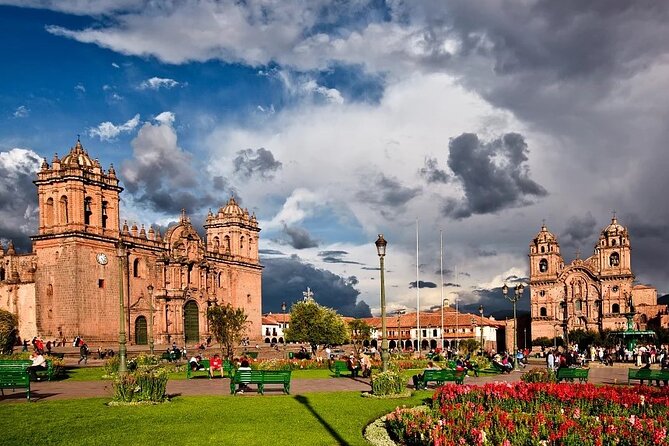
Qorikancha was the most important shrine in the Inca Empire. It was dedicated to Inti, the Sun god, and played a central part in the religious, political, and geographic life of Cusco.
The name is often translated as Golden Enclosure, and the site was known for its gold-plated interiors. The gold is no longer there, but the idea helps you understand the temple’s importance. This was not just another place of worship. It was a center of power at the heart of the Inca capital.
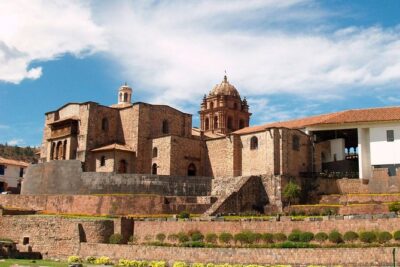
What makes Qorikancha especially useful for a first-time visit is the meeting of Inca and Spanish building traditions. You can see examples of Spanish colonial architecture fused with existing Inca work. That contrast gives the site more meaning than a single period monument would have.
Look closely at the Inca masonry. The precisely fitted stonework reflects a building tradition that did not depend on ordinary mortar in the way many later structures did. Your guide can help connect the surviving walls to the temple’s former religious role.
Entrance to Qorikancha is not part of the $15 tour price. The stated admission is S/20. That is an important detail because the advertised fare looks very low until you add the separate tickets.
Qorikancha is in Cusco itself, so it also works as a quick introduction to the city’s layered past. If you are still getting used to Cusco’s altitude and streets, this stop gives you cultural context without requiring a long walk.
Sacsayhuamán and the Problem of Scale
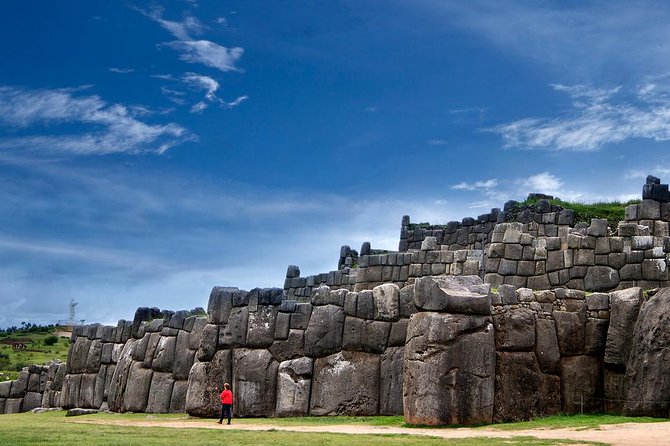
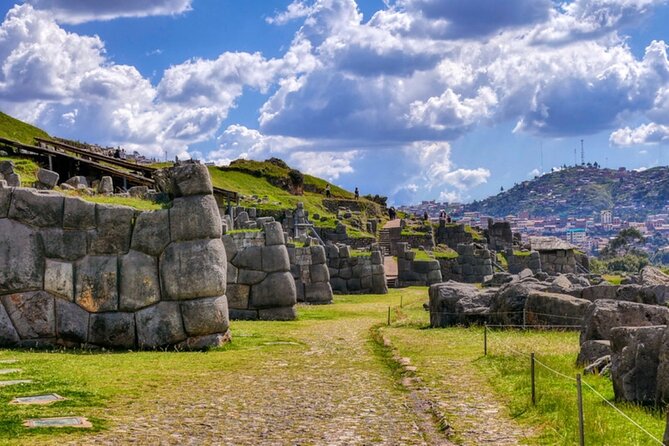
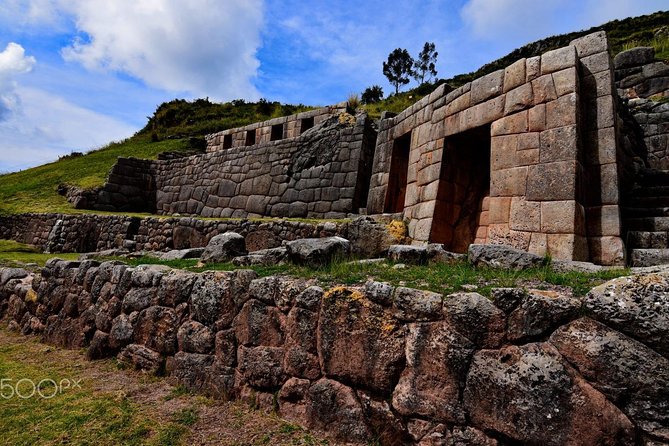
Sacsayhuamán is the stop most likely to make you pause. The ancient Inca complex is known for massive stone blocks fitted into stepped walls, and its size helps explain the labor and planning behind imperial Cusco.
It served as a fortress and an important religious and ceremonial center. Construction is believed to have begun during the reign of Pachacútec and continued under later rulers. The complex included stepped walls, storage areas, and possibly temples.
You do not need to be an architecture specialist to appreciate the site. The sheer size of the stones makes the point for you. At Qorikancha, you study careful masonry in a city setting. At Sacsayhuamán, you see that same skill used on a much grander scale.
The site is also useful for understanding Cusco’s position as the center of an empire. It was not simply a defensive outpost. Its ceremonial role shows how political authority, religion, and military strength were tied together in the Inca world.
The tourist ticket is separate from the tour and costs S/70 according to the stated pricing. A useful money-saving tip is to consider the 130-sol city pass if you plan to visit other included sites around Cusco. One person on the tour pointed out that it can pay off when you visit two stops on this route and then use the remaining admissions elsewhere.
You should check the current ticket rules before booking, since the value depends on which sites you plan to visit after this outing. Still, the larger pass can make more sense than paying for isolated admissions if you are spending several days in Cusco.
Tambomachay and the Sacred Role of Water
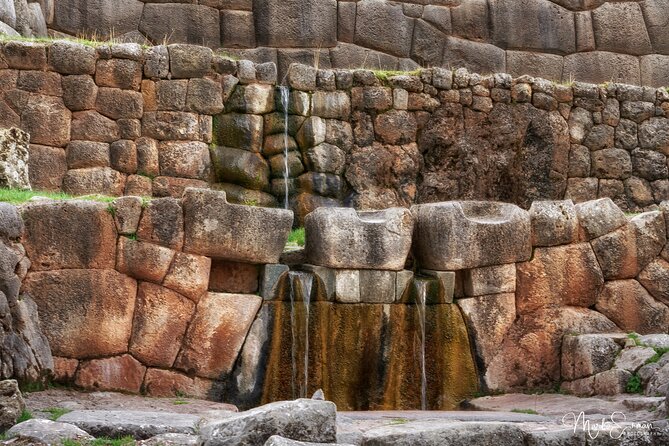
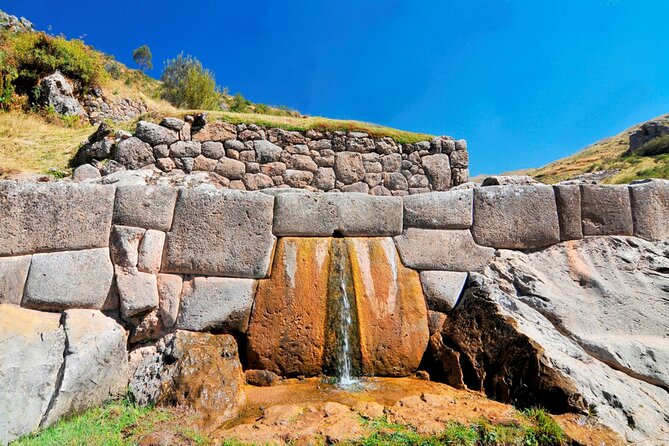
Tambomachay gives the route a different mood. Rather than focusing mainly on military power or imperial display, this site was connected with water, ceremony, and rest.
For the Incas, Tambomachay was a sacred place and a kind of spa or resting area for the Inca and his entourage. It was also a ceremonial center dedicated to the worship of water.
That purpose matters. Water was not treated as a simple utility in the Inca world. At Tambomachay, it formed part of religious life and royal ritual. The stop helps you see that Inca sacred places could be tied to natural elements as well as buildings and political centers.
The site is also a good reason to choose a guided visit. Without context, a smaller archaeological place can be easy to pass through quickly. A bilingual guide can explain why the water features mattered and how Tambomachay fit into the wider network of royal and ceremonial locations around Cusco.
The walking here is described as easy, but you should still expect some movement between the vehicle and the archaeological remains. Cusco is high, and even a gentle outing can feel different from a low-altitude city walk. The tour does not promise a strenuous hike, which makes it a sensible choice if you want to conserve energy for other Cusco activities.
Other ruins and collections around Cusco:
- Cusco: City Tour | Half-Day Tour to 4 Archaeological Sites
★ 4.6 · 206 reviews - City Tour in Cusco & visit Museum South American Camelid Private.
★ 5.0 · 147 reviews - Cusco City Sightseeing and Sacsayhuaman Archeological Park Tour
★ 4.5 · 101 reviews - Cusco: Historical Guided City Tour with 4 Inca Ruins
★ 4.5 · 99 reviews
The Unnamed Fourth Ruin Needs Clarifying
The experience is presented as a four-ruin half-day tour, but the supplied stop details identify Qorikancha, Sacsayhuamán, and Tambomachay. Because of that mismatch, I would confirm the fourth stop before you pay or set your expectations.
This is not a reason to dismiss the tour. The three named locations already provide a strong half-day route, and the fourth site may be included in the operating schedule. Still, knowing the exact route helps you plan clothing, tickets, and the rest of your day.
Ask which four sites are included and which admissions you need to buy. That simple check can prevent confusion, especially since the tourist ticket is not included and Qorikancha has its own stated admission charge.
What the Guide Adds to the Experience
The guide is the part of this tour that can turn a transfer between ruins into a connected story. You receive a bilingual English and Spanish professional guide, and the group can include up to 18 people.
Eddie is one guide associated with the experience. He has been praised for his humor and for looking after the group. His practical advice about alpaca products is worth noting: some items sold at tourist stops may not be genuine alpaca.
That kind of warning is useful in Cusco, where you will see plenty of textiles and animal-fiber goods. A guide who can explain what to question at a shop adds value beyond dates and architectural terms.
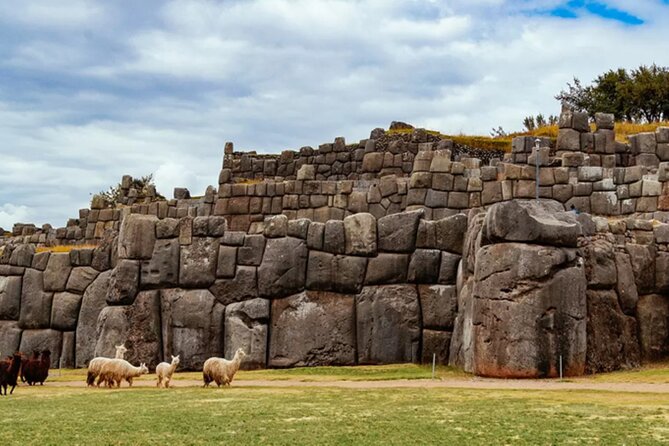
The tour also gives you a chance to see llamas up close. That may be a small part of the day, but it adds a bit of local character and makes the route feel less like a string of stone sites.
The guide’s role matters most at Qorikancha and Tambomachay, where the meaning of the place is not always obvious from the remains alone. At Sacsayhuamán, the stonework speaks for itself, but good explanations help you understand why the complex was more than a fortress.
The Merchandise Stop and Other Trade-Offs
One part of the day may be less appealing: a stop at a tourist merchandise shop. If you are interested in textiles or souvenirs, you may enjoy the chance to browse. If your priority is archaeological time, the stop can feel unnecessary.
You should also know that punctuality matters. One guest felt pressured after arriving four minutes late, so do not treat the meeting time casually. Shared transport has to keep moving, and a small delay can affect the entire group.
Hotel pickup is not included. The tour is near public transportation, so you need to make your own way to the meeting point. The lack of pickup keeps the fare low, but it means you should allow extra time to reach the start.
The service is shared rather than private. A group of up to 18 is not huge, but it is large enough that questions may need to wait and photo stops may be brief. If you want to set the pace yourself, a private tour would likely suit you better, though this experience is aimed at keeping costs modest.
Is the $15 Price Good Value?
At $15 per person, the tour offers a strong starting price for five hours of transport and guiding. The value is best if you want to see several sites without arranging taxis, route planning, and a guide on your own.
The headline cost does not cover everything. Add S/20 for Qorikancha, S/70 for the tourist ticket, and the cost of lunch if you choose to eat during the day. Hotel pickup is also not included.
That means you should judge the tour as a low-cost transport and guiding package, not as an all-inclusive sightseeing ticket. If you already plan to buy the 130-sol city pass for other Cusco sites, the required admissions may fit into a larger sightseeing plan.
The tour is especially good value for a first visit. You get three clearly identified types of Inca site in one outing: a major urban temple, a large ceremonial and defensive complex, and a water shrine. Even with the extra ticket costs, that range is useful.
The value drops if you dislike group schedules or shopping stops. It also drops if your main aim is a slow, detailed visit to one site. This is a broad introduction, not a private archaeological study.
Who Should Book This Half-Day Tour?
I would choose this tour if you want an easy first look at Cusco’s Inca heritage. It suits solo visitors, couples, and families who prefer a guide and shared transport over working out the route alone.
It also fits you if you are watching your budget. The $15 base price is low, and the easy walking level helps if you want to avoid a demanding day in the hills.
This tour may not suit you if you need hotel pickup, dislike fixed group timing, or want complete control over every stop. You should also confirm the fourth ruin before booking, since only three sites are specifically identified in the available details.
Bring money for admissions and possible purchases, but keep the merchandise stop optional in your mind. The most valuable part of the day is the connection between the sites, not the shopping.
Practical Details Before You Go
Confirmation is provided when you book. The experience is near public transportation, and most people can take part.
Lunch is not included. Plan for your own meal or snack, since the outing lasts about five hours and the schedule may not leave much room for an extended break.
The activity has a free cancellation policy if you cancel at least 24 hours before the local start time. Cancellations or changes made less than 24 hours ahead are not accepted for a refund.
The experience is recommended by 97 percent of participants and carries a 4.9 rating from 31 reviews. Those figures suggest a generally dependable outing, but the practical limits remain clear: shared transport, extra admission fees, no hotel pickup, and a possible merchandise stop.
Should You Book It?
Book this tour if you want an inexpensive, guided introduction to Cusco’s major Inca sites, especially Qorikancha, Sacsayhuamán, and Tambomachay. You get useful context, bilingual support, easy walking, and transport in about five hours.
Before you commit, confirm the fourth ruin, meeting point, and current ticket requirements. If those details work for your plans, the tour is a sensible way to get your bearings without spending much. If you want a private pace or a day free of shopping stops, choose a more flexible option instead.
FAQ
How long does the tour last?
The tour lasts approximately five hours.
What sites are specifically included?
The named stops are Qorikancha, Sacsayhuamán, and Tambomachay. The experience is described as a four-ruin tour, so you should confirm the fourth site before booking.
Is hotel pickup included?
No. Hotel pickup is not included.
How much does the tour cost?
The listed price is $15 per person.
Are entrance tickets included?
No. Qorikancha admission is listed as S/20, and the tourist ticket is listed as S/70.
Is lunch included?
No. Lunch is not included.
Is the tour offered in English?
Yes. The service uses a bilingual English and Spanish professional guide.
How large is the group?
It is a shared group service with up to 18 tourists.
Is the walking difficult?
The experience is described as an easy hike, and most people can participate.
More museums and ruins in Cusco
- City Tour in Cusco & visit Museum South American Camelid
★ 4.5 · 80 reviews - Cusco 4-Hour Private Tour Including Sacsayhuaman and Qenqo
★ 5.0 · 77 reviews - Sacsayhuaman Temple, Tambomachay and Puca Pucara Half-Day Tour
★ 4.5 · 59 reviews - Cusco: City and Nearby Ruins 5-Hour Guided Tour
★ 4.4 · 30 reviews
Just added around Cusco
- Ausangate and Rainbow Mountain Trek – 3 Days / 2 Nights★ 5.0 · 35 reviews
- Belmond Hiram Bingham Train to Machupicchu – Full Day★ 4.5 · 33 reviews
- ATV Tour to Moray, Maras and Salt Flat in the Sacred Valley from Cusco★ 5.0 · 40 reviews
- 7-Day: Inca Trail Trek to Machu Picchu Group Tour★ 5.0 · 40 reviews
- 7-Day Tour from Cusco with Machu Picchu and Rainbow Mountain★ 5.0 · 56 reviews
- 6-Day Machu Picchu Express Group Tour★ 5.0 · 48 reviews
- 6-Day Tour of Cusco Magico-Machu Picchu-Rainbow Mountain★ 5.0 · 30 reviews
- 4D Bundle Cusco: Sacred Valley / Machu Picchu / Rainbow Mountain / Humantay Lake★ 5.0 · 37 reviews
Museums & Inca Ruins, compared.
Half-Day City Tour with Sacsayhuaman and Q’enco
Read our review →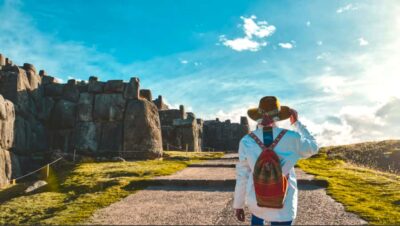
City Tour Cusco Qoricancha Sacsayhuaman y Tambomachay
Read our review →
The Charm of Barranco & Pre Inca Pyramid in Miraflores
Read our review →
Pachacamac Ruins & Barranco Half-Day Guided Tour
Read our review →
Pre Inca Temple of Pachacamac Half-Day Tour from Lima
Read our review →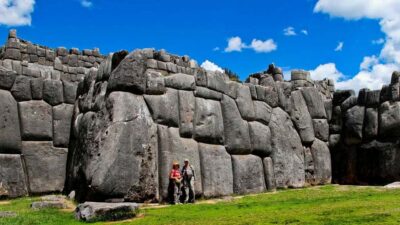
City Tour | Half-Day Tour to 4 Archaeological Sites
Read our review →
City Tour in Cusco & visit Museum South American Camelid Private.
Read our review →Browse the lists this tour appears in