
Reviewed · MUSEUMS & INCA RUINS
Cusco City Sightseeing and Sacsayhuaman Archeological Park Tour
Sacsayhuaman is the star here: huge stones, sweeping views over Cusco, and Inca masonry so tight you may wonder how a sheet of paper could fit between the blocks. This tour then strings together four highland sites, a Spanish cathedral, and Qorikancha, giving you a useful first look at how Inca and colonial Cusco overlap.
I like the small group of up to 15 and the air-conditioned vehicle, especially when the midday sun hits hard. I also like the guides who bring real energy to the past. Alvaro, Yuber, Clara, Rommel, and Niko have all been singled out for lively explanations and strong storytelling.
The main caution is practical: check the ticket option carefully. Some bookings exclude entrance fees, and a few people were surprised by a large extra payment on tour day. The bilingual format can also mean less English explanation than expected.
Key points to know before booking
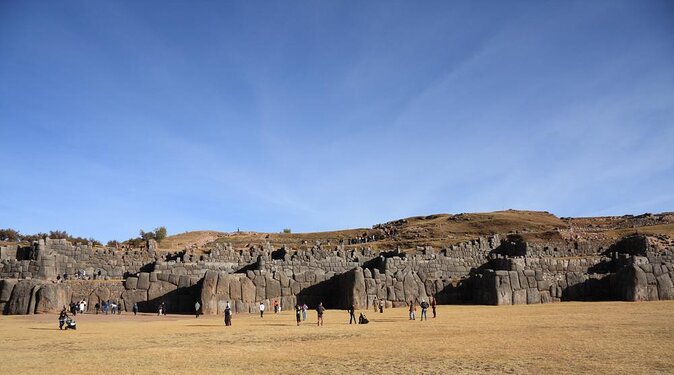
- Sacsayhuaman is the highlight: See enormous fitted stones and wide views over Cusco.
- Four hilltop sites in one outing: Qenqo, Puca Pucara, and Tambomachay follow Sacsayhuaman.
- Two major city sights finish the visit: Enter Qorikancha and Cusco Cathedral, then walk through Plaza de Armas.
- The guide makes the difference: Strong guides such as Alvaro, Yuber, Clara, and Niko have made this tour especially memorable.
- The timing may stretch: The advertised duration is about 3 hours 30 minutes, but some outings have lasted 4 to 5 hours.
- Ticket rules need attention: Select the option with admission included if you do not already have the required Cusco attraction pass.
Why Sacsayhuaman makes a strong first stop
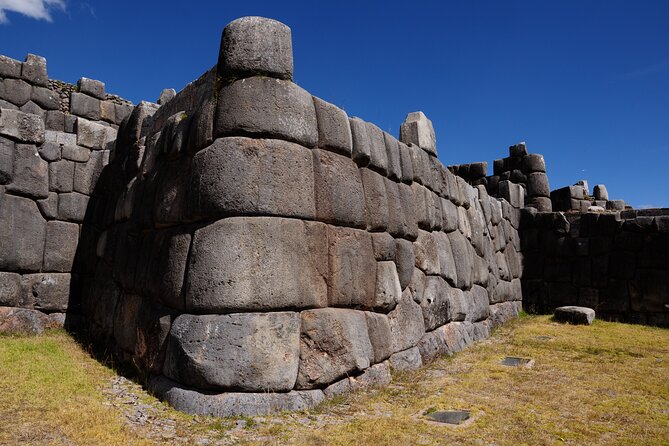
The tour begins above Cusco at Sacsayhuaman, where the first thing you notice is not a museum label or a reconstructed building. It is the stone. Massive blocks, some around 13 feet, or 4 meters, high, are fitted into long walls with remarkable precision.
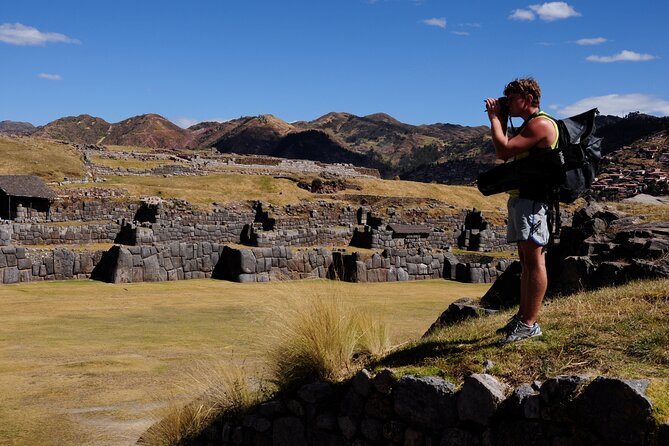
You get time to walk around the archaeological complex with your guide and look down over Cusco. That view helps you understand the site’s position above the old Inca capital. The setting also gives the place a quiet, spacious feel, a sharp contrast to the narrow streets and busy squares below.
Your guide explains the Inca symbolism attached to the condor, puma, and snake. These creatures represented the three levels of the Inca world, so the carvings and shapes are more than decoration. They give you a way to read the site through Inca beliefs rather than seeing it as only a very large stone fort.
Sacsayhuaman rewards curiosity. Ask about construction methods, the purpose of the walls, and the difference between what is known and what remains uncertain. One weakness of a short group tour is that the explanation may stay broad. If your main interest is engineering, you may want to ask direct questions about the earthquake-resistant walls and how the stones were cut and moved.
Other ways to see the whole city in Cusco:
- Cusco: Half-Day City Tour with Sacsayhuaman and Q’enco
★ 4.6 · 1,129 reviews - City Tour Cusco Qoricancha Sacsayhuaman y Tambomachay
★ 4.7 · 617 reviews - Open Bus Cusco City Tour
★ 4.5 · 219 reviews
Qenqo, Puca Pucara, and Tambomachay in one sweep
After Sacsayhuaman, the vehicle takes you to three nearby sites. This is where the tour earns its keep. You could reach these places independently, but organizing transport between them would take more effort, and the sites make more sense when seen as part of the same highland circuit.
At Qenqo, you see a ceremonial area associated with the temple of the puma, along with a carved altar. The site feels more enclosed and mysterious than Sacsayhuaman. Your guide will connect the stonework and ceremonial spaces to Inca religious practice.
Puca Pucara has a different character. Its remains are linked to defense and movement through the area, and the site is commonly described as a former military outpost. Do not expect an intact fortress. The appeal is in the position, the surviving stone structures, and the way this stop shows another practical side of the Inca state.
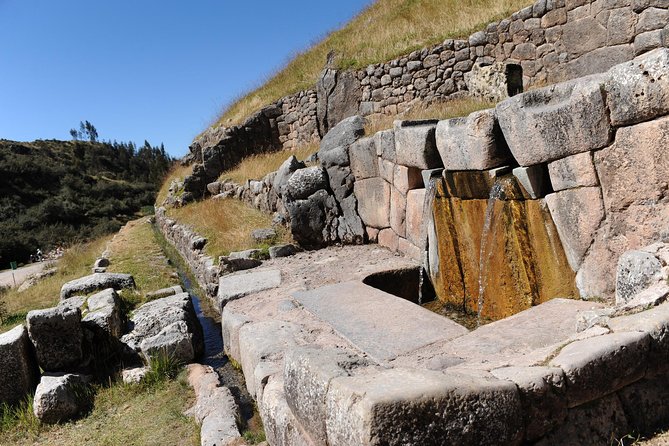
Tambomachay brings water to the center of the story. Channels, aqueducts, and small waterfalls run through the site, which may have served ritual purposes and perhaps acted as a retreat or bathing place for wealthy Incas. The waterworks are not huge, so the stop depends heavily on your guide’s explanation. With a good guide, it becomes a useful lesson in the Inca respect for water and controlled engineering. With a rushed explanation, it can feel like a brief photo stop.
You should wear shoes that feel secure on uneven archaeological paths. Bring water, sun protection, and a light rain layer. Cusco weather can change quickly, and one person who enjoyed the tour in heavy rain still needed the guide’s flexibility to cover the planned sights.
Qorikancha shows two layers of Cusco
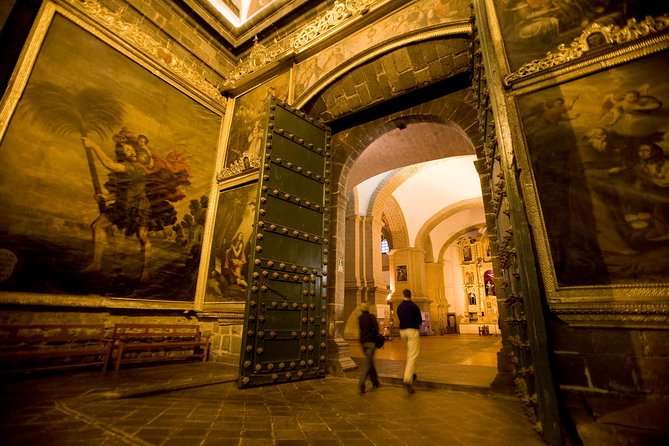
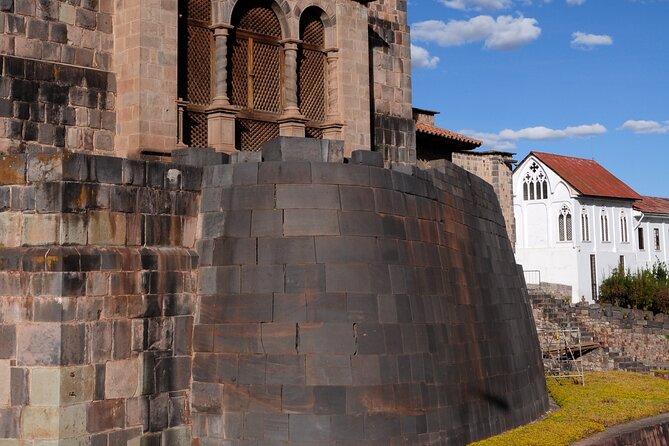
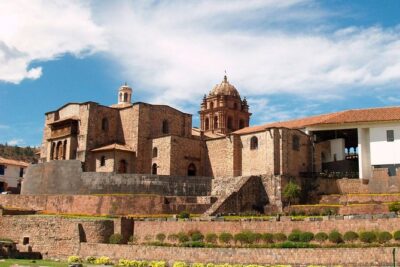
The tour returns toward central Cusco for Qorikancha, the Temple of the Sun. The site is important because the Santo Domingo Convent was built over the Inca temple, putting two eras of Cusco in the same walls.
The traditional account describes Qorikancha as once heavily covered in gold, a sight that astonished the Spanish conquerors. Today, the value of the visit is less about expecting a glittering temple and more about seeing how colonial construction was placed over an earlier Inca foundation.
This stop helps you understand the city’s visual pattern. In Cusco, Spanish churches and convents often sit on or beside Inca stonework. A guide can point out that relationship in a way you might miss while walking alone.
The visit is scheduled for about an hour, though the total length of the outing can vary. Some groups have taken longer than the advertised 3 hours 30 minutes, especially when pickups, ticket checks, language arrangements, or extra stops slow things down. I would avoid booking a tight dinner reservation immediately afterward.
Plaza de Armas and Cusco Cathedral
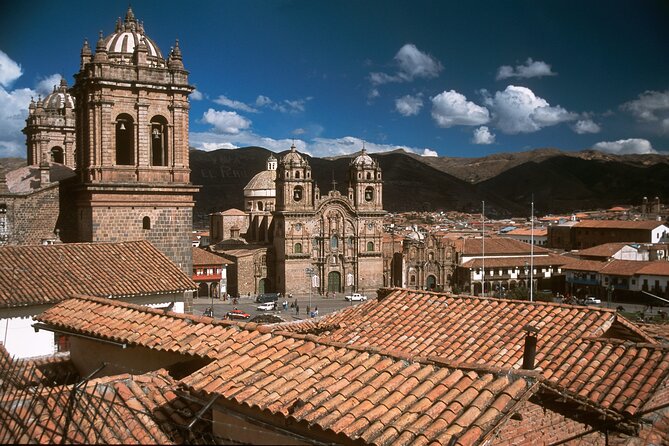
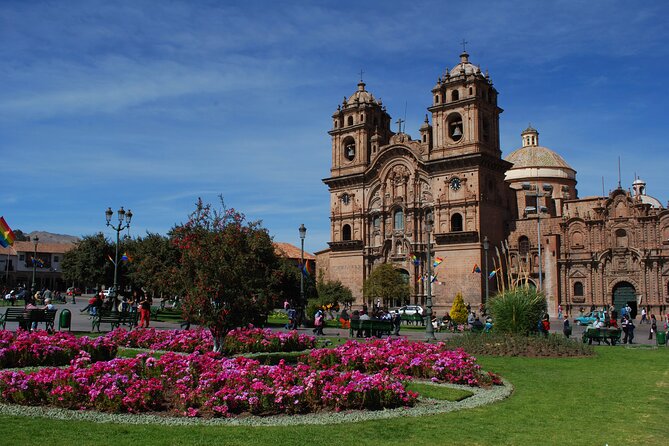
Back in the center, you walk through Plaza de Armas, Cusco’s main square. The square gives you a good orientation point and lets you see Cusco’s colonial heart before entering the cathedral.
Inside Cusco Cathedral, the emphasis shifts from Inca stonework to Spanish religious art and architecture. You see late-Gothic and Baroque features, stained glass, paintings, and religious objects. The famous Senor de los Temblores painting is among the important works presented during the visit and is described as the oldest surviving painting in Cusco.
This part is valuable because it completes the cultural picture. The tour is not only about ruins outside town. It also shows how colonial religion reshaped the former Inca capital. Some people expecting a broad walking tour of streets and neighborhoods may find the city portion narrower than expected, since much of it centers on Plaza de Armas and the cathedral.
Plan your clothing with the cathedral in mind. Shorts are not permitted in religious sites. Photography is forbidden inside the cathedral, so you will need to enjoy the paintings and architecture without relying on your camera.
Other ruins and collections around Cusco:
- Cusco: City Tour | Half-Day Tour to 4 Archaeological Sites
★ 4.6 · 206 reviews - City Tour in Cusco & visit Museum South American Camelid Private.
★ 5.0 · 147 reviews - Cusco: Historical Guided City Tour with 4 Inca Ruins
★ 4.5 · 99 reviews - City Tour in Cusco & visit Museum South American Camelid
★ 4.5 · 80 reviews
The guide can make or break the day
The strongest part of this experience is the guiding. Several guides have been praised by name for bringing warmth, humor, and clear historical context to the stops.
Alvaro Jimenez has been singled out for detailed explanations of the sites. Yuber has been described as energetic and easy to talk with, particularly while explaining Sacsayhuaman and the city’s churches. Clara has received credit for clear, informative commentary, and Rommel for staying professional when the group had a difficult start.
Niko, described as a former history professor, is the kind of guide who can turn a short visit into a connected story about the Inca civilization, the Spanish conquest, and the centuries around them. Other guides, including Abraham, Adrial, Aracely, Julio, and Alain, have also been praised for making the tour engaging and accommodating.
There is an important limitation. The service is bilingual Spanish and English, not necessarily English-only. If most of the group speaks Spanish, the guide may address that audience first and offer shorter English explanations afterward. One English-speaking participant felt they missed much of the cultural information for this reason.
If language is central to your decision, contact the operator before booking and ask how the group will be handled. A truly bilingual guide can do a fine job, but the pace may be slower and each language may receive less time.
Transport, group size, and the real timing
Hotel pickup and drop-off are included, though vehicle access is not permitted at every hotel. In those cases, you may be asked to meet at a nearby point. Pickup problems have occurred, so confirm the meeting details and keep the operator’s contact information handy.
The air-conditioned vehicle is useful here. You cover high sites outside central Cusco, then return to the city without spending the day arranging taxis. A maximum of 15 people keeps the group smaller than a large coach outing, although hotel pickups can still add waiting time at the beginning.
The official duration is approximately 3 hours 30 minutes. In practice, some outings have taken closer to 4 or 4.5 hours, and one report put the total near 5 hours. That difference may come from pickups, ticket arrangements, language translation, traffic, or additional stops.
I would treat this as a half-day activity with a flexible finish. It works well on an acclimatization day or near the start of a Cusco visit because it gives you historical context before Machu Picchu and the wider Inca Valley. It is less suitable if you have a fixed appointment soon after pickup.
Is $79 a fair price?
At $79 per person, the tour can be good value if your booking includes admission tickets. You receive transport, a guide, and access to several archaeological sites plus Qorikancha and Cusco Cathedral. Hiring separate taxis and arranging explanations at each stop could cost more in time and effort, even if an independent visit gives you greater control.
The price becomes harder to judge when tickets are excluded. Some people have been asked to pay a substantial additional amount in Peruvian soles, with reported estimates ranging from about 140 soles to 290 soles depending on the ticket arrangement. The exact charge may depend on which attractions are covered and whether you already hold a broader archaeological ticket.
Read the two purchase choices closely. If you want a simple day with no admission surprise, choose the option that clearly includes Sacsayhuaman, Qorikancha, and Cathedral entry. If you already plan to buy a multi-site Cusco pass, the lower ticket-free option might suit you, but confirm what you must pay separately before the tour begins.
Who should book this Cusco tour?
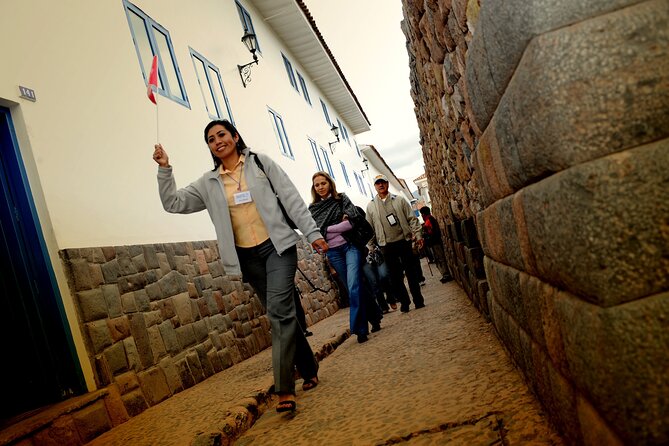
I would choose this outing if you have limited time in Cusco and want one organized introduction to the city and nearby Inca sites. It suits first-time visitors, families, solo visitors who prefer a guide, and anyone who wants transport rather than a half-day of arranging taxis.
It is also a good choice for people who learn best through stories. The tour connects symbols, water systems, military ruins, religious buildings, and colonial history in one run. Children may enjoy Sacsayhuaman’s huge stones and the open-air sites, though the cathedral portion may hold less interest.
I would look elsewhere if you want a quiet private experience, highly technical archaeology, or a strictly English-only group. You may also prefer an independent visit if you need to control every minute or dislike shopping-related detours. One complaint described a stop that felt like a sales presentation, so if that concerns you, ask in advance whether any commercial stops are part of the route.
Should you book it?
Book it if you want broad coverage in a short time, especially with the ticket-included option and a clear pickup plan. Sacsayhuaman is genuinely impressive, the four outer sites add useful context, and Qorikancha plus the cathedral show how different eras of Cusco overlap.
Before paying, confirm three points: admission fees, the language arrangement, and the pickup location. Allow extra time beyond 3.5 hours. With those details settled, this is a practical first-day tour that can give you the background needed to appreciate the rest of your time in Peru.
FAQ
How long does the Cusco sightseeing tour last?
The stated duration is approximately 3 hours 30 minutes. Some outings have lasted 4 to 5 hours, so allow extra time after the scheduled finish.
What sites are included?
The route includes Sacsayhuaman, Qenqo, Puca Pucara, Tambomachay, Qorikancha, Plaza de Armas, and Cusco Cathedral.
Are entrance tickets included in the price?
There are two booking options, one with tickets included and one without them. Check your selected option carefully, since admission fees are not included in every booking.
Is hotel pickup and drop-off provided?
Hotel pickup and drop-off are included, but some hotels are in areas where vehicles cannot enter. You may need to meet at a nearby location.
Is the tour offered in English?
The guide service is bilingual in Spanish and English. It is not necessarily an English-only group, so ask about the language arrangement if this is important to you.
How many people can join the tour?
The maximum group size is 15 people.
Can I wear shorts at the cathedral and other religious sites?
No. Shorts are not allowed in the religious sites visited on this tour.
Can I take photographs inside Cusco Cathedral?
No. Photography is forbidden inside the cathedral.
More museums and ruins in Cusco
- Cusco 4-Hour Private Tour Including Sacsayhuaman and Qenqo
★ 5.0 · 77 reviews - Sacsayhuaman Temple, Tambomachay and Puca Pucara Half-Day Tour
★ 4.5 · 59 reviews - “Waqra Pucara, The Majestic Fortress Revealing Secrets of the Andes”.
★ 3.5 · 8 reviews - Lima: The Charm of Barranco & Pre Inca Pyramid in Miraflores
★ 4.9 · 322 reviews
Just added around Cusco
- “Waqra Pucara, The Majestic Fortress Revealing Secrets of the Andes”.★ 3.5 · 8 reviews
- 1.5h Cusco Chocolate Workshop – Truffles & Hot Chocolate★ 4.3 · 8 reviews
- Cusco: Chocolate Workshop with the Best Local Organic Cacao★ 4.5 · 23 reviews
- Cusco: Bean to bar chocolate workshop★ 5.0 · 3 reviews
- Cusco: Pub Crawl with Skip-the-Line Access and Drinks★ 4.6 · 57 reviews
- Horseback Tour in cusco to Temple of the Moon & Hidden temples★ 5.0 · 54 reviews
- 2-Day Tour in Sacred Valley and Machu Picchu from Cusco★ 5.0 · 59 reviews
- Sacsayhuaman Temple, Tambomachay and Puca Pucara Half-Day Tour★ 4.5 · 59 reviews
Museums & Inca Ruins, compared.
Half-Day City Tour with Sacsayhuaman and Q’enco
Read our review →
City Tour Cusco Qoricancha Sacsayhuaman y Tambomachay
Read our review →
The Charm of Barranco & Pre Inca Pyramid in Miraflores
Read our review →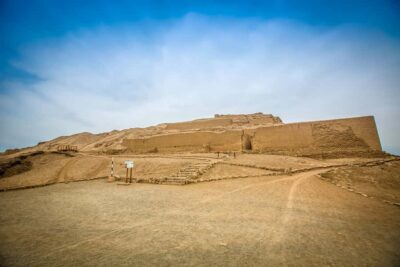
Pachacamac Ruins & Barranco Half-Day Guided Tour
Read our review →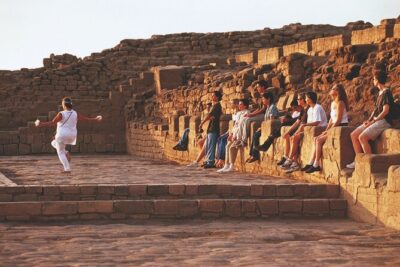
Pre Inca Temple of Pachacamac Half-Day Tour from Lima
Read our review →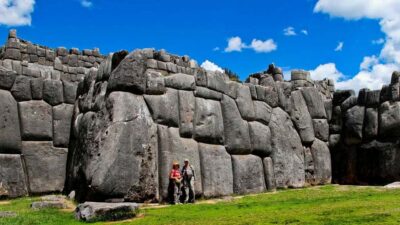
City Tour | Half-Day Tour to 4 Archaeological Sites
Read our review →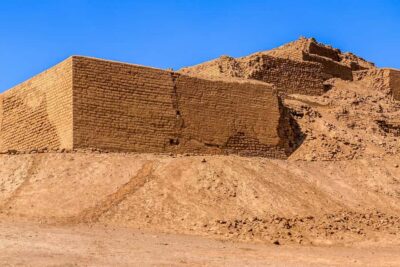
City Tour in Cusco & visit Museum South American Camelid Private.
Read our review →Browse the lists this tour appears in