
Reviewed · CITY TOURS
City Tour Cusco
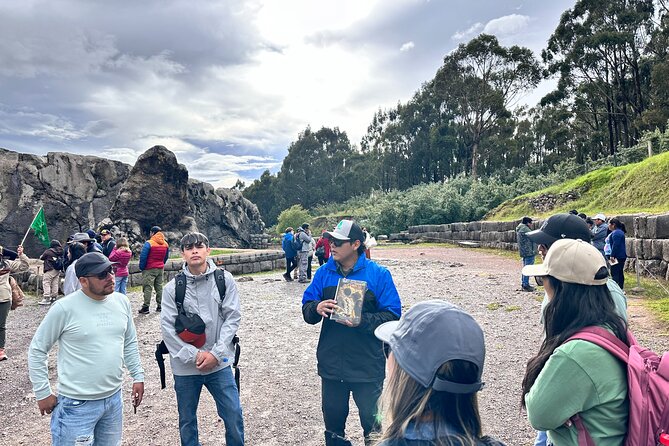
Sacsayhuamán is the star of this five-hour Cusco tour, where enormous Inca stones, Spanish colonial buildings, and mountain views come together. You continue to Q’enqo, Tambomachay, and Puca Pucará, four sites that show how the Incas built, worshipped, managed water, and watched over their capital.
I like the small price of $15 per person, especially since transport and a professional guide are included. I also like the route’s clear focus: you get a quick but meaningful introduction to Inca culture without spending a full day away from Cusco. The main drawback is that entrance tickets, food, and drinks cost extra, and the tour is not suitable for people with mobility impairments.
Key points to know before booking
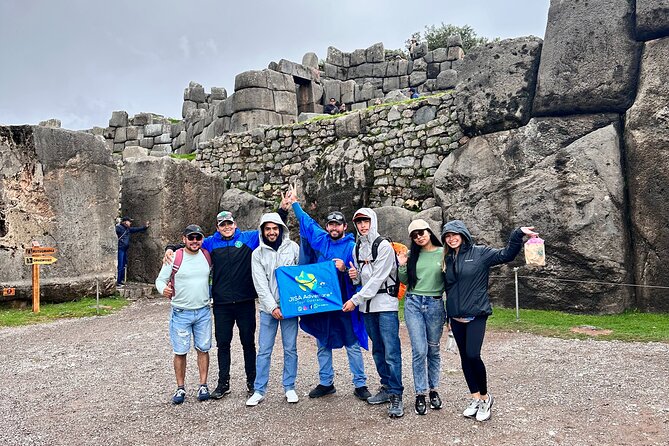
- Sacsayhuamán provides the biggest visual impact, with colossal stone constructions spread across three levels.
- Q’enqo adds a religious side to the tour, including a Puma connection and an interior altar associated with Pachamama.
- Tambomachay shows the Inca skill with water, with springs that still feed fields and terraces.
- Puca Pucará explains Cusco’s defenses, from a watchtower above the valley.
- Transport and guided commentary are included, but entrance tickets are not.
- Hotel pickup can be arranged, though the collection time and meeting point must be coordinated in advance.
Why this short Cusco route works
Cusco can feel like a puzzle at first. Inca walls support Spanish buildings, narrow streets climb sharply, and major ruins sit just beyond the city center. This tour gives you a useful first frame for understanding it all.
You leave from Plaza de Armas or arrange pickup from your hotel. The transport takes you to four important sites outside the central streets, while a live guide speaks in English or Spanish. The route lasts about five hours, although the detailed schedule describes the visit as roughly 5.5 hours, so I would keep a little extra time free.
I like this format for a first day in Cusco. You see the most important nearby Inca sites in one outing, then have the rest of the day for the city’s churches, markets, museums, and restaurants. It is also a practical choice if you want context before visiting Machu Picchu.
The tour does not include admission tickets. That matters when you compare the $15 price with the total cost of the outing. The low base price covers tourist transportation, a professional guide, site commentary, and agency assistance at any time, but you should confirm the required entrance fees before booking so there are no surprises.
Other ways to see the whole city in Cusco:
- Cusco: Half-Day City Tour with Sacsayhuaman and Q’enco
★ 4.6 · 1,129 reviews - City Tour Cusco Qoricancha Sacsayhuaman y Tambomachay
★ 4.7 · 617 reviews - Open Bus Cusco City Tour
★ 4.5 · 219 reviews
Sacsayhuamán and the giant stones above Cusco
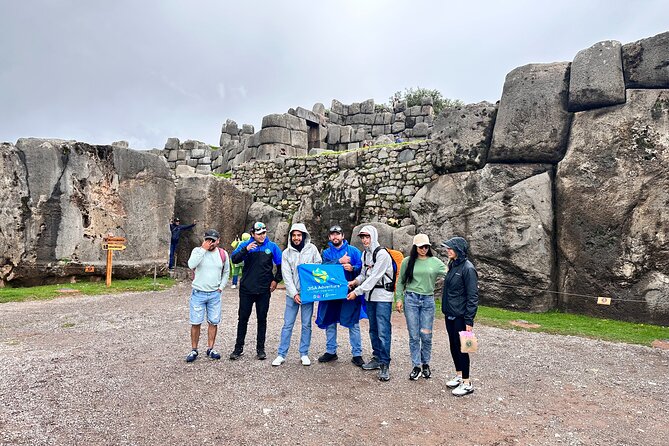
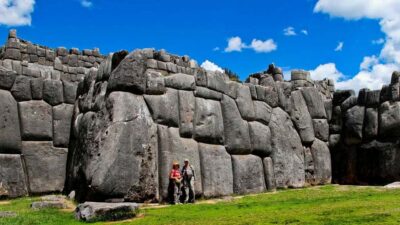
Sacsayhuamán is the main reason to choose this route. The site is described as a ceremonial fortress, but it also had a major role in protecting and controlling the Inca capital. Its massive stonework is the first thing that catches your eye.
The tour covers three levels of the complex. In the upper section, you see the bases of the great towers that once dominated Cusco during Inca times. Even without reconstructing the missing structures in your mind, the scale of the foundations gives you a sense of the site’s importance.
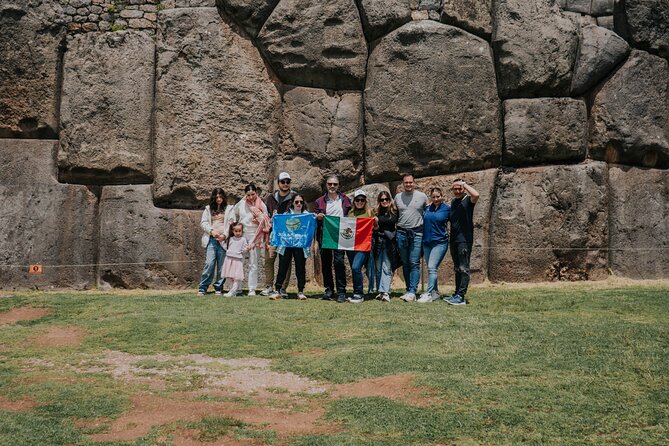
I would pay close attention to the way the stones fit together. Their size is impressive, but the real interest lies in the careful construction. The walls are part of the Inca style that makes Cusco so distinctive: practical, ceremonial, and closely tied to the terrain.
The setting adds to the experience. Sacsayhuamán sits above the city, with broad views across the surrounding hills and Cusco below. Here, the scenery is not just decoration. The position helps explain why the site mattered. From this height, the relationship between the ceremonial complex and the imperial city becomes easier to understand.
The route includes a guided visit rather than a simple photo stop. That is important at Sacsayhuamán, where an unaccompanied visit can become a quick look at large walls followed by a quick exit. A good guide helps you notice construction details and the remains that are easy to miss.
Q’enqo, the Puma shrine and an underground altar
Q’enqo changes the mood. Instead of focusing mainly on giant defensive walls, this stop introduces the spiritual side of Inca life. The site is described as an ancient shrine connected with the Puma, an important animal in Andean religious thought.
Inside the shrine, you see an altar associated with sacrifices and Pachamama, or Mother Earth. The details make this more than another stone complex. You begin to see how the Incas linked religion, the natural world, and the political life of Cusco.
I would listen closely to the guide here, since Q’enqo can be hard to interpret from the stones alone. The site does not announce its purpose as clearly as a modern building with signs and rooms. Guided explanation gives the carved surfaces and interior spaces a clearer meaning.
The stop may feel less grand than Sacsayhuamán, but that is part of its value. The route is not simply a parade of large ruins. It shows different parts of Inca society: power at Sacsayhuamán, ritual at Q’enqo, water management at Tambomachay, and military observation at Puca Pucará.
Tambomachay and the continuing flow of water
Tambomachay is the most water-focused stop on the route. It is considered one of the important places in Andean cosmology, and its springs still irrigate fields and terraces around the city.
The site shows how architecture and water were brought together. You see spring sources and carefully built channels rather than a fortress or a large urban center. That makes Tambomachay useful for understanding the Inca approach to water as both a practical resource and a sacred force.
I like this stop because it slows the tour down. After the huge scale of Sacsayhuamán and the ceremonial atmosphere of Q’enqo, the flowing water gives the route a different rhythm. It also reminds you that Inca engineering was not limited to roads and walls.
The available details do not specify how much time you spend at each site, so do not expect a long independent exploration at every stop. This is a connected guided circuit. The benefit is efficiency. The tradeoff is that you follow the group’s timing rather than setting your own pace.
Same base, a completely different day:
- Cusco: Humantay Lake Tour with Breakfast and Buffet Lunch
★ 4.9 · 2,976 reviews - From Cusco: Moray, Maras Salt Mines & Chinchero Weavers Tour
★ 4.8 · 1,925 reviews - From Cusco: Full-Day Group Tour of Machu Picchu
★ 4.7 · 1,767 reviews - Machu Picchu Day Trip from Cusco
★ 4.5 · 1,644 reviews
Puca Pucará and the view across the valley
The final site is Puca Pucará, a watchtower and strategic position overlooking the valley and the imperial city. Its purpose makes sense when you consider the placement. The site offered a broad view of movement through the area around Cusco.
Puca Pucará is a useful final stop because it brings the earlier sites into a wider picture. Sacsayhuamán shows power and ceremony. Q’enqo shows ritual. Tambomachay shows water and sacred springs. Puca Pucará shows observation and control.
I would use this stop to look back across the valley and think about how closely the sites were connected. The route is not presenting four unrelated ruins. It is showing parts of a capital city system, with ceremonial, religious, agricultural, and defensive functions working together.
The watchtower is also a good reminder that the Inca capital extended well beyond the modern central square. If you spend all your time around Cusco’s colonial core, it is easy to miss how much of the city’s identity comes from these nearby highland sites.
What the $15 price really covers
At $15 per person, this is an inexpensive way to reach the major Inca sites around Cusco. Independent transport can be awkward, and arranging separate visits to four places may take more time and effort than the tour price suggests.
You are paying mainly for movement between sites and interpretation. Tourist transportation is included, along with a professional guide and guided visits lasting about five hours. The agency also offers assistance 24 hours a day, which can be useful if you need help before or during the booking.
The price does not include entrance tickets, meals, drinks, snacks, or travel insurance. Bring your own water and food if needed, but note that large bags and luggage are not allowed. A passport or ID card is required.
I see this as good value for a visitor who wants orientation and basic historical context. It is less suitable for someone who wants a long, slow archaeological visit with lots of time for photography at each site. The tour’s strength is coverage, not complete independence.
Pickup, timing and physical demands
Pickup is included, and collection can be made from your hotel. The schedule is provided separately, and pickup may also be coordinated from a neutral meeting point. Plaza de Armas is listed as a central pickup option, with the tour ending at Cusco’s main square.
Confirm the exact meeting details before the day of the tour. The information allows for coordination, but it does not provide one fixed pickup time for everyone. That means you should keep your morning or afternoon open rather than planning a tight connection immediately afterward.
The route is not suitable for people with mobility impairments. The sites involve uneven archaeological ground and outdoor walking, although the supplied details do not specify the exact number of steps or the walking distance. Wear sensible shoes and bring only what you need.
The tour is available in English and Spanish. If language is important to your experience, choose the guide language carefully when booking. The guide’s role matters most at Q’enqo and Tambomachay, where the meaning of the site is less obvious than the size of the stones at Sacsayhuamán.
The guide can make the difference
The strongest praise attached to this experience is directed at the guide. Esnel, from Brazil, gave the tour a five-star rating after a March 2024 booking and described the guide as kind and very well prepared, with strong knowledge across many subjects.
That matches what this route needs. The ruins are interesting on their own, but the experience improves when someone explains how the four sites relate to Cusco and the Andean worldview. A prepared guide can also help you notice details that a quick stop would otherwise miss.
The tour is not presented as a private experience, so you should not assume that the guide will tailor every stop to your personal interests. Still, the live commentary in English or Spanish is a real advantage over simply hiring transport to the ruins.
Who should book this Cusco tour?
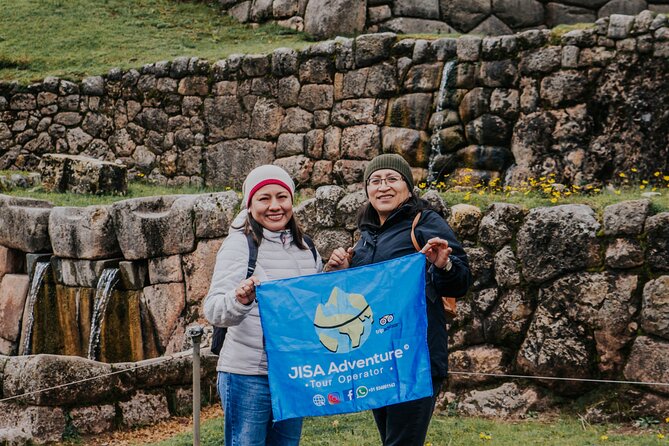
I would recommend this tour to a first-time visitor who wants a practical introduction to Inca culture, especially if you have limited time in Cusco. It also suits anyone who prefers to have transport and site explanations arranged in one booking.
It works well for:
- First-time Cusco visitors
- People who want to see four major sites in one half-day
- Visitors interested in architecture, religion, water systems, and military planning
- Anyone trying to keep the cost low
- Visitors who want English or Spanish guiding
I would think twice if you need step-free access, dislike fixed group schedules, or want entrance fees included in the advertised price. I would also avoid booking it directly before a flight or another timed activity, since the visit can last about five to 5.5 hours and pickup times require coordination.
Should you book the City Tour Cusco?
Book it if you want an affordable and efficient first look at the Inca sites around Cusco. The combination of Sacsayhuamán’s huge walls, Q’enqo’s religious spaces, Tambomachay’s springs, and Puca Pucará’s watchtower gives you a useful picture of how the capital worked.
The tour is not a complete Cusco experience, and $15 is not the final cost because entrance tickets are extra. Still, with transport, a live English or Spanish guide, hotel pickup coordination, and about five hours of guided visits, it offers solid value.
My practical advice is simple: confirm the entrance fees, pickup time, guide language, and meeting point before paying. Bring your passport or ID, leave large luggage behind, and wear shoes suited to uneven ground. If those conditions fit your plans, this is a sensible way to meet Cusco’s Inca side before exploring the city center on your own.
FAQ
How long does the City Tour Cusco last?
The activity is listed as lasting five hours. The detailed visit description gives an approximate duration of 5.5 hours, so allow a little extra time.
Which sites does the tour visit?
The tour visits Sacsayhuamán, Q’enqo, Tambomachay, and Puca Pucará.
Where does the tour start?
One listed pickup option is Plaza de Armas in Cusco. Pickup from your hotel can also be arranged, and the collection schedule is provided separately.
Where does the tour finish?
The tour finishes at Cuzco Main Square.
Is transportation included?
Yes. Tourist transportation is included, along with a professional tourist guide and guided visits at the sites.
Are entrance tickets included?
No. Entrance tickets are not included in the $15 tour price.
What languages are available?
The live tour guide is available in English and Spanish.
What should I bring, and what is not allowed?
Bring your passport or ID card. Luggage and large bags are not allowed on the activity.
Just added around Cusco
- Cusco: 4-Day Salkantay Trek to Machu Picchu, Panoramic Train★ 4.3 · 17 reviews
- Cusco: City and Nearby Ruins 5-Hour Guided Tour★ 4.4 · 30 reviews
- Cusco: 3-Hour Peruvian Cooking Class★ 4.7 · 16 reviews
- Cusco: 4-Day Lares Trek to Machu Picchu with Panoramic Train★ 4.9 · 20 reviews
- Cusco Tourist Ticket and Sacred Valley Site Pass★ 4.2 · 28 reviews
- Colorful mountain tour Palcoyo | Cusco★ 4.8 · 5 reviews
- City Tour in Cusco★ 4.0 · 3 reviews
- City Tour Cusco & Valle Sagrado Pisac mas Almuerzo★ 3.6 · 3 reviews
City Tours, compared.
Half-Day City Tour with Sacsayhuaman and Q’enco
Read our review →
City Tour Cusco Qoricancha Sacsayhuaman y Tambomachay
Read our review →
City Tour | Half-Day Tour to 4 Archaeological Sites
Read our review →
City Tour in Cusco & visit Museum South American Camelid Private.
Read our review →
Cusco City Sightseeing, San Pedro Market, Cathedral and Qorikancha Temple
Read our review →
Cusco City Sightseeing and Sacsayhuaman Archeological Park Tour
Read our review →Browse the lists this tour appears in