
Reviewed · MUSEUMS & INCA RUINS
Cusco City Tour with Sacsayhuaman & Inca Sites – Small Group
Cusco’s best short city tour connects the city’s grand colonial center with the Inca sites on the hills above it. In a few hours, you’ll compare Spanish buildings with original Inca stonework, then visit Sacsayhuaman, Qenqo, Puka Pukara, and Tambomachay without having to arrange separate taxis or puzzle out the site circuit yourself. I especially like the small maximum group of 16 and the way Coricancha and Sacsayhuaman give the outing real substance rather than making it a quick photo stop.
The main catch is the pace. Thirty minutes at each stop is enough for an introduction and some photographs, but not for a long, unhurried visit. Also note that the cathedral interior is not included, and the stated itinerary begins at 1:00 pm, even though departures are described as available in the morning or afternoon. Confirm your preferred departure when booking.
Key points to know before you book
- Start in Cusco’s ceremonial heart: Walk from the Plaza de Armas to the 12 Angled Stone and along Loreto Street before visiting the outlying ruins.
- Compare two building traditions: Coricancha lets you see Spanish colonial construction placed directly over Inca foundations.
- Visit four hilltop sites by vehicle: Sacsayhuaman, Qenqo, Puka Pukara, and Tambomachay form the included Circuit I route.
- Expect a compact schedule: Each listed stop lasts about 30 minutes, making this a good orientation tour rather than a slow archaeological study.
- Keep your group manageable: The tour accepts no more than 16 people, with a professional guide included.
- Budget for the cathedral separately: The cathedral entrance and interior visit are not part of the $98 price.
A smart first look at Cusco
I like this tour because it gives you the basic key to Cusco in one half-day. The city is easier to understand once you see the layers together: the Plaza de Armas as a former Inca ceremonial center, Spanish churches and arcades around the square, Inca walls beneath colonial buildings, and ceremonial sites spread across the hills.
The tour lasts about four to five hours. That is long enough to cover the main sights without using an entire day, yet short enough to fit around other plans. You could use it early in your Cusco stay to get your bearings, or place it on a day when you want history and scenery without committing to a full Sacred Valley excursion.
The $98 price includes hotel pickup and drop-off within Cusco’s Historic Center, entry to Coricancha, the Partial Tourist Ticket for Circuit I, transport between the central city and the hilltop ruins, and a professional guide. That is a fair package if you value convenience and explanation. It is less attractive if you prefer to visit one or two sites slowly on your own.
A maximum of 16 people keeps this from being a giant coach outing. It is still a group tour, so you will follow a fixed schedule, but the group size should make it easier to hear the guide and ask a few questions.
Other ways to see the whole city in Cusco:
- Cusco: Half-Day City Tour with Sacsayhuaman and Q’enco
★ 4.6 · 1,129 reviews - City Tour Cusco Qoricancha Sacsayhuaman y Tambomachay
★ 4.7 · 617 reviews - Open Bus Cusco City Tour
★ 4.5 · 219 reviews
Plaza de Armas, the right place to begin
The tour starts at 1:00 pm in the Plaza de Armas, Cusco’s grand central square. This is more than a pretty meeting point. The area was once the main ceremonial center of the Inca capital, and the buildings around it show how Spanish colonial power was placed over the older city.
Your guide introduces the colonial and Inca buildings around the square before leading you on foot toward two small but important details. The first is the famous 12 Angled Stone, fitted so precisely into an ancient wall that its craftsmanship is easy to admire even during a brief stop.
You then walk along Loreto Street, one of the clearest places to see original Inca urban design. Inca stone walls line both sides, and the narrow route gives you a better sense of the precision of the old city than a distant photograph ever could.
This opening section lasts about 30 minutes and requires no separate admission. Wear comfortable shoes because the tour begins with walking on historic streets, not with a vehicle ride.
Coricancha and the temple beneath Santo Domingo
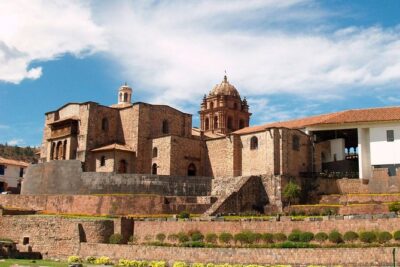
Coricancha is the first included admission and one of the most important stops. This was the Inca Empire’s main temple dedicated to the Sun. The Spanish later built the Santo Domingo convent directly over the original foundations, creating one of Cusco’s clearest examples of two eras occupying the same site.
Inside, your guide points out the difference between the tightly fitted Inca stonework and the colonial structure above it. The contrast is the real reason to visit. You are not simply looking at old walls. You are seeing how the Spanish reused a place that already held great religious and political importance.
The temple was once covered in gold and used for ceremonies, astronomy, and worship. The gold is gone, but the surviving foundations still show the scale and care given to the site.
You have about 30 minutes here. That is enough to understand the main story and inspect the stonework, though anyone fascinated by architecture may wish for longer. If Coricancha is high on your list, stay close to the guide and use the time for focused questions rather than trying to photograph every corner.
Sacsayhuaman, the major stop above the city
A vehicle takes you up to Sacsayhuaman, the largest and most impressive site on this route. Its enormous zigzag walls use huge stones fitted with remarkable precision. The familiar claim that you cannot slide a piece of paper between some stones is easy to understand once you are standing beside them.
Sacsayhuaman is valuable for both its construction and its setting. From the site, you get broad views over Cusco and the surrounding mountains. The guide explains its role in Inca battles and ceremonies, and you will also hear how the site remains central to the Inti Raymi festival.
This is the stop most likely to make you wish the schedule were slower. The planned 30 minutes gives you time to see the main walls, hear the explanation, and take photographs, but the site is large enough that a longer visit would reveal more. Keep that in mind if you are comparing this tour with a private option.
The vehicle transfer is useful here. Walking up from central Cusco would take more time and energy, especially for anyone still adjusting to the altitude. The tour does not promise a long hike, but you should still have a moderate level of fitness for uneven ground and short walks around the ruins.
Other ruins and collections around Cusco:
- Cusco: City Tour | Half-Day Tour to 4 Archaeological Sites
★ 4.6 · 206 reviews - City Tour in Cusco & visit Museum South American Camelid Private.
★ 5.0 · 147 reviews - Cusco City Sightseeing and Sacsayhuaman Archeological Park Tour
★ 4.5 · 101 reviews - Cusco: Historical Guided City Tour with 4 Inca Ruins
★ 4.5 · 99 reviews
Qenqo, a puzzle carved from rock
Qenqo is smaller and more mysterious than Sacsayhuaman. Much of the ceremonial center was carved directly from bedrock, including winding passages, channels, and hidden spaces that may have been used for rituals.
The name Qenqo means zigzag in Quechua, a fitting description of the site’s shapes and passageways. Your guide explains the different theories about how it was used rather than presenting one uncertain interpretation as fact. That makes the stop more interesting, since some parts of the site invite questions rather than offering clear answers.
You have about 30 minutes here. Watch your footing in the carved areas and stay with the group so you do not miss the guide’s explanation. Qenqo is a good example of why a guide helps: without context, it can look like an unusual rock formation. With an explanation of its possible ceremonial purpose, the carved details become easier to read.
Puka Pukara, a strategic roadside post
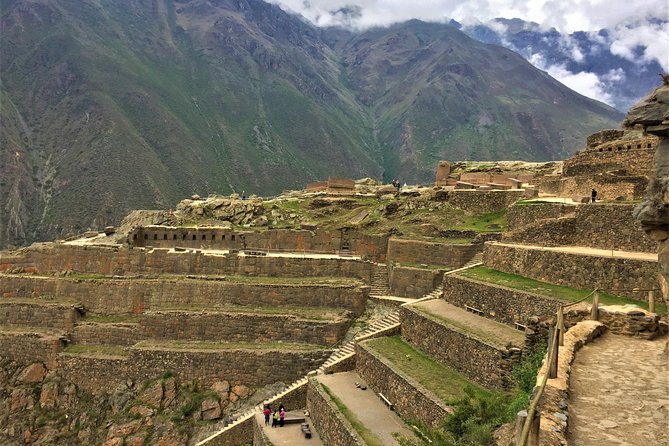
Puka Pukara means Red Fortress in Quechua. This compact site likely served as a military checkpoint and resting place along the route between Cusco, the Sacred Valley, and the jungle.
The ruins include terraces, walls, rooms, and guard positions. From here, you can look across the open scenery and imagine messengers and other travelers moving along the Inca road system. The site is less imposing than Sacsayhuaman, but its value is practical. It helps explain how the Inca capital was connected to the wider empire.
This stop is also a useful break in the rhythm of the tour. After the massive walls at Sacsayhuaman and the carved ritual spaces at Qenqo, Puka Pukara shows a more ordinary side of imperial control: watching roads, offering rest, and managing movement.
Admission is listed as free for this stop, while the Partial Tourist Ticket covers the Circuit I sites overall. Your guide keeps the visit to about 30 minutes, which is enough for a walk around the main remains and a few photographs.
Tambomachay and the sound of running water
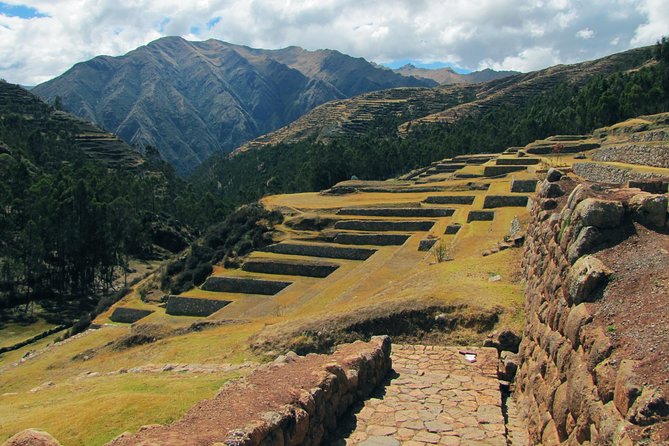
The final archaeological stop is Tambomachay, a peaceful site known for stone fountains, canals, and aqueducts. It is often called the Inca Baths, and it may have served as a place where Inca nobility rested and honored water.
The waterworks are the main attraction. Channels still carry clear water through carefully built stone features, showing the skill involved in controlling and directing it. After the larger walls and open views at the previous sites, Tambomachay feels quieter and more intimate.
Your guide explains the possible religious meaning of water and the role of the site in Inca life. You will have about 30 minutes to see the fountains, enjoy the fresh air, and take photographs before returning to Cusco.
This is a fitting end to the archaeological circuit. It does not try to overpower you with size. Instead, it leaves you with a closer look at engineering, ritual, and the Inca respect for natural resources.
What the $98 price really covers
At $98 per person, this is not the cheapest way to see Cusco’s ruins. The value comes from combining several costs and decisions into one booking.
You receive transport between the city and the outlying sites, hotel pickup and drop-off within the Historic Center, a professional guide, Coricancha admission, and the Partial Tourist Ticket for Sacsayhuaman, Qenqo, Puka Pukara, and Tambomachay. If you were arranging separate taxis and buying admissions yourself, the convenience would add up quickly.
The tour also saves planning time. You do not need to work out the order of the four hilltop sites, negotiate transport, or figure out how the ticket covers the circuit. For a first visit, that simplicity has real value.
Still, the price does not include the cathedral entrance, meals, snacks, or travel insurance. The cathedral is visible as part of the Plaza de Armas introduction, but an interior visit is not included. If you want to go inside, plan that separately.
The tour is strongest for someone who wants a well-organized overview. It is weaker for someone who prefers to linger, sketch, read every sign, or spend an hour at Sacsayhuaman alone.
Guides, group size, and the human side
The assigned guide is not named in the tour details, so you should not book expecting a particular person. The company has guides such as Katia, Jennifer, Roger, Leo, and Frank working on its Peru programs, and the descriptions of their work point to the qualities worth looking for: clear explanations, enthusiasm for Quechua culture, patience with questions, and careful attention when someone feels unwell.
That does not guarantee which guide you will receive on this city tour. It does suggest that the guide can make a large difference, especially at Qenqo and Coricancha, where the stones alone do not explain the site’s purpose.
The maximum group size is 16. That is a useful middle ground. You get the lower cost and shared transport of a group tour, but the guide should still be able to speak to the whole group without the strain of a large bus crowd.
Timing and practical preparation
The stated meeting point is the Plaza de Armas, and the listed start time is 1:00 pm. The activity ends back at the meeting point, although hotel pickup and drop-off are included for hotels in Cusco’s Historic Center.
The overview also describes morning or afternoon departure choices. Since the detailed schedule gives 1:00 pm, confirm the actual option offered for your date before making other plans.
Wear sturdy, comfortable shoes. You will walk through central Cusco and over uneven surfaces at the archaeological sites. A moderate fitness level is requested, so this is not designed for someone who needs a completely level, seated sightseeing program.
Bring water and sun protection, but do not expect meals or snacks to be provided. The tour is short enough that you can eat before or after it. Because the route reaches high sites above the city, take the walking requirement seriously even though the tour uses a vehicle between locations.
The tour is often booked well ahead, with an average booking time of about 45 days. That is useful to know if your Cusco schedule is fixed, especially during a busy travel period.
Who should book this Cusco tour?
I would choose this tour if you have limited time and want the main Cusco sights explained in one organized outing. It suits first-time visitors, couples, families, and anyone who would rather spend four to five hours learning the basic story than arranging several short visits independently.
It is also a good choice if you want both sides of Cusco: the colonial center and the Inca sites above it. Coricancha gives you the clearest architectural comparison, while Sacsayhuaman provides the big views and giant stonework.
I would look elsewhere if your priority is a slow, detailed archaeological visit. The 30-minute stops are efficient, but they leave little room for wandering. A private tour could offer more control, though likely at a higher price.
The cancellation terms are straightforward: cancel at least 24 hours before the start time for a full refund. Changes or cancellations made inside that window are not accepted for a refund.
Should you book it?
Book this tour if you want an efficient introduction to Cusco, value included transport and admissions, and prefer a guide to explain what you are seeing. The combination of Plaza de Armas, Coricancha, Sacsayhuaman, and the three smaller hilltop sites gives you a solid picture of Inca engineering, ceremony, roads, water management, and colonial reuse.
Skip it if you already know Cusco well or want to spend most of your day at Sacsayhuaman and Coricancha. For everyone else, the $98 buys a practical half-day route with a manageable group, strong headline sites, and enough context to make the stones mean something.
FAQ
How long does the Cusco City Tour last?
The tour lasts approximately four to five hours.
What time does the tour start?
The detailed tour schedule lists a 1:00 pm start at the Plaza de Armas. The tour information also refers to morning or afternoon departures, so confirm the available departure time when booking.
Where does the tour begin and end?
It begins at the Plaza de Armas in Cusco and ends back at the meeting point. Hotel pickup and drop-off are included for hotels in Cusco’s Historic Center.
What sites are included?
The route includes the Plaza de Armas, the 12 Angled Stone, Loreto Street, Coricancha, Sacsayhuaman, Qenqo, Puka Pukara, and Tambomachay.
Is the cathedral entrance included?
No. The cathedral entrance and interior visit are not included in the tour price.
How many people can join the tour?
The group can include a maximum of 16 travelers.
What is included in the $98 price?
The price includes hotel pickup and drop-off within Cusco’s Historic Center, entrance to Coricancha, the Partial Tourist Ticket for Sacsayhuaman, Qenqo, Puka Pukara, and Tambomachay, transport between the sites, and a professional guide. Meals, snacks, travel insurance, and cathedral entrance are not included.
More museums and ruins in Cusco
- City Tour in Cusco & visit Museum South American Camelid
★ 4.5 · 80 reviews - Cusco 4-Hour Private Tour Including Sacsayhuaman and Qenqo
★ 5.0 · 77 reviews - Half-Day City Tour of Cusco Including Tambomachay
★ 4.5 · 59 reviews - Sacsayhuaman Temple, Tambomachay and Puca Pucara Half-Day Tour
★ 4.5 · 59 reviews
Just added around Cusco
- Zipline over the Sacred Valley Trip★ 5.0 · 11 reviews
- Waqrapukara 1 day trekking + meals★ 3.9 · 3 reviews
- Visit Pisac from Cusco: Private Transport★ 4.6 · 9 reviews
- Valle Sur Cusco | half day★ 4.3 · 3 reviews
- Trek to Humantay Lake from Cusco★ 4.9 · 8 reviews
- Trek to Choquequirao 4 days★ 3.8 · 4 reviews
- rainbow mountain full day★ 5.0 · 44 reviews
- Machu picchu one day by train all included★ 4.5 · 53 reviews
Museums & Inca Ruins, compared.
Half-Day City Tour with Sacsayhuaman and Q’enco
Read our review →
City Tour Cusco Qoricancha Sacsayhuaman y Tambomachay
Read our review →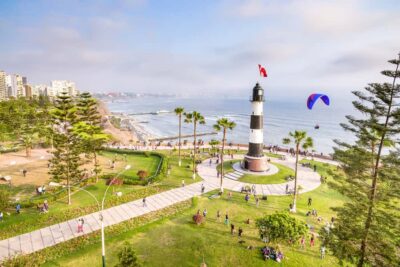
The Charm of Barranco & Pre Inca Pyramid in Miraflores
Read our review →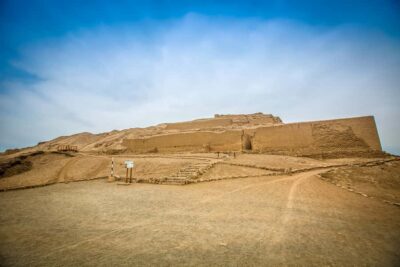
Pachacamac Ruins & Barranco Half-Day Guided Tour
Read our review →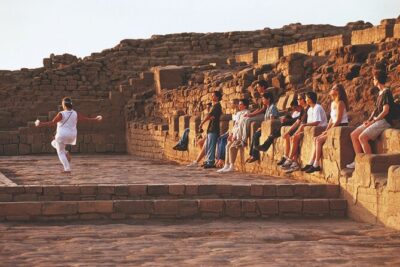
Pre Inca Temple of Pachacamac Half-Day Tour from Lima
Read our review →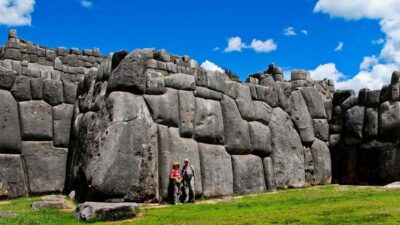
City Tour | Half-Day Tour to 4 Archaeological Sites
Read our review →
City Tour in Cusco & visit Museum South American Camelid Private.
Read our review →Browse the lists this tour appears in