
Reviewed · HISTORICAL TOURS
Arequipa: Walk through the Historic Center of the City
Arequipa’s best introduction may be a walk that mixes grand monuments with the small corners most visitors miss. This two-hour outing moves from the Cathedral and colonial cloisters to old tambos, cobblestone lanes, local traditions, and a final lookout facing the volcanoes.
I like the small groups of no more than six and the practical advice built into the walk. Guides such as Joss, Joseph, and Jose have pointed people toward restaurants, bars, museums, the San Camilo market, and other places to visit after the tour. The ending, often on a terrace or rooftop with a city view and sometimes a pisco sour, is another fine touch.
The main caution is that the quality depends heavily on the guide and the exact route. One guest felt the $15 price was high for a basic walk and wanted more explanation about buildings along the way. You should also expect steady walking on cobblestones, with the full outing lasting about two hours even though the walking portion is described as roughly an hour and a half.
Key points to know before you book
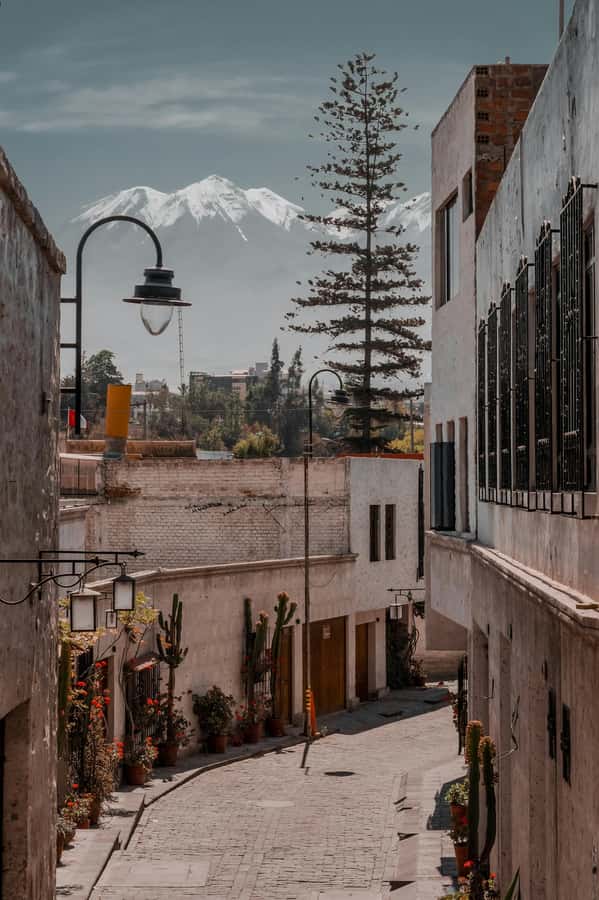
- The tour ends with volcano views: Look for Misti, Chachani, and Pichu Pichu from a city lookout.
- The group is capped at six: You get a more personal walk than on a large city tour.
- You visit more than the main square: The route includes the Cathedral, colonial cloisters, ancient tambos, and less familiar corners.
- Local advice is part of the value: Guides share restaurant, bar, museum, and Peru travel tips.
- Joss and Joseph receive especially warm praise: Their friendly, flexible approach has led to private tours when other bookings cancelled.
- Morning and afternoon departures are available: Pick a time that suits your arrival plans or your preferred light at the viewpoint.
Starting in San Lázaro, where Arequipa feels personal
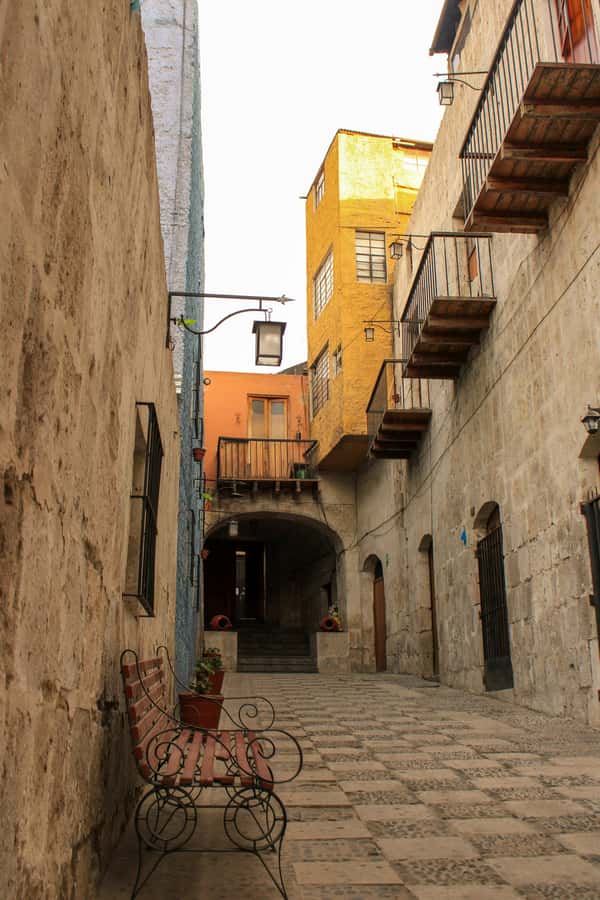
The meeting point is Campo Redondo in the San Lázaro area, at approximately -16.3934138, -71.5336117. This gives the walk a useful sense of place from the beginning. You are not simply dropped into a list of monuments. You start in one of Arequipa’s traditional areas before heading toward the main historic center.
The meeting point matters because Arequipa rewards orientation. Its streets can look similar at first, especially where white volcanic stone, low colonial buildings, and cobbles create a common visual rhythm. A local guide can help you connect the grand city center with the older residential corners around it.
The exact opening stops may vary, but the walk is built around five historical sites. The guide also adds stories, local legends, curious facts, and suggestions for the rest of your stay. That last part is especially useful if this is your first day in town. You can ask about restaurants, bars, museums, markets, and other places while you are already standing near them.
Other guided walks in Arequipa:
- Walking tour in the Historic Center of Arequipa
★ 4.4 · 180 reviews - Arequipa Walking Tour city center and drinks experience
★ 5.0 · 72 reviews - Arequipa: Walking Tour and Santa Catalina Monastery
★ 4.4 · 7 reviews
The Cathedral gives the walk its grand opening
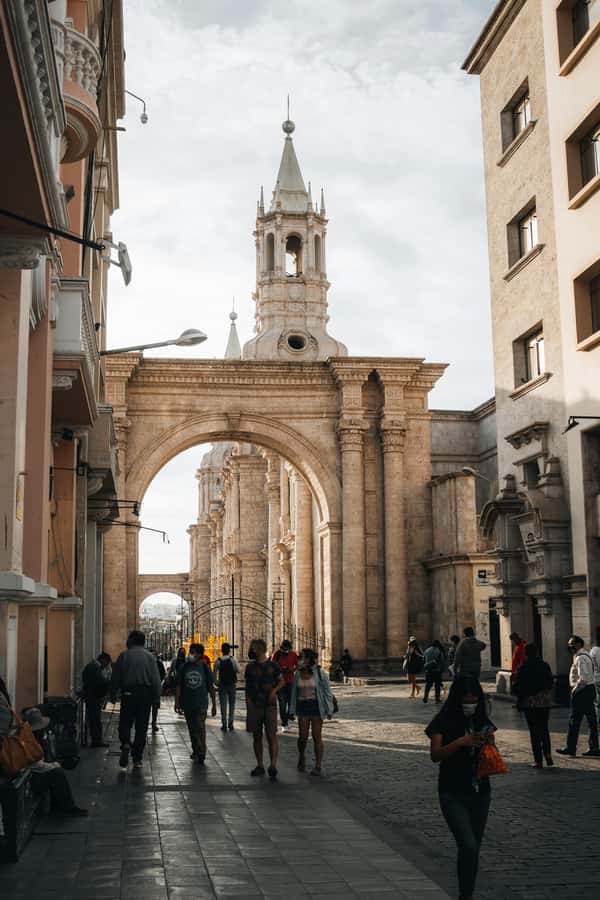
The Cathedral is presented as the first major stop, and it is an obvious choice. It anchors the city’s central square and gives you a clear introduction to Arequipa’s colonial architecture and religious history.
You should clarify what your ticket includes at this point. The tour description says the walk starts with a visit to the Cathedral, while one guest later took a separate guided Cathedral visit on the guide’s recommendation. That suggests the walking tour may explain the building from outside or include a limited visit, but the full interior experience may require another ticket or a separate tour.
That is not necessarily a weakness. The Cathedral can be easier to appreciate after you understand the city around it. A short explanation of its role, architectural details, and place in Arequipa’s public life can give you useful context before you decide if you want a longer visit.
The Cathedral stop also helps set the tone for the rest of the walk. You are not just collecting photographs. You are learning how Arequipa’s religious buildings, stonework, public spaces, and local traditions fit together.
Colonial cloisters show off the White City’s stonework
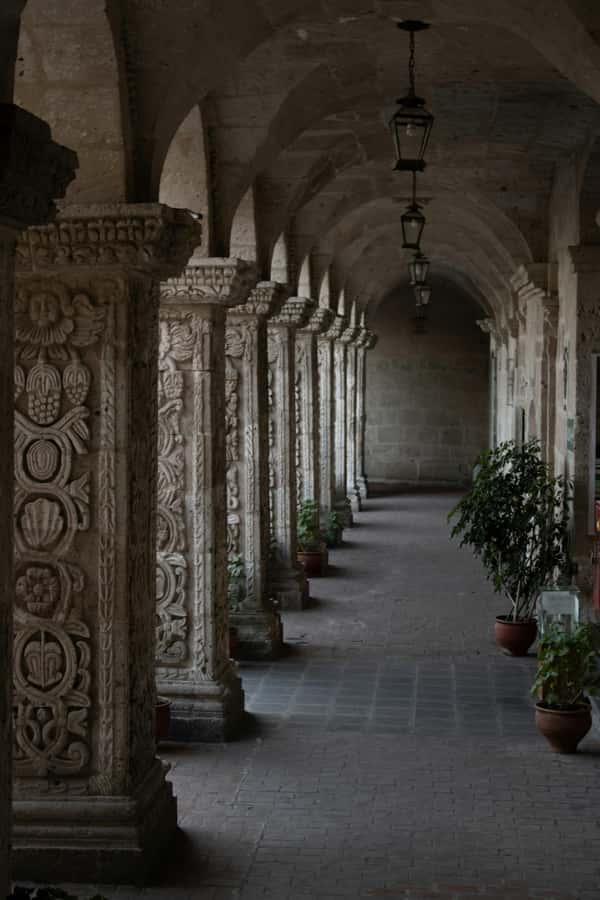
The next part takes you into colonial cloisters, where enclosed courtyards and arcades make the architecture easier to study at close range. Arequipa is known as the White City because many important buildings use pale volcanic sillar, and cloisters are among the best places to see how that material was shaped and decorated.
Here, look closely at the arches, carved details, proportions, and the way light falls across the stone. A guide can point out features you might walk past without noticing. The value is not only the setting itself, but the explanation of why these spaces were built and how they were used.
The pace should feel more thoughtful than a photo stop. You can ask about colonial influences, local building methods, and the cultural forces that shaped Arequipa. Joss has been praised for explaining architecture, geography, and cultural influences together, which is useful because the city makes more sense when those subjects are connected.
One limitation is that the amount of detail may differ from one guide to another. One guest felt there were stretches of walking without enough explanation about the streets and buildings passed along the way. If you want a lecture on every facade, say so early. The guide may be better able to adjust the balance between walking and commentary.
Tambos reveal the city beneath the monuments
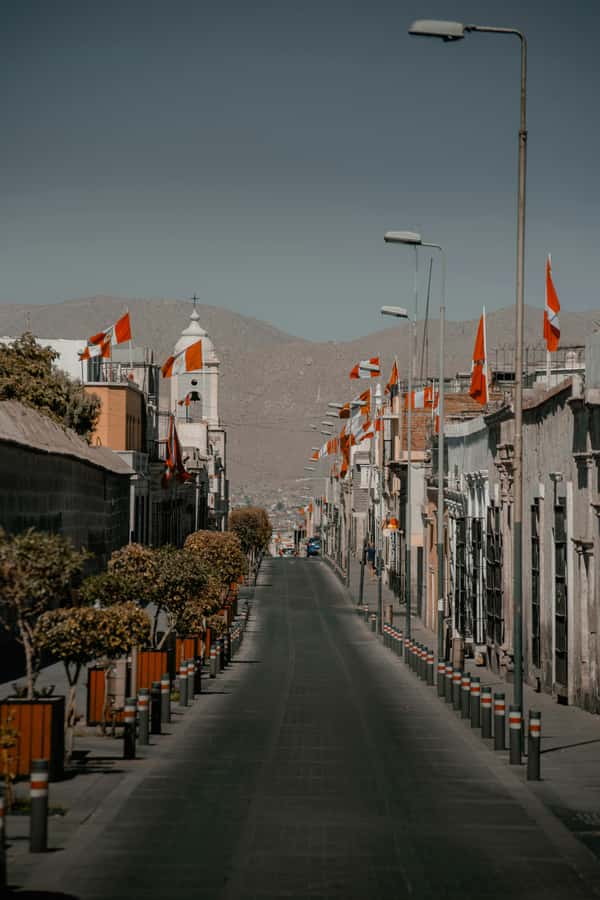
The tambos are among the more distinctive stops. These old lodgings were important to Arequipa’s life for centuries, and they offer a different view of the city from the formal Cathedral and cloisters.
A tambo helps you picture Arequipa as a working place, not only as a collection of churches and handsome stone courtyards. These sites are tied to movement, lodging, trade, and daily life. That makes them valuable for anyone who wants more than the usual central-square tour.
This is also where a local guide earns the $15 price. A plaque can tell you a date or a name. A guide can connect an old lodging place to stories, traditions, and the way people used the city. The tour promises legends and curious facts passed down through generations, so expect the storytelling to be part of the experience.
You may find the tambos less immediately grand than the Cathedral. Give them time. Their appeal comes from the sense of ordinary life and continuity, not from a single spectacular view.
More of the past around Arequipa:
- Arequipa, Historic and Colonial City and Santa Catalina Monastery
★ 4.5 · 42 reviews - Lima’s Vibrant Heritage: Exploring the City’s Landmarks Half-day
★ 4.5 · 581 reviews - Lima: Historic Center Street Food, Market, and Eateries Tour
★ 4.9 · 216 reviews - Historic Downtown, Miraflores & Catacombs Private Tour
★ 5.0 · 100 reviews
Cobblestone lanes bring out Arequipa’s everyday side
Between the principal stops, you walk through picturesque cobblestone streets and less familiar corners of the historic center. This is the part that can make the tour feel more personal than a standard monument circuit.
The route has included places such as the San Camilo market, along with museums, artwork, cafes, restaurants, bars, and other local stops. These additions are not guaranteed as a fixed list, so treat them as examples of the kind of contemporary and historical mix the guide may offer.
I like this format because it helps you plan the rest of your time. You can note a restaurant for dinner, a museum for a hot afternoon, or a bar with a good view. Several guests received restaurant and bar suggestions, and one guide shared contact details to help with later recommendations.
There is a tradeoff. A walking tour that pauses for conversation and local advice may cover fewer formal interiors than a tightly timed sightseeing itinerary. If you want to enter every major building, this may feel light. If you want to understand how the center works and find places you would not easily select online, the open-ended style is more useful.
Wear shoes that are comfortable on uneven streets. The description calls the hike approximately one and a half hours, while the activity lasts two hours, so allow time for stops, questions, and the final viewpoint.
Legends and local facts keep the history moving
The tour is not meant to be a dry list of dates. The guide shares traditions, legends, and curious facts while you walk. That can be the difference between looking at an old street and remembering it later.
Joss has been praised for answering questions about both Arequipa and the wider region. Other guests describe guides as friendly, punctual, and generous with advice. Joseph, who was described as born and raised in Arequipa, has also been praised for knowing less familiar places and explaining them clearly.
The strongest reports point to a guide who can adjust to the group. When other participants cancelled, Jose kept the booking for the remaining pair and gave them a private tour. Other small parties also ended up with a private outing. You should not book expecting a private tour, but a group capped at six already gives you a good chance to ask questions.
The experience is offered in English and Spanish. Some content may be presented in its original language, so if you need a point repeated or explained another way, ask. The small format makes that easier than it would be on a large bus tour.
The final viewpoint puts the volcanoes in context
The walk culminates at a lookout with views toward Misti, Chachani, and Pichu Pichu. This is more than a pleasant finish. The volcanoes help explain Arequipa’s setting and the importance of volcanic stone in its buildings.
The view can also change the way you see the center. After walking through white-stone architecture, narrow lanes, old lodgings, and crowded public spaces, you finally see the city as a whole. The volcanic peaks provide a clear sense of the place Arequipa occupies.
Some outings have ended at a rooftop or terrace where people enjoyed the sunset and pisco sours. That sounds like an excellent close, but the exact final venue and drink are not stated as fixed inclusions. Consider the promised viewpoint the dependable part, and any rooftop stop a possible bonus.
Morning and afternoon departures give you a choice. A morning walk may suit you if you want recommendations before planning the rest of your day. An afternoon outing may offer softer light near the end, though the exact view depends on the weather and departure time.
Is $15 a fair price for two hours?
At $15 per person, this is not a free walk, but it is still modestly priced for a small-group experience with a live guide. The value comes from access to local explanation, five historical sites, cultural stories, city advice, and a lookout rather than from transportation or an expensive admission package.
The price feels strongest when you use the tour as your first activity in Arequipa. You can ask what to do next, where to eat, and which museums or markets deserve your time. One guest called the advice useful enough to continue asking for help after the walk.
The value is less clear if you only want a fast overview of the central square. One person felt the price was high for a basic tour and wanted more information during some walking stretches. That is a fair concern. The route is not a nonstop stream of commentary, and the exact level of detail depends on the guide.
A small group helps justify the cost. Six people is enough for conversation but not so many that you disappear at the back. If fewer people book, the guide may still operate the walk, and you might receive a private or near-private experience.
Free cancellation up to 24 hours before the start and reserve-now, pay-later booking make it easier to fit into a changing Peru itinerary. Check the available starting times before committing, since the duration and schedule depend on the date.
Who should book this Arequipa walk?
I would choose this for a first day in Arequipa, especially if you want a local explanation before exploring alone. It suits curious walkers who enjoy architecture, stories, city views, and practical suggestions in equal measure.
It is also a good match for couples, solo visitors, and small groups who prefer conversation over a large organized outing. English and Spanish guiding make it accessible to a broad range of visitors, and the six-person limit keeps the experience personal.
You may prefer another option if you want a museum-heavy itinerary, a detailed explanation of every building, or a route with very little walking. The cobblestones and steady pace are part of the experience, not a minor detail.
Should you book it?
Book this walk if you want to get your bearings, learn how Arequipa’s architecture and volcanoes connect, and collect useful ideas for the rest of your stay. The best reasons are the small group, the local guides, the tambos and lesser-known corners, and the final view toward Misti, Chachani, and Pichu Pichu.
I would book it early in your visit and ask for plenty of detail as you go. If your guide is Joss, Joseph, or Jose, you can reasonably expect a friendly and flexible style based on the strong reports about them. Just keep your expectations realistic: this is a conversational city walk, not a full architectural seminar. At $15, it offers good value when you want context, local direction, and a pleasant way to see the historic center on foot.
FAQ
How long does the Arequipa walking tour last?
The activity lasts two hours. The walking portion is described as approximately one and a half hours, with the remaining time used for stops, explanations, questions, and the final viewpoint.
What sites are included?
The walk includes five historical sites, with the Cathedral, colonial cloisters, and ancient tambos specifically named. The route also includes cobblestone streets, lesser-known corners, stories, legends, and a viewpoint.
Where does the tour meet?
The meeting point is Campo Redondo in San Lázaro. The listed coordinates are -16.3934138, -71.5336117.
What languages are available?
The live tour guide service is available in English and Spanish. Some content may be presented in its original language.
How large is the group?
The tour is limited to six participants. If other people cancel, the experience may become a private or near-private tour, but that is not guaranteed.
Is the Cathedral visit included?
The tour starts with a visit to the Cathedral, but the provided information does not specify whether this means a full interior visit or an exterior explanation. A separate guided Cathedral tour may be recommended.
Does the tour include a pisco sour?
A pisco sour has been enjoyed at a rooftop or terrace at the end of some outings, but it is not listed as a guaranteed inclusion. The dependable ending is the viewpoint with views of Arequipa and its surrounding volcanoes.
Can I cancel the booking?
You can cancel up to 24 hours in advance for a full refund. Reserve-now, pay-later booking is also available to keep your plans flexible.
Just added around Arequipa
- From Arequipa: Pillones Waterfall and Stone Forest Day Trip★ 4.4 · 15 reviews
- Adventure Day in Arequipa: Pillones Waterfall + Rock Forest★ 4.2 · 25 reviews
- Arequipa: Walking Tour and Santa Catalina Monastery★ 4.4 · 7 reviews
- Arequipa Walking Tour and Santa Catalina Monastery★ 5.0 · 4 reviews
- Trekking, Waterfalls and Thermal Baths★ 4.5 · 47 reviews
- From Arequipa: Colca Valley & Thermal Baths Small-Group Trip★ 4.1 · 43 reviews
- Arequipa, Historic and Colonial City and Santa Catalina Monastery★ 4.5 · 42 reviews
- Arequipa: City Tour and Santa Catalina Monastery★ 4.5 · 6 reviews
Historical Tours, compared.
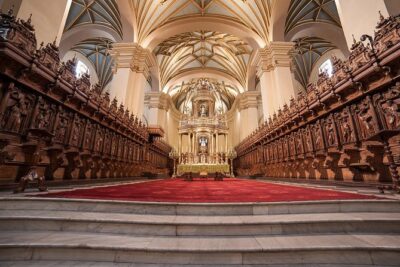
Lima’s Vibrant Heritage: Exploring the City’s Landmarks Half-day
Read our review →
Historic Center Street Food, Market, and Eateries Tour
Read our review →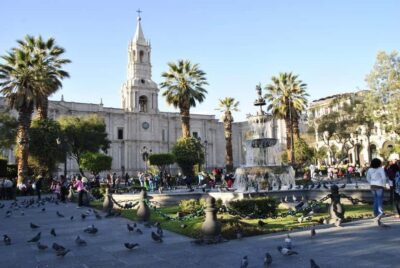
Walking tour in the Historic Center of Arequipa
Read our review →
Historic Downtown, Miraflores & Catacombs Private Tour
Read our review →
Machu Picchu Private Archaeological and Historical Guided Tour
Read our review →
Historic Walking Tour with Pisco Sour and Music Show
Read our review →Browse the lists this tour appears in