
Reviewed · SANTA CATALINA MONASTERY
Arequipa, Historic and Colonial City and Santa Catalina Monastery
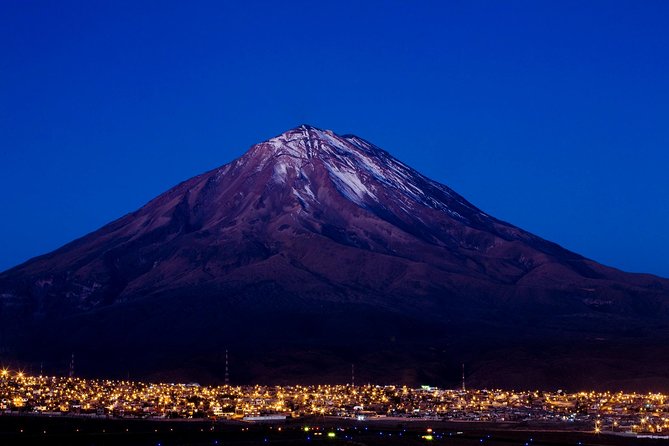
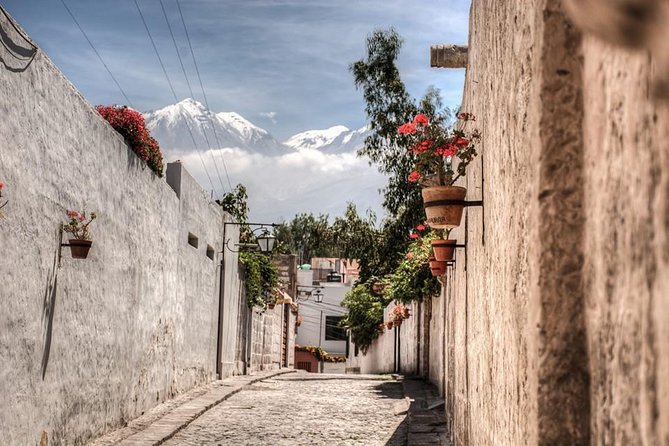
Santa Catalina Monastery is the heart of this Arequipa outing. Inside its painted walls, quiet plazas, narrow lanes, and gardens make the old convent feel like a small city enclosed within the city. You also get the Misti, Chachani, and Pichu Pichu volcanoes from hillside viewpoints, a fine introduction to Arequipa’s setting.
I like the way this tour combines sights that sit outside the center with major colonial landmarks downtown. I also like that the vehicle saves you from arranging taxis to Carmen Alto and Yanahuara, while the monastery admission is included. The main drawback is its heavy religious focus, with much of the walking time devoted to Santa Catalina and churches, so it may not suit visitors seeking food, markets, or museums.
Key points to know before you book
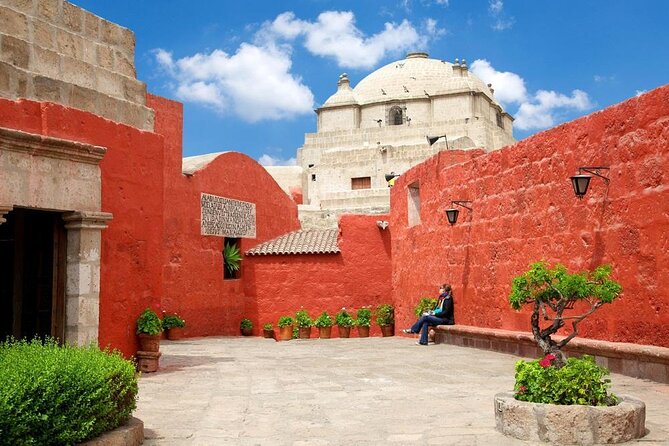
- Santa Catalina is the main event: Allow plenty of attention for its colored streets, courtyards, gardens, and former religious quarters.
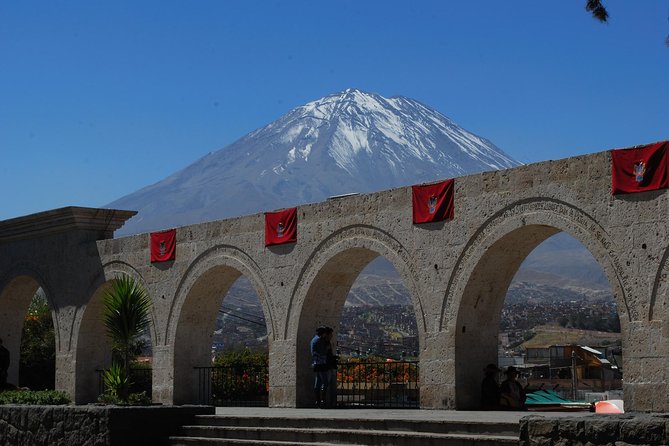
- Two strong viewpoints: Carmen Alto offers farmland and volcano views, while Yanahuara adds classic sillar arches and colonial architecture.
- A useful 2:00 pm start: The afternoon schedule works well if you have a free half-day, though the Cathedral tower may close before the final stop.
- Small-group format: The maximum is 15 people, giving the guide a better chance to answer questions than a large coach tour.
- Comfortable sightseeing: Hotel pickup, drop-off, and an air-conditioned vehicle let you cover more ground with less walking between districts.
- Dress with care: Shorts are not allowed in the religious sites, so wear long pants or a long skirt.
Why this half-day tour works in Arequipa
Arequipa is easy to admire but harder to understand at a glance. Its pale buildings, grand Plaza de Armas, volcanoes, and churches are attractive from the first look, yet the details make more sense when someone explains the local stone, colonial layout, and religious traditions.
This tour gives you that explanation while moving between several parts of the city. You begin beyond the central streets, see the countryside and volcanoes from above, then return to the old center for the sites most visitors come to Arequipa to see.
I find the format especially useful on a short stay. In about three and a half hours, you cover viewpoints, two historic districts, Santa Catalina Monastery, the Cathedral area, and the Church of the Society of Jesus. You will not have unlimited time at each place, but you get a solid first look without spending the afternoon arranging transport.
The group is capped at 15 people. That is small enough to keep the tour manageable, though the experience can still vary with the guide and with the language mix in the group. Guides including Charo, Jeymi, Sline, Kaitlin, and Victor have been praised for clear explanations, warmth, and strong language skills. One guide has handled English, Spanish, and Portuguese on the same outing, while another provided especially strong English interpretation.
Other convents and colonial houses around Arequipa:
- Arequipa: Walking Tour and Santa Catalina Monastery
★ 4.4 · 7 reviews - Arequipa: City Tour and Santa Catalina Monastery
★ 4.5 · 6 reviews - Arequipa Walking Tour and Santa Catalina Monastery
★ 5.0 · 4 reviews
Carmen Alto and the three volcanoes
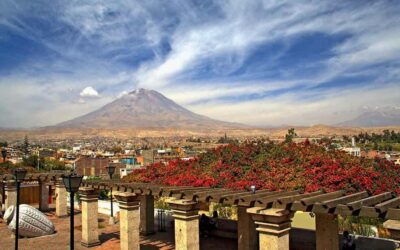
The tour begins with the Carmen Alto viewpoint, listed as the first major stop and usually part of the opening hour. This is where Arequipa’s setting becomes clear. Below you, farming terraces spread across the countryside, while three volcanoes frame the view: Misti, Chachani, and Pichu Pichu.
Misti is the familiar cone associated with Arequipa, but seeing all three volcanic peaks together gives you a better sense of the city’s surroundings. The viewpoint is also a practical reason to take the tour by vehicle. You can reach it without arranging a taxi or spending precious time walking out from the historic center.
Bring your camera, but keep expectations tied to the weather. February falls in the rainy season, and cloud can hide the volcanoes. A clear day gives you the best chance of seeing the peaks, while a gray afternoon still leaves the terraces and city setting worth the stop.
The Carmen Alto visit is more than a photo break. It places the colonial center in its larger setting and helps explain why volcanic stone is so central to Arequipa’s appearance. Your guide can connect the views with the city’s building traditions and the nearby agricultural areas.
Yanahuara’s arches and white volcanic stone
From Carmen Alto, the vehicle continues to Yanahuara, a colonial district known for its Andalusian-style church, pale buildings, and viewpoint. This is one of the prettiest parts of the route, and it feels different from the formal center around the Plaza de Armas.
Arequipa’s nickname, the White City, comes from sillar, a light volcanic rock used in many of its buildings. At the Yanahuara viewpoint, sillar arches frame views toward the city and volcanoes. The arches are architectural features, but they also make natural photo frames, so you will want a little time here even if you are not especially interested in church architecture.
The stop takes you beyond the main tourist streets, which is one of the tour’s better choices. You see a neighborhood with its own character rather than moving only between famous monuments. The guide’s comments help you notice the relationship between the church, local streets, stonework, and the wider view.
The two viewpoints serve different purposes. Carmen Alto gives you farmland and a broad rural setting. Yanahuara gives you a closer look at Arequipa’s colonial design and the way sillar shapes the city. Together, they make the first part of the tour feel varied rather than repetitive.
Santa Catalina Monastery, a city behind a wall
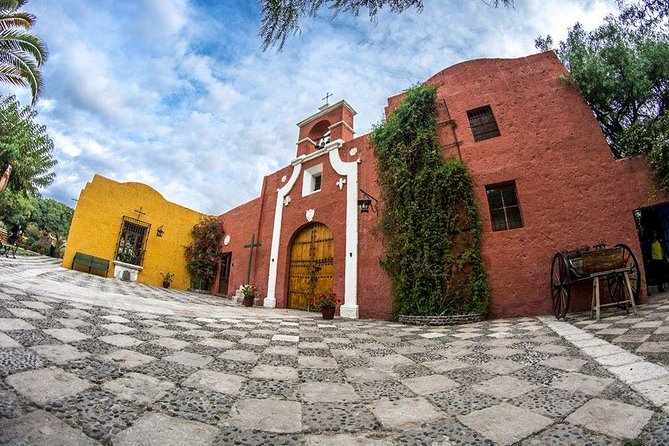
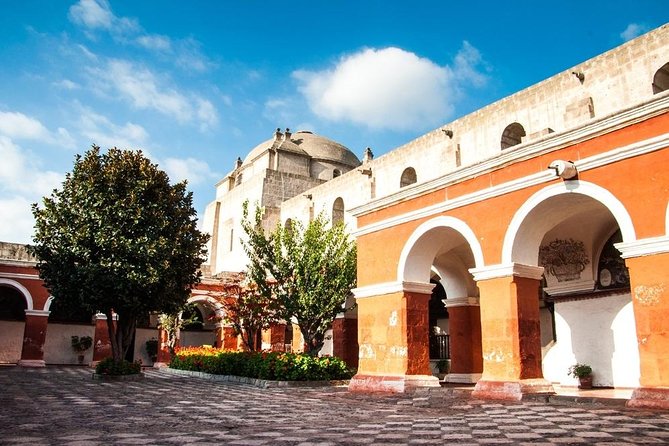
Santa Catalina Monastery receives the largest share of the tour’s attention, and rightly so. The Dominican religious complex was closed to the public for nearly 400 years. Once inside, you walk through an enclosed world of plazas, narrow lanes, painted walls, and gardens.
The layout is what makes the visit memorable. This is not one single church interior that you see and leave. The monastery is arranged like a small urban district, with passages and open spaces leading from one section to another. The colors and compact streets make comparisons with old quarters of Seville or Granada easy to understand.
A good guide adds context to details that might otherwise blur together. You will hear about the site’s religious purpose and its long period away from public view, while the guide points out how the rooms, courtyards, and lanes fit together.
The monastery can also feel repetitive if you prefer a quick visit. There are many similar walls, doorways, and cloistered spaces, and the tour schedule does not give you unlimited time to linger. I would treat the first few minutes as a chance to get oriented, then focus on the plazas, painted areas, gardens, and details your guide identifies as most important.
Admission to Santa Catalina is included, which matters because it is one of the more substantial paid sights in the city. One useful practical tip is to ask at the entrance if you need more time. The staff has sometimes allowed visitors to return at no extra cost, but you should confirm that possibility on the day rather than count on it.
The monastery portion can be guided in more than one language. English, Spanish, Portuguese, French, and German support has been available through guides on different departures, though you should confirm your preferred language when booking. If your group includes several languages, explanations may take longer.
More of the past around Arequipa:
- Walking tour in the Historic Center of Arequipa
★ 4.4 · 180 reviews - Arequipa: Walk through the Historic Center of the City
★ 4.9 · 87 reviews - Lima’s Vibrant Heritage: Exploring the City’s Landmarks Half-day
★ 4.5 · 581 reviews - Lima: Historic Center Street Food, Market, and Eateries Tour
★ 4.9 · 216 reviews
The Plaza de Armas and Arequipa’s Cathedral
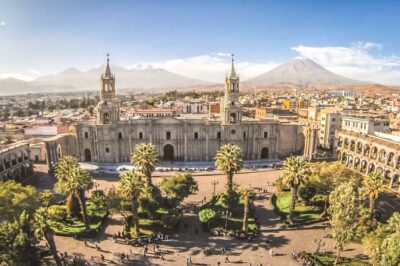
The route then returns to the Main Square, or Plaza de Armas. This is Arequipa’s grand central space, framed by arcades and the Basilica Cathedral. The Cathedral dates from the 16th century, and your guide explains its place in the city’s colonial development.
The square is an important contrast to Santa Catalina. The monastery feels enclosed and inward-looking, while the Plaza de Armas is open, formal, and built for public life. Seeing both in one afternoon gives you a useful sense of how religious and civic Arequipa developed side by side.
The Cathedral visit comes late in the scheduled route, around the final part of the tour. That timing creates one possible problem. The Cathedral tower and its views may close at 4:00 pm, while the tour can reach the area around 5:00 pm. If climbing the tower is important to you, ask the guide at the start if the order can be adjusted, or plan a separate visit.
The tour description promises the Cathedral and the arches around the square, but time may not allow every interior detail. I would consider the stop valuable mainly for the architecture, the guide’s explanation, and the position of the square within Arequipa’s old center.
Jesuit cloisters and the San Ignacio Chapel
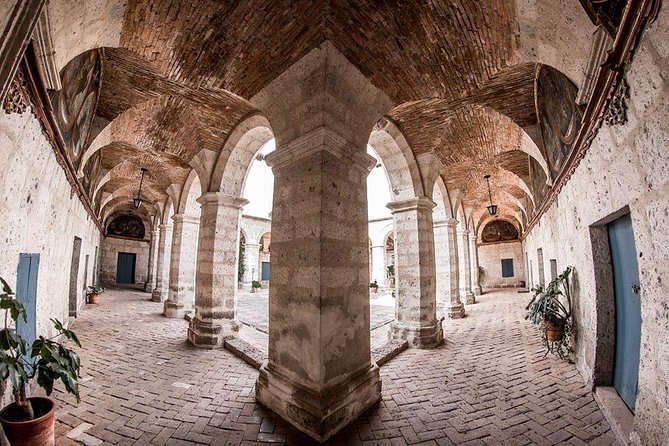
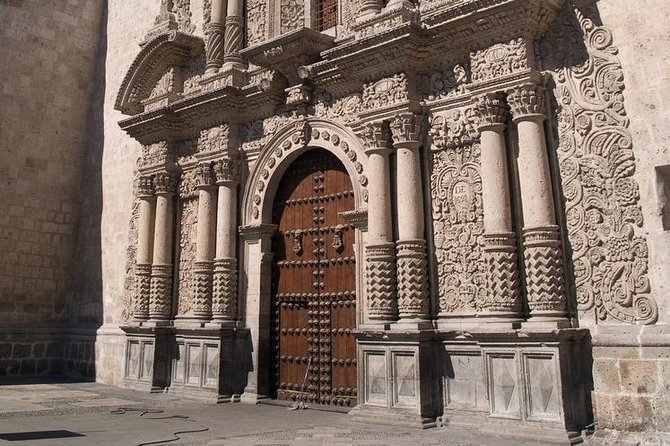
The final church visit is the Church of the Society of Jesus, often called Iglesia de la Compañía. The Jesuits founded it in the 17th century, and the complex is known for its cloisters and the San Ignacio Chapel.
The cloisters provide a calmer architectural counterpoint to the open Plaza de Armas. Look for the carved stonework and the painted decoration. The San Ignacio Chapel is particularly striking for its jungle imagery, including bird motifs that bring a distinctly Peruvian touch to an otherwise European religious setting.
This stop is also where the tour’s religious emphasis becomes most clear. Between Santa Catalina, the Cathedral, and the Jesuit church, roughly two thirds of the outing can feel connected to religious buildings. I appreciated the range of architecture, but if you are not interested in religious art or church history, you may find the latter part too focused.
The guide’s role matters here. A strong explanation helps you understand why the cloisters and chapel are worth seeing, instead of treating them as just another decorated interior. Guides have been praised for clear English, humor, and the ability to answer questions, though language ability can vary by departure.
What the $61 price includes
At $61 per person, this is not the cheapest way to walk around central Arequipa. It can still be good value if you want transport, a guide, and the monastery in one package.
The price includes hotel pickup and drop-off in Arequipa, an air-conditioned vehicle, and a professional guide. Most importantly, admission to Santa Catalina is included. You also avoid paying for separate taxis to Carmen Alto and Yanahuara, which makes the price easier to justify for solo visitors or anyone who prefers not to negotiate local transport.
The value is weaker if you are staying near the historic center, enjoy walking, and plan to visit only the Plaza de Armas and nearby churches. You could arrange some of those stops independently. The tour earns its cost through the combination of distant viewpoints, transport, and guided access to the monastery.
Food and drinks are not included. The tour lasts about three and a half hours, so eat before departure or plan your meal after returning to your hotel.
Timing, clothing, and guide style
The scheduled start is 2:00 pm. That gives you the morning for another activity, but it also means the tour runs into late afternoon. The timing is convenient for a relaxed first day, yet it creates the Cathedral tower issue noted above.
Wear long pants or a long skirt. Shorts are not allowed in the religious sites, and this is an easy rule to overlook in Arequipa’s mild daytime weather. Comfortable shoes are sensible because you will walk through the monastery, viewpoints, plazas, and church areas.
You will spend part of the tour in the vehicle and part on foot. The driving helps connect districts, but the main sights still require walking over historic surfaces and through narrow passages. The tour is described as suitable for most people, though the information does not provide a detailed mobility assessment.
Guide quality has been one of the strongest parts of this experience. Charo has been singled out for making the city tour especially engaging. Jeymi has been praised for a good explanation of the sights, while Sline has guided in English, Spanish, and Portuguese. Kaitlin has been noted for spending extra time on historical details. These names do not guarantee who will lead your departure, but they show the range of guide styles associated with the tour.
Who should book this Arequipa tour?
I would choose this tour if you have only one afternoon in Arequipa, want to see the volcano viewpoints, or prefer having transport arranged. It also suits visitors who want the story behind the buildings rather than simply taking photographs and moving on.
It is a strong match for couples, families, and solo visitors who appreciate a structured route. The group limit of 15 keeps it more personal than a large bus outing, and the included monastery admission removes one of the day’s major planning tasks.
I would hesitate if your main interests are local food, shopping, archaeology, or free time in cafés. The religious content is substantial, and the monastery visit can feel long if you are not drawn to architecture or church history.
Should you book it?
Book it if Santa Catalina Monastery is high on your list and you want to pair it with Yanahuara, Carmen Alto, the Cathedral, and the Jesuit cloisters in a single afternoon. The best value comes from the transport plus monastery admission, especially for a short stay.
Before paying, confirm the pickup details and preferred language, then ask about the Cathedral tower timing. Also remember that one serious missed-pickup complaint involved a date mix-up, so check your confirmation carefully and contact the operator if anything looks unclear.
Free cancellation is available up to 24 hours before the 2:00 pm start. Inside that window, changes and refunds are not accepted. If you want a fast, guided introduction to Arequipa with one major paid sight included, this is a sensible choice. If you prefer to set your own pace and avoid churches, spend the $61 on independent visits instead.
FAQ
What time does the tour start?
The tour starts at 2:00 pm local time.
How long does the experience last?
The tour lasts approximately three hours and 30 minutes.
Is hotel pickup included?
Yes. Hotel pickup and drop-off in Arequipa are included.
Is transportation provided between the sights?
Yes. The tour uses an air-conditioned vehicle to connect the viewpoints, districts, and historic center.
Is admission to Santa Catalina Monastery included?
Yes. Admission to the Monastery of Saint Catherine is included.
What should I wear to the religious sites?
Wear long pants or a long skirt. Shorts are not allowed in the religious places visited on the tour.
How many people can join the tour?
The maximum group size is 15 travelers.
Just added around Arequipa
- Adventure Day in Arequipa: Pillones Waterfall + Rock Forest★ 4.2 · 25 reviews
- From Arequipa: Pillones Waterfall and Stone Forest Day Trip★ 4.4 · 15 reviews
- Trekking, Waterfalls and Thermal Baths★ 4.5 · 47 reviews
- From Arequipa: Colca Valley & Thermal Baths Small-Group Trip★ 4.1 · 43 reviews
- Arequipa: City Tour and Santa Catalina Monastery★ 4.5 · 6 reviews
- From Arequipa: Colca Canyon & La Calera Thermal Waters★ 4.3 · 15 reviews
- Arequipa: Pub Crawl with Skip-The-Line Access and Drinks★ 3.0 · 4 reviews
- Arequipa: Walking Tour and Santa Catalina Monastery★ 4.4 · 7 reviews
Santa Catalina Monastery, compared.
Browse the lists this tour appears in