
Reviewed · HISTORICAL TOURS
Walking tour in the Historic Center of Arequipa
Arequipa’s white-stone historic center is best understood on foot, and this tour adds an unexpected country break to the city walk: you leave the colonial streets to see llamas, alpacas, suri, and vicuñas at Mundo Alpaca. The route also reaches Puente Grau, where Misti, Chachani, and Pichu Pichu may appear beyond the city.
I like the tour’s useful mix of grand sights and ordinary local details. You get the Plaza de Armas, Company cloisters, old mansions, gardens, and San Lazaro, while guides such as Edgar, Johan, Beatriz, and Jorge Echeandia bring in food, religion, current city life, and plenty of humor. The low booking price is attractive, but the voluntary tip matters: one recent visitor was told to budget 30 to 50 soles per person, so clarify the expected amount before you start.
Key points at a glance
- See Arequipa’s main square first: Learn how the Plaza de Armas, its arches, and surrounding portals shaped the city.
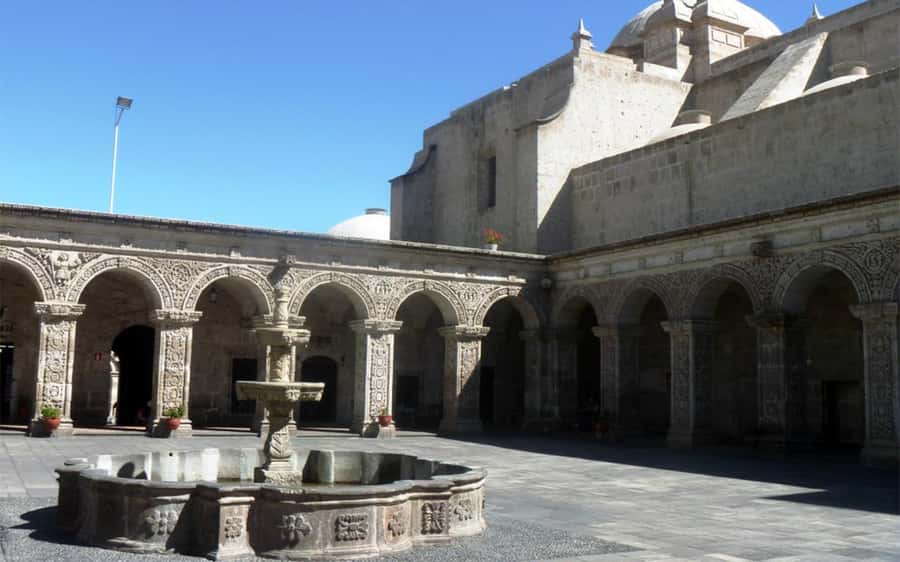
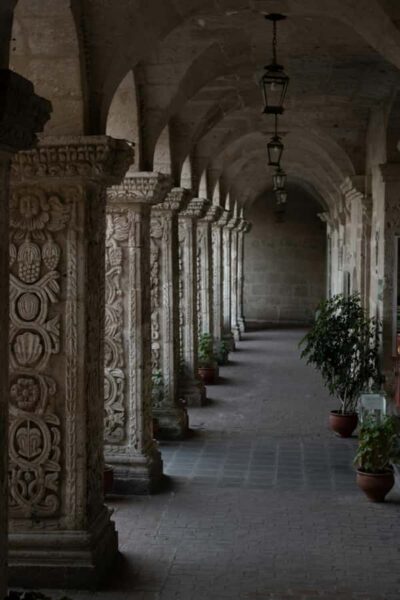
- Look inside the Company cloisters: This is one of the tour’s best stops for carved stone and colonial architecture.
- Meet Andean camelids in the city: Mundo Alpaca includes llamas, alpacas, suri, and vicuñas, with fabric shopping available.
- Catch volcano views from Puente Grau: Misti, Chachani, and Pichu Pichu are the major sights when visibility is good.
- Walk through San Lazaro: Visit the area described as the first settlement of the White City.
- Plan for the tip: The $10 payment reserves your place, while the guide’s tip helps cover guiding and site maintenance costs.
Why this two-hour walk works as an Arequipa introduction
I would use this tour early in an Arequipa stay. It begins one block from the Plaza de Armas and returns near the same spot, so you quickly learn the central streets before setting off on your own. The route is also broad enough to give you several useful reference points, from Santa Catalina Street to San Lazaro and Puente Grau.
The tour lasts about two hours on paper, though one recent booking took roughly two and a half hours. That extra time can be welcome if the guide is answering questions, but you should not expect a slow photography walk. One visitor found the pace rushed and had little time for pictures at each stop.
You walk the whole way. There is no vehicle transfer between the sights, and that is part of the appeal. You see courtyards, street corners, old gardens, and city life that can disappear when you move from one major attraction to the next by taxi.
Other guided walks in Arequipa:
- Arequipa: Walk through the Historic Center of the City
★ 4.9 · 87 reviews - Arequipa Walking Tour city center and drinks experience
★ 5.0 · 72 reviews - Arequipa: Walking Tour and Santa Catalina Monastery
★ 4.4 · 7 reviews
Meeting at Santa Catalina Street 204
The meeting point is Santa Catalina Street 204, about one block from the Plaza de Armas. The guide is meant to hold an umbrella, making the person easier to spot in the busy center. The published coordinates are -16.3967191, -71.53667879999999.
I would arrive a little early and keep the operator’s contact details handy. One group had trouble at the start because the guide was not at the meeting point and the organizer did not answer immediately. The issue was eventually fixed, and the tour went ahead, but it is a useful reminder to confirm the exact location and guide before setting out.
English and Spanish tours are available. The guide names appearing in recent bookings include Edgar, Johan, Beatriz, Francisco, and Jorge Echeandia. Do not assume you will receive a particular guide, but these names give you an idea of the local team. The strongest part of the experience, again and again, is the guide’s ability to explain Arequipa in a lively way rather than reciting dates.
Starting with the Plaza de Armas
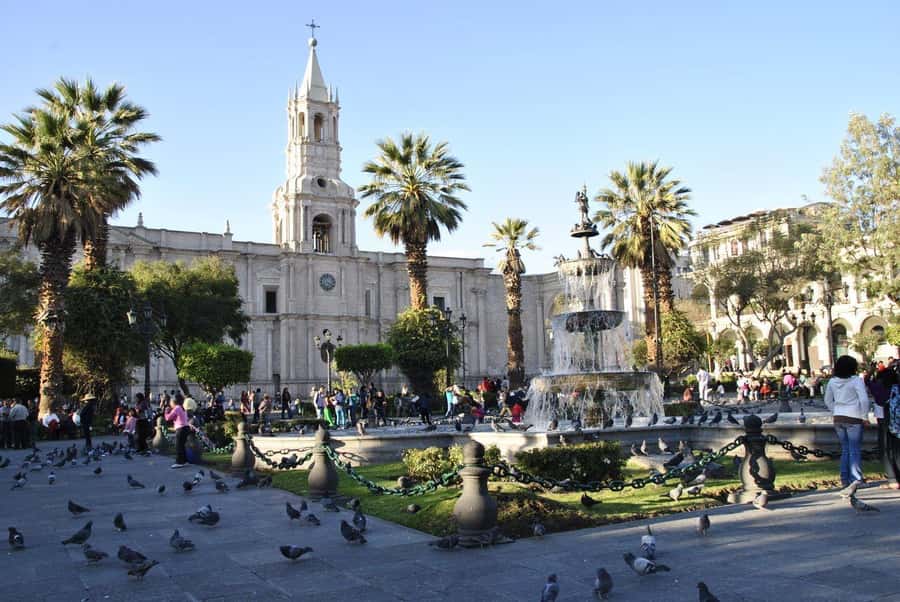
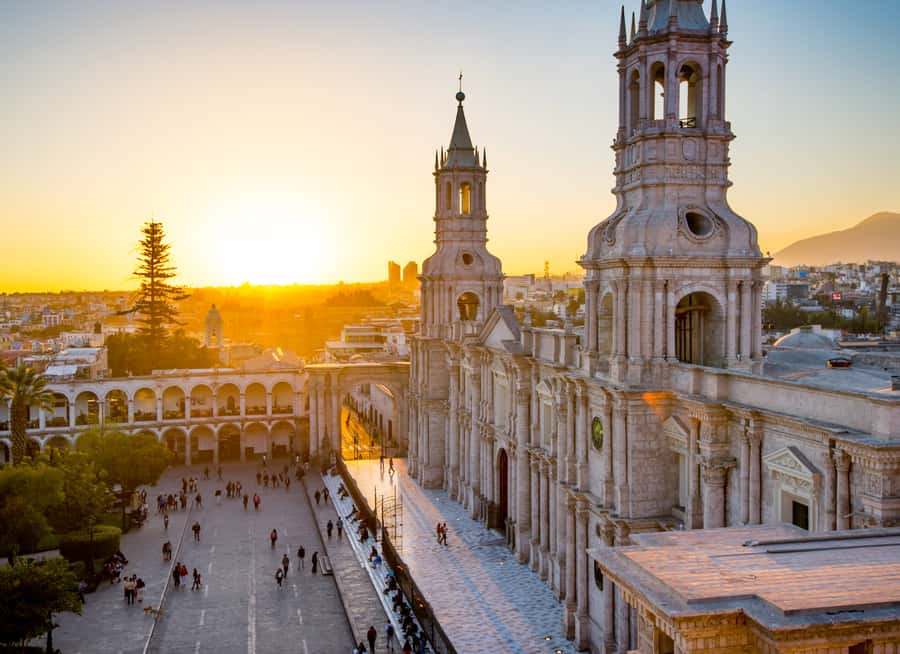
The first stop focuses on Arequipa’s main square. The guide explains the history of the Plaza de Armas and points out the traditional arches and portals around it. This is a good place to begin because the square is not just a pretty open space. It is the city’s clearest meeting point, and its surrounding buildings help you read the scale and character of the old center.
Look closely at the light-colored volcanic stone used in the architecture. The tour gives you a starting point for noticing how the stone appears in churches, mansions, cloisters, and street details. I like this opening because it turns the square from a place where you simply take photos into a place you can understand.
The guide may also connect the formal center with present-day Arequipa. One booking described learning about a long line of people waiting to renew national identity cards. Details like this help link the historic setting with the city you are actually visiting today.
The Company cloisters and colonial details

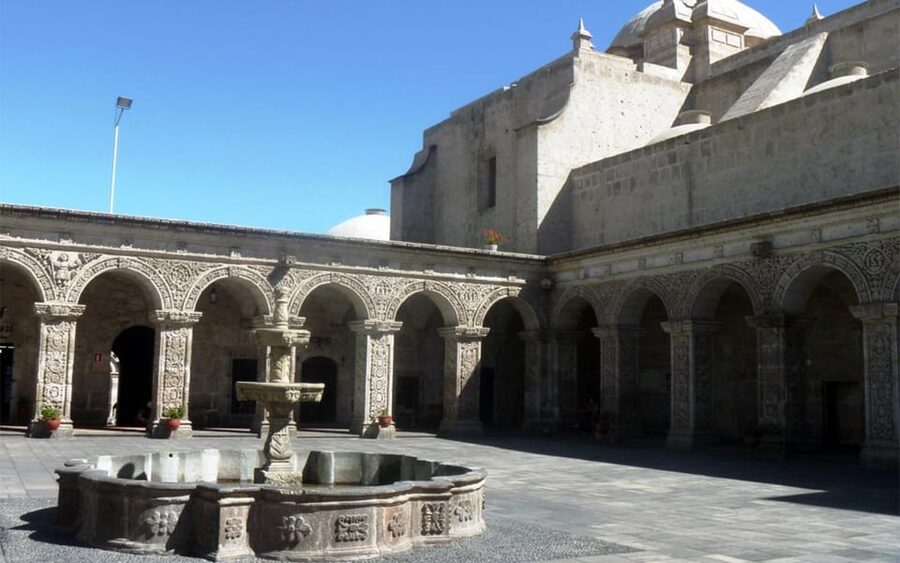
The cloisters of the Company are one of the most appealing architectural stops. Rather than seeing only a church facade from the street, you get a chance to look at an interior space with the quiet proportions and carved details associated with colonial religious architecture.
This is the sort of stop where a guide adds real value. Religious symbols, artwork, and architectural details can be hard to interpret on your own, especially if you do not know the difference between decoration and religious meaning. Beatriz was praised for explaining the religious architecture and art clearly, while other guides have filled the route with stories about buildings and local customs.
The drawback is time. A two-hour walk covering many places cannot give you a full museum-style visit at every stop. If the cloisters especially interest you, slow down mentally, take in the main details, and return later for a longer look if your schedule allows.
More of the past around Arequipa:
- Arequipa, Historic and Colonial City and Santa Catalina Monastery
★ 4.5 · 42 reviews - Lima’s Vibrant Heritage: Exploring the City’s Landmarks Half-day
★ 4.5 · 581 reviews - Lima: Historic Center Street Food, Market, and Eateries Tour
★ 4.9 · 216 reviews - Historic Downtown, Miraflores & Catacombs Private Tour
★ 5.0 · 100 reviews
Old mansions, gardens, and small city views
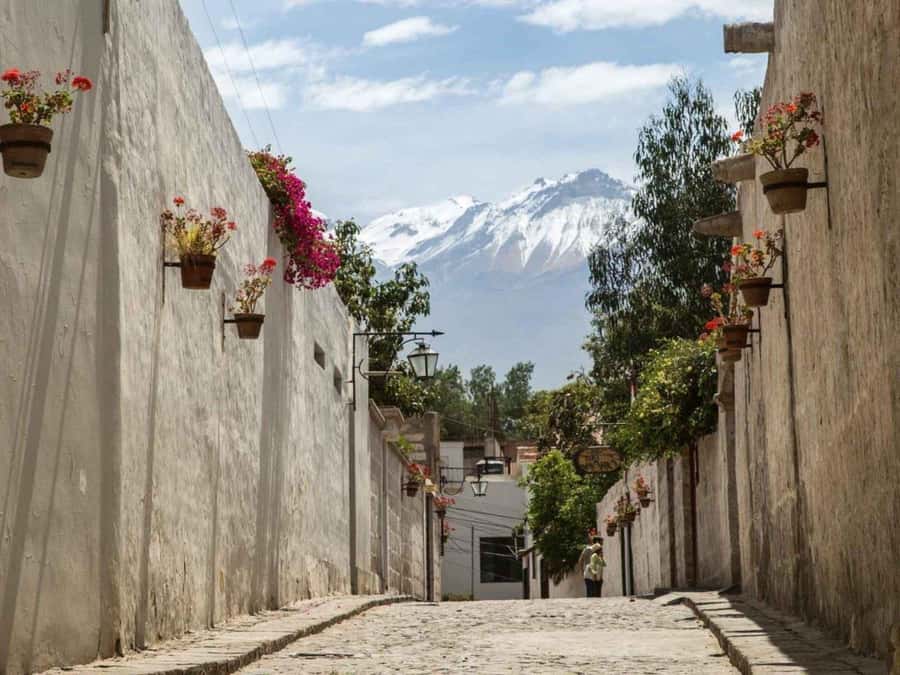
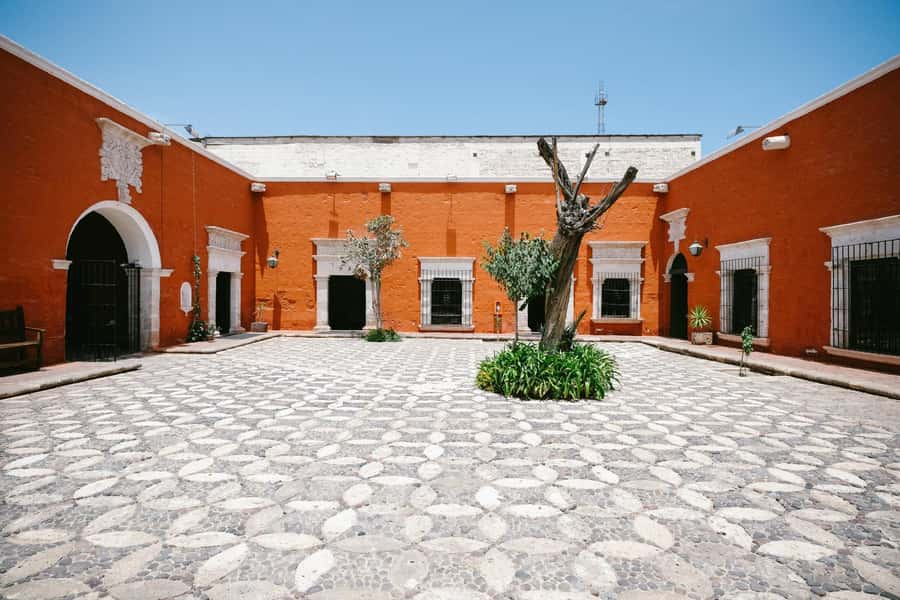
After the central square and cloisters, the route moves through older streets, mansions, and gardens near the center. These sections may feel less famous than the Plaza de Armas, but they are important to the way Arequipa feels as a city.
You are not simply checking off monuments. You are watching the change from formal public architecture to quieter residential spaces. Old gardens offer a break from the stone streets, and the walk gives you a better sense of how the historic center is arranged.
Some guides add food-related information along the way. One booking praised a detailed discussion of Peruvian food and market life, and another mentioned tasting cocktails and frozen cheese, a local-style sweet treat. These extras are not guaranteed parts of every departure, so treat them as possible additions rather than promised inclusions.
A guide may also point out places for later meals. That can be especially useful after the tour, since you can ask for advice based on the area you plan to explore next. The tour is not a food walk, but food and daily life may appear naturally in the conversation.
Volcano views from Puente Grau
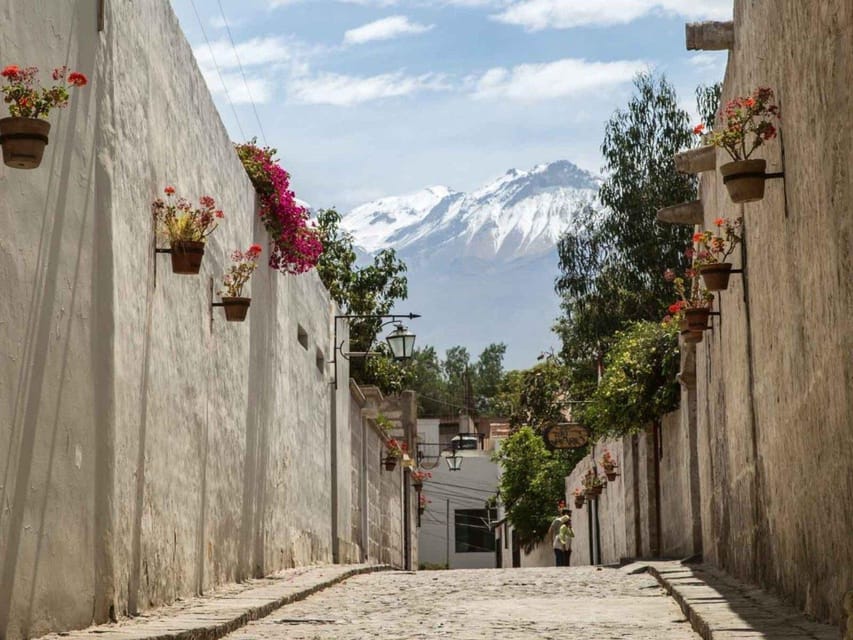
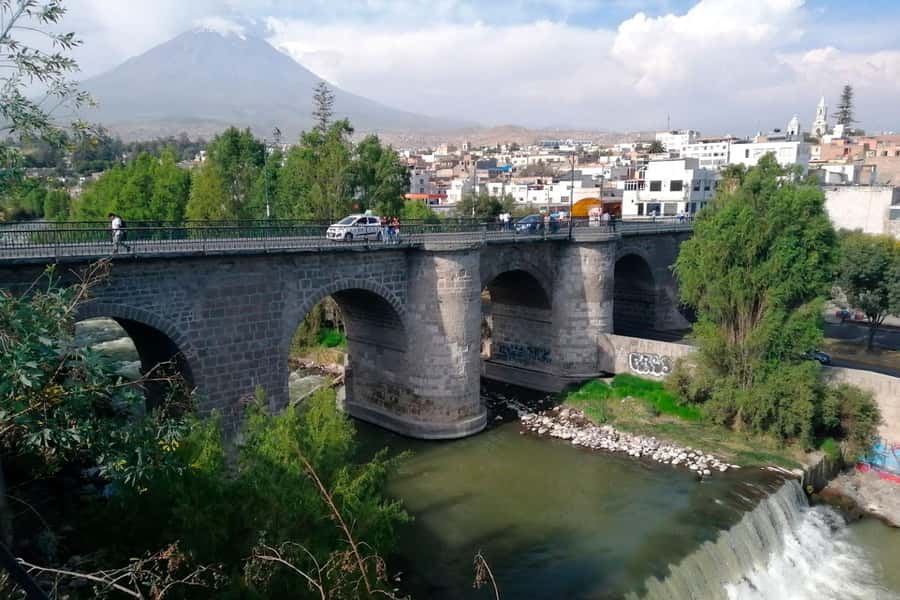
Puente Grau provides one of the route’s clearest changes of mood. You leave the enclosed feel of the old streets and reach a strategic viewpoint over the city. On a clear day, you may see Misti, Chachani, and Pichu Pichu, the volcanoes most closely linked with Arequipa’s setting.
Visibility is the key variable. The tour can take you to the viewpoint, but it cannot guarantee cloud-free volcanoes. Bring your camera, yet do not judge the stop only by whether all three peaks appear. The guide can still explain the relationship between the city and the surrounding peaks, and the bridge offers a useful visual pause in the walking route.
Several bookings singled out the volcano views as a highlight. If you want a long photo session, tell the guide early. The normal pace is designed to cover several attractions, and one person found that photo time was limited.
Mundo Alpaca, a surprising city stop
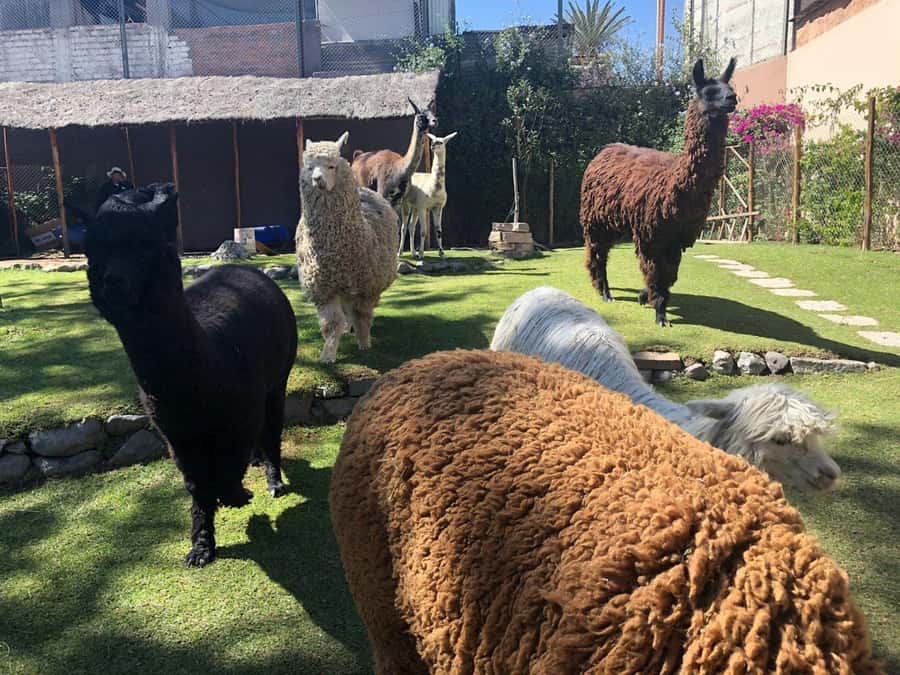
Mundo Alpaca adds something you do not expect from a historic-center walk. The stop includes an old breeding area for camelids such as llamas, alpacas, suri, and vicuñas. You may also see young animals, and one booking especially enjoyed seeing a baby llama and alpaca.
This visit gives you a simple way to understand the animals behind many Andean textiles. You can also buy fabrics made from the same fibers if you wish. Shopping is optional, so you can focus on the animals and the explanation without treating the stop as a required purchase.
I like this part because it widens the tour beyond stone buildings and church history. Arequipa is not only a colonial center. It is also connected to Andean materials, livestock, clothing, and regional trade. Mundo Alpaca makes those links tangible.
Still, keep the setting in perspective. This is a small camelid attraction within a city tour, not a full rural farm visit or wildlife excursion. If you are mainly interested in architecture, it may feel like a detour. If you want variety, it is one of the route’s most memorable surprises.
San Lazaro and the city’s early beginnings
The walk continues to San Lazaro, described as the first town where the White City was founded. This neighborhood gives the tour a more intimate ending than another grand church or formal plaza would.
San Lazaro helps you see Arequipa as a place that grew outward from early settlements. Its streets and older buildings provide a different feel from the broad Plaza de Armas. Your guide can explain why the area matters and how it fits into the city’s beginnings.
I would pay attention to the transition between the main center and San Lazaro. It is one of the better parts of the tour for understanding the city’s shape. You are not just visiting an isolated historic attraction. You are walking between districts and seeing how the old city connects together.
The official route returns to the area near Santa Catalina Street 204 and the Plaza de Armas. That is convenient. You can continue to lunch, visit a museum, or use the square as your base for the rest of the afternoon.
Santa Catalina Convent and Juanita mummy options
The walking route passes near major paid attractions, including the Santa Catalina Convent and museums such as the Juanita mummy museum. You may be able to enter one of these places by prior arrangement, but the supplied information is not fully consistent about admission.
The general description says visits can be arranged with an extra charge, including separate internal guides. The included section says entrance to the places visited is included. I would not rely on the $10 reservation covering these optional attractions. Ask before the tour begins which entries are planned, what costs extra, and whether you need to pay a separate guide.
This matters because Santa Catalina Convent and the Juanita museum each deserve more than a quick pass if you choose to enter. Adding one could make the outing longer than two hours, particularly if the group has questions or the site requires its own guide.
For a first orientation, I would usually take the walking tour as the main experience and return to Santa Catalina separately if it interests you. That gives you more time inside one of Arequipa’s major sights instead of trying to squeeze everything into one short route.
Price, tips, and real value
The listed price is $10 per person, but this is not a fully all-inclusive paid tour in the usual sense. The explanation says the reservation fee is low because it mainly covers the booking, followed by a voluntary tip for the guide and operating costs, including maintenance at places visited.
One recent booking said the suggested tip was 30 to 50 soles per person. That is a meaningful addition, especially for a family or group. The word voluntary matters, but you should budget honestly and ask what the guide expects. The final cost may still be good value if you receive a two-hour private-feeling explanation of the city, access to several sites, and useful advice for the rest of your stay.
The rating attached to the experience is 4.4 from 180 reviews, with strong praise for the guides’ humor, local detail, history, and ability to answer questions. The practical takeaway is simple: the guide makes or breaks this tour. Edgar was praised for combining history with current city details and a rooftop view, while Johan was described as funny and engaging. Jorge Echeandia received praise for fitting a great deal into a short time.
Who should book this walk?
I would recommend it to a first-time Arequipa visitor who wants orientation before exploring alone. It suits you especially well if you enjoy history but also want animals, city views, food discussion, and ordinary local details in the same outing.
It is also a strong choice if you have only a short stay. In about two hours, you cover the main square, colonial architecture, older neighborhoods, a volcano viewpoint, and Mundo Alpaca. That is a lot of ground without needing a bus or taxi.
You may want a different plan if you prefer leisurely photography, long museum visits, or a tightly timed private tour. The route can feel rushed, and the tip system needs clarification. You should also avoid booking it only for volcano photos, since clouds can block the peaks.
Final call: Is this Arequipa walking tour worth it?
Yes, with two conditions: confirm the tip expectation and accept that this is a brisk orientation walk, not a slow architectural study. The mix is unusually good. You get Arequipa’s grand center, quiet older streets, religious art, volcano views, camelids, and San Lazaro in one compact outing.
Book it near the start of your stay if you want help finding your way around. Skip it if you already know the center well or plan to spend the day inside Santa Catalina Convent and the museums. For most first visits, the low reservation price and lively local guiding make this a practical way to get your bearings fast.
FAQ
How long does the walking tour last?
The stated duration is about two hours. One recent booking lasted around two and a half hours, so allow a little extra time if the guide takes questions or adds explanations.
Where does the tour meet?
Meet at Santa Catalina Street 204, about one block from the Plaza de Armas. The guide should be holding an umbrella, and the coordinates are -16.3967191, -71.53667879999999.
Which languages are available?
The tour is offered in English and Spanish.
Does the tour include entrance fees?
The information is inconsistent. The included section mentions entrance to places visited, while the description says entry to Santa Catalina Convent and other museums can be arranged for an extra cost, with separate internal guides. Confirm the exact admission arrangements before starting.
Is the $10 price the total cost?
The $10 charge is described as a reservation payment. You are then expected to give a voluntary tip to the guide, and one booking reported a suggested amount of 30 to 50 soles per person.
Can I cancel the booking?
You can cancel up to 24 hours in advance for a full refund. The booking option also allows you to reserve now and pay later.
Just added around Arequipa
- Adventure Day in Arequipa: Pillones Waterfall + Rock Forest★ 4.2 · 25 reviews
- From Arequipa: Pillones Waterfall and Stone Forest Day Trip★ 4.4 · 15 reviews
- Arequipa, Historic and Colonial City and Santa Catalina Monastery★ 4.5 · 42 reviews
- Arequipa: City Tour and Santa Catalina Monastery★ 4.5 · 6 reviews
- From Arequipa: Colca Canyon & La Calera Thermal Waters★ 4.3 · 15 reviews
- Arequipa: Pub Crawl with Skip-The-Line Access and Drinks★ 3.0 · 4 reviews
- Arequipa: Walking Tour and Santa Catalina Monastery★ 4.4 · 7 reviews
- Arequipa Walking Tour and Santa Catalina Monastery★ 5.0 · 4 reviews
Historical Tours, compared.
Lima’s Vibrant Heritage: Exploring the City’s Landmarks Half-day
Read our review →
Historic Center Street Food, Market, and Eateries Tour
Read our review →
Historic Downtown, Miraflores & Catacombs Private Tour
Read our review →
Machu Picchu Private Archaeological and Historical Guided Tour
Read our review →
Historic Walking Tour with Pisco Sour and Music Show
Read our review →Browse the lists this tour appears in