
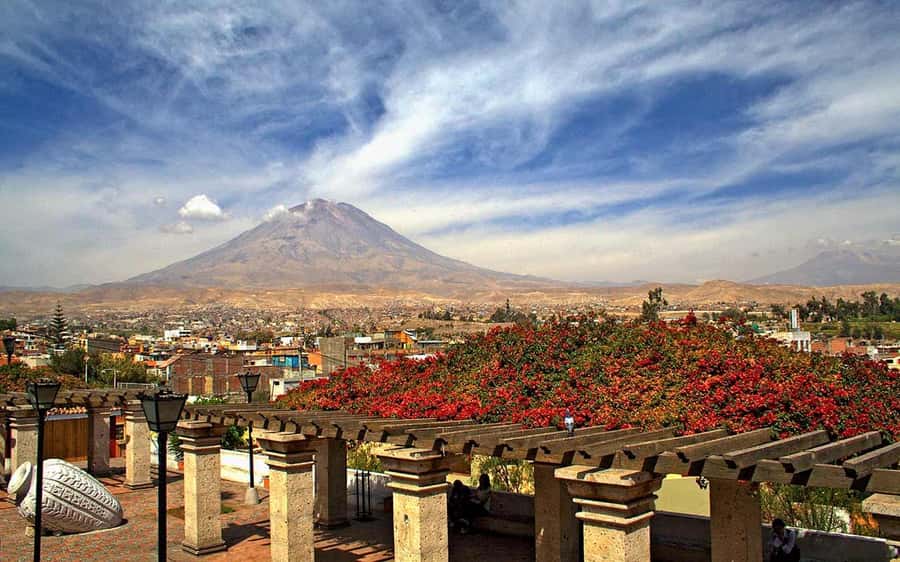
Reviewed · SANTA CATALINA MONASTERY
Arequipa: Walking Tour and Santa Catalina Monastery
Arequipa’s best introduction may be a walk through its quietest old quarters, not just a quick look at Plaza de Armas. This tour takes you from San Lazaro’s white sillar lanes to the red-walled streets of Santa Catalina Monastery, linking everyday neighborhoods with the city’s grandest sights. I like the route because it shows how people lived, worked, prayed, and traded, rather than presenting Arequipa as a string of photo stops.
I especially like the visits to Tambo el Matadero and Tambo La Cabezona, two less familiar corners of the historic center, and the full hour set aside for Santa Catalina. The main drawback is the pace: three hours covers a lot, and the walking route is not suitable for wheelchair users. Also check your booking option carefully, since hotel pickup and monastery admission may cost extra.
Key points before you book
- San Lazaro begins the story: Explore narrow lanes, small squares, and white volcanic-stone walls in one of Arequipa’s oldest districts.
- Two historic tambos add local detail: See former lodging and work spaces, including a seventeenth-century slaughterhouse building still used as homes.
- Plaza de Armas gets a proper introduction: Learn about the Cathedral, surrounding arcades, fountain, and the square’s role as Arequipa’s main meeting place.
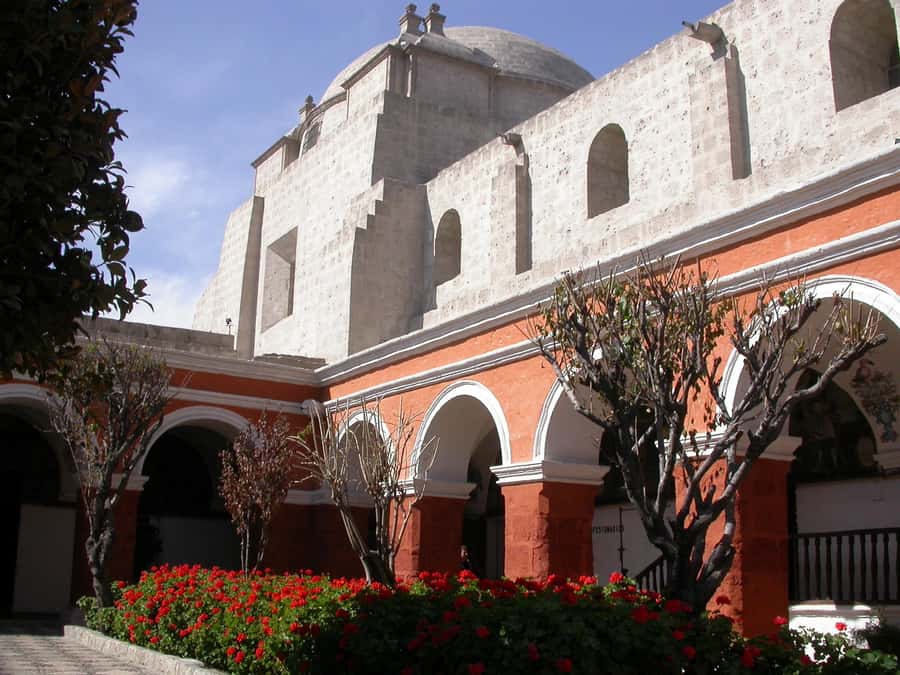
- Santa Catalina receives about an hour: Walk through cloisters, patios, streets, a bell tower, and the Patio del Silencio.
- English and Spanish guiding is available: Guides associated with the experience include Gisela, Milei, and Sline, all praised for clear explanations and a friendly manner.
- The price depends on the option you choose: The advertised rate is $35 per person, but confirm whether entrance and hotel transport are included before paying.
Why this walking route works in Arequipa
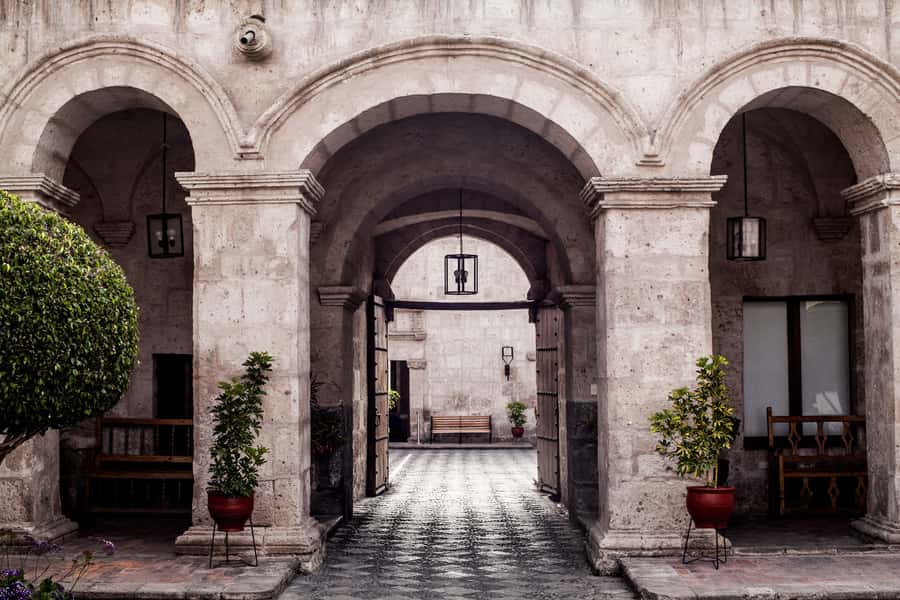
Arequipa’s historic center is built largely from sillar, a pale volcanic stone that gives the city its famous white appearance. You see it best on foot. In a vehicle, the stonework becomes a blur. Walking lets you notice carved doorways, thick walls, tight lanes, and small squares that connect the city’s grand monuments with ordinary homes.
This three-hour outing begins with a short van ride of about 10 minutes, followed by a series of walks through the old center. The schedule allows roughly 20 minutes in San Lazaro, 20 minutes around Barrio del Solar, 20 minutes at Tambo el Matadero, 20 minutes at Tambo La Cabezona, 30 minutes at Plaza de Armas, and one hour inside Santa Catalina Monastery.
That is a sensible division of time. The neighborhoods are compact, and the monastery deserves the longest visit. Still, this is an overview rather than a slow architectural study. If you want long photo stops or time to inspect every chapel and doorway, you may find the schedule brisk.
The tour is offered with a live guide in English or Spanish. Recent guide names connected with the experience include Gisela, Milei, and Sline. They have been praised for clear explanations, patience, warmth, and the ability to answer questions. That matters here because the appeal is not only the buildings. It is the story behind each district.
Other convents and colonial houses around Arequipa:
- Arequipa, Historic and Colonial City and Santa Catalina Monastery
★ 4.5 · 42 reviews - Arequipa: City Tour and Santa Catalina Monastery
★ 4.5 · 6 reviews - Arequipa Walking Tour and Santa Catalina Monastery
★ 5.0 · 4 reviews
San Lazaro, where Arequipa begins to feel personal
San Lazaro sits about five blocks from Plaza de Armas and is one of the most atmospheric parts of the route. Its streets are small, its walls are white, and its compact squares offer a quieter view of the city than the central plaza.
The district was occupied by pre-Inca and Inca cultures. During the Spanish conquest and the founding of Arequipa, some of the city’s first houses were built here. That layered past gives your guide plenty to explain, but the setting does much of the work. You can see how the narrow streets and sturdy stone construction shaped the neighborhood.
I like starting here because it eases you into Arequipa. You are not dropped straight into the grand Cathedral and asked to understand the city at a glance. Instead, you begin with small-scale streets and homes, then work toward the monumental center.
Expect about 20 minutes for the stop, including a guided walk and photo opportunities. Wear comfortable shoes. The route is not described as wheelchair accessible, and the combination of walking and uneven historic streets may be difficult for anyone with limited mobility.
Bring sunglasses, a hat, and sunscreen. Arequipa’s bright stone walls can make the sun feel stronger than expected, even during a short walk.
Barrio del Solar and the old river quarter
From San Lazaro, you walk for about 15 minutes toward Barrio del Solar, near the Chili River. This section brings you closer to traditional and colonial buildings, with another 20 minutes set aside for a guided visit and photographs.
The neighborhood is connected with the tambos, former lodging centers where merchants could rest during the colonial period. The word may sound simple, but these places help explain how commerce worked in the old city. They were not grand palaces. They were useful spaces tied to movement, trade, and daily business.
That is one of the tour’s strongest features. You get more than polished facades. The route points to buildings that served practical purposes and shows how Arequipa functioned as a working city.
The walk from San Lazaro to Barrio del Solar also breaks up the sightseeing. You are not spending the entire three hours indoors or standing in one plaza. Instead, the city itself becomes the connection between stops.
Tambo el Matadero, a working building with an unusual past
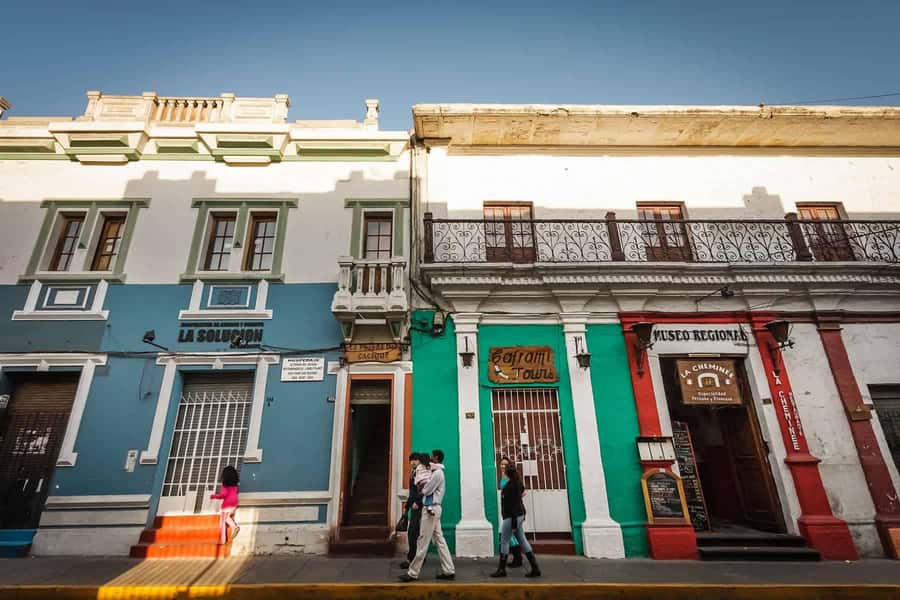
Tambo el Matadero dates from the seventeenth century and was once used to sacrifice animals. Today, about 30 families live in the building. That contrast is striking. A place built for one form of city work has become a residential setting.
You spend about 20 minutes here with a guide. This is not a grand monument, and that is precisely why it adds value. It shows how old structures can continue to serve people long after their original purpose has changed.
I would pay close attention to the guide’s explanation rather than expect a dramatic museum-style visit. The appeal lies in the building’s use, age, and connection to local life. Photography is included as part of the stop, but be mindful that families live here.
Tambo el Matadero also gives the tour a more grounded tone. Santa Catalina is carefully preserved and visually spectacular. Tambo el Matadero feels more like part of a living neighborhood. Seeing both helps you understand that the old center is not only a heritage zone. It is also a place where people still live.
Other guided walks in Arequipa:
- Walking tour in the Historic Center of Arequipa
★ 4.4 · 180 reviews - Arequipa: Walk through the Historic Center of the City
★ 4.9 · 87 reviews - Arequipa Walking Tour city center and drinks experience
★ 5.0 · 72 reviews - Lima: Miraflores Trending Flavors Half-Day Walking Tour
★ 4.9 · 98 reviews
Tambo La Cabezona and Arequipa’s early mills
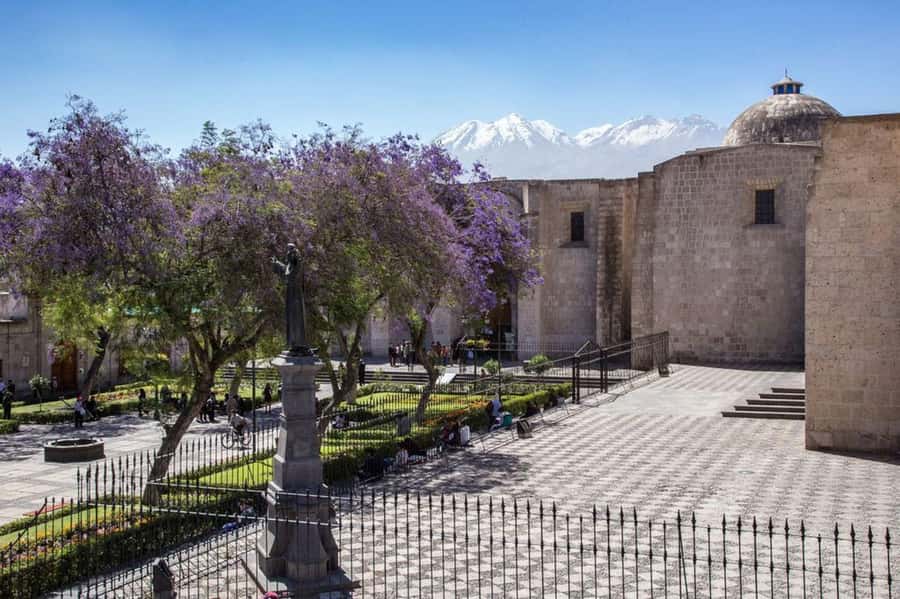
After about 10 minutes on foot, you reach Tambo La Cabezona. This colonial group of houses has a communal entrance and dates from the sixteenth century. The site is also linked to one of the first mills in Arequipa.
The communal entrance is an important detail. It gives you a sense of how residents once shared access and space within the complex. The mill connection adds another piece to the city’s economic story. Arequipa’s old buildings were tied to food production, trade, lodging, and household life, not just religious or government use.
The scheduled visit lasts about 20 minutes. I like this stop for the way it fills in the middle ground between a private home and a public monument. You see a group of connected houses rather than one isolated building.
As with Tambo el Matadero, the experience depends on the guide’s storytelling. Guides such as Milei and Sline have been praised for their friendly manner and strong command of the subject. You will get the most from this part if you ask questions about how the tambos operated and how their use changed over time.
Plaza de Armas, Arequipa’s grand central room
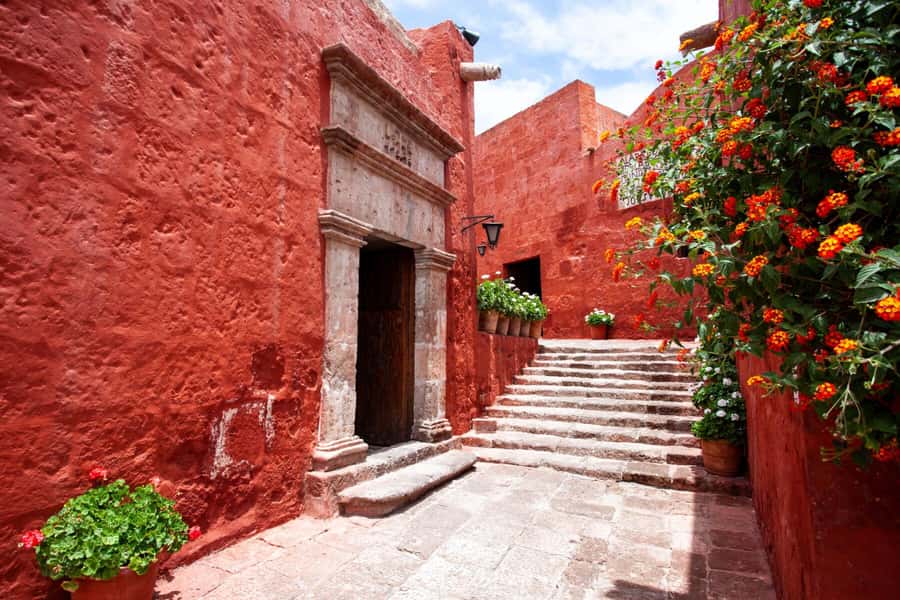
From Tambo La Cabezona, the route continues on foot for about 15 minutes to Plaza de Armas. You spend around 30 minutes here, with time for a guided visit, sightseeing, and photographs.
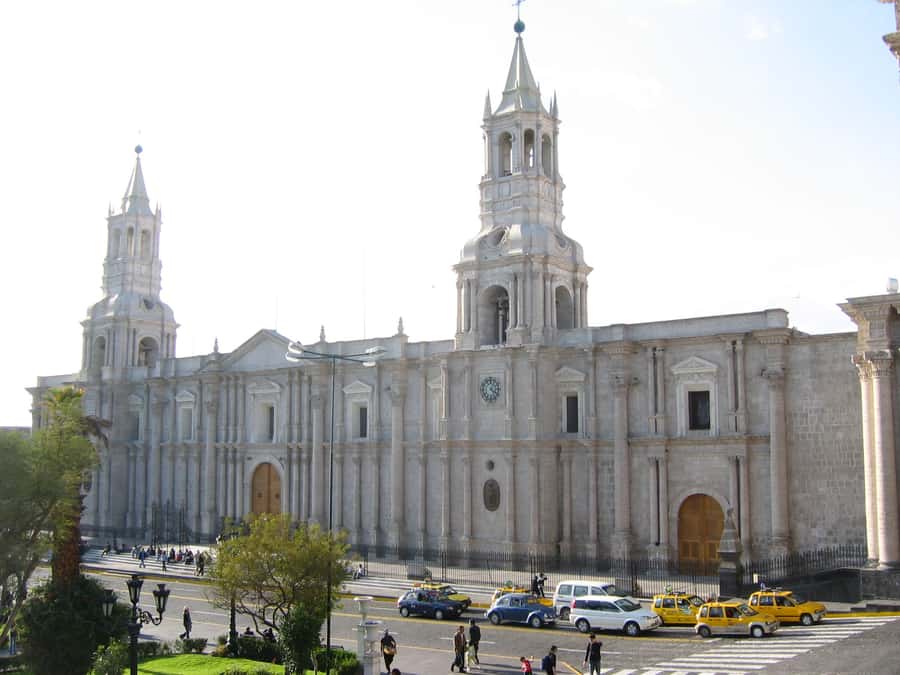
This is Arequipa’s main meeting point. The Cathedral occupies one side, while elegant arcades surround the square. A bronze fountain sits in the center. The open space offers a sharp contrast to the narrow lanes of San Lazaro and the enclosed tambos.
A panoramic introduction here is useful because the plaza can otherwise become a quick photo stop. Your guide can connect the square to the neighborhoods you have already seen. The same sillar that forms the modest walls of San Lazaro appears in the major buildings around the plaza, but on a larger and more formal scale.
The half-hour allowance is enough to get your bearings, admire the arcades, and take photographs. It is not enough for a full Cathedral visit or a detailed architectural lecture on every surrounding building. That is worth knowing if the plaza is your main reason for booking.
The square is also a practical place to pause before Santa Catalina. You have already walked through several districts, and the route’s biggest sight comes next.
Santa Catalina Monastery, a city within the city
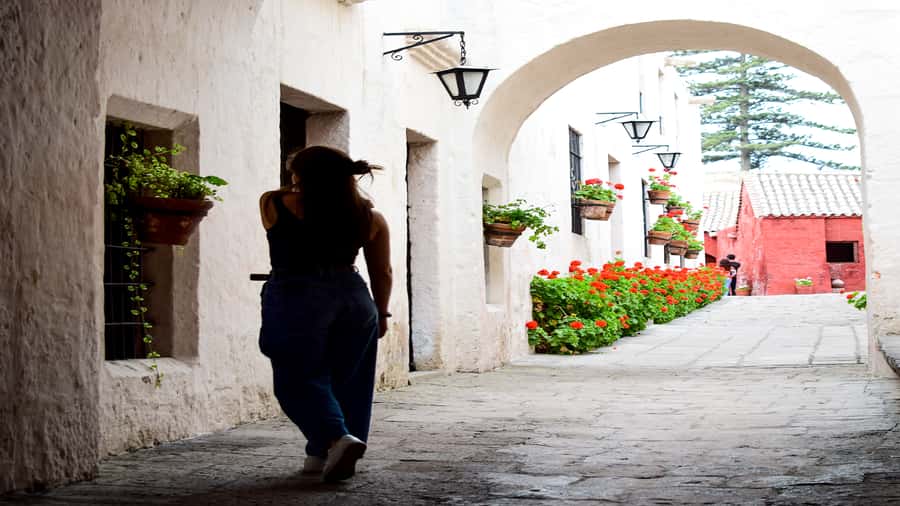
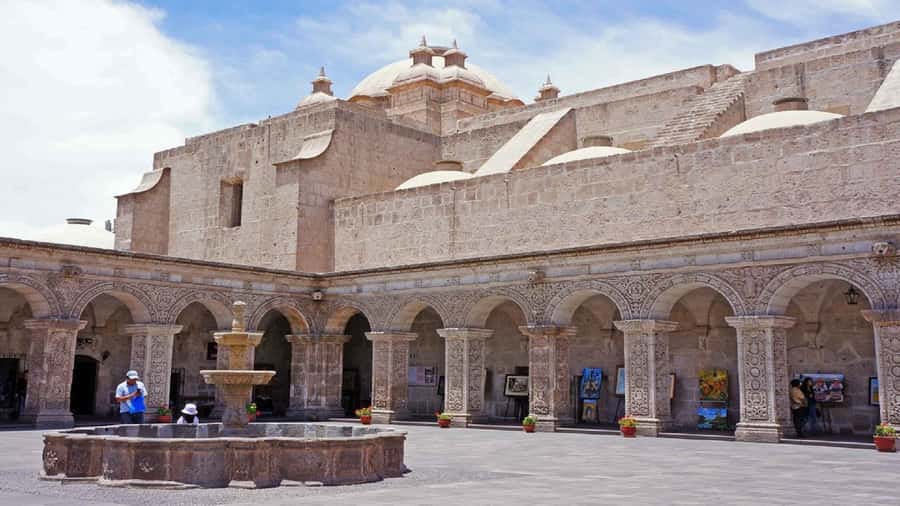
A five-minute walk brings you to Santa Catalina Monastery. The complex was founded in 1579 and covers about 20,000 square meters. One hour is reserved for the visit, which is the right call. The monastery is too large and varied for a rushed half-hour stop.
Inside, you can walk through cloisters, patios, small squares, streets, a bell tower, and the church. Some passageways are built from pale ashlar, while other sections have naturally colored red walls. The changes in color and scale make the visit feel like a walk through a separate town.
The monastery began with Doña Maria de Guzman, a wealthy woman who donated her properties and entered religious life as a cloistered nun. Many of the women who joined the convent came from wealthy families. Cloistered nuns still live at Santa Catalina, so the site remains more than a preserved historic building.
One especially quiet area is the Patio del Silencio. Nuns met there to pray and read the Bible in silence. That purpose gives the courtyard its character, and it is a good example of why a guide adds something here. Without context, you might see a beautiful enclosed patio. With context, you understand how the space shaped daily religious life.
Bring your camera, but allow time to look beyond the most colorful walls. The monastery’s appeal comes from its sequence of streets and courtyards, not from one single viewpoint. I would resist rushing through for photographs alone.
Santa Catalina is a UNESCO World Cultural Heritage site as part of Arequipa’s historic center. The monastery closes on December 25 and Good Friday, so check your dates before booking.
What the $35 price really covers
The listed price is $35 per person, but the final value depends on the option you select. Some options include hotel pickup and drop-off, while others do not. Some include the monastery entrance fee and a local guide, while others require you to pay admission locally.
If entrance is not included, the stated local price is 45 PEN for adults and 25 PEN for people ages 7 to 21. Children age 4 and younger are complimentary. Check the booking details carefully, since a low headline price can become less attractive once admission and transport are added.
At its best, the fee pays for a focused introduction to the historic center, an English or Spanish guide, local context at the tambos, and an hour inside Santa Catalina. For a first visit to Arequipa, that is a fair package, especially if you value explanation over simply ticking off sights.
Hotel pickup and drop-off is available only for hotels in the historic center. If your hotel is outside that area, you need to meet at Calle Zela 301, beside Santa Catalina Monastery, at Hotel Mirador del Monasterio. The exact meeting time is confirmed after booking.
The tour ends with a van ride of about 10 minutes. Drop-off points include the historic center, Calle Zela 301, and Mirador del Monasterio. If your hotel has poor vehicle access, you may be dropped nearby rather than at the door.
Who will enjoy this tour most
I would recommend this experience to a first-time Arequipa visitor who wants a clear three-hour orientation. It suits you if you enjoy architecture, city history, and local neighborhoods, but do not want to spend an entire day on a formal museum circuit.
It also works well for anyone staying in the historic center. The pickup arrangement is simple there, and the final drop-off keeps you near your hotel or the monastery.
You should think twice if you want a very slow walk, long independent photo sessions, or a fully accessible route. The itinerary has several timed stops, and wheelchair users are specifically advised not to book.
Comfortable clothing, sturdy walking shoes, sunglasses, sunscreen, a hat, and insect repellent are recommended. Food and drinks are not included, so plan accordingly before you set out.
Should you book it?
Book this tour if you want Arequipa’s old center explained through both famous sights and ordinary historic buildings. The pairing of San Lazaro, the tambos, Plaza de Armas, and Santa Catalina gives you a better sense of the city than a monastery visit alone.
I would choose the option that includes monastery admission if the price difference is reasonable, since it keeps the cost clear and avoids paying locally. Confirm pickup coverage as well. For a compact introduction led by a friendly English or Spanish guide, this is good value, provided you are comfortable walking and accept the brisk three-hour pace.
FAQ
How long does the Arequipa walking tour last?
The tour lasts three hours. It includes transport at the beginning and end, walking between several historic-center stops, and about one hour inside Santa Catalina Monastery.
Is the tour available in English?
Yes. A live guide is available in English or Spanish.
Is hotel pickup included?
Hotel pickup and drop-off are optional and are available only for hotels located within Arequipa’s historic center. If your hotel is outside the center, meet at Calle Zela 301 beside Santa Catalina Monastery, at Hotel Mirador del Monasterio.
Is the entrance fee to Santa Catalina Monastery included?
It depends on the option selected. If entrance is not included, the local fee is 45 PEN for adults and 25 PEN for people ages 7 to 21. Children age 4 and younger are complimentary.
What places does the walking route visit?
The route includes San Lazaro, Barrio del Solar, Tambo el Matadero, Tambo La Cabezona, Plaza de Armas, and Santa Catalina Monastery.
Is the tour suitable for wheelchair users?
No. The experience is not suitable for wheelchair users.
When is Santa Catalina Monastery closed?
Santa Catalina Monastery is closed on December 25 and Good Friday. The order of visits can also change.
Just added around Arequipa
- From Arequipa: Pillones Waterfall and Stone Forest Day Trip★ 4.4 · 15 reviews
- Adventure Day in Arequipa: Pillones Waterfall + Rock Forest★ 4.2 · 25 reviews
- From Arequipa: Colca Canyon & La Calera Thermal Waters★ 4.3 · 15 reviews
- Arequipa: Pub Crawl with Skip-The-Line Access and Drinks★ 3.0 · 4 reviews
- Arequipa Walking Tour and Santa Catalina Monastery★ 5.0 · 4 reviews
- Trekking, Waterfalls and Thermal Baths★ 4.5 · 47 reviews
- From Arequipa: Colca Valley & Thermal Baths Small-Group Trip★ 4.1 · 43 reviews
- Arequipa, Historic and Colonial City and Santa Catalina Monastery★ 4.5 · 42 reviews
Santa Catalina Monastery, compared.

Arequipa, Historic and Colonial City and Santa Catalina Monastery
Read our review →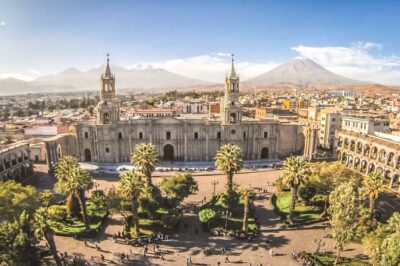
Arequipa Walking Tour and Santa Catalina Monastery
Read our review →Browse the lists this tour appears in