
Reviewed · SACRED VALLEY TOURS
Maras Moray
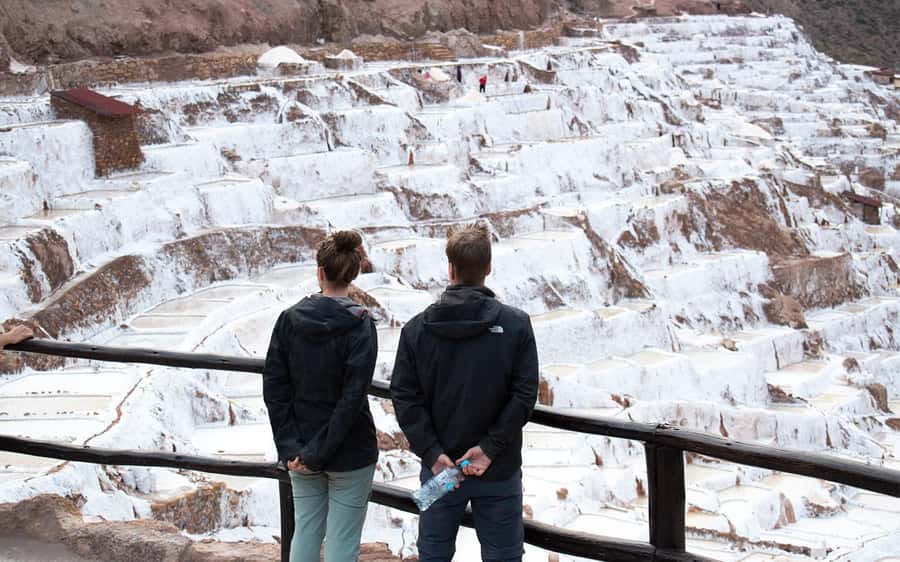
Moray’s great stone circles are the star here. Cut into a high Andean hollow, the terraces look almost like a giant amphitheater, but they were built for agriculture. At Maras, thousands of small salt ponds spread across the mountainside, fed by salty water from underground springs. Together, these sites show two clever ways people worked with Cusco’s difficult terrain.
I like the half-day length, which leaves room for other Cusco plans, and I like the chance to see living textile work at Chinchero rather than only old stonework. The guide service can also be a real plus: Raul has been praised for translating clearly into English and allowing extra photo time.
The main thing to consider is that the $18 tour price does not include the required entrance fees or food. Your day costs at least $45 per person after adding the stated $20 tourist ticket and $7 Maras entrance, before snacks or lunch. Also, the Chinchero stop is centered on a textile center, not a free walk through town.
Key points to know before booking
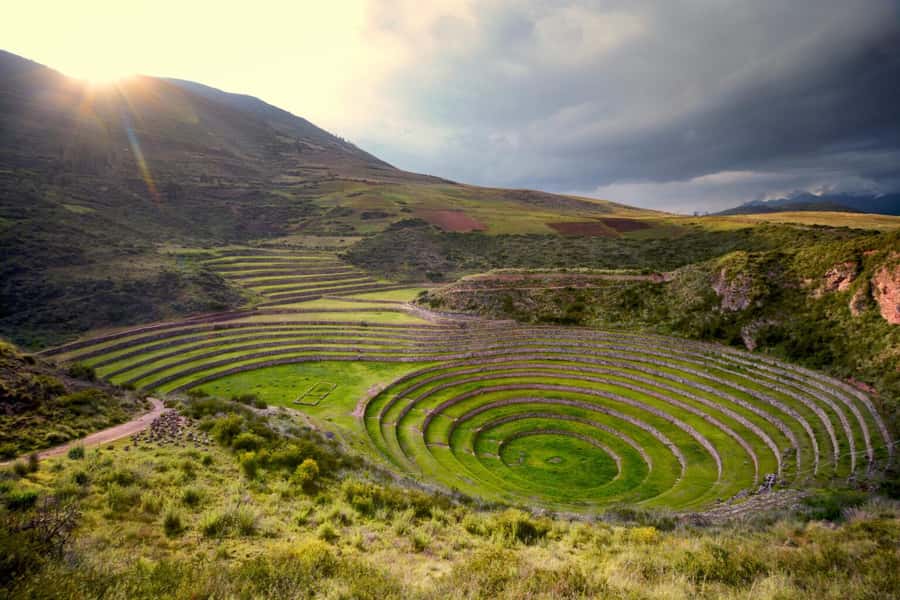
- Moray’s circular terraces were used as an agricultural testing site for crops such as corn, potatoes, and olluco.
- Maras has about 3,800 salt production ponds, supplied by salty mountain water at more than 3,000 meters above sea level.
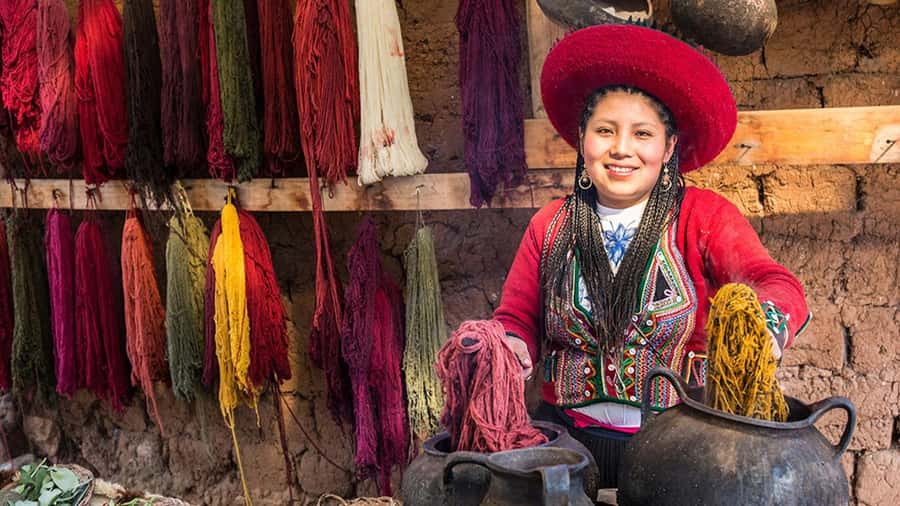
- Chinchero adds a living craft stop, with natural dyes and wool work using llama and alpaca fibers.
- The tour lasts about six hours, making it a good fit if you do not want a full-day outing.
- English and Spanish guiding is available, with Raul specifically praised for patient translation and a well-managed pace.
- The price is only the starting cost, since the tourist ticket, Maras admission, and food are extra.
Three Andean sights in six practical hours
This is a compact Cusco excursion built around three different kinds of interest: local craft at Chinchero, Inca engineering at Moray, and traditional salt production at Maras.
Pickup is scheduled for about 8:30 in the morning from your hotel or accommodation. You travel by tourist transport and return to Cusco once the route is complete. The total time is listed as six hours, so you get a useful look at the area without giving up an entire day.
That timing matters in Cusco. You may want a morning for the historic center, a separate day for Machu Picchu, or simply some quiet time to adjust to the altitude. This tour gives you a solid outing without asking you to spend from dawn until evening on the road.
The route is not designed as a strenuous hike. The description says it does not require high physical effort, but the experience is not suitable for people with mobility impairments. You should still bring sports shoes, since practical footwear is better for walking around archaeological sites and salt ponds than sandals or smooth-soled shoes.
Other days through the Sacred Valley from Urubamba:
- Cusco:Sacred Valley Pisaq,Ollantaytambo,Chinchero with Lunch
★ 4.8 · 183 reviews - From Cusco: Chinchero, Moray, Maras and Ollantaytambo
★ 4.5 · 83 reviews - from Urubamba & Ollantaytambo:Sacred Valley Full-Day Private
★ 4.9 · 31 reviews
Chinchero’s wool, dye, and craft traditions
Chinchero is the first meaningful stop after leaving Cusco. The town is known for textile production passed down through generations, with techniques connected to the Inca era.
At a textile center, you can see how natural materials are used to create colors for wool. The materials are used with llama and alpaca fibers, and the presentation helps explain how local craft workers turn raw wool into finished goods.
I like this stop because it gives the tour a human scale. Moray and Maras are impressive, but they can feel like grand outdoor monuments. Chinchero shows how Andean knowledge continues through hands-on work, color, fiber, and family teaching.
Set your expectations correctly. The stop is primarily an explanation and demonstration of alpaca wool production, with products for sale. It is not necessarily a chance to wander freely around Chinchero village. If browsing local streets is important to you, ask about the exact stop before booking.
The textile center can also feel commercial because goods are sold there. That is not automatically a flaw, but it changes the tone. You are seeing a working craft tradition in a place that also functions as a shop. I would treat it as an informative introduction to local textiles, not as a full cultural tour of the town.
Moray’s giant circular terraces
After Chinchero, the transport continues to the archaeological park of Moray. This is the visual high point of the day.
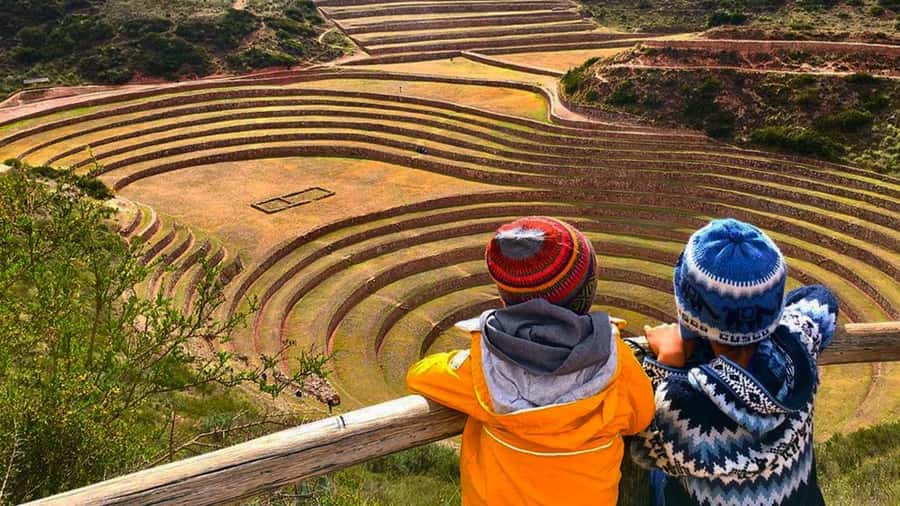
Moray consists of circular agricultural terraces cut into the earth. The rings descend toward a lower center, creating a shape unlike the straight-sided platforms found at many other Inca sites. The terraces were connected with agricultural experimentation, including the development and cultivation of crops such as corn, potatoes, and olluco.
That purpose makes Moray more interesting than a scenic photo stop. You are not just looking at an unusual pattern in the ground. You are looking at a place linked to efforts to obtain, adapt, and domesticate different crop varieties.
The circular design is the detail to watch. From above, the terraces form a series of broad stone-edged rings. From the viewing area, their scale becomes clear, and the arrangement gives you a good sense of how much planning was required to shape the site.
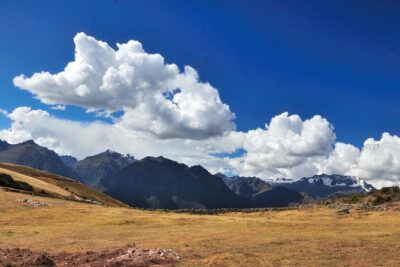
The surrounding mountains add to the experience. The tour points out snow-covered peaks regarded as apus, or sacred mountain beings, in Inca times. You get both the engineered site and the wider Andean setting in one view.
I would give Moray your full attention rather than rushing through it for a single photograph. The circular terraces are easy to understand at a glance, but a guide can add useful context about their farming role. The tour is offered in English and Spanish, and clear translation matters here because the site’s purpose is less obvious than its shape.
One practical point comes from the experience of a recent visitor on the tour: guide Raul adjusted the pace for photography and allowed time to walk around freely after explaining the site in Spanish and then English. That is the kind of small service that makes a bilingual group easier to enjoy. If Raul is leading your departure, you can expect a guide who has been praised for making room for photographs as well as explanations.
The same feedback also points to two things you should know. First, English explanations may sometimes come quickly, especially if you are still feeling the effects of Cusco’s altitude. Second, the vehicle may pass scenic viewpoints without stopping. Moray itself supplies the main photo opportunity, but do not assume every roadside view will become a planned stop.
Maras and its thousands of salt ponds
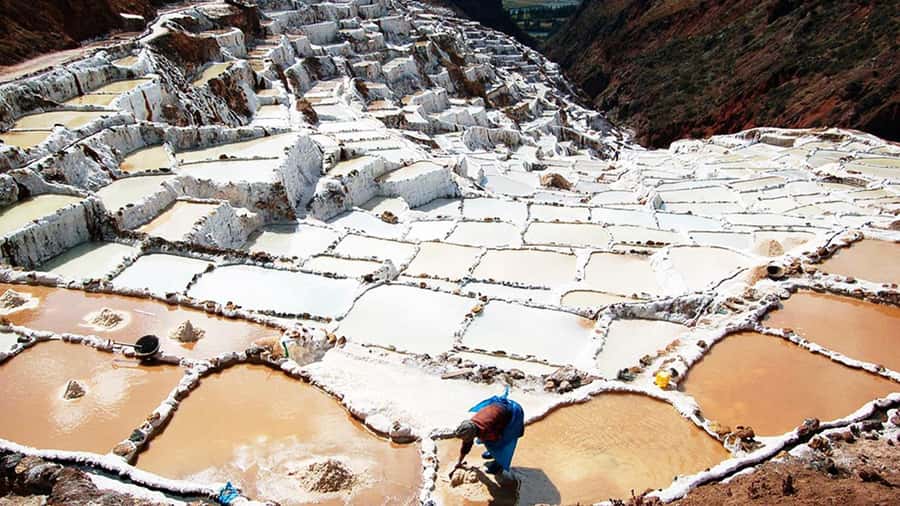
The final major stop is the Maras salt mine area. Here, salty water rises from mountain sources and flows across a large collection of shallow production ponds.
The site contains about 3,800 salt-producing areas, creating a striking pattern on the mountainside. Each pond catches and concentrates the water, allowing salt to form as the water evaporates. The result is both a working production area and a strong visual contrast to Moray’s stone circles.
The salt ponds sit at more than 3,000 meters above sea level. That altitude is worth remembering, even though the tour is not described as physically demanding. Bring water, use sunscreen, and take your time if you are still getting used to the elevation.
Maras also adds a useful local-economy angle. At Moray, you see a large archaeological site tied to farming. At Maras, you see a traditional production system tied to salt. The two stops complement each other: one deals with crops and terraces, the other with water, minerals, and small-scale production.
The appearance of the ponds can vary with weather and production conditions, so you might find different colors and levels of salt from one visit to another. The important feature is the structure of the site itself: many small pools supplied by mineral-rich water from the mountains.
Wear shoes you can walk in comfortably and carry cash. The entrance to Maras is not included, and the tour information lists the separate fee as $7. A camera is worth bringing, but keep it protected from dust and handle it carefully around working salt areas.
Same base, a completely different day:
- Machu Picchu: Group Guided Tour
★ 4.7 · 102 reviews - Machu Picchu: Tour Guide Service & Entrance Ticket Circuit-2
★ 4.6 · 90 reviews - Cusco: One Day Tour to Machu Picchu with Train Transfers
★ 4.8 · 28 reviews - Machu Picchu: historical and photographic guided tour
★ 4.9 · 27 reviews
What the $18 price really covers
At $18 per person, the advertised tour price is low for a six-hour outing with hotel pickup, tourist transport, and a professional English or Spanish guide.
But the true cost is higher. The stated additional charges are:
- $20 for the tourist ticket
- $7 for entrance to Maras
- Food, which is not included
That brings the known total to $45 per person before anything you eat or drink. This is still a reasonable price for a guided half-day trip, especially if you value hotel pickup and do not want to arrange transport to three separate stops.
The value depends on what you want from the day. If you need private transport, a long stop at every viewpoint, or a slow custom itinerary, this shared tour may feel limited. If you want the main sights explained and organized in one morning, it offers a practical deal.
Food is not included, and the tour lasts half a day. Bring a snack and a bottle of water rather than counting on a meal during the route. Cash is also listed among the items to bring, which is sensible for entrance fees and personal purchases.
Pace, guiding, and language
The tour uses live guides in English and Spanish. That is important because the route involves more than taking pictures. Moray makes more sense when you understand its agricultural purpose, and Chinchero is more rewarding when you know what the textile workers are demonstrating.
The strongest guide detail available is Raul. He has been praised for translating the explanations into clear English, keeping the outing at a comfortable speed, and noticing when people wanted extra time for photographs. That suggests a flexible style rather than a rigid march from one stop to the next.
Still, bilingual tours can require patience. A guide may explain something first in Spanish and then in English, which can make the stop feel longer or cause one language group to wait. A recent experience also noted that Raul occasionally spoke quickly, which was harder on the first day in Cusco when altitude symptoms were still present.
You can help yourself by arriving rested, drinking water, and telling the guide if you need an explanation repeated. Bring your passport or identification card, since those are specifically listed among the recommended items.
Who will enjoy this Cusco outing
I would recommend this tour to you if you want three well-known sights in a single morning and prefer a guide to explain what you are seeing. It works particularly well for first-time visitors who want more context than a taxi ride can provide.
It is also a good choice if you do not want a full-day trip. Six hours leaves your afternoon open, though the exact amount of free time will depend on pickup and return timing.
Photographers should enjoy Moray and Maras, but should not book this expecting frequent roadside photo stops. The main sites offer the planned photography time. The vehicle may pass other viewpoints without pulling over.
The tour suits people with ordinary walking ability who do not need mobility assistance. It is specifically not suitable for people with mobility impairments. You should also be comfortable spending part of the day at high altitude and carrying your own water, sunscreen, and medication.
It may not suit you if you want an unhurried village visit in Chinchero. The stop focuses on textile production and sales. It may also disappoint if you expect meals, entrance fees, or every scenic viewpoint to be included in the $18 price.
What to bring for a smoother morning
Keep your packing simple:
- Sports shoes for walking at the sites
- Water and a snack
- Sunscreen
- Camera
- Cash for fees and purchases
- Passport or identification card
- Any personal medication
The high elevation makes sun protection important even on a cool morning. A small bag is easier than heavy luggage, and water is especially useful because food is not provided.
Pickup guidance is straightforward: wait at your hotel reception five minutes before the scheduled time. The guide will call your name, so stay alert rather than waiting out on the street.
The activity runs every day of the year. You can also reserve now and pay later, and cancellation is allowed up to 24 hours in advance for a full refund. Those policies are useful if your Cusco schedule is still shifting, but the main booking decision should be based on the route and extra costs.
Should you book Maras and Moray?
Book it if you want a well-priced, six-hour introduction to three distinct parts of the Cusco region: textile work at Chinchero, Inca agricultural design at Moray, and salt production at Maras.
I especially like the balance between cultural craft, archaeology, and working production. The guide service can add real value, and Raul’s reported attention to English translation and photo time is encouraging.
Skip it if you want a free-form village visit, a meal included, or a series of roadside viewpoints. Also calculate the full price first: the $18 starting fare becomes at least $45 after the listed entrance fees. For most visitors who want a shorter guided outing and can manage the extra charges, this is a sensible way to see Moray and Maras without surrendering an entire day.
FAQ
How long does the Maras and Moray tour last?
The tour lasts approximately six hours, including hotel pickup, transport, the Chinchero stop, visits to Moray and Maras, and the return to Cusco.
What is included in the tour price?
The price includes hotel pickup, tourist transport, and a professional guide who speaks English or Spanish.
Are entrance fees included?
No. The tourist ticket costs $20, and entrance to Maras costs $7 according to the provided information. Food is also not included.
What time does pickup begin?
Pickup begins at approximately 8:30 in the morning. You should wait at your hotel reception five minutes before the scheduled pickup time.
Is the tour available in English?
Yes. Live guiding is available in English and Spanish. Guide Raul has been noted for providing English translation during the tour.
Is this a physically difficult excursion?
The tour does not require high physical effort, but it is not suitable for people with mobility impairments. Sports shoes are recommended.
What should I bring?
Bring a camera, sports shoes, cash, sunscreen, your passport or identification card, personal medication, a snack, and a bottle of water.
Just added around Urubamba
- Machupicchu 2025: The best ticket Circuit 2★ 3.5 · 6 reviews
- Machu Picchu: 1-day tour by Vistadome Panoramic train★ 4.7 · 15 reviews
- Half day tour: Maras Salt Mines and Moray Terraces★ 4.5 · 4 reviews
- Private Guide in Machu Picchu for 3 Hours★ 4.2 · 17 reviews
- Guided tour of Cusco and its 4 ruins★ 3.8 · 3 reviews
- From Cusco:Chinchero, Moray, Maras, Ollantaytambo with lunch★ 5.0 · 3 reviews
- From Cusco: Salkantay trek 5 days/4 nights meals included★ 4.0 · 3 reviews
- From Cusco: Sacred Valley & Moray, Salt Mines with Lunch★ 4.6 · 3 reviews
Sacred Valley Tours, compared.
Sacred Valley & Maras Salt Mines Tour with Lunch
Read our review →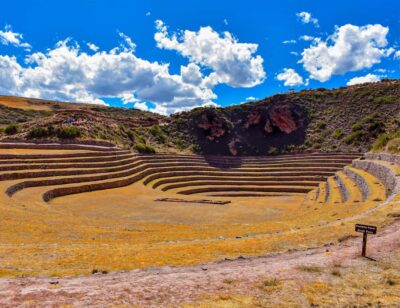
Moray, Maras Salt Mines & Chinchero Weavers Tour
Read our review →
Sacred Valley, Pisac, Ollantaytambo, Salt Mines Moray
Read our review →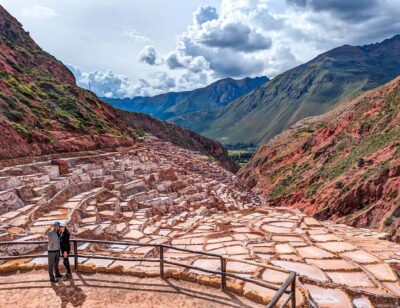
Chinchero,Moray & Salt Mines drop-off in Ollantaytambo
Read our review →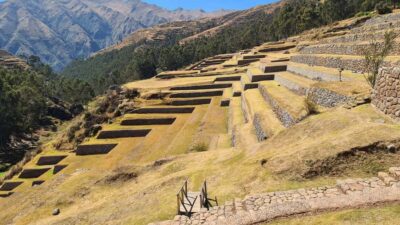
Pisac Indian Market and Ollantaytambo Fortress with Lunch
Read our review →
Browse the lists this tour appears in