
Reviewed · SACRED VALLEY TOURS
Sacred Valley Vip Cusco
The Sacred Valley is at its best when you can connect its major sites in one sweeping day. This 12-hour trip links Chinchero, Moray, Maras, Ollantaytambo, and Pisac, giving you a broad look at Inca engineering, colonial Peru, village life, and local crafts.
I like the route’s variety. Moray’s round terraces feel unlike any other Inca site, while Pisac gives you time for handicrafts as well as stonework. I also like the small-group limit of 10, which should make the long day easier to manage.
The trade-off is the pace. Five major stops, lunch, and the return to Cusco make this a packed outing. Pickup coordination may need patience, and the salt mine entrance fee is reported as 20 soles rather than the 10 soles shown in the app.
Key points to know before booking
- Five Sacred Valley stops in one day: Chinchero, Moray, Maras, Ollantaytambo, and Pisac are all covered.
- Moray is the visual highlight: Its huge circular terraces are one of the most unusual Inca agricultural sites in Peru.
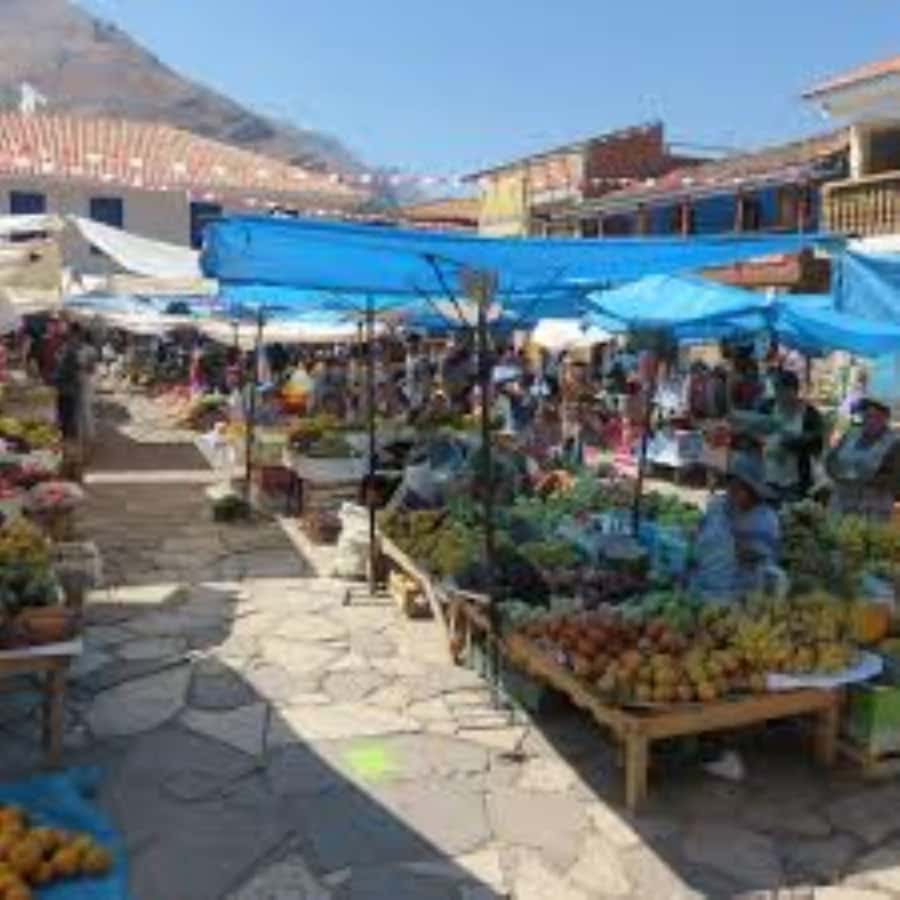
- Pisac combines shopping and archaeology: You visit the indigenous market and the Archaeological Park of Pisac.
- A small group keeps the day manageable: The tour is limited to 10 participants.
- Lunch is in Urubamba: A buffet meal breaks up the long sightseeing schedule.
- Budget extra for Maras: The salt mine entrance is reported as 20 soles, despite the 10 soles shown in the app.
Why this Sacred Valley route works
I like this tour because it avoids the narrow focus of a single-site outing. In one day, you see Inca walls, agricultural terraces, salt production, a colonial church, a living town, and a market where you can shop for handmade goods.
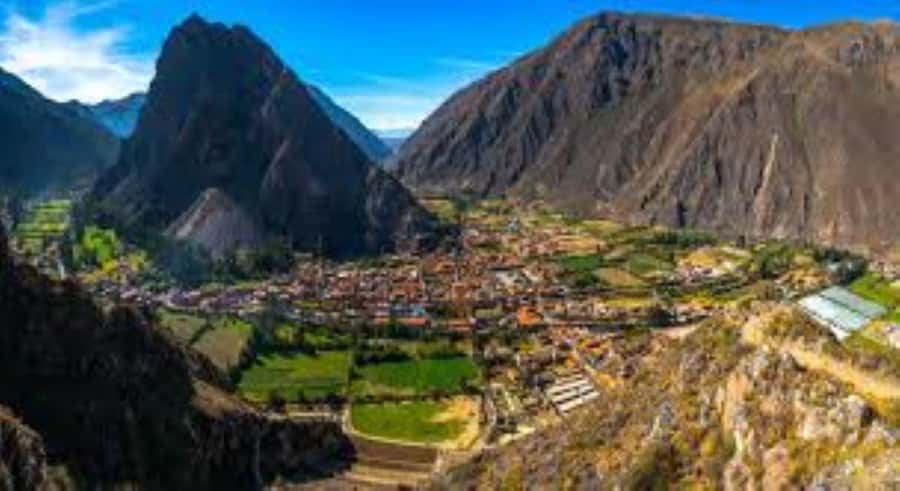
That variety matters. The Sacred Valley is not just a chain of ruins. It is a place where old farming methods, religious buildings, local commerce, and modern village life sit close together. This itinerary gives you pieces of all of that.
The day begins at 7:00 am and returns to Cusco around 7:00 pm. That is a long stretch, but it is the price of seeing all five locations without staying overnight in the valley. I would choose this route if your time in the Cusco region is limited and you want a broad first look.
The group limit of 10 is another practical advantage. A small group does not remove the tight schedule, but it can make stops and head counts less cumbersome than a large coach tour. The guide speaks English or Spanish, so choose the language that lets you ask questions comfortably.
Other days through the Sacred Valley from Cusco:
- From Cusco: Moray, Maras Salt Mines & Chinchero Weavers Tour
★ 4.8 · 1,925 reviews - Cusco: Sacred Valley, Pisac, Ollantaytambo, Salt Mines Moray
★ 4.6 · 1,058 reviews - Cusco:Chinchero,Moray & Salt Mines drop-off in Ollantaytambo
★ 4.8 · 793 reviews
Chinchero, where Inca walls meet a colonial church
Chinchero gives you the clearest opening contrast of the day. You see carefully fitted Inca wall construction beside a historic colonial church, then visit a textile center.
The stonework is the main reason to pay attention here. Look closely at how the blocks fit together rather than treating the walls as a backdrop for photographs. The site helps you see how Inca construction survived beneath and beside later Spanish buildings.
The church adds another layer. Its presence shows how colonial religious life was placed into an older Andean setting. You do not need a long lecture to understand the basic story: Chinchero lets you see two periods of Peruvian history in one compact stop.
The textile center gives the visit a more practical side. This is the place to look at local weaving and consider handicrafts before the market stop later in the day. If you plan to buy something, compare your options rather than spending your full shopping budget right away.
Chinchero is also the first stop after an early departure, so do not expect a slow start. You are beginning a full day, not easing into a relaxed village visit.
Moray and the logic of the circular terraces
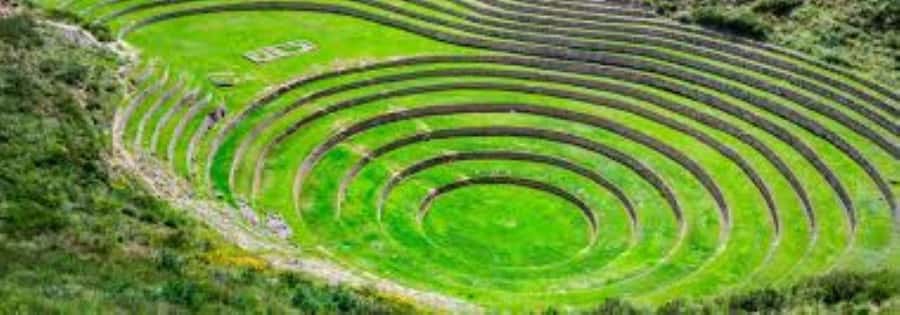
Moray is the stop most likely to stay in your memory. Its broad, circular terraces sink into the earth in a series of rings, creating a pattern that looks almost theatrical from above.
The site was an important agricultural center during Inca times. The terraces show how the Incas shaped difficult ground for farming, and their unusual form makes Moray easier to understand visually than through words alone.
I would give this stop your full attention. The shape is the attraction, but the clever use of the land is the point. Walk slowly enough to notice the changing levels and the precision of the terraces. Your guide can explain the agricultural role in English or Spanish.
Moray is also a good example of why this tour is more than a standard ruins circuit. You are not simply looking at walls or buildings. You are seeing a large-scale attempt to control growing conditions and make productive use of the Andean environment.
The limitation is time. Since Moray is one part of a five-stop route, you should not expect an extended hike or an unhurried archaeological study. The value comes from seeing it in person and understanding its place in the wider Sacred Valley.
Maras Salt Mines and more than 3,000 salt wells
From Moray, the tour descends to Maras, where the salt mines spread across the mountainside in more than 3,000 individual salt wells. The sight is striking because the small pools form a dense patchwork of white and earthy colors.
The mines were historically used by the Incas, and they remain one of the valley’s most distinctive working sites. Here, the interest comes from the combination of nature, human labor, and an old production system. Water and salt are not abstract ideas at Maras. You see the many small wells that make the process possible.
Bring your camera, but also take a moment to study the scale. Thousands of wells make it clear that this was not a minor local activity. The site is more effective when you look past the overall view and notice how many separate pools fit together.
Pay attention to the entrance cost. The most recent booking information reports an on-site fee of 20 soles, while the app description lists 10 soles. I would budget for 20 soles and confirm the current amount before the day begins. This small mismatch is exactly the kind of detail that can spoil an otherwise smooth outing if you are not prepared.
Maras also adds another walking stop to an already active day. Wear practical shoes and keep water with you, although the tour information does not specify equipment or walking conditions in detail.
Same base, a completely different day:
- Cusco: Humantay Lake Tour with Breakfast and Buffet Lunch
★ 4.9 · 2,976 reviews - From Cusco: Full-Day Group Tour of Machu Picchu
★ 4.7 · 1,767 reviews - Machu Picchu Day Trip from Cusco
★ 4.5 · 1,644 reviews - Cusco: Half-Day City Tour with Sacsayhuaman and Q’enco
★ 4.6 · 1,129 reviews
Urubamba buffet lunch breaks up the schedule
After Maras, you stop in Urubamba for a buffet lunch. This is a useful pause, not just a meal. By this point, you have already visited three important places and still have Ollantaytambo and Pisac ahead.
A buffet can work well on a tight schedule because you can choose what you want and avoid waiting for a made-to-order meal. The information provided does not name the restaurant or list the dishes, so I would treat this as a practical included stop rather than plan the day around a particular menu.
Urubamba sits in the middle of the route, making it a sensible place to pause before the afternoon sites. Use the break to eat enough for the rest of the day, refill your water if possible, and keep your shopping purchases organized.
The lunch stop also shows the advantage of covering the Sacred Valley as a connected route. You are not constantly returning to Cusco between attractions. The day moves through the valley, with meals and sightseeing arranged around the geography.
Ollantaytambo, the valley’s living Inca town
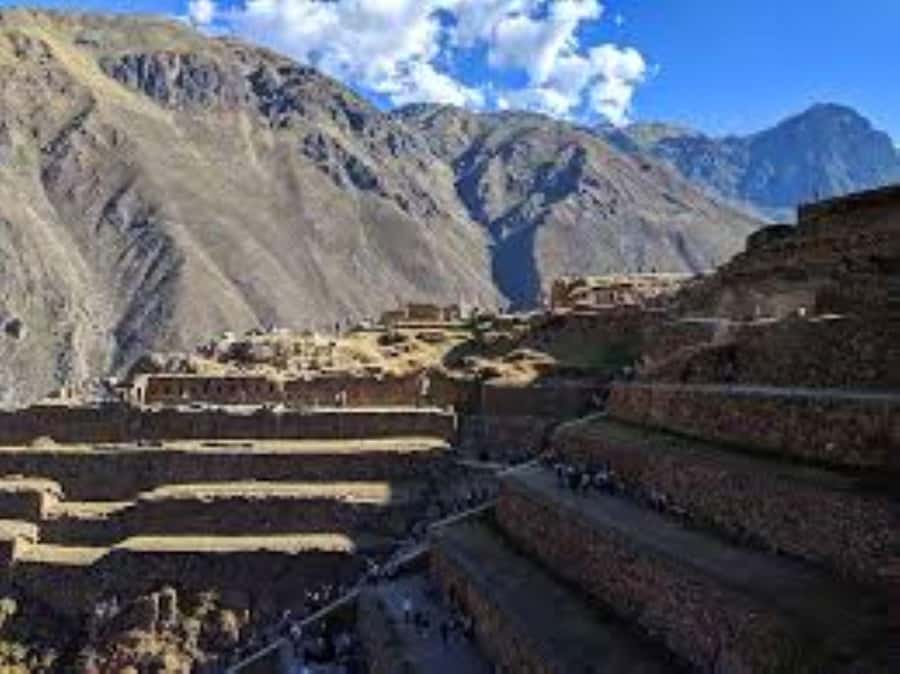
Ollantaytambo is described as The Last Living Inca City, and that name points to what makes the stop different from Moray or Maras. You are visiting a town known for its Inca foundations, not only a detached archaeological site.
The appeal is the connection between old stone construction and an inhabited place. That gives the site a more immediate feel. You can think about how Inca planning worked in a setting that still functions as a town, rather than viewing the remains as something entirely separate from daily life.
This stop is especially valuable for readers who want more than scenic viewpoints. The stonework and town layout help explain the practical side of Inca building. It is a place to pay attention to streets, walls, and the way the old construction shapes the setting.
Ollantaytambo comes late in the day, after Moray, Maras, and lunch. You may be tired by then. I would resist rushing through it just because Pisac remains on the schedule. It is one of the tour’s strongest historical stops and deserves more than a quick photograph.
The exact amount of time at each location is not provided, so your guide will control the pace. That is another reason to ask early in the day how long each stop will last.
Pisac market and the Archaeological Park
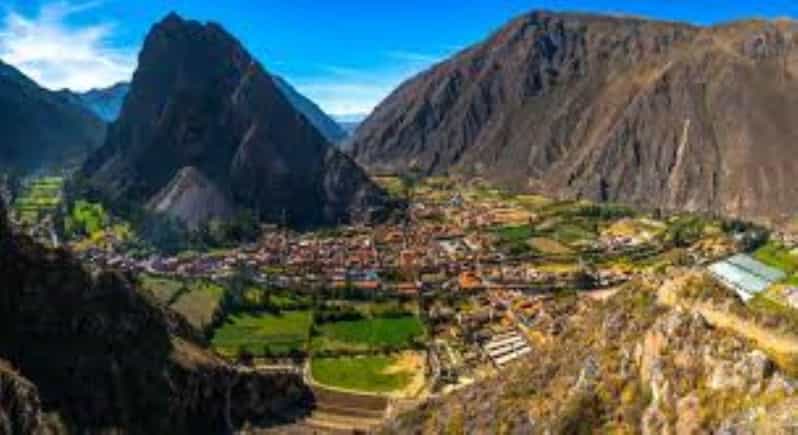
Pisac finishes the sightseeing circuit with two different experiences: the indigenous market and the Archaeological Park of Pisac. Together, they make the town one of the most useful stops for both shopping and archaeology.
The market is the natural place to look for handicrafts. You will find a more personal souvenir experience here than buying a generic item at a roadside stop, but remember that market time is limited within a 12-hour itinerary. Decide what you want before you arrive, and leave enough time to see the archaeological area.
Pisac sits on the slopes of Intihuatana hill. The position gives the town a strong visual setting, but the important point is the relationship between the settlement and the hill above it. The Archaeological Park contains finely crafted Inca stone buildings, giving you one last chance to focus on construction rather than shopping.
I like the balance of this final stop. You can browse local goods, then shift your attention back to stonework and the Inca site. If you are mainly interested in buying handicrafts, Pisac may be your favorite part. If ruins are your priority, save your energy for the Archaeological Park.
Because Pisac comes near the end of a demanding day, manage your expectations. You are seeing a major market and an archaeological park after many hours on the road. The route gives you access to both, but it cannot offer the slow pace of a dedicated Pisac day.
Timing, group size, and the real value
The tour runs for about 12 hours, from a 7:00 am start to a return around 7:00 pm. That is a serious commitment, but the value comes from the number of major sites included.
If you booked separate outings for Chinchero, Moray, Maras, Ollantaytambo, and Pisac, you would need to manage more scheduling and coordination. This tour gives you one fixed day and one guide-led route. For someone with limited time, that convenience can be worth more than a slower, narrower excursion.
The main cost is not just money. It is energy. Five destinations mean frequent transitions and a full day away from Cusco. I would book this if you want coverage and variety. I would skip it if you prefer spending several hours at one archaeological site or keeping afternoons open.
The small-group cap of 10 improves the basic value. It gives the outing a more personal scale than a large-group bus, though it does not guarantee unlimited time at each stop. The English and Spanish guide options also make the tour useful for visitors who want explanations rather than a simple transfer between sights.
The only specific extra charge provided is the Maras entrance fee. Plan for 20 soles based on the latest booking information, not the 10 soles shown in the app. The total tour price itself is not included here, so compare the current booking price with the number of sites, lunch, guide service, and group size before paying.
Free cancellation is available up to 24 hours in advance for a full refund, and you can reserve now and pay later. Those terms help if your Cusco plans are still shifting.
Who should book this full-day outing
I would recommend it to a first-time visitor who wants a strong overview of the Sacred Valley and has only one open day. It suits people who enjoy switching between archaeological sites, local crafts, village settings, and unusual engineering.
It is also a good fit if you want both Pisac and Ollantaytambo in the same day. Many shorter outings leave out one of these places or focus on only a few attractions. This route gives you the broadest range, though at a faster pace.
I would be more cautious if you dislike early starts, long days, or structured sightseeing. The itinerary is fixed and ambitious. There is no room to linger for hours at Moray, shop slowly in Pisac, and study every wall in Ollantaytambo.
Families and small groups may appreciate the 10-person limit, but the tour details do not specify child policies, vehicle arrangements, or accessibility provisions. Ask the provider about those points before booking if they affect your plans.
Should you book Sacred Valley Vip Cusco?
Book it if you want the biggest possible Sacred Valley overview in one day. The strongest reasons are the unusual terraces at Moray, the 3,000-plus salt wells at Maras, the two-part visit to Pisac, and the chance to see five major locations with a small group.
Skip it in favor of a slower or more focused tour if you value long visits over coverage. Also budget 20 soles for Maras, and allow extra patience for pickup coordination. For an ambitious first look at the Cusco region, this is a useful route with plenty of historical and visual variety.
FAQ
How long does the Sacred Valley tour last?
The tour lasts 12 hours. It starts at 7:00 am and returns to Cusco around 7:00 pm.
Which places does the tour visit?
The route includes Chinchero, Moray, the Maras Salt Mines, Ollantaytambo, and Pisac.
What can I see in Chinchero?
You can see Inca wall construction, a historic colonial church, and a textile center.
What is special about Moray?
Moray is an important Inca agricultural site with large circular terraces.
How many salt wells are at Maras?
The Maras Salt Mines contain more than 3,000 salt wells.
Is lunch included?
The itinerary includes a buffet lunch in Urubamba.
What can I do in Pisac?
You can visit the indigenous market and the Archaeological Park of Pisac, which has finely crafted Inca stone buildings.
What languages does the guide speak?
The live guide is available in English or Spanish.
How large is the group?
The tour is limited to 10 participants.
Can I cancel the booking?
You can cancel up to 24 hours in advance for a full refund. You can also reserve now and pay later.
Just added around Cusco
- Super Sacred Valley with Transfer to Ollantaytambo★ 3.1 · 4 reviews
- From Cusco: South Valley Villages and Archaeology Tour★ 5.0 · 3 reviews
- SOUTH VALLEY CUSCO★ 4.1 · 56 reviews
- Salkantay Trek to Machu Picchu 5D/4N or 4D/3N by glamping★ 4.4 · 35 reviews
- From Cusco: Sacred Valley of the Incas Full-Day Tour★ 4.5 · 29 reviews
- Sacred Valley & Machu Picchu by Train: 2-Day, 1-Night Tour★ 5.0 · 6 reviews
- rainbown mountain Vinicunca 1 day★ 3.8 · 3 reviews
- Cusco: Rainbow Mountain Horseback Riding Tour + lunch★ 4.1 · 10 reviews
Sacred Valley Tours, compared.
Sacred Valley & Maras Salt Mines Tour with Lunch
Read our review →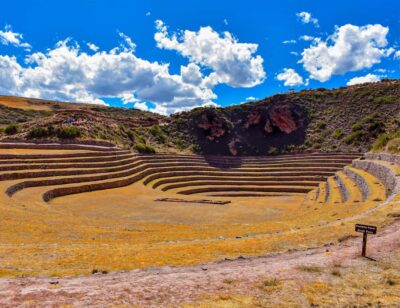
Moray, Maras Salt Mines & Chinchero Weavers Tour
Read our review →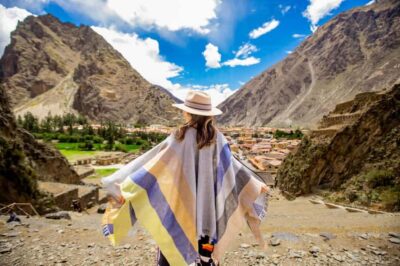
Sacred Valley, Pisac, Ollantaytambo, Salt Mines Moray
Read our review →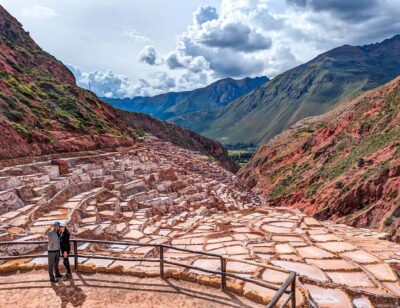
Chinchero,Moray & Salt Mines drop-off in Ollantaytambo
Read our review →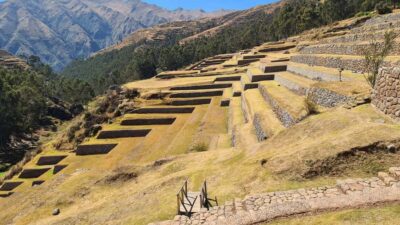

Pisac Indian Market and Ollantaytambo Fortress with Lunch
Read our review →
Browse the lists this tour appears in