
Reviewed · CITY TOURS
Lima : City tour 360° Panoramic bus – Sightseeing Tour
Lima’s past and present come into view quickly on this four-hour panoramic bus tour. You move from the ancient Huaca Pucllana in Miraflores to modern San Isidro, then into the colonial center founded in 1535. The most memorable stretch is the walk through Plaza Mayor and San Francisco Convent, where the catacombs add a darker note.
I like the broad introduction to the city, especially the contrast between Huaca Pucllana and the colonial center. I also like having a bilingual guide, round-trip transport, and a set route that covers sights spread across Lima. The main drawback is traffic. A bad day on Lima’s roads can cut into your time at the stops, and the bus itself may feel cold.
Key points to know before booking
- Huaca Pucllana gives the tour an ancient starting point: You see a 1,500-year-old archaeological site before moving into modern Lima.
- The route covers three very different parts of the city: Miraflores, financial-district San Isidro, and the colonial center.
- The historic center is partly explored on foot: Expect a bus-to-walking transition, including a pedestrian visit to Plaza Mayor.
- San Francisco includes a 30 to 40-minute underground catacomb visit: This is the most focused historical stop.
- Traffic can shape the day: One report described long delays and too little time outside the bus.
- The $39 price includes the main practical pieces: Panoramic transport, an official Spanish and English guide, listed visits, and the ride back to Miraflores.
Starting in Miraflores at Av. Petit Thouars 5490
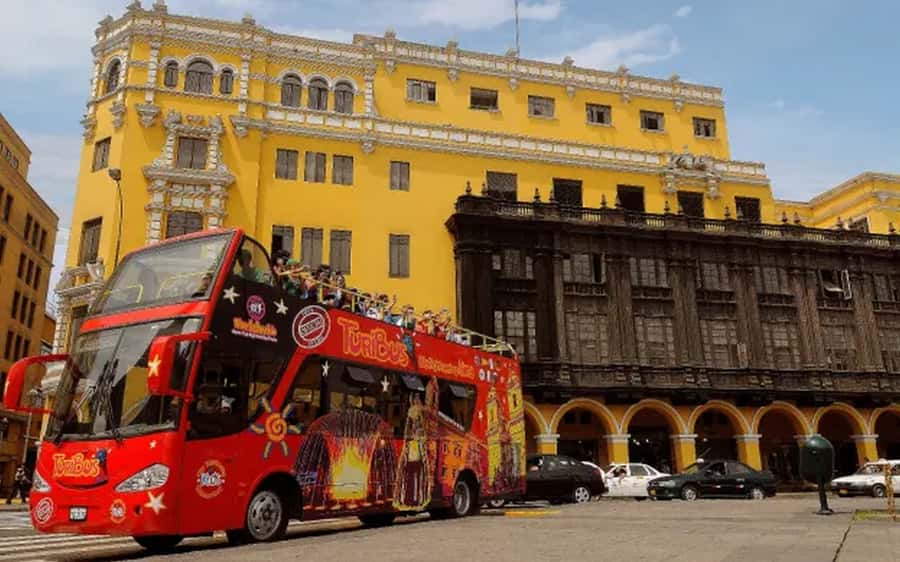
The meeting point is at Av. Petit Thouars 5490 in Miraflores, where you look for the red bus. This location works well if you are staying in Miraflores, but you should allow time to reach it if you are based elsewhere in Lima. The tour returns to the same address, which keeps the day simple.
The opening ride lasts about 40 minutes. I would use this time to watch the city change outside the windows rather than expect a nonstop stream of major sights. The panoramic design gives you a wide view, but traffic, road position, and the roof or window setup will affect how clearly you see things.
The guide speaks Spanish and English and stays with you through the route. The strongest praise for this experience centers on the guide’s explanations of Lima’s culture, history, and daily character. That matters here because this is not only a photo ride. Without context, a colonial balcony, a public square, or a large city park can blur into the next stop.
Bring sunglasses, a hat, sunscreen, insect repellent, and light clothing. Also bring a layer for the bus. One passenger found the bus too cold, so a thin sweater is a sensible addition even on a warm day.
Other ways to see the whole city in Lima:
- City Tour Panoramic Bus Departure from Larcomar
★ 5.0 · 97 reviews - City Tour of Lima from the Airport
★ 4.5 · 84 reviews - Lima City Tour. Pre-Hispanic, Colonial and Modern Tour.
★ 5.0 · 74 reviews
Huaca Pucllana, Lima’s ancient beginning
Your first notable stop is Huaca Pucllana, an archaeological center in Miraflores. The site is described as the oldest evidence in Miraflores, dating back about 1,500 years. That gives you an early look at Lima before the Spanish colonial city and long before the modern financial district.
The stop includes a photo opportunity, a visit, a guided explanation, and some walking. The exact amount of time matters. This is not presented as a long archaeological tour, so you should expect an introduction rather than an exhaustive study of the site.
I like this stop because it prevents the tour from treating Lima as only a Spanish colonial capital. The city’s story began well before 1535, and Huaca Pucllana makes that clear in a way a bus ride cannot. If you have already visited the site separately, this portion may feel familiar. If you are new to Lima, it is a useful first landmark.
After Huaca Pucllana, the bus passes preserved republican residences in Miraflores. These homes reflect European and American influence and show a different side of the district than its hotels, shops, and modern streets. The tour then continues into San Isidro.
San Isidro and the modern face of Lima
San Isidro is introduced as Lima’s financial capital and one of its more modern, exclusive districts. You will see this area mainly from the bus, so think of it as a city overview rather than a walking visit.
This section helps explain Lima’s size and range. In a short time, you move from an ancient ceremonial site to republican residences and then to offices and modern urban development. I find that contrast useful when you are trying to get your bearings early in a Peru trip.
The tradeoff is that a bus overview can feel thin if you want time on the ground. You will see the district, but the experience does not focus on detailed architecture walks or extended stops there. The panoramic format favors coverage over close inspection.
The Magic Water Circuit and Parque de la Reserva
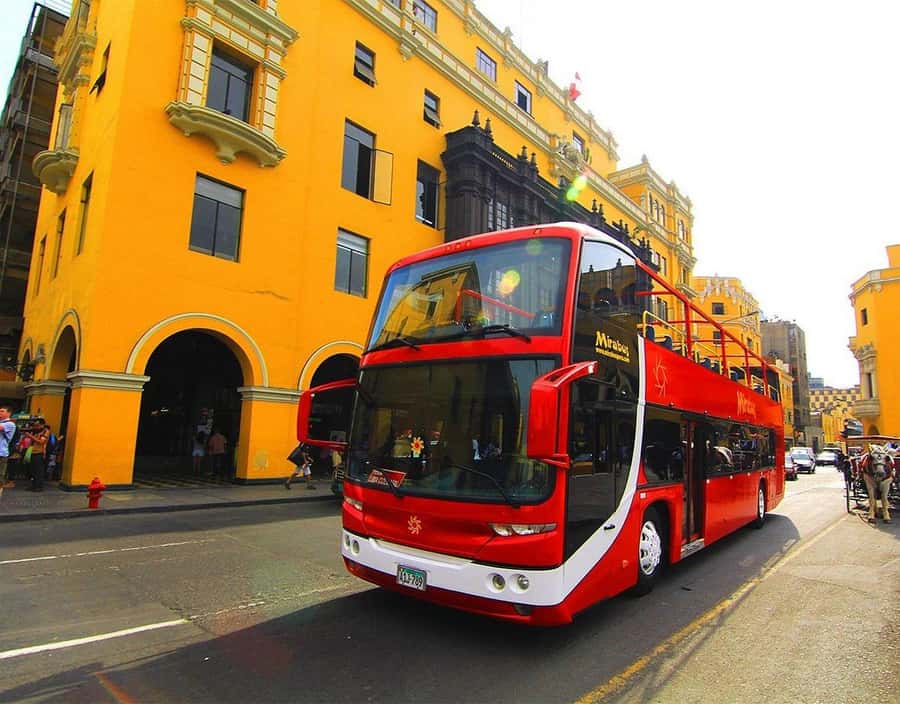
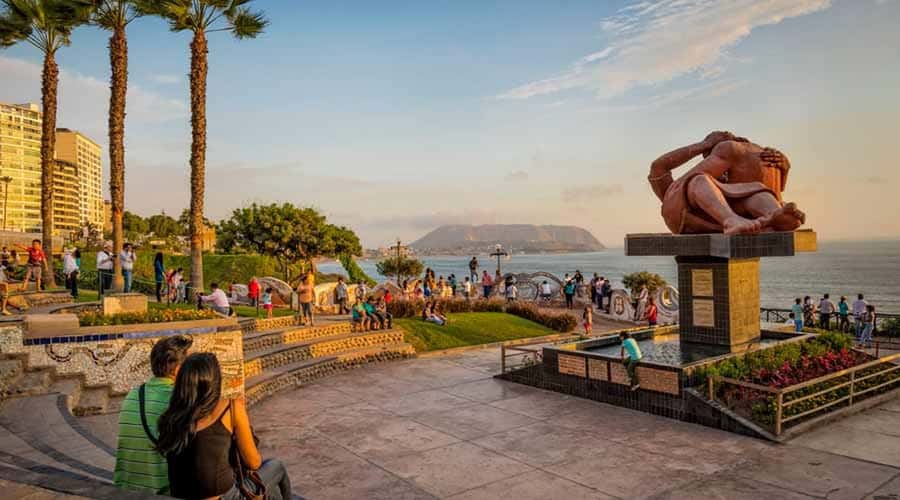
The next major stop is Parque de la Reserva, the historic park that now contains the Magic Water Circuit. Its earlier connection is to Peruvian reservists who gathered there during the War of the Pacific. Since 2007, it has been known for its fountain complex, which holds a Guinness World Record for its size within a public park.
The tour includes a visit, guided commentary, sightseeing, and walking. The water features are the visual draw, while the park’s wartime connection gives the place more meaning than a simple fountain display. You can expect this to be a lively change from the archaeological site and formal streets of central Lima.
Do not confuse this with a full evening fountain show. The activity description provides a visit to the park and Magic Water Circuit, but it does not promise a separate nighttime performance or a long stop. Your experience will depend on the timing of the tour and traffic earlier in the day.
The route’s timing is worth keeping in mind. With only four hours covering several districts, each stop is necessarily controlled. If you prefer to linger, take detailed photographs, or explore every fountain, you may want a separate visit. If your goal is to see the park as part of a larger city introduction, the stop makes sense.
Same base, a completely different day:
- Lima: Ultimate Peruvian Food Tour
★ 4.9 · 700 reviews - Full Day Paracas Ica and Huacachina from Lima All Included
★ 4.5 · 623 reviews - Lima’s Vibrant Heritage: Exploring the City’s Landmarks Half-day
★ 4.5 · 581 reviews - From Lima: Day trip to Paracas, Ica and Oasis Huacachina
★ 4.6 · 409 reviews
Entering the colonial center through Plaza San Martín
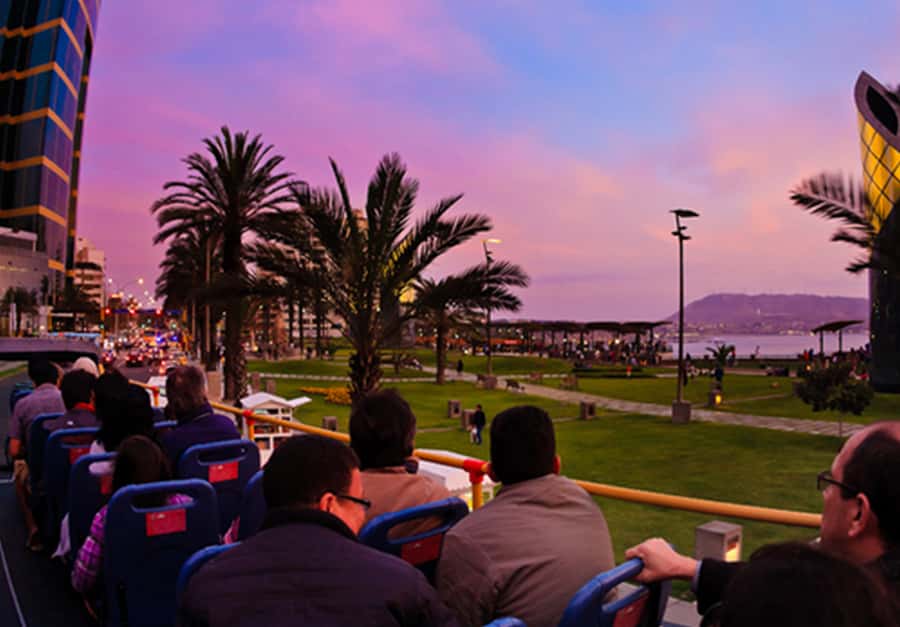
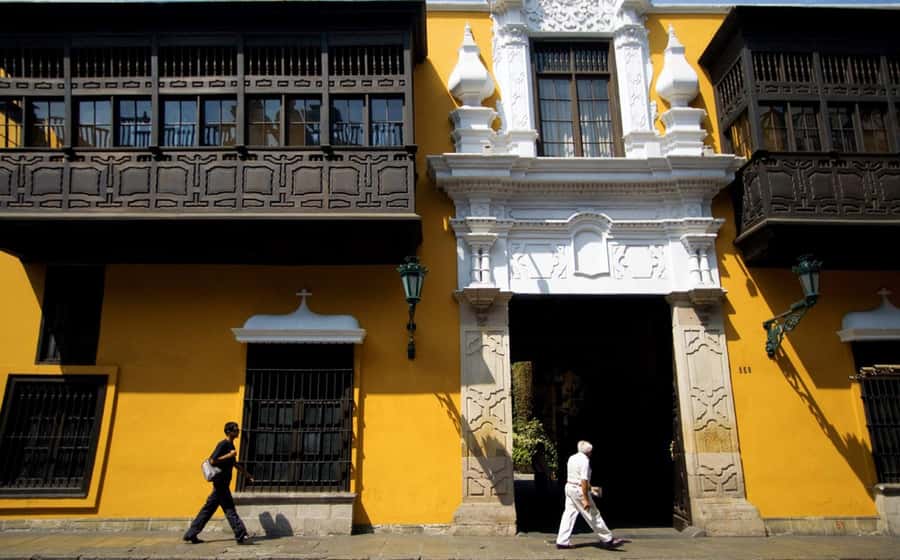
The bus then heads toward Lima’s historic center, once the capital of the Spanish viceroyalty of Peru. This is where the tour becomes more walk-focused. You see colonial mansions, carved balconies, palaces, and major public spaces connected with Peru’s independence.
Plaza San Martín is an important early stop in the colonial-center portion. It carries the name of José de San Martín, the liberator who proclaimed Peru’s independence on July 28, 1821. The square provides a useful political and historical marker before you continue toward the city’s main plaza.
This is also where Lima’s architecture becomes easier to appreciate on foot. From the bus, you can register the broad shape of the city. Walking lets you look up at balconies, compare facades, and hear how the guide connects buildings to Peru’s government and colonial past.
Be ready for a transition from bus sightseeing to city walking. A report from the tour described being dropped off about seven blocks from the main sights. That detail is important because the product is marketed around a panoramic bus, but the historic-center portion is not entirely viewed from your seat. Wear comfortable shoes and expect ordinary city walking.
Plaza Mayor and Lima’s seat of power
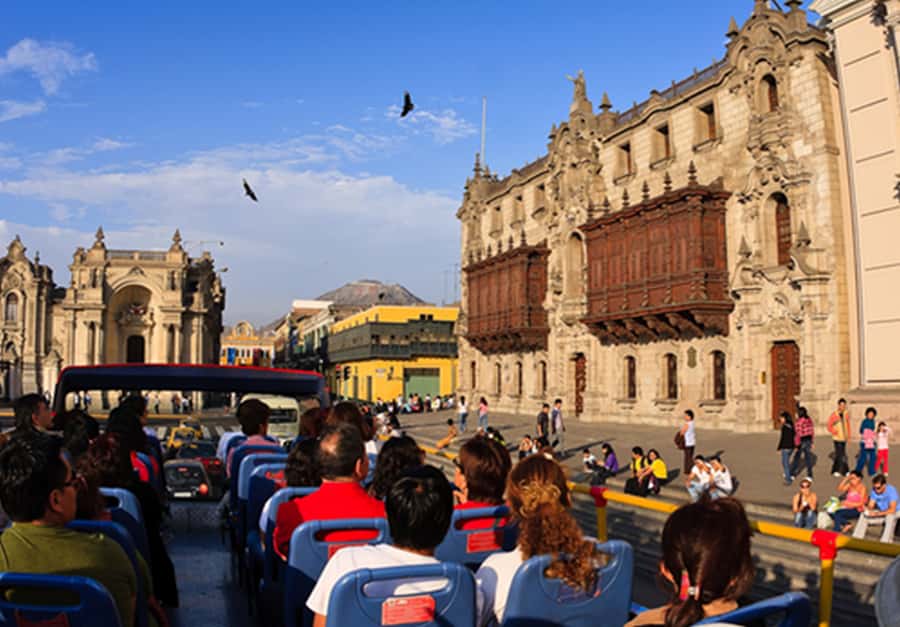
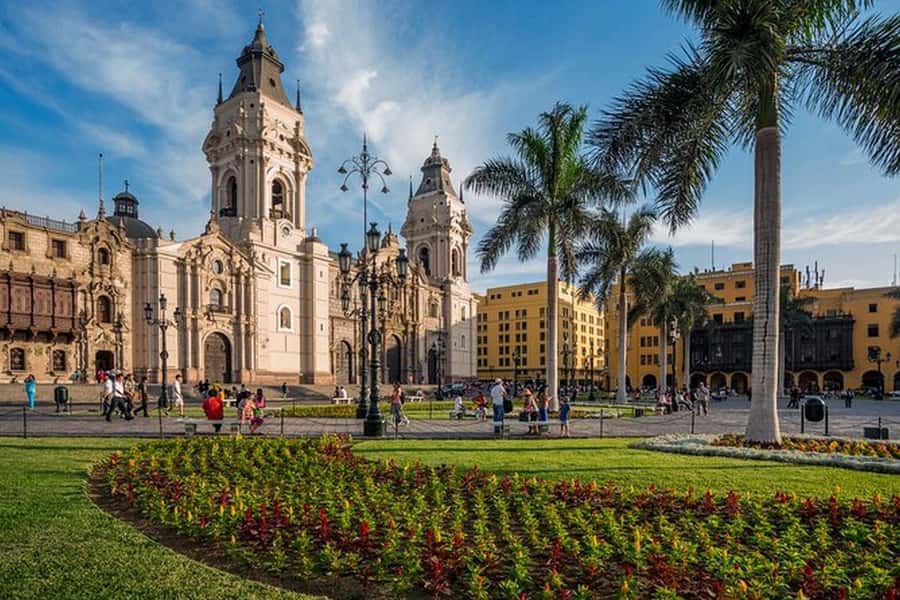
The pedestrian visit to Plaza Mayor, also called Plaza de Armas, is the central historic moment of the route. The square is surrounded by some of Peru’s most important government and religious buildings: the Presidential Palace, the Metropolitan Municipality of Lima, the Archbishop’s Palace, the Union Club, and Lima Cathedral.
You are not just looking at a pretty square. This is the place where the city’s political and religious power is gathered in one view. The guide’s explanations are especially useful here because the facades can look similar at first glance, while their roles are very different.
I would give this part your full attention. It is easy to get distracted by the architecture, people, and photo opportunities, but the square is where the tour’s earlier stops come together. Huaca Pucllana showed Lima before the Spanish period. San Isidro showed the modern city. Plaza Mayor shows the colonial and national capital.
The time here may feel short if you want to enter several buildings. The route includes a pedestrian visit, not a full interior tour of every structure around the square. Treat it as a guided orientation, then return later on your own if you want a slower look.
San Francisco Convent and the underground catacombs
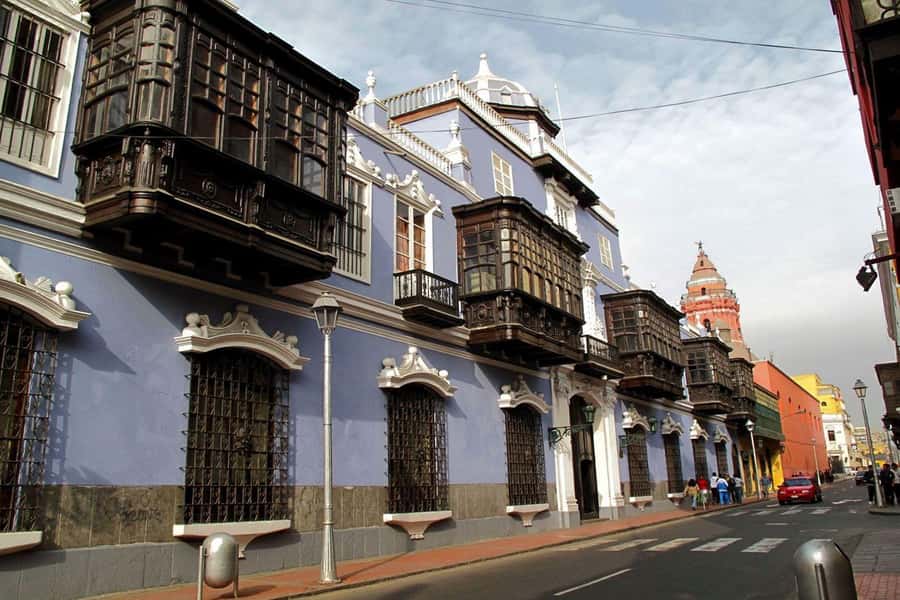
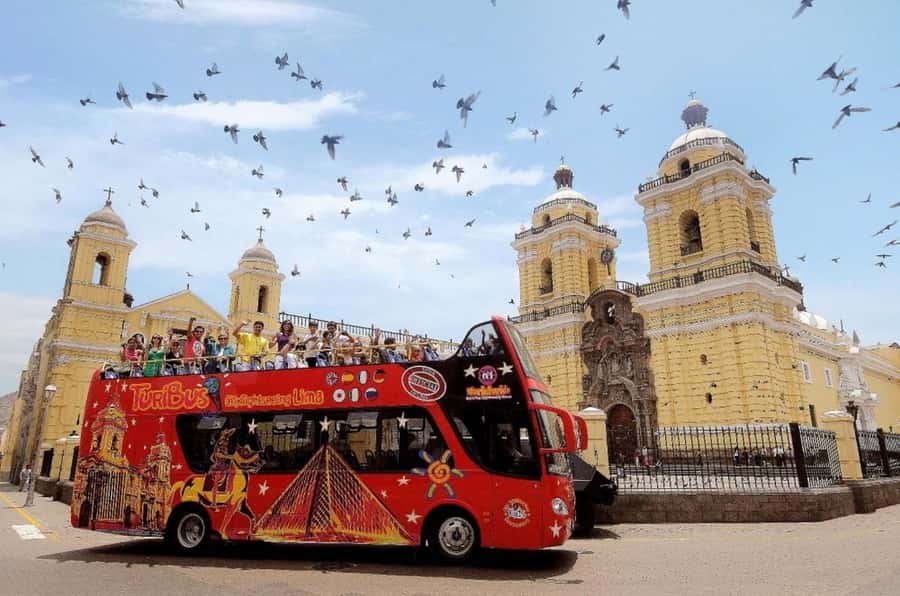
San Francisco Convent is the most specific interior visit on the tour. The catacomb section lasts about 30 to 40 minutes and takes place completely underground. You see vaults made with brick, lime, and stone, along with the way bodies were arranged to use the available space.
This is a serious and unusual stop. The catacombs are not a light museum display, and the underground setting gives the visit a distinct mood. I would not choose this part if you dislike enclosed spaces or are uncomfortable with human remains, but the description makes clear that the catacombs are a central feature rather than an optional extra.
The convent also adds an important religious layer to Lima’s colonial story. After seeing government buildings and public squares, you get a look at how religious institutions shaped the old city. The guide’s role matters here, since the layout and burial practices need explanation to make sense.
One weakness is that the tour may offer limited time for other historic-center interiors. One person described having only one church stop and wanting more places included. That is a fair expectation to manage. You get San Francisco and its catacombs, not a full church-by-church survey of central Lima.
How traffic affects a four-hour route
Lima traffic is the biggest variable in this experience. The route covers Miraflores, San Isidro, Parque de la Reserva, and the historic center before returning to Miraflores. That is a lot of ground for four hours, especially when the tour includes both bus travel and walks.
A good day gives you a useful city overview with several strong stops. A bad day can mean long stretches seated on the bus and less time at the sights. One low rating specifically blamed severe congestion for reducing the number of visits and making the day feel less worthwhile.
I would book this tour with the right expectation: it is a broad first look, not a slow architectural walk. If you have only one day in Lima, the route can help you decide where to return. If you already know you want long visits at Huaca Pucllana, the Magic Water Circuit, or San Francisco, separate visits may suit you better.
The bus itself has mixed comfort potential. A panoramic vehicle gives you a higher, wider view than a normal car, but temperature control may not suit everyone. Bring that extra layer, and do not count on every road section offering a perfect photo.
Is the $39 price fair?
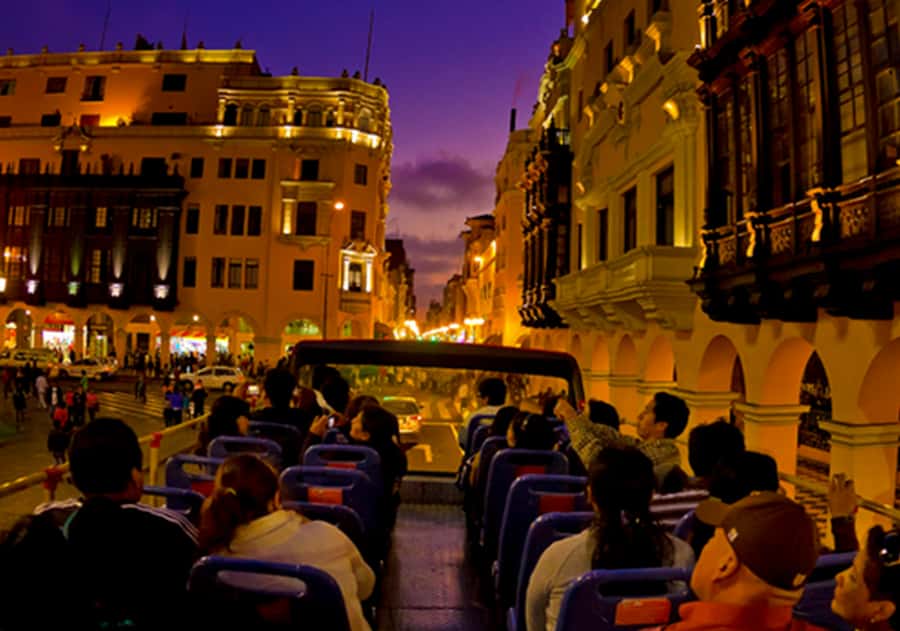
At $39 per person, I see reasonable value if you want transport and a guide to connect distant parts of Lima in one half-day. The price includes the 360-degree panoramic bus round trip, an official guide in Spanish and English, Huaca Pucllana, Plaza San Martín, the pedestrian Plaza Mayor visit, and San Francisco Convent.
The value is strongest for first-time visitors who would otherwise spend time arranging transport between Miraflores and the historic center. You also get historical framing that is hard to build from a bus window alone. The guide has received strong praise for explaining Lima’s culture and history, and that is one of the main reasons to pay for this format.
The value is weaker if you measure the tour by the number of long, detailed stops. Lunch is not included, and the experience does not promise a meal break. Traffic can also reduce the amount of time you spend outside the bus, which makes the fixed price feel less attractive on a difficult day.
Free cancellation up to 24 hours before departure and the option to reserve now and pay later add flexibility. Starting times vary, so check availability before you plan the rest of your day.
Who will get the most from this tour?
I would choose this for a first visit to Lima, especially if you are staying in Miraflores and want a structured introduction without arranging several taxis or rides. It suits you if you like seeing a city’s main districts in one sweep and appreciate a guide who explains what you are looking at.
It also works for visitors with limited time. In four hours, you get ancient remains, modern San Isidro, a major city park, independence-era Plaza San Martín, Plaza Mayor, and San Francisco’s catacombs. That range is the tour’s real strength.
I would hesitate if you want a small, personal outing or a quiet walking tour. The panoramic bus format can feel less intimate, and one rating specifically described the experience as less personal inside the vehicle. I would also think twice if your plans depend on exact timing, since Lima traffic can be unpredictable.
Bring comfortable shoes, sun protection, water, and a light layer. Keep your camera ready on the bus, but save your best attention for the walking sections, especially Plaza Mayor and San Francisco.
Should you book the Lima panoramic bus?
Book it if you want a practical overview of Lima’s major districts, a bilingual guide, and a mix of ancient, modern, colonial, and religious sights for $39. The route gives you a helpful first map of the city and includes the San Francisco catacombs, the tour’s most distinctive visit.
Skip it if you want long stops, a very personal group experience, or a carefully timed day with little risk from traffic. In that case, visit the historic center and Huaca Pucllana separately.
My call: this is a sensible first-day orientation, not the final word on Lima. Go in expecting coverage rather than depth, wear walking shoes, and carry a sweater for the bus. With those expectations, the tour can give you a clear sense of how Lima fits together.
FAQ
Where does the tour start and finish?
It starts and finishes at Av. Petit Thouars 5490 in Miraflores, where the red bus will be waiting.
How long does the tour last?
The tour lasts four hours, including the bus rides, sightseeing, guided visits, and walking portions.
What languages are available?
The live guide speaks Spanish and English.
Is Huaca Pucllana included?
Yes. The tour includes a guided visit to Huaca Pucllana, with sightseeing, a photo stop, and walking.
Does the tour visit the catacombs?
Yes. The San Francisco Convent visit includes an underground catacomb tour lasting about 30 to 40 minutes.
Is lunch included?
No. Lunch is not included in the price.
Just added around Lima
- Lima: Half-Day Private Lima City Tour and Larco Museum★ 4.7 · 20 reviews
- Lima: Flavors and Tradition Walking Tour with Food Tasting★ 4.6 · 40 reviews
- Lima: Half-Day Colonial Lima and Larco Museum Tour★ 4.9 · 31 reviews
- Lima: Escapada de 2 Días a la Reserva Nor Yauyos-Cochas★ 3.1 · 3 reviews
- Lima: City biking★ 4.5 · 36 reviews
- Lima: Food Tour on Local Market★ 5.0 · 8 reviews
- Full Day Lima: Local Market+ CityTour+ Barranco & Miraflores★ 5.0 · 3 reviews
- Lima city tour: Larco Museum and Huaca Pucllana★ 4.8 · 33 reviews
City Tours, compared.
Half-Day City Tour with Sacsayhuaman and Q’enco
Read our review →
City Tour Cusco Qoricancha Sacsayhuaman y Tambomachay
Read our review →
City Tour | Half-Day Tour to 4 Archaeological Sites
Read our review →
City Tour in Cusco & visit Museum South American Camelid Private.
Read our review →
Cusco City Sightseeing, San Pedro Market, Cathedral and Qorikancha Temple
Read our review →
Cusco City Sightseeing and Sacsayhuaman Archeological Park Tour
Read our review →Browse the lists this tour appears in