
Reviewed · WALKING TOURS
Cusco: Walking Tour with a Local Guide
Cusco reveals itself best on foot, where an Inca wall can sit beneath a colonial building and a narrow lane can lead into an artisan neighborhood. This 150-minute walking tour links the city’s main square, Qoricancha, Inka Roca Street, and San Blas in one compact route.
I like the low $15 price and the focus on places you could easily miss without a local guide. Guide Enrique earned especially warm praise for keeping the pace comfortable and explaining sights that were hard to find alone. The main drawback is the moderate walking on cobblestones and uphill streets, plus one serious report of a guide not appearing, so punctual confirmation is wise.
Key points to know before you book
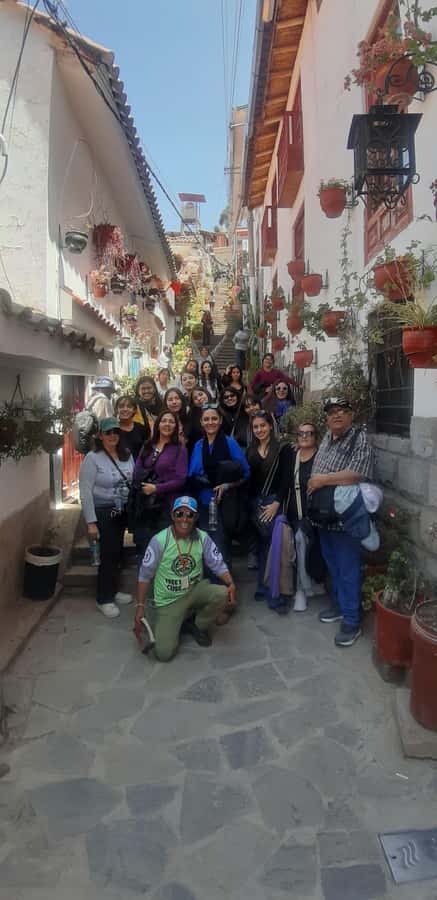
- A strong first look at central Cusco: The route covers the Plaza de Armas, Loreto Street, Qoricancha, Cusicancha, Inka Roca Street, and San Blas.
- The best value is the local context: You get stories about Inca beliefs, colonial buildings, local shops, and Cusqueño daily life for $15.
- Qoricancha gives the walk its historical heart: You learn why the sun mattered so much in Inca culture and see surviving Inca construction.
- San Blas finishes the tour on a useful note: Artisan workshops, colonial churches, and a city viewpoint make this more than a central-plaza stroll.
- Expect real street walking: Wear good shoes, carry water, and be ready for cobbles, slopes, and sun.
- Service reliability deserves attention: The overall score is 4.3 from five ratings, but one booking recorded no guide and no response.
Why this short Cusco walk works so well
Cusco is a city where the past is not kept behind glass. It is built into doorways, foundations, street names, churches, and walls still used as part of modern buildings. A walking tour gives you the right scale for seeing those layers.
This route is particularly useful early in a Cusco visit. You begin at the city’s main public space and finish above the center in San Blas, so you get your bearings while learning why the city matters. You are not spending half the outing in transport, and the route keeps its attention on streets and buildings rather than rushing between distant sights.
The advertised format is a private walking tour with a live guide in English or Spanish. That matters because the most useful information here is not simply the name of a building. It is the explanation of how Inca design, Spanish colonial construction, religious beliefs, and present-day life fit together.
At $15 per person, the value is easy to see if the guide arrives and the tour runs as planned. A single local explanation can help you notice stonework and street details you might otherwise pass without a second look. Food, drinks, hotel pickup, and hotel drop-off are not included, so the price covers the walking experience itself.
Other guided walks in Cusco:
- Cusco: Historic Walking Tour with Pisco Sour and Music Show
★ 4.6 · 65 reviews - Cusco: Walking Tour Cusco
★ 3.4 · 6 reviews - Cusco: Cultural Walking Tour with Local Guide⭐⭐⭐⭐⭐
★ 5.0 · 4 reviews
Starting between Calle del Medio and the Plaza de Armas
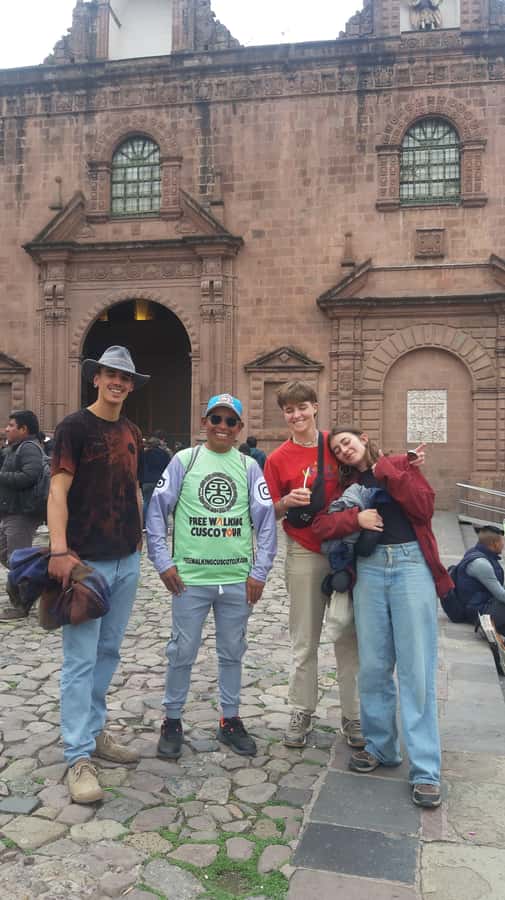
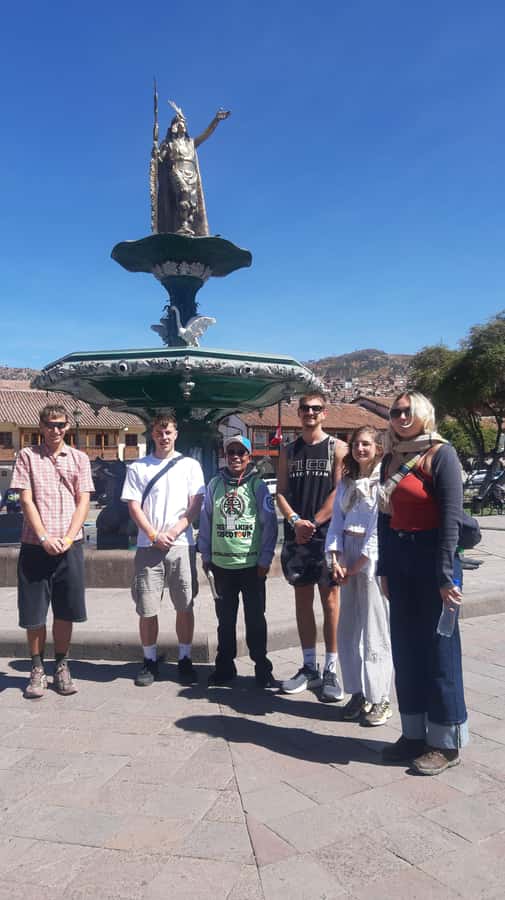
Meet between Calle del Medio and the Plaza de Armas, at the coordinates provided for the meeting point: -13.5170627, -71.9795113. Look for the guide wearing a green T-shirt.
Give yourself enough time to find the exact spot. The meeting area is central, but a large square and surrounding streets can be confusing when you are newly arrived, especially if you are watching traffic, carrying luggage, or adjusting to Cusco’s altitude.
The tour begins at Del Medio and moves directly into the Plaza de Armas. This is a sensible place to start because it gives the guide a broad stage for explaining Cusco’s past. You will hear about the plaza, the colonial buildings around it, and Inca legends connected with the city.
The square is also a useful orientation point for the rest of your stay. From here, you can understand how the central streets connect to the older stonework and the climb toward San Blas. I would book this walk near the beginning of a Cusco visit, not on the final afternoon when you already know the center.
Reading the Plaza de Armas and Loreto Street
The Plaza de Armas is not just a photo stop. It is where the tour introduces the meeting of Inca and Spanish Cusco. The surrounding colonial buildings help explain the city’s later architectural layer, while the guide’s stories bring in legends and local meaning that a quick solo visit may miss.
Next comes Loreto Street, where the pace becomes more detailed. You can expect colonial architecture, local shops, and artisan workshops along a narrow urban route. This is the kind of section where a guide can point out small features without asking you to stop for a formal museum visit.
I like this part because it changes the mood from grand public square to close-up street inspection. Keep your eyes at wall level and foot level. The route is not designed only for big views. Its value comes from small transitions between building styles and the continuing presence of local businesses.
The tradeoff is that the central streets can feel crowded and uneven. The tour description calls for a moderate level of fitness, and that applies even before the climb to San Blas. Comfortable shoes are not optional here. Smooth-soled fashion shoes will make the cobblestones less pleasant.
Qoricancha and the Inca importance of the sun
Qoricancha, also called the Temple of the Sun, is the historical centerpiece of the walk. Here you learn about the importance of the sun in Inca culture and see Inca architecture at close range.
This stop gives the route more depth than a general city orientation. The Plaza de Armas and Loreto Street show the city as you see it today. Qoricancha helps explain the belief system and building skill that shaped Cusco before the colonial period.
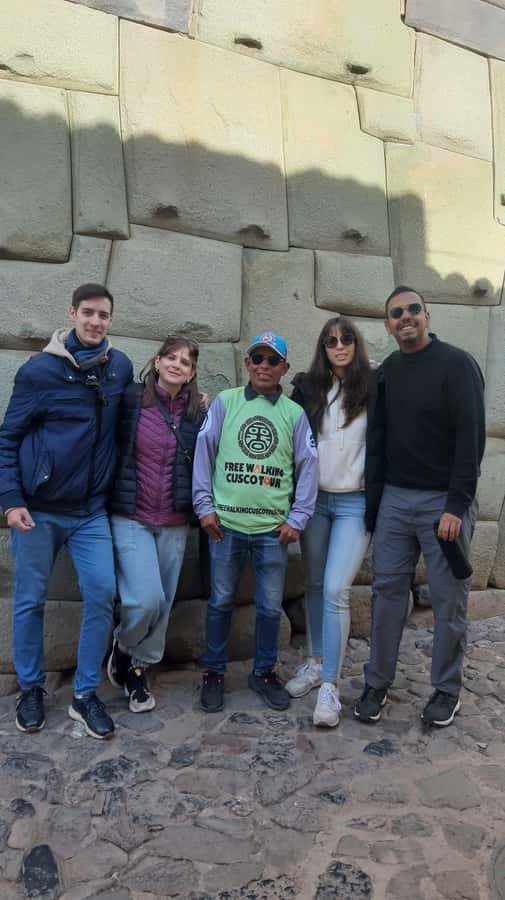
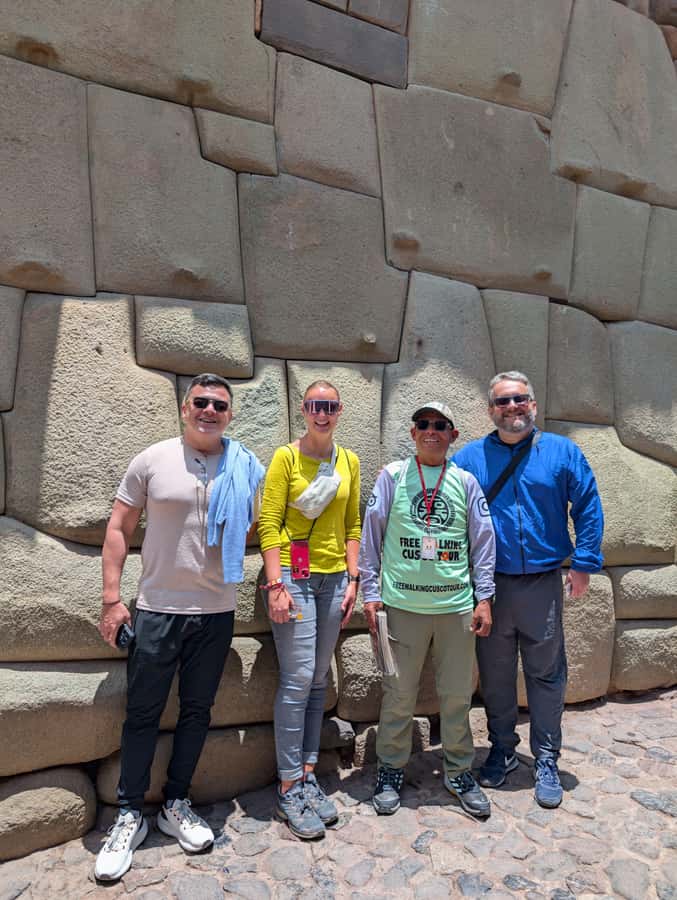
You should pay close attention to the contrast between the surviving Inca work and the later colonial setting. The guide’s role is especially useful here, since stone walls can look impressive without making their purpose clear. The explanation of the sun helps you understand why this place held such importance.
The activity information says you can skip the ticket line, but it does not specify whether an admission ticket is included in the $15 price. Ask about entry costs before you go if you want to budget precisely. The tour price clearly includes the professional guide, but food, drinks, pickup, and drop-off are excluded.
Flash photography is not allowed. Bring your phone or camera if you like, but be ready to follow the site’s rules rather than treating the stop as a rapid photo break.
Other guided tours around Cusco:
- Machu Picchu: Inca Trail 2-Day Overnight Guided Tour
★ 4.9 · 203 reviews - Full Day Private Guided Tour in Machu Picchu
★ 5.0 · 115 reviews - Cusco: Historical Guided City Tour with 4 Inca Ruins
★ 4.5 · 99 reviews - From Cusco: Machu Picchu Full-Day Guided Tour
★ 4.8 · 81 reviews
Cusicancha, an Inca palace, and a change in religious use
The walk continues to the Inka Palace Cusicancha, described as an Inca palace and temple that is now a church. That change in use is one of the clearest ways to understand Cusco’s layered identity.
You are not looking at a separate ancient site and modern town. The old and new occupy the same streets. An Inca palace or temple can be part of a later religious setting, and the route uses Cusicancha to show that shift in a direct, physical way.
This stop should appeal to you if you like cultural context more than a checklist of famous names. The guide can connect the building to the earlier discussion of Inca beliefs and then show how colonial religion changed the setting.
The supplied details do not name a specific guide for every departure, so do not assume Enrique will lead your booking. His name is worth noting because he received especially strong praise for a well-paced tour and for showing places the group would not have found alone. Still, guide assignments can vary.
Inka Roca Street and the details of daily life
Inka Roca Street brings the tour back to street scale. Expect a narrow cobblestone lane, colonial houses, and glimpses of local life. This is less about a single grand building and more about how Cusco’s historic center functions from one block to the next.
I like the change of pace. After the formal history of the plaza and the major religious sites, a street such as Inka Roca helps you see the city as a lived-in place. The colonial houses are part of an ordinary route, not only a backdrop for sightseeing.
The uneven paving is also part of the practical challenge. Keep your water handy and walk at a pace that feels safe. The tour is only 150 minutes, but the time includes regular walking rather than long seated explanations.
A hat and sunscreen are important. Cusco’s sunlight can feel strong, and the activity specifically recommends both. Water is also on the bring list. There is no food or drink included, so handle refreshments before or after the walk rather than expecting stops along the route.
San Blas workshops, churches, and the walk uphill
The final neighborhood is San Blas, one of the most appealing parts of the route for anyone interested in local craft and daily life. You will see artisan workshops, colonial churches, and the everyday setting of Cusqueños.
San Blas gives the tour a more personal finish than ending back at the main square. Workshops and local streets make it easier to connect the historical discussion with present-day work and neighborhood life. You might find the area more memorable than a quick pass through a landmark because the route shows how people use the space.
There is a physical cost. San Blas involves a climb, and the tour ends at the Mirador de San Blas. The viewpoint is a fitting endpoint, but the uphill streets and cobblestones make this a poor choice for anyone with mobility limits.
The activity is not wheelchair accessible and is not suitable for wheelchair users or people with mobility impairments. Even if you normally walk comfortably, consider the sun, altitude, uneven streets, and the moderate fitness requirement when deciding when to schedule it.
What the $15 price really buys you
At $15, this is not a full-day cultural program. It is a focused introduction to central Cusco, led by a professional local guide and built around walking rather than paid attractions or transport.
The strongest value comes from connection. You visit several important places in a short period, but the guide also links them through Inca legends, colonial architecture, religious change, and local life. That combination can save you from wandering through the center with only a list of names.
The price is particularly attractive for solo visitors and couples who want a structured first afternoon without committing to an expensive private vehicle or a long excursion. It also leaves you free to return to the places that interest you most.
You should keep the limits in mind. Pickup and drop-off are not included. Food and drinks are not included. The details do not clearly state that admission to every site is included, so check that point before booking.
There is also a service-reliability concern. The experience has a 4.3 rating from five ratings, including strong praise for Enrique and an excellent mark for another Spanish-speaking guide. One booking, however, reported that no guide arrived and that messages went unanswered. That is a serious warning, even though it appears to be an isolated account in a small sample. Save the meeting details and confirm the green T-shirt meeting point before setting out.
Who will get the most from this walking tour
I would choose this tour if you want a short, affordable introduction to Cusco and prefer local explanation over a self-guided stroll. It suits first-time visitors, history-minded walkers, and anyone who wants to see San Blas while learning how the city’s Inca and colonial layers overlap.
It is also a good fit if you like a moderate pace. Enrique was praised for keeping the walk comfortable, which matters on cobblestones and slopes. A 150-minute outing gives you enough time for context without taking up an entire day.
I would be more cautious if you have trouble walking uphill, dislike uneven paving, or need guaranteed wheelchair access. I would also avoid putting this tour immediately before a fixed dinner reservation, since the route ends in San Blas rather than returning to the Plaza de Armas.
Wear comfortable shoes, a hat, and sunscreen. Bring water. Avoid smoking and do not use flash photography. The tour is available in English and Spanish, so choose the language that will let you follow historical explanations without strain.
Should you book the Cusco walking tour?
Book it if you want the main square, Qoricancha, Inka architecture, colonial streets, and San Blas in one inexpensive walk. The route has a smart shape, the finish at the Mirador de San Blas is useful, and the best guide feedback points to a comfortable pace and worthwhile local detail.
Before booking, accept three facts: it is a real walking tour, the route is not wheelchair accessible, and one booking had a no-show guide. Confirm the meeting point, arrive prepared for sun and cobbles, and ask about any site admission fee. For $15, this is a good-value introduction to Cusco, provided your legs and schedule suit it.
FAQ
How long does the Cusco walking tour last?
The tour lasts 150 minutes, or two and a half hours.
How much does the tour cost?
The listed price is $15 per person.
Where does the tour meet?
Meet between Calle del Medio and the Plaza de Armas in Cusco. The provided coordinates are -13.5170627, -71.9795113.
How do I identify the guide?
Look for the green T-shirt at the meeting point.
Where does the tour finish?
The walk finishes at the Mirador de San Blas.
Which places are visited?
The route includes the Plaza de Armas, Loreto Street, Qoricancha, the Inka Palace Cusicancha, Inka Roca Street, and the San Blas neighborhood.
Is the tour offered in English?
Yes. The live guide service is available in English and Spanish.
Is hotel pickup or drop-off included?
No. Pickup and drop-off are not included.
What should I bring?
Bring comfortable shoes, a hat, sunscreen, and water.
Is the tour wheelchair accessible?
No. The activity is not wheelchair accessible and is not suitable for wheelchair users or people with mobility impairments.
Just added around Cusco
- Excursion to Rainbow Mountain in ATV.★ 5.0 · 4 reviews
- From Cusco: Palccoyo Mountain Tour full day★ 4.5 · 9 reviews
- Day trip to Rainbow Mountain and Red Valley★ 5.0 · 3 reviews
- From Cusco: City tour 4 ruins + Qoricancha★ 4.3 · 22 reviews
- Cuzco: Rainbow Mountain Excursion★ 5.0 · 3 reviews
- Cuzco : Excursion City Tour in Cusco, Sacsayhuaman and Tambomachay★ 3.8 · 3 reviews
- Cusco: Zipline + ATV’s | Salt Mines of Maras and Moray |★ 5.0 · 4 reviews
- Cusco street food tour★ 4.4 · 9 reviews
Walking Tours, compared.
Walking tour in the Historic Center of Arequipa
Read our review →
Miraflores Trending Flavors Half-Day Walking Tour
Read our review →
Arequipa Walking Tour city center and drinks experience
Read our review →
Historic Walking Tour with Pisco Sour and Music Show
Read our review →
Trending Flavors: Miraflores Walking Tour Including Food and Drinks Tasting
Read our review →
City Tour by Panoramic Bus – Walking & Catacombs
Read our review →Browse the lists this tour appears in