
Reviewed · MUSEUMS & INCA RUINS
Cusco: Sacsayhuaman Guided Tour and 1-Hour Horseback Ride
Sacsayhuaman’s huge fitted stones are the star here, but the best surprise is that this four-hour outing adds a one-hour horseback ride through the high country around Cusco. You get four important Inca sites without spending a full day away from town.
I like the mix of archaeology and open-air activity. I also like the small-group limit of 10 and the chance to ride horses selected for your experience. The main drawback is that entrance fees and the Cusco Tourist Ticket are extra, and the ride may take longer if the group needs more help in the saddle.
Key points at a glance
- Four Inca sites in one half-day: Visit Sacsayhuaman, Qenqo, Tambomachay, and Puka Pukara.
- A full hour on horseback: Ride through the National Park of Sacsayhuaman, with mountain views, farms, excavations, and possible llamas or alpacas.
- Good guide-to-group ratio: The group is capped at 10 people, and guides speak English or Spanish.
- Useful personal attention: Guides such as Beny have provided clear riding help, fluent English, and thoughtful answers to questions.
- High-altitude riding: The route reaches about 3,800 meters, so take the altitude seriously.
- Plan for extra admission costs: Site entrances and the Cusco Tourist Ticket are not included.
Why this Cusco tour works so well
This outing solves a common Cusco planning problem. The major ruins north of the city sit close together, but arranging transport, guides, and a safe horseback ride on your own can be awkward. Here, a driver and guide connect the sites, then a ranch visit adds a very different view of the area.
You begin with Inca architecture, move to religion and royal burial practices, then spend an hour outdoors on horseback. The final stops return to temples and defensive buildings. That variety keeps the half-day from feeling like one long march through stone walls.
The tour is listed at $90 per person. That is not the cheapest way to see the ruins, especially since admission is separate. Still, the price includes central hotel pickup and drop-off, private transport during the outing, a bilingual guide, the horse, saddle, helmet, muleteer, snacks, and water. If you value a single booking that combines transport, interpretation, and riding, the cost can make sense.
Other ruins and collections around Cusco:
- Cusco: Half-Day City Tour with Sacsayhuaman and Q’enco
★ 4.6 · 1,129 reviews - City Tour Cusco Qoricancha Sacsayhuaman y Tambomachay
★ 4.7 · 617 reviews - Cusco: City Tour | Half-Day Tour to 4 Archaeological Sites
★ 4.6 · 206 reviews
Sacsayhuaman and the great Inca stonework
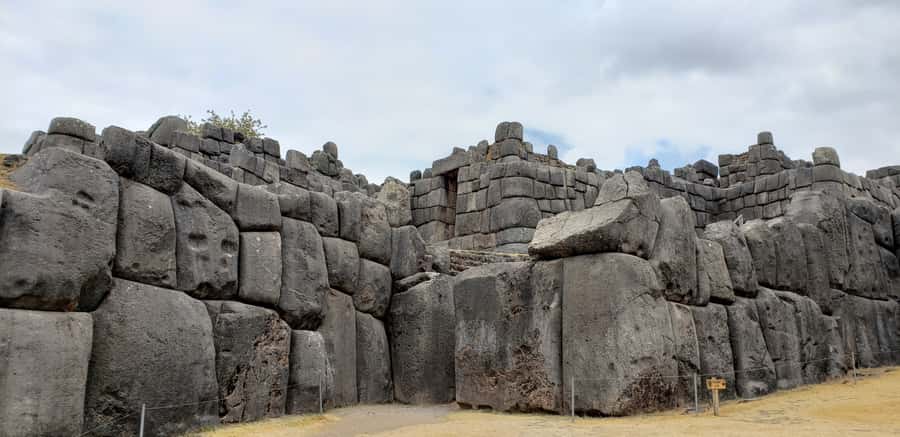
Your first stop is Sacsayhuaman, on the edge of Cusco. This is the place to focus on construction. Massive stones fit together with remarkable precision, and the site gives your guide plenty to explain about Inca engineering, purpose, and power.
The planned visit here lasts about 25 minutes. That is enough for a clear introduction, but not enough for a slow, scholarly examination of every wall. I see this as a strength for a four-hour tour because you have three more archaeological stops and a riding session ahead.
Pay attention to the way the stonework changes in scale and shape. Your guide should help you connect the walls to the wider Inca city rather than treating them as isolated ruins. Sacsayhuaman is often described as a fortress, but the tour also presents its broader importance to the old imperial center.
You will be walking at high altitude from the start. Wear shoes with a firm sole, move at an easy pace, and do not spend your first minutes racing ahead for photographs. The site is memorable enough without turning the first stop into an altitude test.
Qenqo and the ritual side of Inca life
The short drive to Qenqo shifts the subject from giant walls to sacred space. Qenqo was a huaca, an Inca holy place, and the site includes a cave associated with mummification of royal people.
The guided visit is planned for about 25 minutes. It is a compact stop, but it adds an important human detail to the day. At Sacsayhuaman, you are looking at state power and engineering. At Qenqo, you hear how ritual and royal death fitted into Inca society.
The cave is the feature to watch for. Ask your guide to explain what happened there and how mummification related to royal status. The supplied information does not promise a long indoor visit or an extended archaeological lecture, so keep your expectations practical. This is a focused explanation at a smaller site, not a museum visit.
Qenqo also helps break up the physical rhythm of the day. You are not simply moving from one large ruin to another. The route introduces different kinds of sacred and ceremonial places before you reach the ranch.
A one-hour ride through Sacsayhuaman National Park
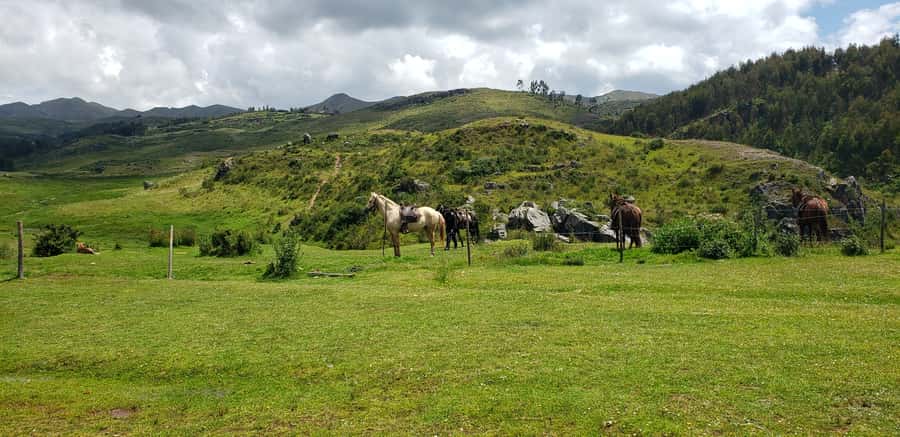
After Qenqo, you head to a ranch near Sacsayhuaman. There, you meet the horses and muleteers, receive a short introduction to riding and safe handling, and get a horse chosen for your experience and comfort.
That selection matters. A first-time rider and a confident rider do not need the same animal or the same pace. The guide can also explain how to lead the horse safely, which is useful even if you have ridden before. Saddles and safety helmets are included.
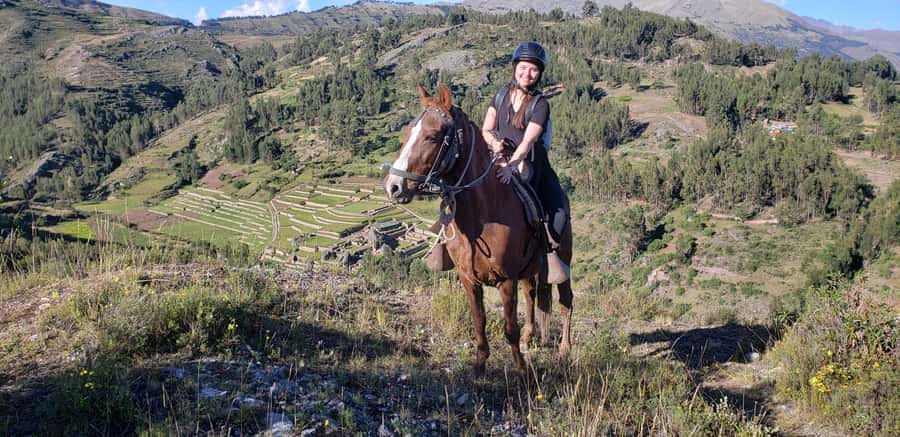
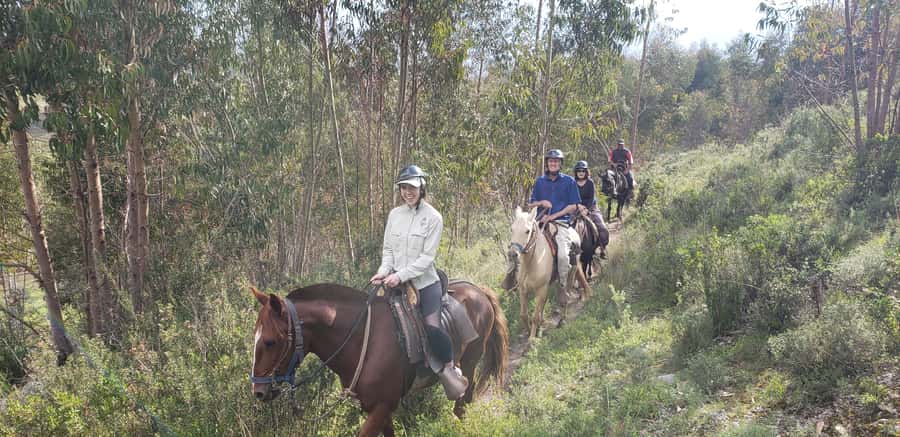
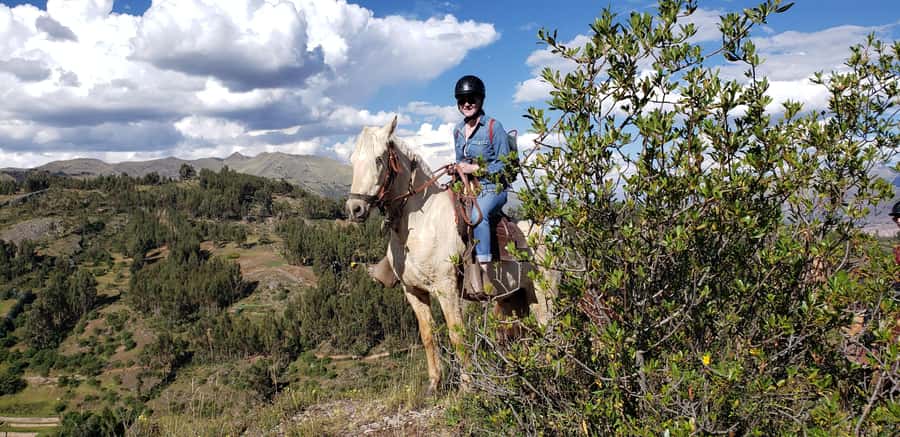
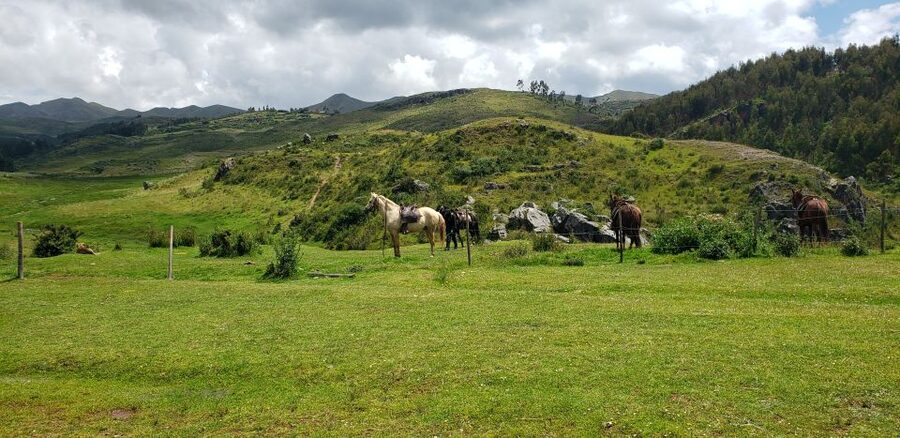
The ride lasts one hour and enters the National Park of Sacsayhuaman, an area described as about 6,000 acres. You pass potato farms, possible new excavation areas, and mountain scenery around the archaeological zone. With luck, you may see llamas or alpacas along the way.
This is not just a short photo stop beside a ranch. You spend a full hour in the saddle, which gives you time to settle into the horse and notice the change from city streets to open high country. The route can feel active and scenic without requiring a full day of riding.
A detailed account of one outing with guide Beny describes horses that were well behaved and well cared for. That same ride allowed the two participants to trot and gallop as they wished. Do not treat that as a guarantee for every group. Your pace depends on your ability, your horse, trail conditions, and the guide’s safety judgment.
The tour notes that total timing depends on the group’s riding skills and experience. Beginners may need more instruction and a slower pace. That is good for safety, but it can reduce time available for the last two ruins if the group runs late.
Other rides out of Cusco:
- Cusco: 3-Hour Horse Riding Tour to the Temple of the Moon
★ 5.0 · 105 reviews - Cusco: Half-Day Horseback Riding at Devil’s Balcony
★ 4.9 · 89 reviews - Horse Riding Chacan Mountain And Temple Of The Moon
★ 5.0 · 78 reviews - Horseback Tour in cusco to Temple of the Moon & Hidden temples
★ 5.0 · 54 reviews
What riding at 3,800 meters feels like
The high point of the ride is around 3,800 meters above sea level. Cusco itself already sits high, and many people feel altitude effects more during activity than while walking slowly through town.
You should keep your effort moderate, drink the supplied water, and tell the guide if you feel unwell. The activity is not suitable for people with mobility impairments, pregnant women, or anyone over 200 pounds, or 91 kilograms. Those limits are worth taking seriously because mounting, balancing, and riding at altitude put different demands on your body than a normal sightseeing walk.
Long pants and closed-toe shoes are required recommendations. They protect your legs and feet better than shorts and sandals. A helmet is provided, but you should still dress for a high mountain outing rather than a city tour.
If you have never ridden, say so during the introduction. If you have experience and hope to trot or gallop, explain that clearly too. The guide needs an honest picture of your ability to match you with a suitable horse and set a safe pace.
Tambomachay, a temple shaped by water
After the ride, the route includes Tambomachay, an ancient temple dedicated to water. The planned guided visit lasts about 25 minutes.
This stop gives the day a calmer finish after time in the saddle. Look for the water channels and ask your guide how the site functioned in Inca religious life. The point here is not size. Tambomachay is valuable because it shows how water could carry ceremonial meaning as well as practical importance.
The order of the ride and final ruins can make the outing feel pleasantly varied. You have already spent time learning about construction and burial customs, then moved through farmland on horseback. Tambomachay brings the focus back to a carefully designed sacred place.
As with the other short visits, the guide’s explanation makes the difference. A 25-minute stop will not cover every theory about the site, but it can give you a useful framework for seeing what remains.
Puka Pukara and the last view of the Inca road
Puka Pukara is the final archaeological stop. This ancient Inca fortress sits near the route and gives you a different type of structure from both Sacsayhuaman and Tambomachay.
The visit is also scheduled for about 25 minutes. Its position near the end of the day works well because you can compare it with Sacsayhuaman while the earlier explanations are still fresh. Ask how its defensive or monitoring role related to movement through the area.
Puka Pukara is a brief stop rather than a long exploration. If you want extensive time at every site, a dedicated ruins tour would suit you better. If you want a broad introduction plus riding, this quick visit rounds out the experience nicely.
From here, you transfer back to Cusco. Central hotel pickup and drop-off are included, with pickup from the hotel lobby or entrance. The convenience is especially useful in Cusco, where finding the right meeting point and arranging transport between scattered sites can consume time.
Guides, group size, and the feel of the day
The group is limited to 10 participants, and the guide speaks English or Spanish. A small group helps at the riding stage, when people need different levels of instruction and attention.
Beny led one particularly well-received outing for a parent and a 17-year-old son. That experience included a chauffeur, the four Inca sites, a llama farm and alpaca wool shop, and the mountain ride. The supplied tour details do not list the llama farm or wool shop as guaranteed stops, so consider them possible additions rather than part of the fixed plan.
Beny was also described as speaking excellent English and answering questions readily. Another named guide is Holger. Guide assignments can change, but these names give you a sense of the personal service associated with the experience.
The small group does not mean the tour is private. You may share the vehicle, guide, and riding time with other participants. The group size does make it easier to ask questions than on a large coach outing.
What the $90 price really covers
At $90 per person, this is best viewed as a bundled activity rather than a simple ruins transfer. You are paying for four hours of coordination, transport from central Cusco, a bilingual guide, the ranch operation, horse equipment, a muleteer, snacks, and water.
The main extra is admission. Entrance fees and the Cusco Tourist Ticket Site Pass are not included. Check the ticket requirement before you go and budget for it separately. The tour price alone does not cover every cost connected with the archaeological sites.
Insurance is also not included. That matters more here than on a basic city walk because horseback riding carries its own risks. You should understand your personal travel insurance before booking.
Free cancellation is available up to 24 hours in advance for a full refund, and you can reserve now and pay later. Those terms help if your Cusco schedule depends on weather, altitude, or changing train plans, but they do not remove the need to arrive ready for a physical activity.
Who should book this experience
I would choose this for someone with limited time in Cusco who wants both ruins and a short horseback ride. It suits couples, families with older children, and small groups who enjoy switching between guided history and outdoor activity.
The outing is also a good fit if you want help with the practical pieces. Pickup, driving, site explanations, horses, helmets, and a muleteer are arranged in one booking. You do not need to spend your morning negotiating separate rides or finding the ranch.
I would hesitate if your main goal is serious archaeological study. The stops are short, and the four-hour schedule favors range over depth. I would also hesitate if you dislike riding, have strong altitude concerns, or want complete control over your pace at each ruin.
Before booking, be honest about your riding ability. The tour can accommodate different experience levels, but the pace and total timing depend on the group. If one person needs extra help, everyone’s schedule may shift.
Should you book this four-hour Cusco outing?
Book it if you want a compact, active introduction to the Inca sites north of Cusco, and if riding through high mountain country appeals to you. Sacsayhuaman and Qenqo provide the strongest cultural content, while the horse ride gives the day its character. Tambomachay and Puka Pukara complete the circuit without requiring another full day.
Skip it if you want long, unhurried visits, if the extra entrance fees strain your budget, or if you are not comfortable on horseback at about 3,800 meters. For the right person, $90 is fair for the transport, guide, equipment, and one-hour ride. Just arrive in long pants, closed-toe shoes, realistic expectations about altitude, and enough energy for a busy half-day.
FAQ
How long does the tour last?
The planned duration is four hours. The total time can change depending on the riding skills and experience of the participants.
What sites will I visit?
You will visit Sacsayhuaman, Qenqo, Tambomachay, and Puka Pukara. The tour also includes a ranch near Sacsayhuaman for the horseback ride.
How long is the horseback ride?
The horseback ride lasts one hour.
Is hotel pickup included?
Yes. Pickup and drop-off are included from hotels in central Cusco. You should wait in the hotel lobby or at the entrance for the guide.
Are entrance fees included in the price?
No. Entrance fees and the Cusco Tourist Ticket Site Pass are not included.
What should I wear and bring?
Bring long pants and closed-toe shoes. Saddles, safety helmets, snacks, and water are included.
Is the tour suitable for everyone?
No. It is not suitable for pregnant women, people with mobility impairments, or people over 200 pounds, or 91 kilograms.
More museums and ruins in Cusco
- City Tour in Cusco & visit Museum South American Camelid Private.
★ 5.0 · 147 reviews - Cusco City Sightseeing and Sacsayhuaman Archeological Park Tour
★ 4.5 · 101 reviews - Cusco: Historical Guided City Tour with 4 Inca Ruins
★ 4.5 · 99 reviews - City Tour in Cusco & visit Museum South American Camelid
★ 4.5 · 80 reviews
Just added around Cusco
- Cusco: Sacsayhuaman, Qenqo, Puca Pucara & Tambomachay Tour★ 4.8 · 4 reviews
- Cusco: Rainbow Mountain & Red Valley Tour with Picnic meals★ 5.0 · 11 reviews
- Cusco: Sacred Valley Day Trip with Maras & Moray Salt Mines★ 5.0 · 3 reviews
- Cusco : Rainbow Mountain and Red Valley Tour★ 5.0 · 3 reviews
- Cusco: Rainbow Mountain ATV Tour with Breakfast & Lunch★ 4.7 · 5 reviews
- Cusco: Rainbow Mountain In Quad Bikes /walk 5 minutes/+meals★ 3.5 · 3 reviews
- Cusco: Rainbow Mountain and viewpoint red valley ( optional)★ 4.8 · 3 reviews
- Cusco: Rainbow Mountain Tour at Sunset Without the Crowds★ 4.7 · 3 reviews
Museums & Inca Ruins, compared.
Half-Day City Tour with Sacsayhuaman and Q’enco
Read our review →
City Tour Cusco Qoricancha Sacsayhuaman y Tambomachay
Read our review →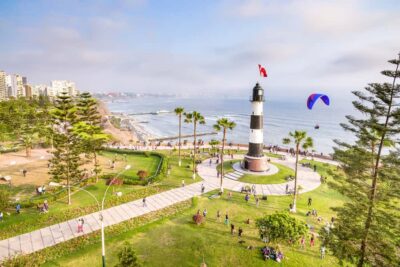
The Charm of Barranco & Pre Inca Pyramid in Miraflores
Read our review →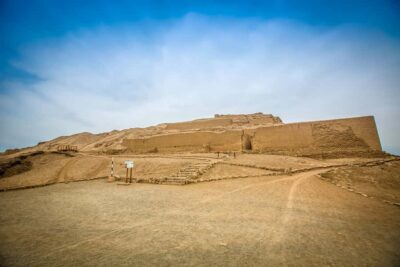
Pachacamac Ruins & Barranco Half-Day Guided Tour
Read our review →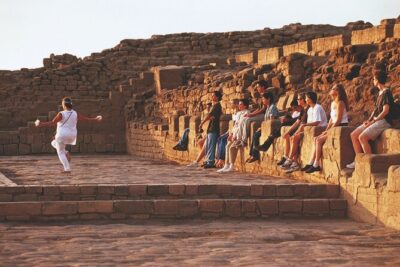
Pre Inca Temple of Pachacamac Half-Day Tour from Lima
Read our review →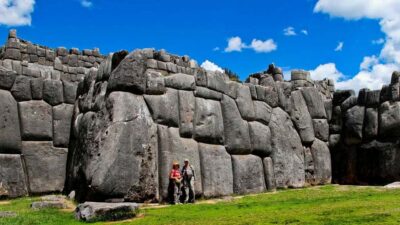
City Tour | Half-Day Tour to 4 Archaeological Sites
Read our review →
City Tour in Cusco & visit Museum South American Camelid Private.
Read our review →Browse the lists this tour appears in