
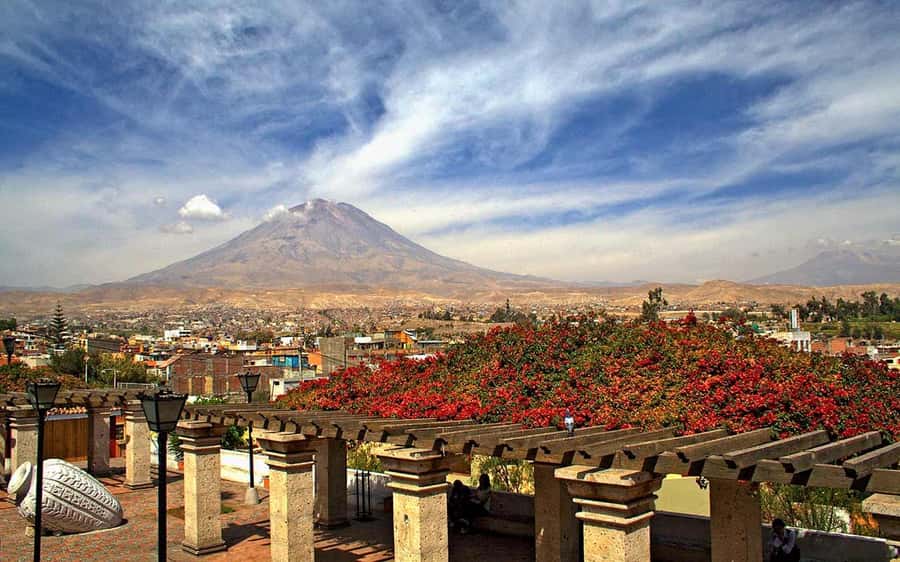
Reviewed · SANTA CATALINA MONASTERY
Arequipa Walking Tour and Santa Catalina Monastery
Santa Catalina Monastery is the star here: a vast, colorful maze of narrow lanes, small cells, flower-filled cloisters, and old furnishings in the middle of Arequipa. You can walk through four centuries of local architecture without spending half a day on a museum circuit. The visit then moves to the Plaza de Armas and the Jesuit Church of the Company of Jesus, known for its carved mestizo facade, cloisters, and dome.
I like the easy 3:00 PM pickup, which leaves your morning free, and I like the compact route linking the monastery with Arequipa’s central square. The main caution is timing: one past booking started about an hour late, so keep a little flexibility in your afternoon. Guide Deyvis earned especially strong praise for answering questions, while another guide was noted for excellent English and a helpful manner.
Key points to know before booking
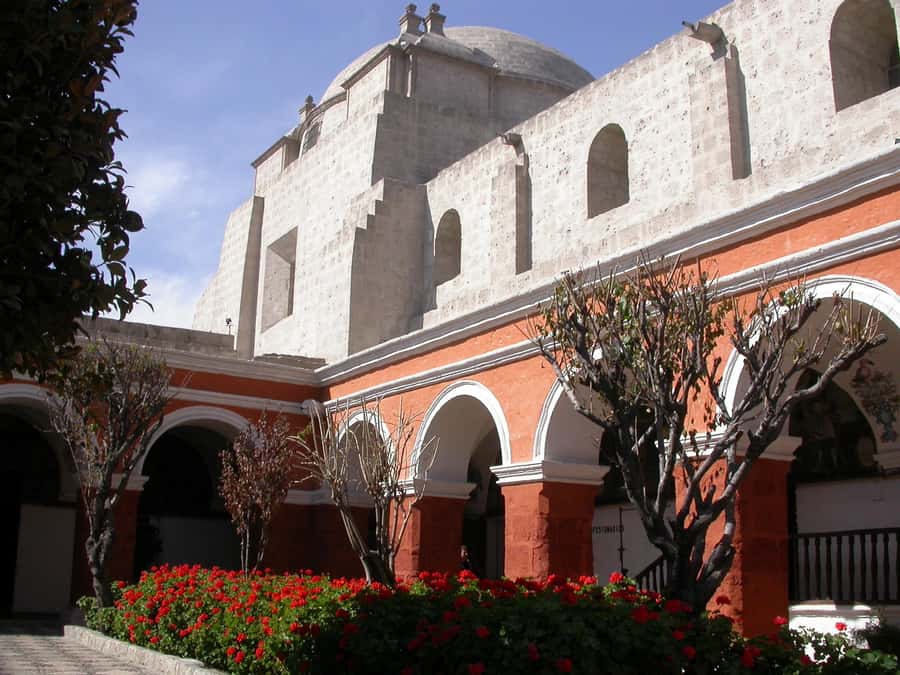
- Santa Catalina takes center stage: Explore small streets, cells, cloisters, flowers, painted walls, and original furniture.
- Two major sights fit into three hours: The route covers the monastery and the Jesuit Church of the Company of Jesus at Plaza de Armas.
- Late afternoon timing works well: Pickup is planned for around 3:00 PM, with your return around 6:00 PM.
- Central hotel pickup is included: The service applies to accommodations in Arequipa city center.
- English and Spanish guiding is available: You can choose between the two listed tour languages.
- Pack light: Large bags and luggage are not allowed, and comfortable clothing is recommended.
Why Santa Catalina Monastery is the main event
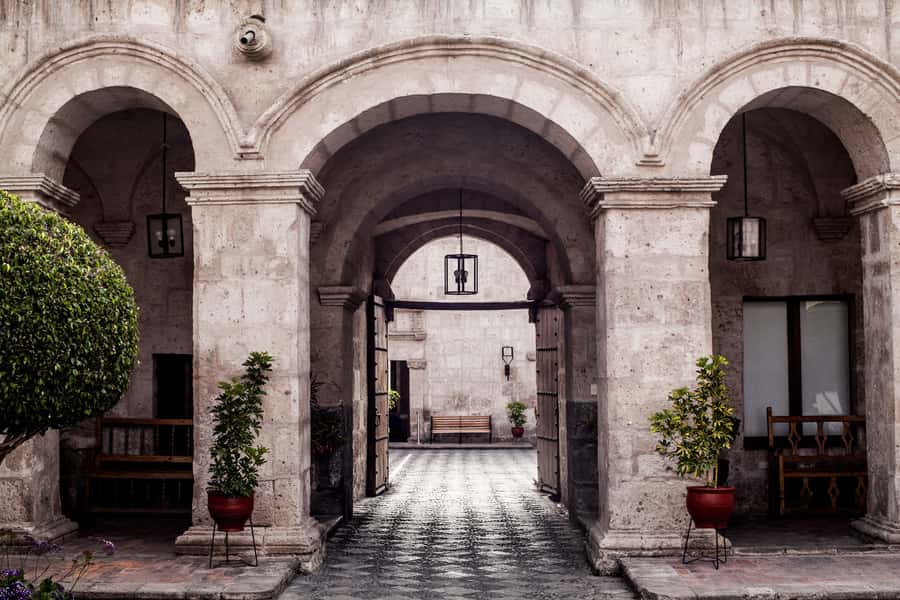
Arequipa can feel like a city of grand public spaces and handsome stone buildings. Santa Catalina gives you something different. Inside its walls, the experience becomes more intimate, with lanes, cells, cloisters, and small living spaces arranged almost like a town.
The monastery contains four centuries of Arequipa architecture. That matters because you are not simply looking at one grand religious building. You are moving through a group of spaces shaped over a long period, with changes in style and use visible from one section to the next.
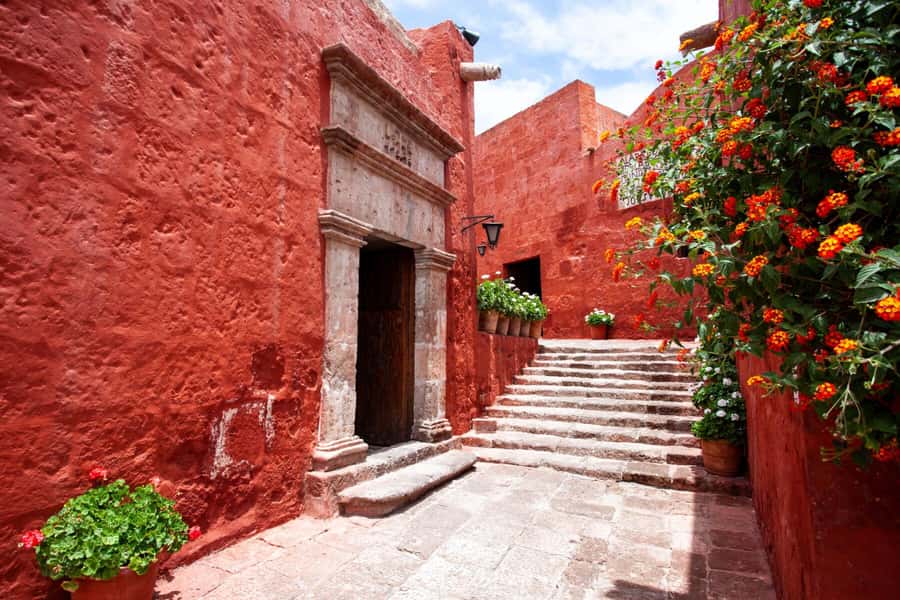
The colors also give the visit its character. Walls are painted in fresh dyes, while flowers add color around the cloisters and narrow passages. I would pay attention to the contrast between the strong wall colors and the quieter rooms. It helps you see how the monastery was designed as a place for daily life, not only worship.
You will also see small cells and places to stay and sleep with original furniture. These rooms give the visit a human scale. Instead of looking only at a facade or altar, you can consider how people used the building, where they rested, and how the different parts of the convent connected.
The alleys are narrow, and the route passes through picturesque sections of the complex. That layout is part of the appeal, but it also means you should wear comfortable clothing and shoes suitable for walking. The tour lasts three hours overall, so the monastery visit is substantial without taking up an entire day.
Other convents and colonial houses around Arequipa:
- Arequipa, Historic and Colonial City and Santa Catalina Monastery
★ 4.5 · 42 reviews - Arequipa: Walking Tour and Santa Catalina Monastery
★ 4.4 · 7 reviews - Arequipa: City Tour and Santa Catalina Monastery
★ 4.5 · 6 reviews
Walking through the cells, lanes, and cloisters
The monastery is best approached slowly. The narrow streets lead to different parts of the convent, and each turn can change the feel of the visit. One passage may open toward flowers and a courtyard, while another leads to a small room furnished in its original style.
I like this kind of sightseeing because the building tells its story through details rather than through one single viewpoint. A guide can help explain what you are seeing, but you should also leave room to look closely at the paint, doors, furniture, and relationship between the private rooms and shared cloisters.
The word lost in time is often overused in travel writing, but it fits the design of this stop better than it fits most. The lanes make the monastery feel separate from the streets outside. You are still in central Arequipa, yet the sequence of courtyards and rooms creates a clear change of pace.
Do not expect a quick photo stop. The value comes from walking through the connected spaces and noticing how the architecture changes from one section to another. If you enjoy historic buildings, religious architecture, or places that show ordinary daily routines, this is the part of the tour that justifies the price.
The Plaza de Armas and the Jesuit Church
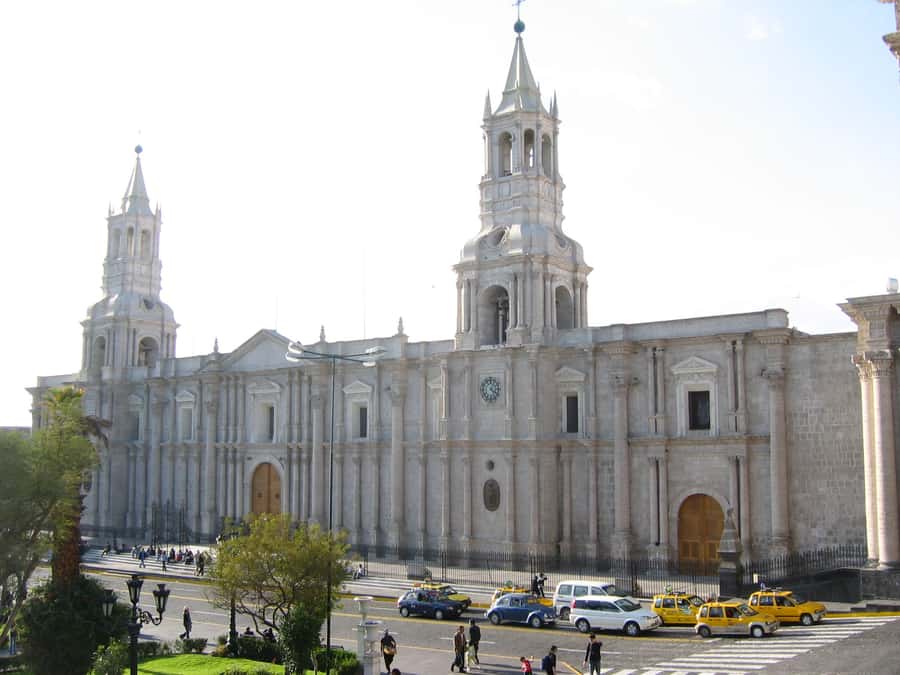
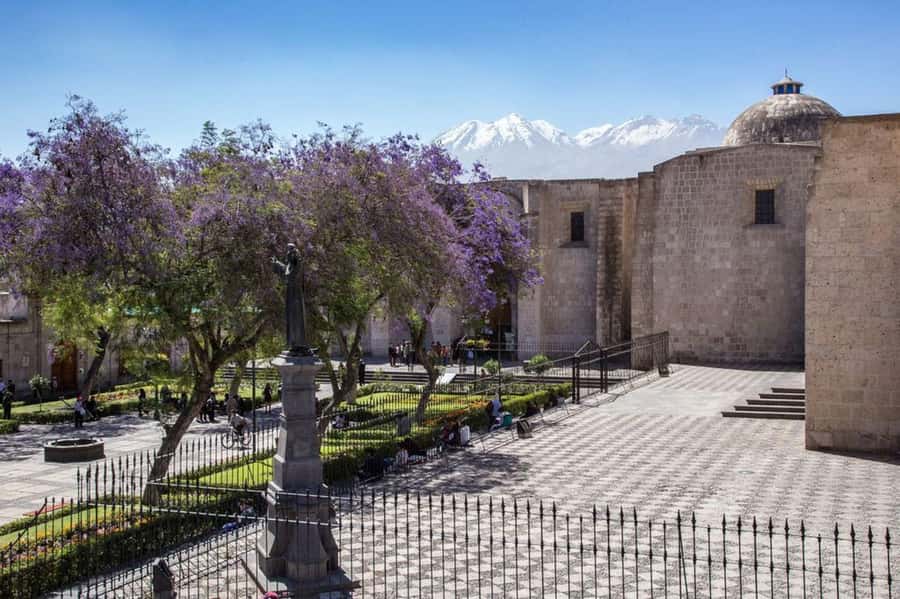
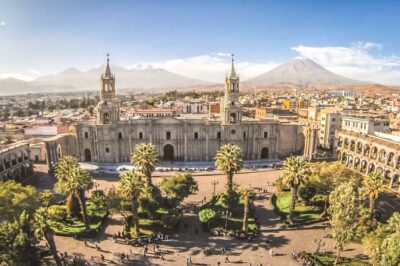
After Santa Catalina, the route continues to the Plaza de Armas, one of Arequipa’s most important public spaces. Here you visit the Jesuit Church of the Company of Jesus, whose facade displays the style known as mestizo architecture.
The church offers a useful change from the monastery. Santa Catalina gives you enclosed lanes and lived-in rooms. The Jesuit church brings you back to the formal center of the city, with its distinctive facade, cloisters, and dome.
The facade is the detail to watch first. Mestizo architecture combines European religious forms with local decorative influences. The supplied tour information does not promise a long architectural lecture, so your guide’s explanation will shape how much context you receive. Still, the building gives you a clear chance to compare Arequipa’s public religious architecture with the more private spaces of Santa Catalina.
The cloisters and dome add variety to the stop. You are not limited to standing outside the church and taking a picture. The visit includes several architectural elements, making this a worthwhile second stop even after the monastery has taken up most of your attention.
The Plaza de Armas also helps you understand how the city’s major sights relate to one another. You finish the tour in a central setting rather than at a remote attraction, which is useful if you want to continue exploring Arequipa on your own after the scheduled return.
How the three-hour schedule works
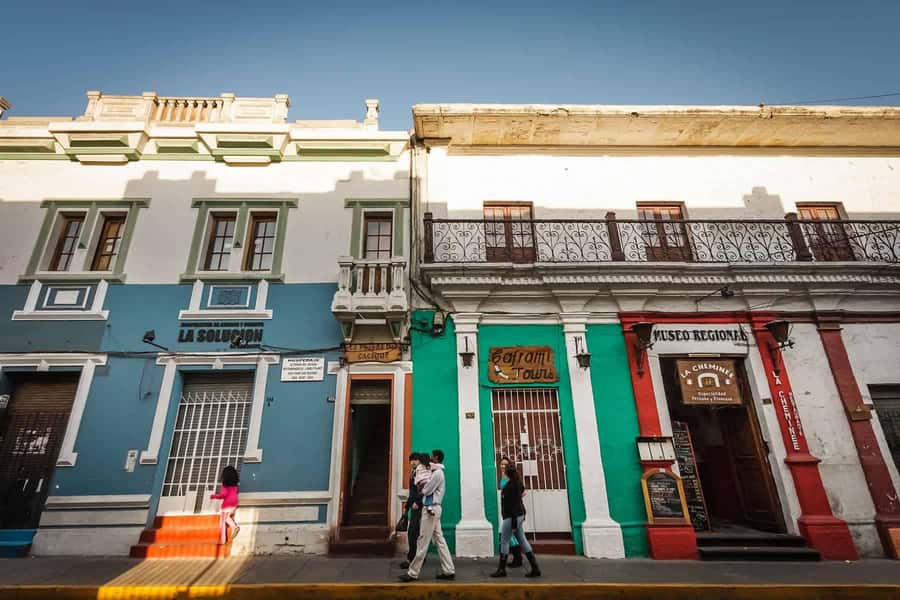
Pickup is planned for around 3:00 PM from your accommodation in Arequipa city center. The tour then visits Santa Catalina Monastery before continuing to the church at Plaza de Armas. You should be back in Arequipa around 6:00 PM.
That schedule is a practical choice if you want to spend the morning on another activity or arrive in the city earlier in the day. It also keeps the outing focused. You are not paying for a long transfer outside the city or a full-day program built around a single attraction.
The timing does call for some care. One past booking began about an hour late, after the party contacted the agency directly. The guide was eventually described as helpful, with excellent English, and the tour itself was considered worth doing. Still, I would avoid scheduling a tight evening connection immediately afterward.
The activity has free cancellation up to 24 hours before departure, and you can reserve without paying at the time of booking. Those terms make the plan easier to adjust, especially if your Arequipa schedule depends on transport or changing arrival times.
Other guided walks in Arequipa:
- Walking tour in the Historic Center of Arequipa
★ 4.4 · 180 reviews - Arequipa: Walk through the Historic Center of the City
★ 4.9 · 87 reviews - Arequipa Walking Tour city center and drinks experience
★ 5.0 · 72 reviews - Lima: Miraflores Trending Flavors Half-Day Walking Tour
★ 4.9 · 98 reviews
What the $56 price includes
At $56 per person, this is not a bargain basement city stroll. The price includes pickup from a central Arequipa hotel, entrance fees, and a professional guide. Those inclusions matter most because Santa Catalina is the major paid sight on the route, and arranging entry separately would add another task to your afternoon.
The value is strongest if you want structure and explanation. You receive a planned visit to two major sites, rather than simply finding the monastery and church on your own. A good guide can connect the architectural details to the way each space was used, and Deyvis was specifically praised for being able to answer questions thoroughly.
The value is weaker if you prefer to spend a long, unhurried stretch inside one place. A self-guided visit may suit you better if you want complete control over your pace, though the provided experience is designed to include both Santa Catalina and the church within three hours.
Meals are not included, but this is not a serious drawback for a three-hour afternoon activity. Accommodation is also not included, as you would expect. Your main extra cost will be anything you choose to eat or drink before or after the tour.
Guides, language, and the quality of the explanation
The tour is offered in English or Spanish with a live guide. That is important at Santa Catalina, where the rooms and lanes are visually appealing but can mean more when someone explains their purpose and connection.
Deyvis received the strongest specific praise, especially for answering questions and explaining the site well. A separate past experience described a female guide as very nice and helpful, with excellent English, even though the start was delayed. These details suggest that the guide can be a major part of the experience, but the individual guide assigned to your date may differ.
If you have questions about architecture, religious life, or the layout of the monastery, ask them directly. The tour is short enough that focused questions should help you get more from the visit without turning the walk into a lecture.
The language choice is simple: English and Spanish are available. If you need another language, the supplied information does not confirm it, so you should not assume one can be arranged.
Practical advice for a smoother visit
Wear comfortable clothes. The route involves walking through the monastery and between its different areas, so ease of movement matters more than dressing formally.
Do not bring luggage or a large bag. Large bags are not allowed, and the most sensible approach is to carry only what you need for a short afternoon outing. A small personal item may be acceptable, but the stated rule specifically warns against large bags and luggage.
Hotel pickup applies to accommodations in Arequipa city center. If your accommodation is outside the center, do not assume pickup is included. Confirm the pickup area before booking or make your own way to the meeting point if needed.
Keep the 3:00 PM pickup time in mind, but also leave a little room in your schedule. The late start from one past booking does not prove that delays are normal, yet it is a useful reason not to plan an important reservation right at 6:00 PM.
The tour returns around 6:00 PM. That gives you an easy transition into an evening meal or further time around the Plaza de Armas, provided you are not working against a strict departure time.
Who will enjoy this Arequipa walk
I would recommend this tour to a first-time visitor who wants to see Arequipa’s best-known central sights with a guide. It works especially well if you have only a short stay and want to combine a major historic complex with an important church in one afternoon.
It also suits you if architecture is a main reason for visiting Arequipa. Santa Catalina offers intimate spaces, color, and original furnishings, while the Jesuit Church provides a formal example of mestizo design. Together, they give you two different ways to read the city.
The tour may also work for anyone who wants a simple plan after arriving in Arequipa. Central pickup removes some of the afternoon’s logistics, and the three-hour duration leaves time for dinner or independent sightseeing.
I would think twice if you dislike guided visits, dislike fixed schedules, or want to carry a large day bag. I would also avoid booking it immediately before an important evening departure because of the possibility of a delayed start.
Should you book the Santa Catalina and Plaza de Armas tour?
Book it if you want a compact, guided introduction to Arequipa’s architecture, with Santa Catalina as the clear highlight and the Jesuit Church as a strong second stop. The inclusion of entrance fees, central hotel pickup, and a live English or Spanish guide makes the $56 price reasonable for a three-hour outing.
The best reason to choose it is the combination of spaces: colorful monastery lanes and furnished cells followed by the formal church and public square. The main caution is the schedule. Leave some flexibility in your afternoon, pack light, and confirm that your accommodation is within the central pickup area.
FAQ
How long does the Arequipa walking tour last?
The tour lasts three hours.
What time does pickup take place?
Pickup is scheduled for around 3:00 PM.
Where is pickup available?
Pickup is included from hotels or accommodations in Arequipa city center.
What sights does the tour visit?
The tour visits Santa Catalina Monastery and the Jesuit Church of the Company of Jesus at the Plaza de Armas.
What languages are available?
The live tour guide is available in English or Spanish.
Is the entrance fee included?
Yes, entrance fees are included in the tour price.
Is transportation from my hotel included?
Pickup from accommodation in Arequipa city center is included. The tour returns you to Arequipa around 6:00 PM.
Are meals included?
No. Meals are not included in the itinerary.
Can I cancel for a refund?
Yes. You can cancel up to 24 hours in advance for a full refund. You can also reserve now and pay later.
Just added around Arequipa
- From Arequipa: Pillones Waterfall and Stone Forest Day Trip★ 4.4 · 15 reviews
- Adventure Day in Arequipa: Pillones Waterfall + Rock Forest★ 4.2 · 25 reviews
- Arequipa: Pub Crawl with Skip-The-Line Access and Drinks★ 3.0 · 4 reviews
- Arequipa: Walking Tour and Santa Catalina Monastery★ 4.4 · 7 reviews
- Trekking, Waterfalls and Thermal Baths★ 4.5 · 47 reviews
- From Arequipa: Colca Valley & Thermal Baths Small-Group Trip★ 4.1 · 43 reviews
- Arequipa, Historic and Colonial City and Santa Catalina Monastery★ 4.5 · 42 reviews
- Arequipa: City Tour and Santa Catalina Monastery★ 4.5 · 6 reviews
Santa Catalina Monastery, compared.

Arequipa, Historic and Colonial City and Santa Catalina Monastery
Read our review →
Browse the lists this tour appears in