
Reviewed · SANTA CATALINA MONASTERY
Arequipa: City Tour and Santa Catalina Monastery
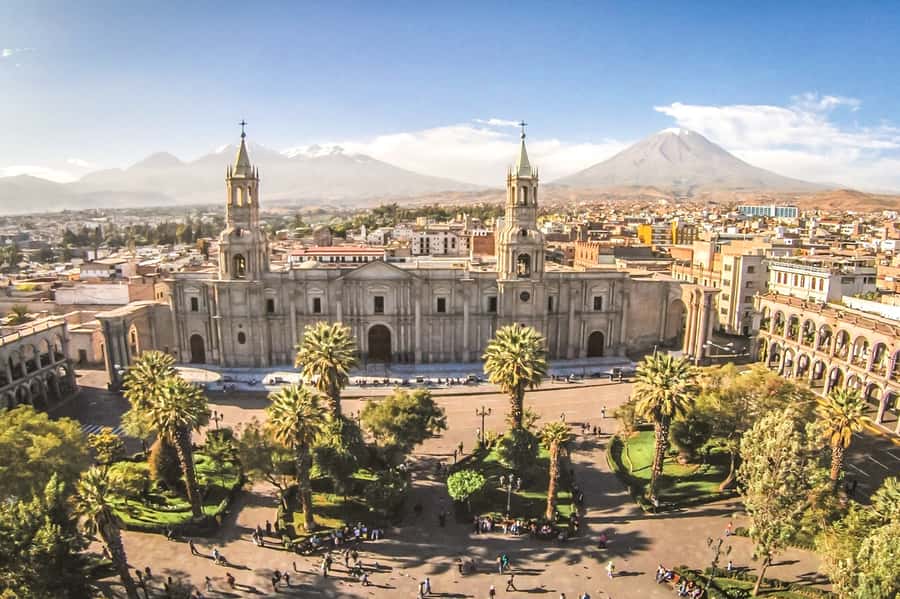
Arequipa’s best sights fit neatly into this 3.5-hour city tour, with volcano views, white ashlar buildings, and the remarkable Santa Catalina Monastery all on the same route. You begin above the city at Carmen Alto and Yanahuara, then move into the historic center for churches, the main square, and a guided visit through the convent’s streets and cloisters.
I like the smart mix of viewpoints and indoor sights, and I like that the guide does not simply rush you from stop to stop. Mariela is especially good at answering questions, taking photos, and adding useful restaurant and bar suggestions. The main limitation is that pickup is only available from hotels in Arequipa’s Historic Center, and the tour is not suitable for wheelchair users.
Key points to know before booking
- Two high viewpoints come first: Carmen Alto offers countryside and volcano views, while Yanahuara looks across the city.
- Santa Catalina Monastery is the main attraction: You explore plazas, cloisters, and streets inside a former convent for daughters of wealthy families.
- The white stone matters: The Basilica of the Company of Jesus shows off Arequipa’s distinctive ashlar construction and neo-Renaissance style.
- Mariela adds a personal touch: Her clear explanations, relaxed pace, photos, and local dining suggestions make the short tour more useful.
- Hotel pickup has a tight boundary: Pickup and drop-off apply to hotels in the Historic Center, not private residences.
- Plan for sun and walking: Bring comfortable shoes, sunglasses, a hat, sunscreen, and light, comfortable clothing.
Why this short Arequipa tour works
Arequipa can feel spread out when you first arrive. This tour gives you an efficient introduction by combining two city viewpoints with several central sights. I like that the route starts with broad views, then narrows its focus to architecture and local history.
You are not spending the entire morning inside one museum or church. Instead, you get a quick sense of how Arequipa fits together: farmland and the Chili River beyond the city, volcanoes on the horizon, white volcanic-stone buildings in the center, and a convent complex that feels almost like a small town behind its walls.
The price is $70 per person. That is not the cheapest way to see Arequipa, but it includes hotel pickup and drop-off, a professional guide, and admission to Santa Catalina Monastery. Since the monastery is the tour’s most important paid stop, the cost can make sense if you want transportation and explanations handled for you.
I would think of this as an orientation tour rather than a full study of Arequipa. In three and a half hours, you can see the city’s main symbols, but you will not have time to explore every church, museum, or neighborhood at length.
Other convents and colonial houses around Arequipa:
- Arequipa, Historic and Colonial City and Santa Catalina Monastery
★ 4.5 · 42 reviews - Arequipa: Walking Tour and Santa Catalina Monastery
★ 4.4 · 7 reviews - Arequipa Walking Tour and Santa Catalina Monastery
★ 5.0 · 4 reviews
Carmen Alto and the first view of Arequipa
Your first stop is Carmen Alto, a viewpoint above the city. From here, you can look over the countryside around Arequipa, the Chili River, and the volcanoes Misti and Chachani in the distance.
This opening stop gives you something that a central walking tour cannot: a clear sense of Arequipa’s setting. The city is not just a collection of colonial buildings. It sits beneath major volcanic peaks, with farmland and river country close by. That wider view helps explain why the city looks and feels different from other Peruvian destinations.
Bring sunglasses, sunscreen, and a sun hat. The supplied information specifically recommends all three, and they are sensible choices for an outdoor viewpoint. Comfortable clothing also helps, since the tour includes several stops and walking inside the monastery.
The exact weather and visibility can affect how much you see from the viewpoints. The volcanoes are part of the planned view, but mountain scenery is never guaranteed to look identical from one day to the next. Even so, Carmen Alto remains a useful first stop because it places the city in its natural setting.
Yanahuara’s arches and city panorama
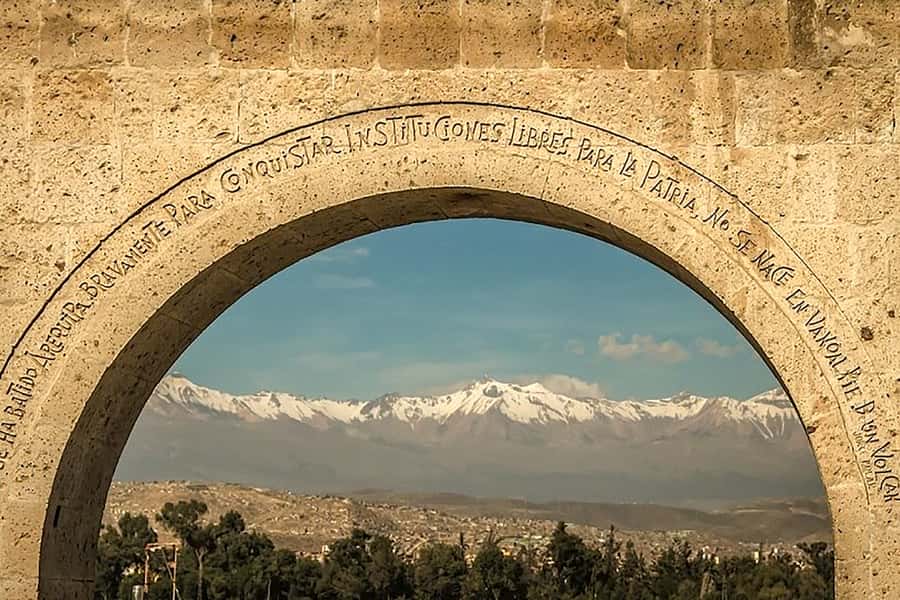
Next comes the Yanahuara viewpoint, another strong photo stop with a view back toward Arequipa. The emphasis here is the city itself, so the stop pairs well with Carmen Alto. First you look outward over the countryside, then you turn your attention back toward the urban center.
This is one of the tour’s best design choices. Two viewpoints might sound repetitive, but they serve different purposes. Carmen Alto gives you the river, countryside, and volcanoes. Yanahuara helps you see the white city as a whole.
I would use this time to ask your guide about the city’s layout and the buildings you can identify below. A good guide can turn a quick panorama into a useful map in your head. The tour is offered in English, Spanish, French, and Portuguese, so you can book according to your preferred language.
You should also expect some time standing outdoors. If you are sensitive to bright sun, keep your hat and sunglasses handy rather than leaving them in the vehicle.
The Company of Jesus and Arequipa’s white stone
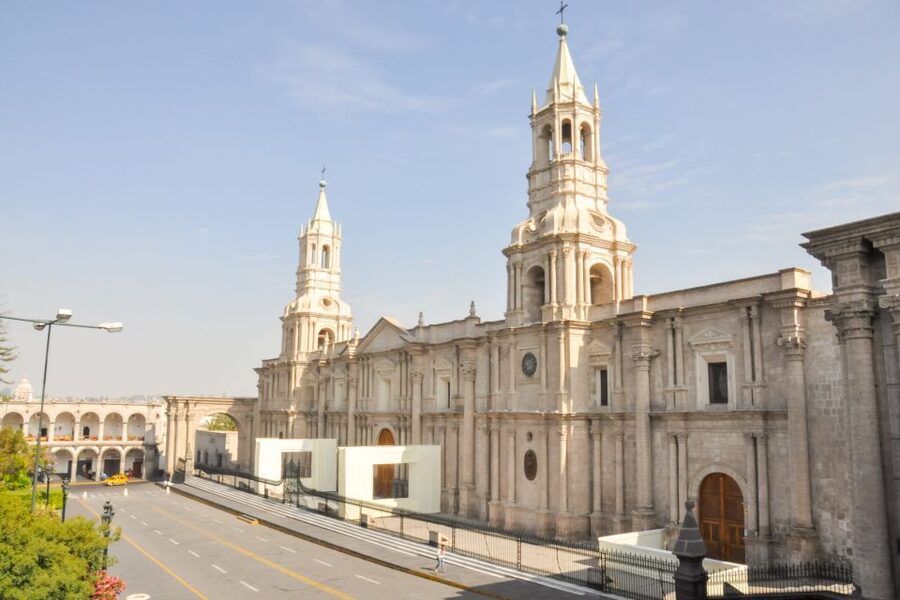
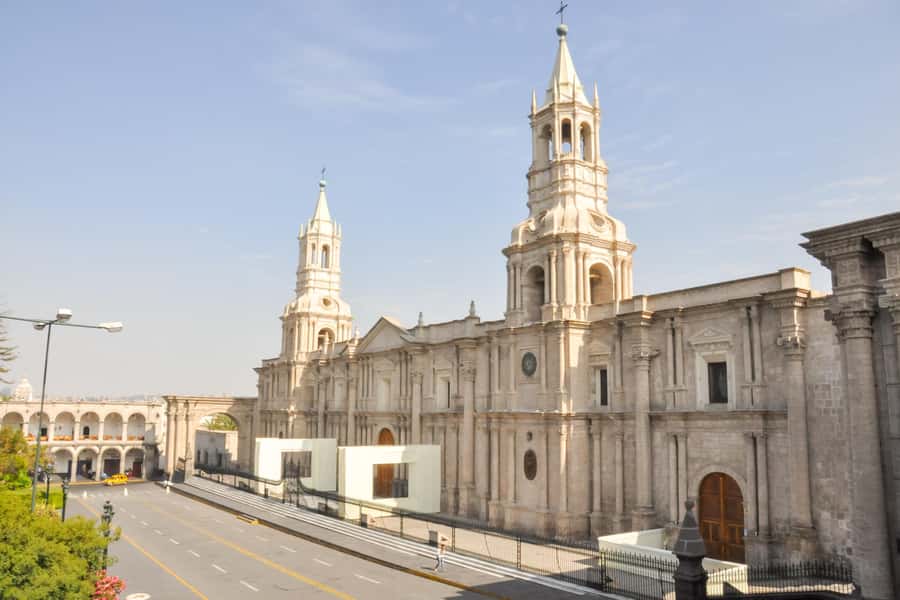
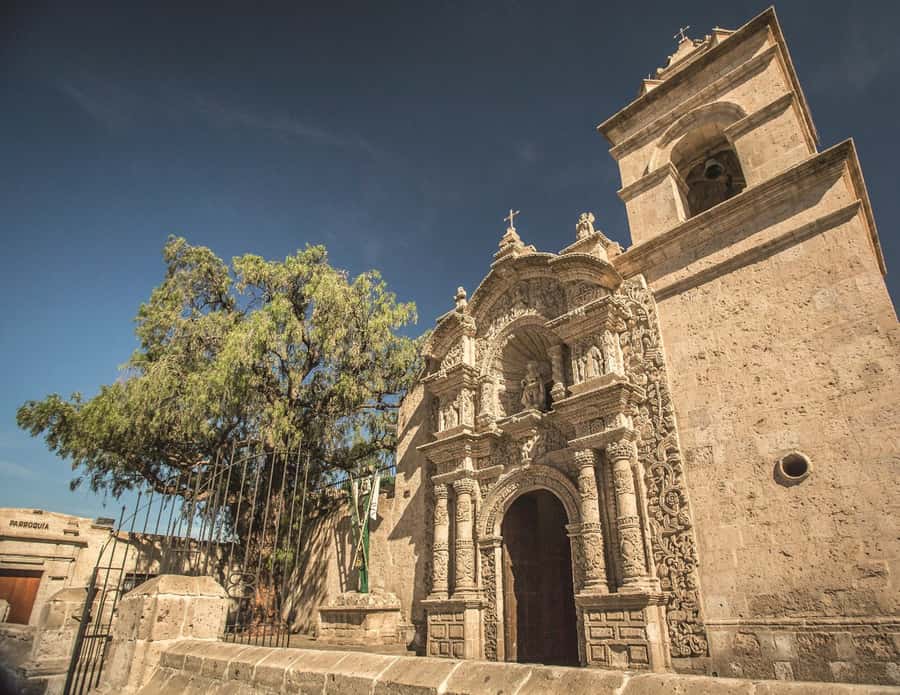
The route then moves into the historic center and the Basilica of the Company of Jesus. The church was built in a neo-Renaissance style using white volcanic stone known as ashlar.
That material is central to Arequipa’s appearance. The city’s nickname, the White City, is tied to this pale stone, and the Company of Jesus gives you a direct look at the architectural style rather than only hearing about it from a viewpoint.
This stop is likely to be more rewarding with a guide than on your own. The building’s style and material can be easy to glance at and pass by, but an explanation helps you notice why it belongs to Arequipa’s identity. Ask your guide to point out the features that distinguish the church’s design if you want more than a quick visit.
The tour description does not promise a long interior visit or a detailed architectural workshop, so keep your expectations measured. You will see an important church and learn about its construction, but Santa Catalina is the place where the itinerary offers the longest, most substantial exploration.
Other ways to see the whole city in Arequipa:
- Cusco: Half-Day City Tour with Sacsayhuaman and Q’enco
★ 4.6 · 1,129 reviews - City Tour Cusco Qoricancha Sacsayhuaman y Tambomachay
★ 4.7 · 617 reviews - Open Bus Cusco City Tour
★ 4.5 · 219 reviews - Cusco: City Tour | Half-Day Tour to 4 Archaeological Sites
★ 4.6 · 206 reviews
A short look at the main square
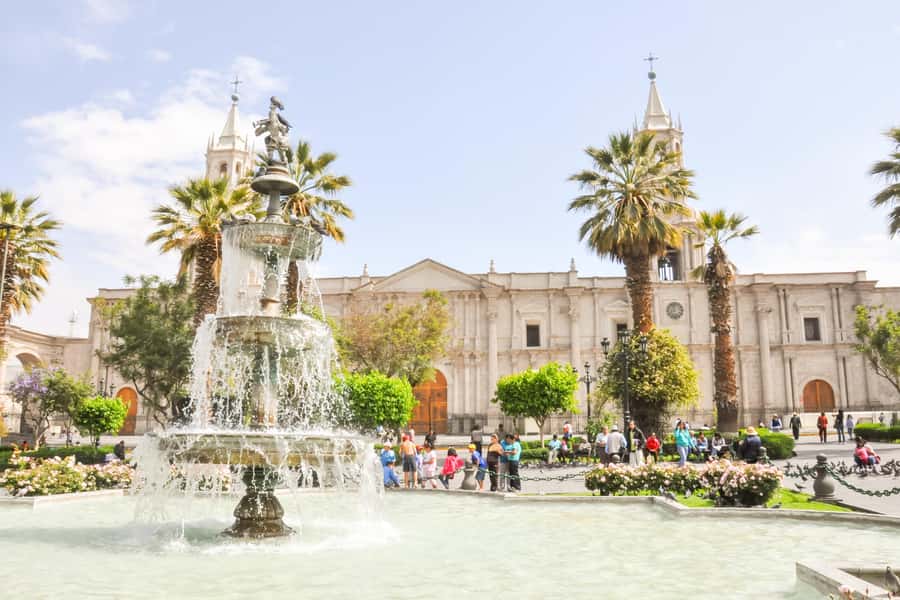
You also spend time in Arequipa’s main square. This is a useful pause between the church and the monastery, giving you a look at the civic heart of the city.
The square is a good place to get your bearings. It connects the historic center’s major buildings and gives you a chance to appreciate the scale of Arequipa’s central architecture. Since the visit is part of a compact tour, I would expect a guided look rather than a long period for independent wandering.
That distinction matters. If you want time to sit in the square, shop, take your own photographs, or explore nearby streets, you may need to return later on your own. The tour gives you the introduction, not unlimited free time.
Still, the stop earns its place. After the two elevated viewpoints, the square brings you down into the city’s daily center. It helps the tour move from broad scenery to close-up architecture and then into Santa Catalina’s enclosed world.
Santa Catalina Monastery, a city behind the walls
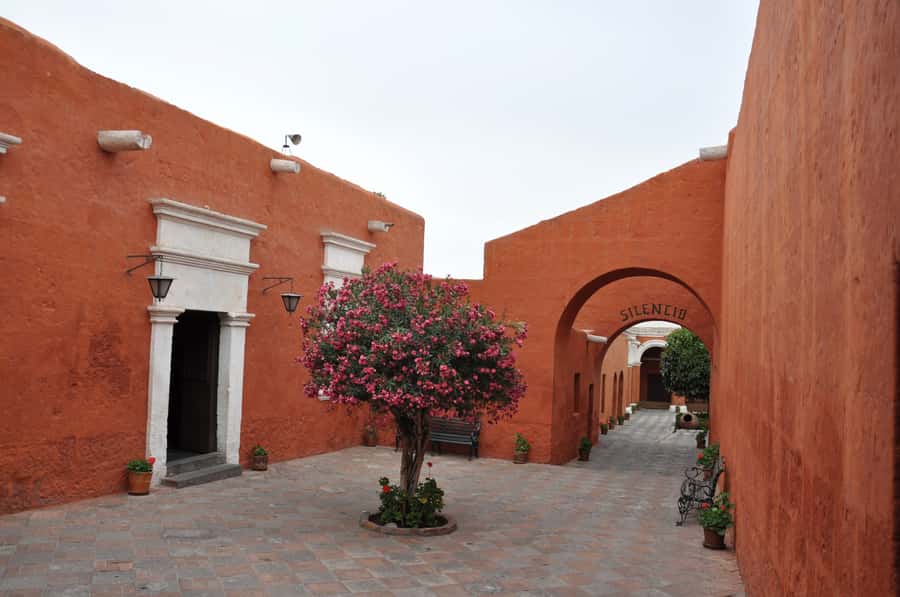
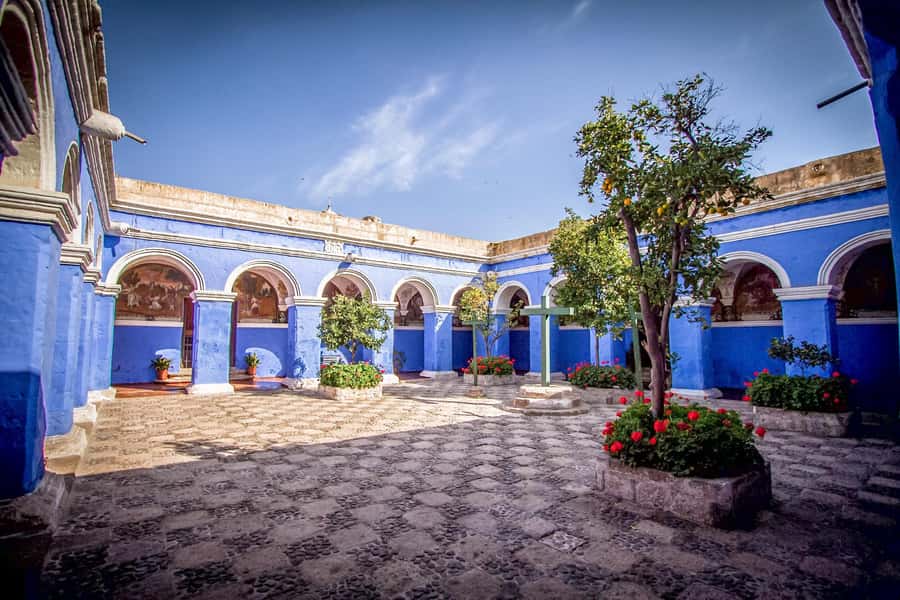
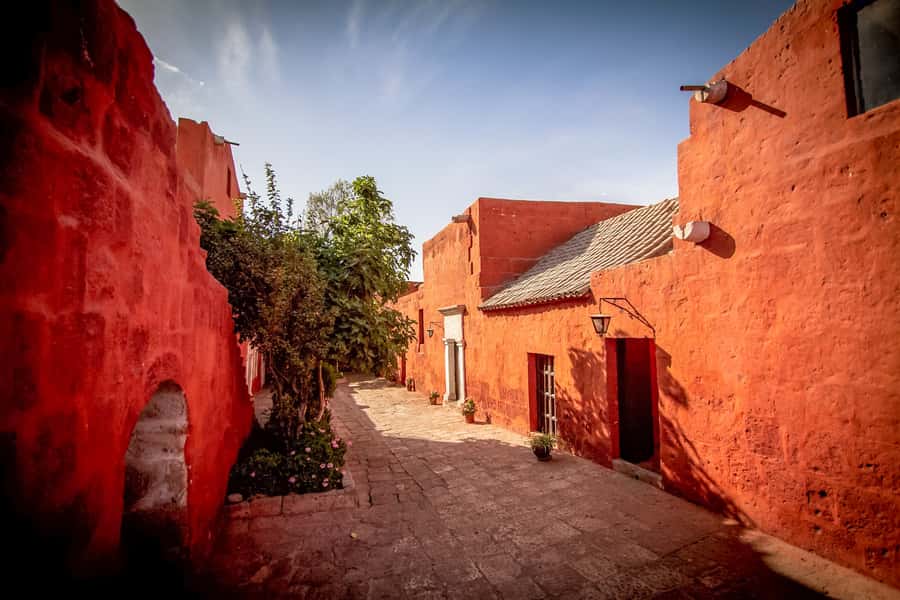
Santa Catalina Monastery is the tour’s centerpiece. This sixteenth-century institution includes plazas, cloisters, and streets that once housed the daughters of prestigious families under the care of the convent’s nuns.
Do not think of it as a single quiet church interior. The complex is arranged with lanes and open spaces, so your visit reveals a contained world inside the city. The streets and plazas make the monastery feel larger and more layered than its name might suggest.
The historical detail about its residents is important. The convent was connected to prominent families, and the people who lived there occupied a particular social setting. That gives your guide plenty to explain beyond dates and architectural labels. You can learn how the institution functioned and why it held such a notable place in Arequipa.
I especially value the guided explanation here because the complex could otherwise feel like a series of attractive walls and courtyards. With context, the cloisters and streets become evidence of how religious life and family status once intersected.
The monastery is also the part of the tour most likely to appeal to people who enjoy architecture and old urban spaces. You can expect walking through the complex, so comfortable shoes are important. Large bags and luggage are not allowed, and pets are not allowed either. Children must be accompanied by an adult.
The guide makes a difference in three and a half hours
A short city tour depends heavily on the guide. There is little room for wasted time, and the best guides adjust their pace when a group has questions or needs a moment for photographs.
Mariela has received particular praise for answering questions clearly, keeping the group from feeling rushed, and taking good photos. That combination is useful. You get information without feeling pushed through the sights, and you can leave with photographs of the experience rather than only quick snapshots taken while moving.
She has also offered restaurant and bar suggestions. That is a practical bonus if this is your first day in Arequipa and you still need ideas for an evening meal. Treat those suggestions as a starting point, then choose according to your own plans and budget.
The guide service is available in English, Spanish, French, and Portuguese. When you book, check that your preferred language and starting time are available. The activity page asks you to check availability for exact departure times, so do not assume every language runs at every hour.
What the $70 price really includes
At $70 per person, this is best value for someone who wants a planned introduction with transportation and a professional guide. Hotel pickup and drop-off remove the need to arrange a taxi between your hotel and the first viewpoint, while the monastery admission is already covered.
The price is less compelling if you are staying close to the historic center, prefer to walk independently, and are comfortable arranging your own admission and sightseeing. You would give up the organized route and guide commentary, but you might spend less and move at your own pace.
I would also check the tax condition before paying. The stated rate does not apply to Peruvians or to foreign passengers whose stay in Peru has exceeded 60 days, because sales taxes are not included in the listed total for those cases.
You can reserve now and pay later, which helps if your schedule is still shifting. Cancellation is free up to 24 hours in advance for a full refund. Those terms make the booking relatively flexible, but you still need to confirm your pickup location and departure time.
Who should book this experience
I would recommend this tour to a first-time visitor who wants to see Arequipa’s major sights in one organized morning or afternoon. It is also a good choice if you have only a short stay and want the viewpoints, central architecture, and Santa Catalina Monastery handled in one route.
It suits you especially well if you enjoy having historical context while you look at buildings. The church, main square, and convent all become more useful when someone explains what you are seeing.
Families can book, provided children are accompanied by an adult. I would be more cautious about booking for anyone who cannot manage regular walking or uneven surfaces, since the tour is not suitable for wheelchair users and includes the large Santa Catalina complex.
You may want a different plan if your priority is slow photography, shopping, museums, or extended time in the main square. The route is focused and efficient, not leisurely in the sense of spending an hour at each sight.
Practical preparation for the day
Wear comfortable shoes. The monastery includes streets, plazas, and cloisters, and the tour also includes outdoor viewpoints, so footwear matters more than dressing up for the historic center.
Pack sunglasses, a sun hat, sunscreen, and your passport or ID card. Bring water or plan to purchase a drink before or after the tour, since snacks and beverages are not included.
Leave luggage and large bags behind. The activity does not allow them, and private residences are not included in the pickup service. Pickup applies to hotels located in Arequipa’s Historic Center.
The tour does not allow smoking or pets. It also does not permit unaccompanied minors. These are simple rules, but knowing them in advance prevents an awkward start.
Should you book the Arequipa City Tour?
Book it if you want a compact, well-organized introduction to Arequipa with the city’s best viewpoints, a white-stone church, the main square, and Santa Catalina Monastery in one outing. The strongest reasons are the efficient route, included monastery admission, multilingual guiding, and Mariela’s relaxed style with photos and local dining tips.
Skip it if you want complete independence, long visits at each stop, or an outing designed for wheelchair access. At $70, the value comes from combining transport, explanations, and admission rather than from low cost alone.
For most first visits, I see this as a sensible way to get oriented. Afterward, you can return to the sights that caught your attention and explore them at your own speed.
FAQ
How long does the Arequipa city tour last?
The tour lasts 3.5 hours. Starting times vary, so check availability when booking.
What sights are included?
The route includes Carmen Alto viewpoint, Yanahuara viewpoint, the Basilica of the Company of Jesus, Arequipa’s main square, and Santa Catalina Monastery.
Is hotel pickup included?
Yes. Pickup and drop-off are included for hotels located in Arequipa’s Historic Center. Pickup is not available from private residences.
Is admission to Santa Catalina Monastery included?
Yes. Admission to Santa Catalina Monastery is included in the tour price.
Which languages are available?
The live guide service is available in English, Spanish, French, and Portuguese.
What should I bring?
Bring your passport or ID card, comfortable shoes, sunglasses, a sun hat, sunscreen, and comfortable clothing.
Can I cancel the booking?
Yes. You can cancel up to 24 hours in advance for a full refund. The reserve-now-and-pay-later option allows you to book without paying immediately.
Just added around Arequipa
- From Arequipa: Pillones Waterfall and Stone Forest Day Trip★ 4.4 · 15 reviews
- Adventure Day in Arequipa: Pillones Waterfall + Rock Forest★ 4.2 · 25 reviews
- Arequipa: Walking Tour and Santa Catalina Monastery★ 4.4 · 7 reviews
- Arequipa Walking Tour and Santa Catalina Monastery★ 5.0 · 4 reviews
- Trekking, Waterfalls and Thermal Baths★ 4.5 · 47 reviews
- From Arequipa: Colca Valley & Thermal Baths Small-Group Trip★ 4.1 · 43 reviews
- Arequipa, Historic and Colonial City and Santa Catalina Monastery★ 4.5 · 42 reviews
- From Arequipa: Colca Canyon & La Calera Thermal Waters★ 4.3 · 15 reviews
Santa Catalina Monastery, compared.

Arequipa, Historic and Colonial City and Santa Catalina Monastery
Read our review →
Browse the lists this tour appears in