
Reviewed · SACRED VALLEY TOURS
Cusco: Full-Day Sacred Valley History Tour
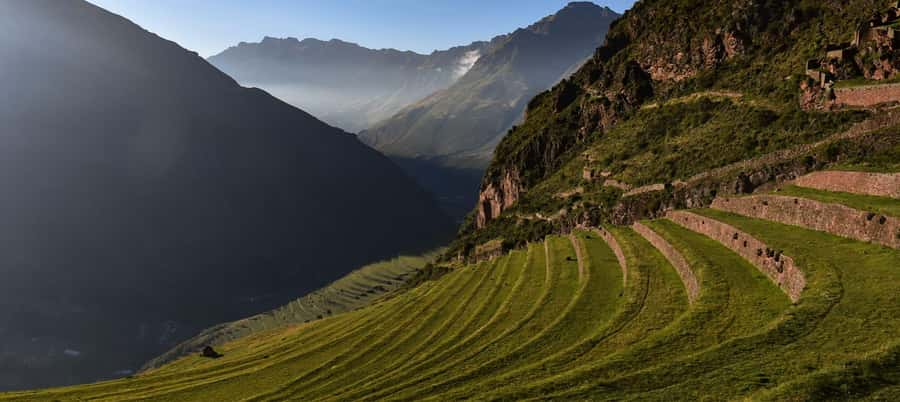
The Sacred Valley makes a strong first impression from El Mirador, where Inca terraces and fertile plains spread below the mountain road. This full-day trip then links three very different places: Pisac for its market and ruins, Ollantaytambo for massive Inca stonework, and Chinchero for Quechua textile traditions.
I like the bilingual guides, especially the clear teaching style shown by guides such as Eddy and Manuel. I also like the route itself: you get major archaeological sites, a river ride through the valley, a buffet lunch, and a close look at natural dyes and alpaca wool in one long day.
The main drawback is the schedule. Pickup can be slow, and the buffet lunch may take longer than you expect. If you are the only English speaker in a mostly Spanish-speaking group, the guide should translate both languages, but every stop may take a little longer.
Key points to know before booking
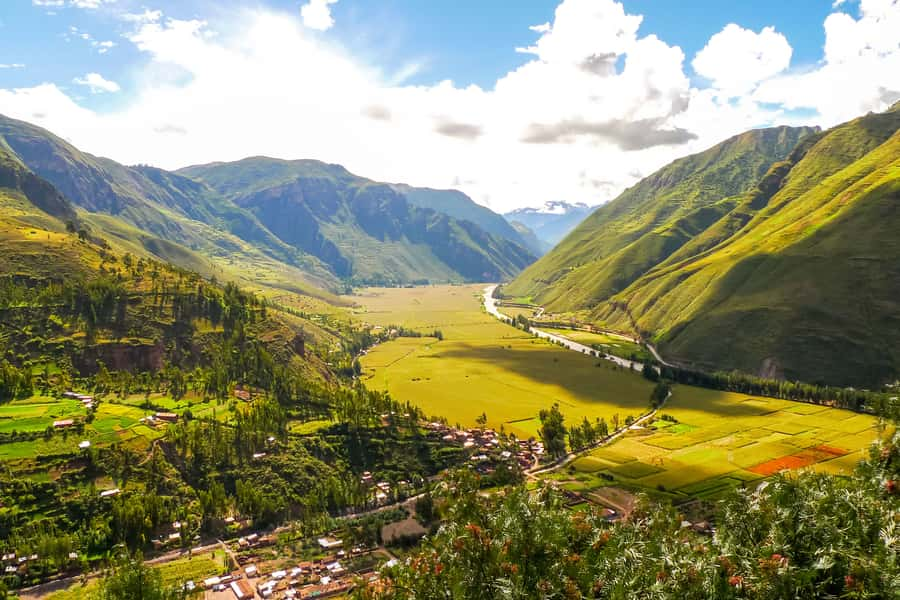
- El Mirador puts the whole valley in context: You see the fertile plains, mountain roads, Inca terraces, and irrigation channels before visiting the ruins.
- Pisac combines a market with serious archaeology: Allow your attention to move between colorful stalls, stonework, and hillside farming terraces.
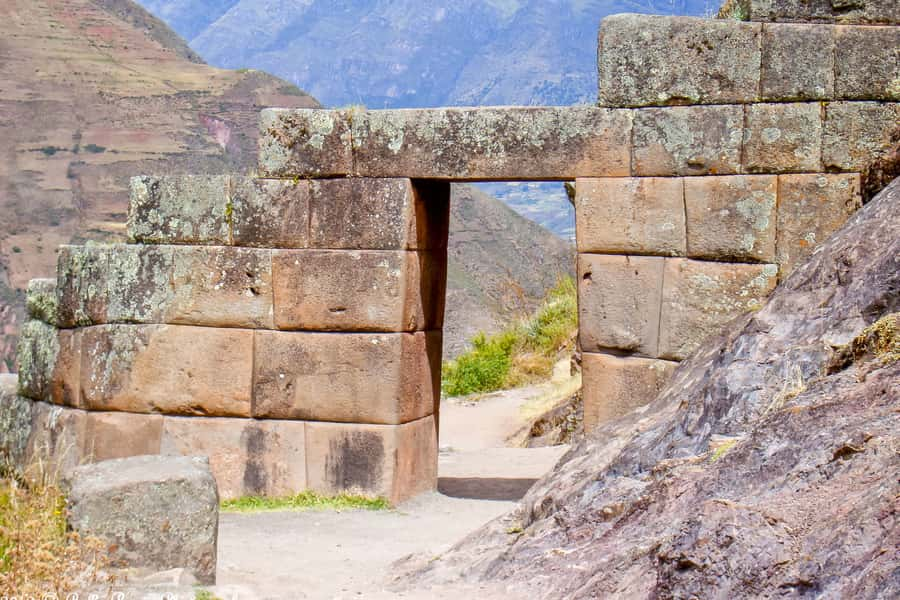
- Ollantaytambo is the architectural highlight: Its huge construction blocks and sacred rock forms show the scale of Inca building.
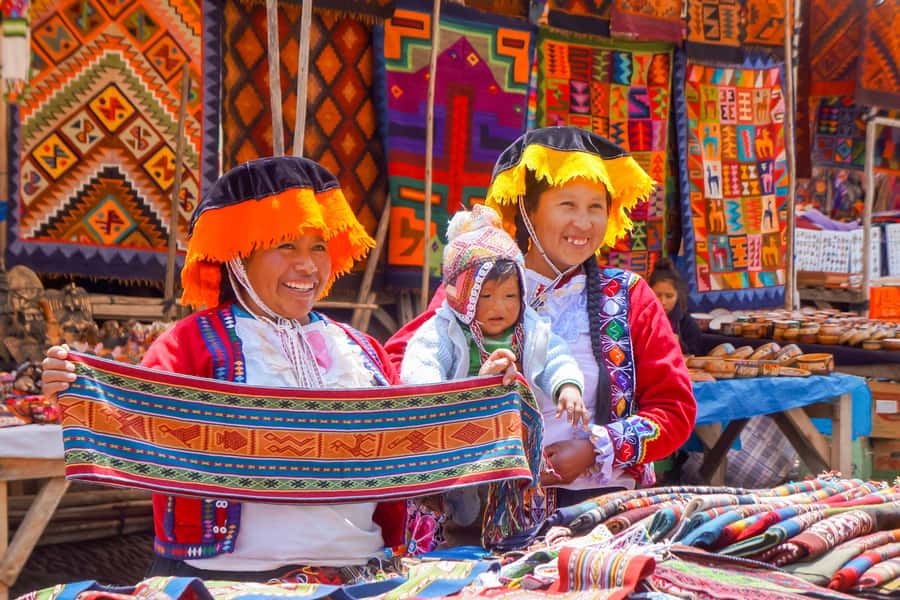
- Chinchero offers living textile traditions: You see natural dyes and knitting methods linked to alpaca and sheep wool.
- The group is limited to 15 people: That is small enough for a more manageable outing, though hotel pickups can still add delays.
- Check the ticket option carefully: The listed price is $45 per person, but the tourist ticket is listed separately at S/70 unless your chosen option includes ruin entrances.
Why this 11-hour Sacred Valley route works
The Sacred Valley is not one single attraction. It is a long corridor of farmland, villages, archaeological sites, and river scenery north of Cusco. This tour gives you a broad introduction without requiring you to arrange separate transport between Pisac, Ollantaytambo, and Chinchero.
You leave Cusco at around 7:30 AM, though the actual departure can be later after the van collects everyone. Pickup is available from hotels in Cusco’s historic center. At the end of the day, you return to Cusco and are dropped at Plaza Regocijo at about 7:00 PM.
That is a full day by any measure. I would choose it when you want to see the main Sacred Valley stops in one outing and do not have enough time to sleep in the valley. I would not choose it if you prefer slow visits, long meals, or plenty of time at each market stall.
The small-group limit of 15 people helps. You are not dealing with a giant coach, and a good guide can answer questions more easily. Still, this is a shared itinerary, so the pace is shaped by other people’s pickups, lunch choices, and onward plans.
Other days through the Sacred Valley from Cusco:
- From Cusco: Moray, Maras Salt Mines & Chinchero Weavers Tour
★ 4.8 · 1,925 reviews - Cusco: Sacred Valley, Pisac, Ollantaytambo, Salt Mines Moray
★ 4.6 · 1,058 reviews - Cusco:Chinchero,Moray & Salt Mines drop-off in Ollantaytambo
★ 4.8 · 793 reviews
El Mirador and the first view of Inca farming
The first major stop is El Mirador, or Lookout Point. This is where the day begins to make sense. From above, you can see why the Incas valued this part of the Andes: the Sacred Valley has unusually fertile plains in a high mountain region.
Look for the broad agricultural terraces cut into the slopes. These were not only dramatic building projects. They helped the Incas use steep ground for farming, while irrigation channels moved water through the cultivated areas.
Your guide uses this viewpoint to explain the Inca settlement of the valley. This early explanation is useful because the rest of the tour is not just a sequence of ruins. Pisac and Ollantaytambo are easier to understand when you already know how farming, water, and mountain geography shaped the area.
Bring a layer for the morning and wear shoes with a firm sole. The tour specifically recommends comfortable footwear, and that advice matters once you begin walking around stone sites and terraces.
Pisac market and hillside ruins
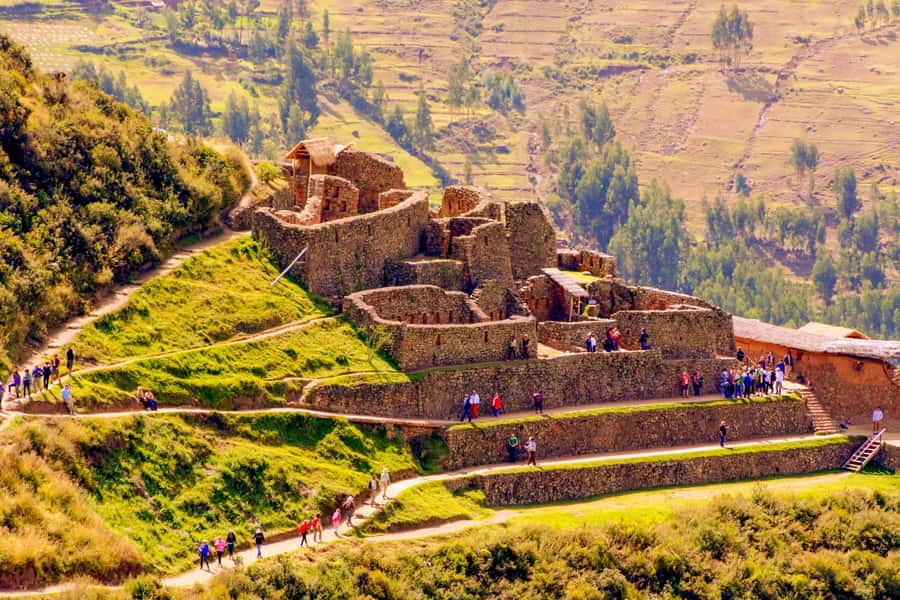
Pisac gives you two experiences in one stop. The town is known for its colorful market, while the nearby ruins offer stonework, terraces, and a look at how Inca settlements were arranged above the valley.
The market is the more social part of the visit. You will have a chance to see local crafts and browse textiles and other goods. Keep your timing in mind, since the archaeological site is the more substantial part of the stop and the day continues to Urubamba, Ollantaytambo, and Chinchero.
At the ruins, your guide explains Inca culture while pointing out stone construction and agricultural terraces. The terraces are especially important because they connect Pisac to the larger story introduced at El Mirador. The Incas worked with the slopes rather than treating the mountains as empty barriers.
You may also stop at a jewelry shop in Pisac to learn about Inca-inspired jewelry making. That can add interest, but it is also a reminder to keep your wallet ready only if you genuinely want to buy something. The textile visit at Chinchero is more central to the advertised route, while shopping in Pisac is an additional part of the day’s commercial side.
Plan to stay aware of the clock here. Pisac can tempt you to spend all your time shopping, but the ruins are the reason this stop belongs on a history-focused tour.
Urubamba lunch and the practical middle of the day
After Pisac, the van continues toward Urubamba for a buffet lunch. This is a useful pause after a morning of walking and driving, and the meal is included in the tour price.
The restaurant is described as attractive, but the food may be less memorable than the setting. One meal account found the buffet bland, while another described it as pretty good. That difference tells you what to expect: lunch is convenient and filling, but it should not be the main reason you book the tour.
The timing deserves attention. Lunch may run from roughly 1:30 PM to 2:45 PM, and that can feel long if you arrive hungry or want more time at the archaeological sites. One person found that about 30 minutes would have been enough. If you prefer a quick meal, you may feel that the schedule gives lunch too much space.
Even so, an included buffet has real value on a long day. You do not need to search for a restaurant with a group, and you can choose how much to eat before the afternoon visits. Meals beyond the specified buffet are not included, so bring money for anything else you want during the day.
Same base, a completely different day:
- Cusco: Humantay Lake Tour with Breakfast and Buffet Lunch
★ 4.9 · 2,976 reviews - From Cusco: Full-Day Group Tour of Machu Picchu
★ 4.7 · 1,767 reviews - Machu Picchu Day Trip from Cusco
★ 4.5 · 1,644 reviews - Cusco: Half-Day City Tour with Sacsayhuaman and Q’enco
★ 4.6 · 1,129 reviews
Following the Urubamba River to Ollantaytambo
After lunch, the road follows the Urubamba River toward Ollantaytambo. This drive is one of the calmer parts of the tour. You pass through the Sacred Valley with mountain peaks around you, and you may see llamas and alpacas along the way.
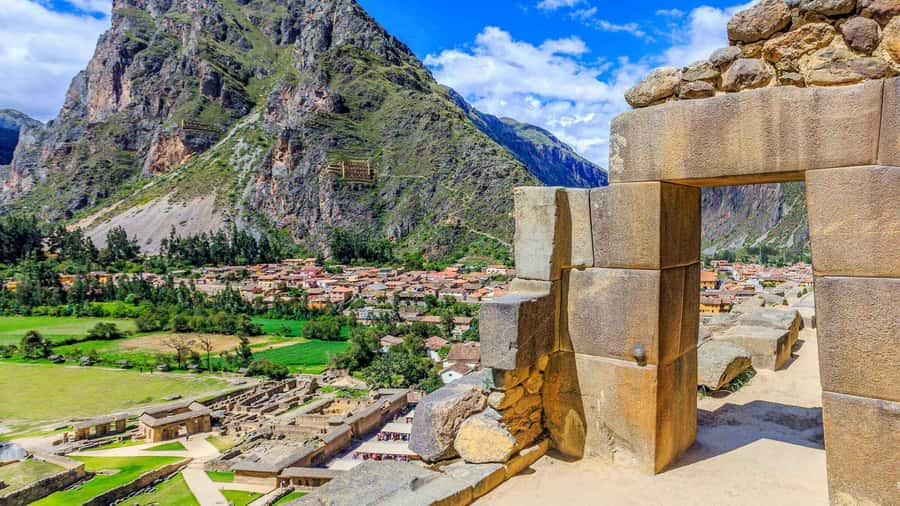
Ollantaytambo is the architectural high point of the itinerary. The site was an important Inca construction area during the empire’s peak, and the scale of the stonework makes that clear. Massive blocks, carefully fitted masonry, and the steep setting give the ruins a very different feel from the market visit in Pisac.
Your guide points out rock formations associated with Wiracocha, the Inca god. This is a place where the guide’s explanation adds real value. Without context, you may simply see an enormous stone complex. With a good explanation, the site connects engineering, religion, farming, and control of the valley.
Ollantaytambo also requires practical planning. Some people on the route may leave here to catch a train toward Machu Picchu, while others continue to Chinchero and Cusco. That means the van can become a mix of passengers with different tour packages. Confirm with your guide where you belong before leaving the ruins, especially if you are continuing to Chinchero.
If you are planning Machu Picchu separately, do not assume this day tour replaces your train or entrance arrangements. The listed experience returns to Cusco and has its own transport plan.
Chinchero and the people behind the textiles
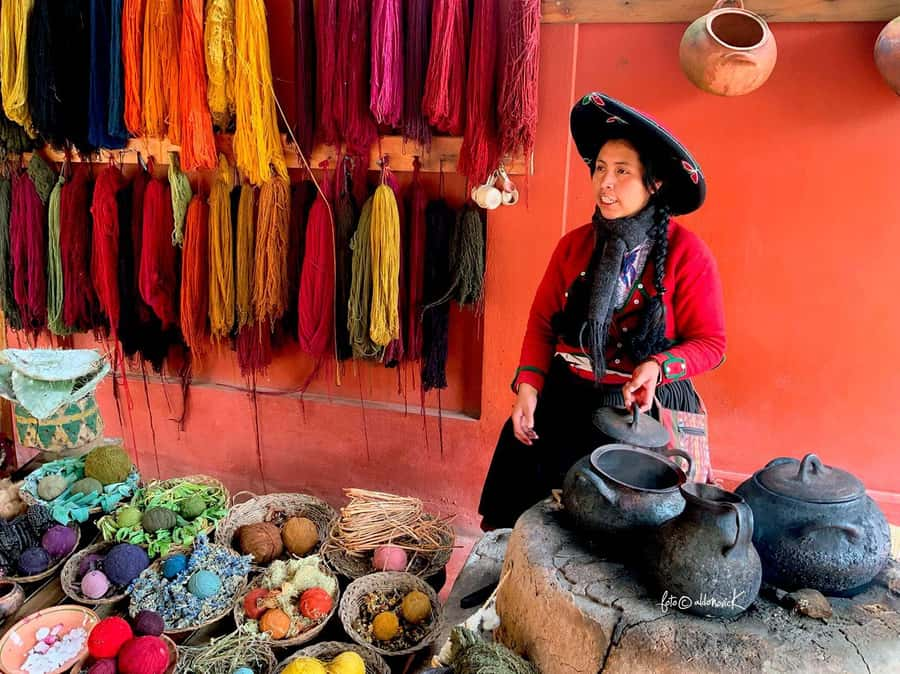
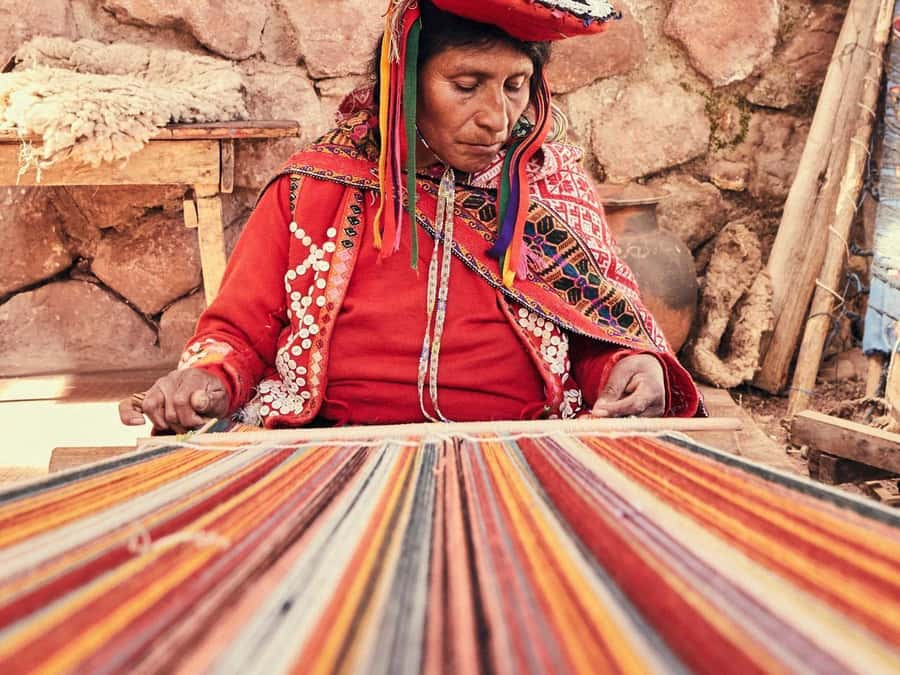
The final major stop is Chinchero, a town where traditional textile work remains part of daily life. Here you learn how natural dyes are made and how wool from alpacas and sheep becomes handmade fabric.
This is one of the most personal parts of the route. The demonstration connects objects you may see in Pisac’s market with the work behind them. You get a clearer idea of how color, fiber, and technique come together instead of seeing textiles only as finished souvenirs.
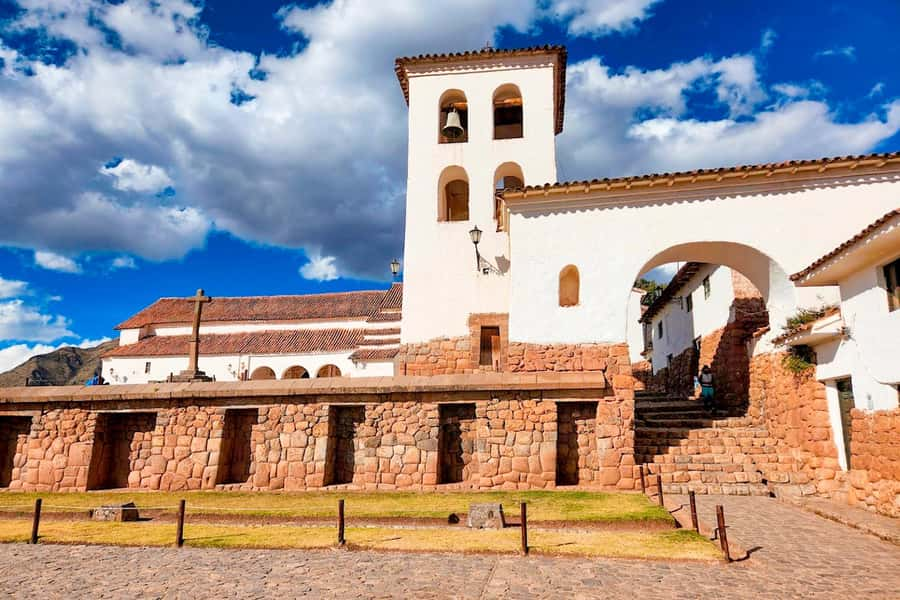
Chinchero is also presented as a place where residents maintain old customs, wear multicolored clothing, and speak Quechua. The visit gives you a window into living culture, not only ancient stone ruins.
Bring cash if you may want to buy genuine alpaca items. The experience can include beautiful textiles, and having local currency available gives you more flexibility. Still, take time to inspect what you are buying and choose something because you like the material and workmanship, not simply because it carries a traditional label.
The timing at Chinchero can vary depending on how long the earlier stops and lunch take. If you care most about the textile demonstration, ask the guide how much time is planned there.
Guides, language, and group size
The guide can make or break a long shared tour. The advertised languages are English and Spanish, and the guide explains the day in both. Guides named Eddy and Manuel received especially strong praise for explaining Cusco, local people, Inca culture, archaeological sites, jewelry, and textile production.
You should know how bilingual tours work in practice. If most of the group speaks Spanish and only a few people speak English, the guide has to repeat information in both languages. That is helpful, but it can slow the day and make each stop feel less private.
The group limit is 15 participants. That is a sensible size for a route with several stops and a buffet lunch. It is small enough that you can usually hear the guide and keep track of the group, though the tour is still shared rather than intimate.
Pickup can also affect your first impression. The van may collect people from several hotels, then wait at a transport area before leaving Cusco. Build patience into the first hour, and do not schedule an important separate activity immediately after the stated 7:00 PM return.
What the $45 price really covers
At $45 per person, this is a reasonably priced way to combine transport, guiding, and lunch across a wide section of the Sacred Valley. Hiring separate transport to reach Pisac, Urubamba, Ollantaytambo, and Chinchero would require more planning and could cost more, especially for one or two people.
The value depends on the entrance arrangement. Transportation, a bilingual professional guide, buffet lunch, and historic-center pickup are included. Drop-off is at Plaza Regocijo rather than necessarily at your hotel.
The tourist ticket is listed separately at S/70 per person. Entrance to the ruins is included only if you select the option that includes it, so check the booking choice carefully before paying. A low headline price can become less attractive if you discover the site ticket is extra.
The tour also offers free cancellation up to 24 hours in advance and a reserve-now, pay-later choice. Those terms are useful if your Cusco schedule may change, but the key financial question remains the entrance option.
Who should book this Sacred Valley day trip
I would recommend this tour to first-time visitors who want a strong overview of the valley without arranging several transfers. It suits you if you value explanations, want to see major Inca sites, and are happy to spend most of a day on the road.
It is also a good match for people interested in both archaeology and living culture. Pisac and Ollantaytambo cover stonework and Inca engineering, while Chinchero adds Quechua textile traditions and natural dyeing.
You may want another plan if you dislike early starts, shared vans, long lunch breaks, or bilingual commentary. It is also not suitable for wheelchair users, and comfortable shoes are essential for the ruin visits.
Should you book it?
Book this tour if your priority is variety: a lookout, Pisac, a buffet lunch in Urubamba, a river drive, Ollantaytambo, and Chinchero all in one day. The strongest parts are the excellent archaeological stops, the clear bilingual guiding from people such as Eddy and Manuel, and the textile demonstration.
Before you commit, check three things: the exact pickup time, the entrance-ticket option, and whether you will continue to Chinchero after Ollantaytambo. If you can accept a long day and some schedule padding, this $45 experience offers a practical introduction to the Sacred Valley with plenty of substance.
FAQ
How long does the Sacred Valley tour last?
The tour lasts about 11 hours. Pickup begins around 7:30 AM, and return to Cusco is expected at about 7:00 PM.
Where does pickup take place?
Pickup is included from hotels in the historic center of Cusco.
Where do I get dropped off?
The tour drops you at Plaza Regocijo in Cusco.
Which languages does the guide speak?
The live guide speaks English and Spanish.
How many people are in the group?
The group is limited to 15 participants.
Is lunch included?
Yes. A buffet lunch in Urubamba is included. Other meals or food not specified in the itinerary are not included.
Are entrance fees included?
Entrance to the ruins is included if you select the option that includes it. The tourist ticket is otherwise listed separately at S/70 per person.
What should I bring?
Bring comfortable shoes. You may also want cash if you plan to buy alpaca textiles or other goods at the stops.
Is the tour suitable for wheelchair users?
No. The activity is not suitable for wheelchair users.
More full-day trips around Cusco
- Machu Picchu: Full-Day Tour from Cusco with Optional Lunch
★ 4.6 · 927 reviews - Full-Day Excursion to Sacred Valley, Pisac and Ollantaytambo from Cusco
★ 4.5 · 174 reviews - Food and Culture Full day Tour in the Sacred Valley
★ 5.0 · 144 reviews - Private Rainbow Mountain Full Day Tour from Cusco
★ 5.0 · 129 reviews
More history tours around Cusco
- Cusco: Historical Guided City Tour with 4 Inca Ruins
★ 4.5 · 99 reviews - 6-Day Cultural Tour to Machu Picchu
★ 5.0 · 76 reviews - Cusco: Historic Walking Tour with Pisco Sour and Music Show
★ 4.6 · 65 reviews - Pisco Sour Secrets: Hands-On Mixology in Historic Cusco
★ 4.5 · 50 reviews
Just added around Cusco
- Zipline over the Sacred Valley Trip★ 5.0 · 11 reviews
- Waqrapukara 1 day trekking + meals★ 3.9 · 3 reviews
- Visit Pisac from Cusco: Private Transport★ 4.6 · 9 reviews
- Valle Sur Cusco | half day★ 4.3 · 3 reviews
- Trek to Humantay Lake from Cusco★ 4.9 · 8 reviews
- Trek to Choquequirao 4 days★ 3.8 · 4 reviews
- rainbow mountain full day★ 5.0 · 44 reviews
- Machu picchu one day by train all included★ 4.5 · 53 reviews
Sacred Valley Tours, compared.
Sacred Valley & Maras Salt Mines Tour with Lunch
Read our review →
Moray, Maras Salt Mines & Chinchero Weavers Tour
Read our review →
Sacred Valley, Pisac, Ollantaytambo, Salt Mines Moray
Read our review →
Chinchero,Moray & Salt Mines drop-off in Ollantaytambo
Read our review →
Pisac Indian Market and Ollantaytambo Fortress with Lunch
Read our review →
Browse the lists this tour appears in