
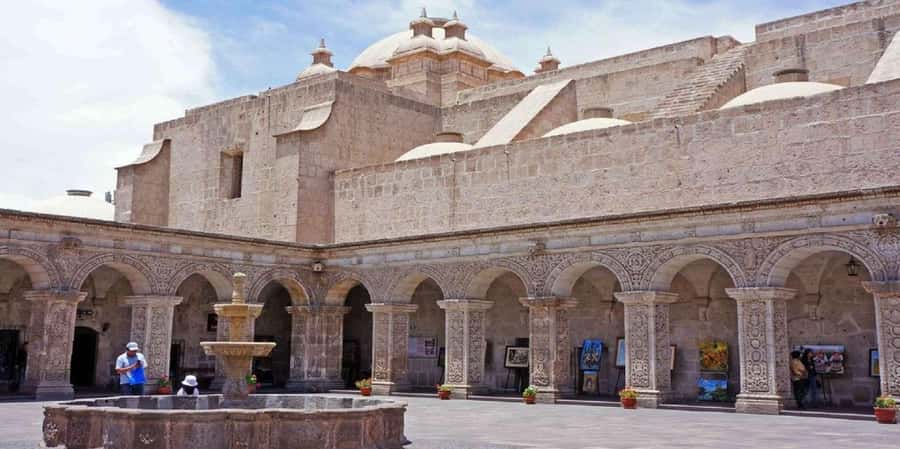
Reviewed · HISTORICAL TOURS
Walking tour through the Historic Center of Arequipa
Arequipa’s white-stone center makes a strong first impression, but this walk shows you more than the grand Plaza de Armas. You’ll pass through the Company cloisters, look toward Misti from the Bolognesi Bridge, and reach San Lázaro, the first town where the White City was founded. I like the route’s variety, and I like that it connects architecture with local camelid culture at Mundo Alpaca.
The three-hour format gives you a useful orientation without taking up a whole day. The main drawback is that you walk the entire route, and entrance tickets are not included, so you’ll want comfortable shoes and extra cash for the sites or textiles you choose to visit or buy.
Key points at a glance
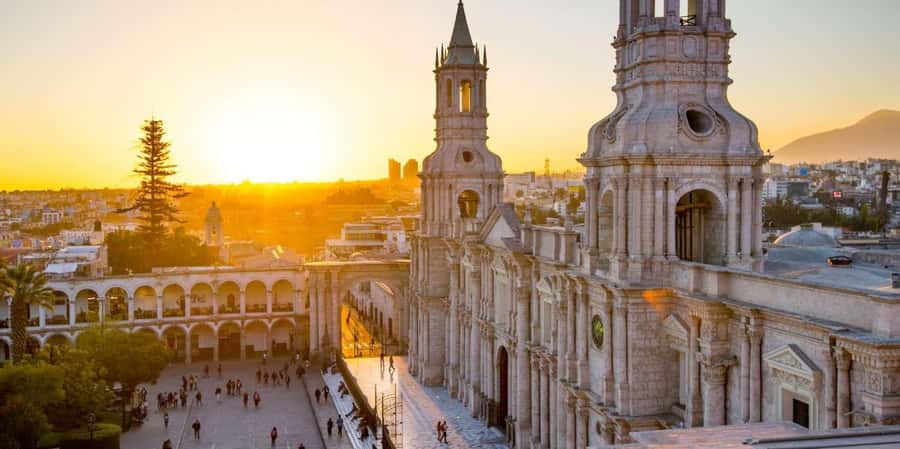
- The Plaza de Armas sets the scene: Begin among Arequipa’s famous arches and portals in the city’s central square.
- The Company cloisters add fine detail: See one of the city’s most striking examples of religious architecture.
- Bolognesi Bridge brings volcano views: Look toward Misti and other volcanoes above the Chili River.
- Mundo Alpaca links craft with farming: See llamas, alpacas, suris, and vicuñas, then browse fabrics made from their fibers.
- San Lázaro gives the walk a local finish: Visit the first town associated with the founding of the White City.
- The price is easy to judge: At $25 per person, the tour offers a guided three-hour introduction, but you must pay separately for food and admission tickets.
Start in Arequipa’s grand central square
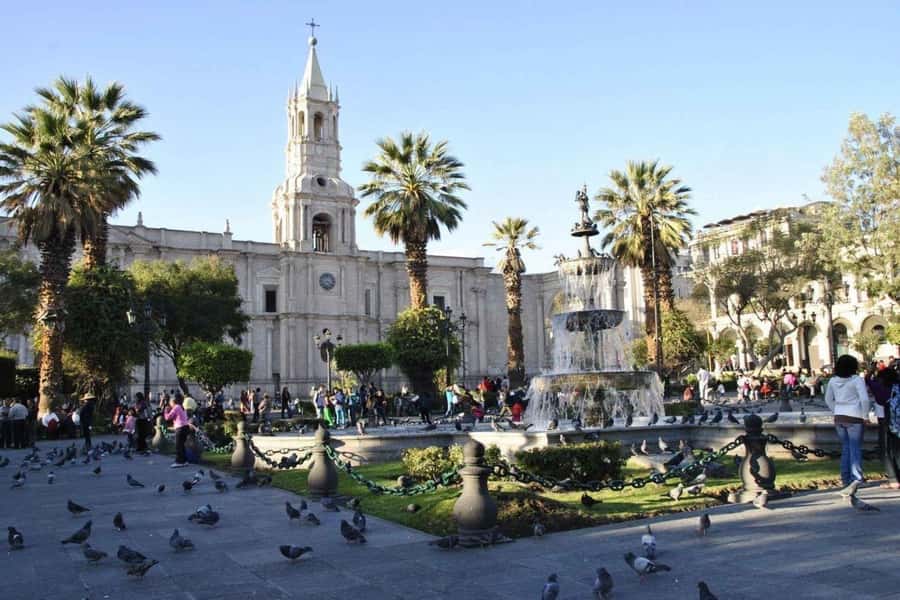
The meeting point is the main square of Arequipa, the natural place to begin learning how the city is arranged. You’ll walk around the square with your guide, taking in its arches, portals, and central importance to city life.
This opening section is useful if you have just arrived. Instead of viewing the square as a quick photo stop, you’ll hear about its role in Arequipa’s past and present. The setting also gives you a clear reference point for the rest of your visit. From here, the tour moves outward on foot rather than relying on a bus or van.
Arequipa is often called the White City because of the pale volcanic stone used in many historic buildings. The walk lets you see that material up close as part of the city’s streets, religious buildings, and older neighborhoods. You should expect an outdoor start with plenty to look at, not a long indoor presentation.
Other guided walks in Arequipa:
- Walking tour in the Historic Center of Arequipa
★ 4.4 · 180 reviews - Arequipa: Walk through the Historic Center of the City
★ 4.9 · 87 reviews - Arequipa Walking Tour city center and drinks experience
★ 5.0 · 72 reviews
Take your time in the Company cloisters
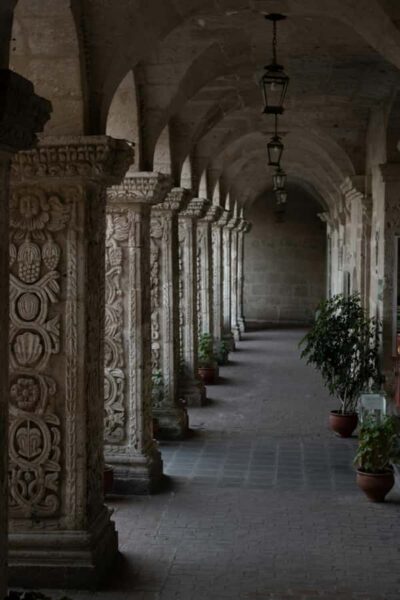
The cloisters of the Company are one of the tour’s main architectural stops. Their design is known for impressive stonework and carefully shaped spaces, making this a good place to slow down and examine details instead of rushing through another church exterior.
I especially like this part of the route because cloisters give you a different view of historic architecture. A square can show you scale and civic design, but cloisters reveal smaller touches, enclosed courtyards, and the craftsmanship that went into religious buildings. Your guide can help explain what you are seeing in either Spanish or English.
Tickets are not included in the $25 cost. The supplied details do not specify which entrance fees apply or how much they cost, so check the current arrangements before you book if you want a precise budget. The tour itself still gives you the benefit of reaching the site with a guide and a clear sense of why it matters.
Cross the Bolognesi Bridge for volcano views
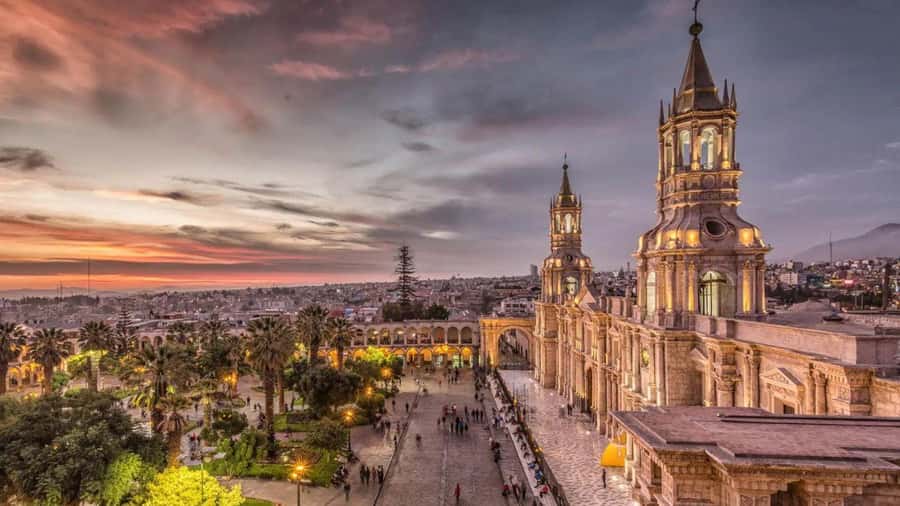
The route continues toward the Bolognesi Bridge. From here, you can look toward volcanoes including Misti and see the Chili River below. This is one of the walk’s best changes of pace: after the close architectural views downtown, you get open air and a wider view of Arequipa’s setting.
Misti is particularly important to the city’s identity, and seeing it from the bridge helps you understand Arequipa’s relationship with the volcanoes around it. The view can depend on conditions, so keep your expectations sensible. The tour promises the viewpoint, not a guaranteed clear panorama.
The bridge stop also gives your legs a brief change after the central streets. Still, this is a walking tour from beginning to end, so wear shoes suited to several hours on city streets and bridges. If you prefer vehicle transport or have difficulty walking for three hours, this may not be the right match.
Meet llamas, alpacas, suris, and vicuñas at Mundo Alpaca
Mundo Alpaca brings a hands-on local industry angle to the route. You’ll visit an old breeding farm for camelids, including llamas, alpacas, suris, and vicuñas. That list matters because these animals are not simply decorative symbols. Their fibers support traditional and modern textile production in the Andes.
This stop helps connect what you see in shops with the animals and materials behind the finished products. You’ll also have the option to purchase fabrics made from these fibers. That choice is entirely yours, which keeps the visit useful for both shoppers and people who only want to learn about local production.
If you do plan to buy something, remember that fabric purchases are not part of the tour price. You can treat Mundo Alpaca as a cultural stop rather than a required shopping stop. I find that flexibility helpful, especially when you are trying to keep your spending under control.
More of the past around Arequipa:
- Arequipa, Historic and Colonial City and Santa Catalina Monastery
★ 4.5 · 42 reviews - Lima’s Vibrant Heritage: Exploring the City’s Landmarks Half-day
★ 4.5 · 581 reviews - Lima: Historic Center Street Food, Market, and Eateries Tour
★ 4.9 · 216 reviews - Historic Downtown, Miraflores & Catacombs Private Tour
★ 5.0 · 100 reviews
Walk into San Lázaro, Arequipa’s first town
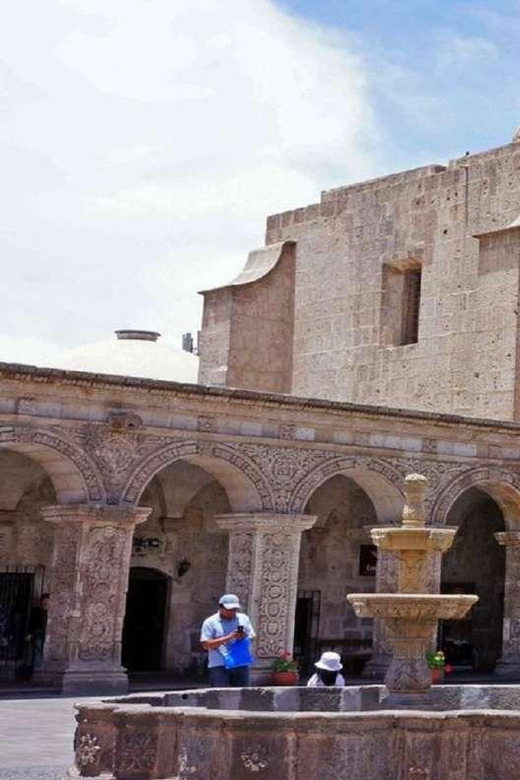
The tour then heads to San Lázaro, described as the first town where the White City was founded. This gives the walk a more residential and neighborhood-focused finish after the formal square and religious architecture.
San Lázaro is valuable because it shifts attention from famous landmarks to the early shape of Arequipa itself. You are not just collecting pictures of grand buildings. You are also seeing the place connected with the city’s beginnings, as part of a route that moves through several layers of local identity.
The information provided does not list specific buildings or monuments in San Lázaro, so you should expect the neighborhood’s historical setting to be the focus rather than a fixed series of named interiors. The guide’s explanation will be important here, particularly if you want more than a quick walk through the streets.
Finish near Santa Catalina or the Juanita Mummy Museum
The walk ends in central Arequipa, close to the Monastery of Santa Catalina or the Juanita Mummy Museum. This is a practical finish because both are major places you may want to visit during your stay.
The tour does not include admission to either attraction. That can be an advantage if you want to decide later which one fits your schedule and budget. You can finish the walk, take a break, and then visit one of them separately if opening hours and ticket prices work for you.
The exact ending point is described as very close to one of these attractions, rather than as a full visit inside either one. Plan on treating them as nearby options, not included stops. If Santa Catalina or the Juanita Mummy Museum is high on your list, this tour can help you get oriented before you go in on your own.
What $25 gets you
At $25 per person, the tour is priced as a modest introduction to central Arequipa. You receive a professional guide, a three-hour walking route, and hotel pickup if your hotel is in the historic center. The guide adds the most value at the Plaza de Armas, the Company cloisters, and San Lázaro, where context makes the buildings and streets easier to understand.
The price does not cover food, entrance tickets, or fabrics at Mundo Alpaca. That is normal for a walking orientation, but it means the final cost depends on what you add. If you want only an overview and outdoor sightseeing, the advertised price is fairly easy to assess. If you plan to enter several attractions and shop, set aside more.
Hotel pickup is limited to the historic center. If you are staying elsewhere, you should expect to make your own way to the main square. The activity lasts three hours, but starting times depend on availability, so check the schedule before committing to another booking that day.
Who will enjoy this route most
I would choose this tour for a first day in Arequipa, especially if you want to understand the historic center before exploring it alone. The route combines major civic architecture, religious design, a river-and-volcano viewpoint, textile culture, and an early settlement area. That is a good range for one morning or afternoon.
It also suits you if you prefer walking to riding between stops. You get a closer look at street-level details, and the route has enough variety to avoid feeling like a single long plaza tour. The English and Spanish guide options make it accessible to visitors who want explanation in one of those languages.
You may want a different plan if your priority is a deep visit inside Santa Catalina, the Juanita Mummy Museum, or several other paid attractions. Those tickets are not included, and the walk finishes nearby rather than covering them. This activity is best understood as a guided city introduction, not a complete museum tour.
Bring water, wear comfortable shoes, and leave room in your schedule for stops that catch your eye. Food is not included, so plan to eat before or after the walk. Since the route is outdoors and entirely on foot, practical comfort matters more here than dressing for a formal sightseeing excursion.
Should you book the Arequipa historic-center walk?
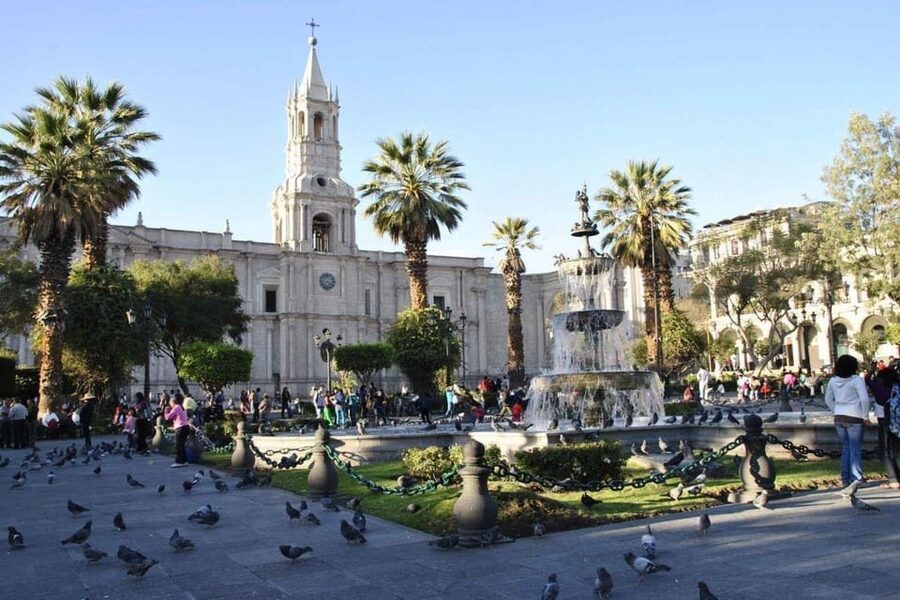
Book it if you want a compact, guided introduction that goes beyond the main square. The mix of the Company cloisters, Bolognesi Bridge, Misti and Chili River views, Mundo Alpaca, and San Lázaro gives you a fuller picture of Arequipa than a short central-square visit.
Skip it if you strongly dislike walking, need transport between every stop, or want admission to the major museums and monastery included in one price. For everyone else, $25 buys a useful three-hour route with a clear local focus. Add ticket costs and shopping only if they suit your plans, and use the final stop near Santa Catalina or the Juanita Mummy Museum to continue exploring on your own.
FAQ
Where does the walking tour begin?
It begins at the main square of Arequipa.
How long does the tour last?
The tour lasts three hours.
Is the entire tour done on foot?
Yes. The full route is completed on foot.
Is hotel pickup available?
Hotel pickup is available only from hotels in Arequipa’s historic center.
What languages are available?
The live guide is available in Spanish and English.
Are food and entrance tickets included?
No. Food and entrance tickets are not included in the tour price.
What is the cancellation policy?
You can cancel up to 24 hours in advance for a full refund. You can also reserve now and pay later.
Just added around Arequipa
- Trek to the Route of the Sillar and Culebrillas in Arequipa★ 4.0 · 9 reviews
- 3-Day Colca Canyon trek with Professional Guide★ 5.0 · 40 reviews
- Private 3 Day Colca Canyon Trekking tour (superior Service)★ 5.0 · 58 reviews
- 2 Day Trek Including Transfer to Puno / Colca Canyon★ 4.5 · 38 reviews
- Full Day Tour to Colca Canyon from Arequipa★ 4.0 · 34 reviews
- Colca Full Day★ 5.0 · 57 reviews
- Tour to the Sillar Route from Arequipa | Half Day★ 4.2 · 4 reviews
- 8-Hours Tour in Arequipa Laguna de Salinas with Pick-up★ 4.5 · 56 reviews
Historical Tours, compared.
Lima’s Vibrant Heritage: Exploring the City’s Landmarks Half-day
Read our review →
Historic Center Street Food, Market, and Eateries Tour
Read our review →
Walking tour in the Historic Center of Arequipa
Read our review →
Historic Downtown, Miraflores & Catacombs Private Tour
Read our review →
Machu Picchu Private Archaeological and Historical Guided Tour
Read our review →
Browse the lists this tour appears in