
Reviewed · COLCA CANYON TOURS
Private 3 Day Colca Canyon Trekking tour (superior Service)
Colca Canyon is best seen on foot, not from a bus window. This three-day route gives you time to descend into the canyon, sleep in family homes, reach the pool at Sangalle before the afternoon is gone, and climb out at sunrise.
I like the small private group, limited to two to eight people, and the strong local flavor: family cooking, village stays, fruit along the trail, and guides such as José, Miguel, Jarley, and Pepe who explain plants, animals, traditions, and daily life. I also like that the schedule leaves real time to rest at Sangalle.
The catch is the physical demand. You start around 3:15 a.m. from Arequipa, walk downhill for about five hours on day one, then climb steeply before breakfast on day three. This is not a gentle sightseeing trip, even with a mule option.
Key points to know before booking
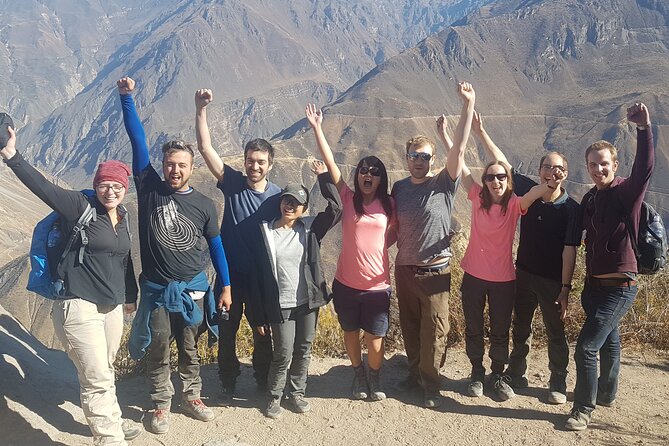
- A real canyon trek: You descend roughly 1,200 meters on day one and climb back out from Sangalle at 4:00 a.m. on day three.
- The best part is the extra night: Two nights allow time for the Oasis Sangalle pool, a slower pace, and less pressure than a two-day version.
- Local stays and meals: Accommodation is in family homes with private bathrooms and hot water, with meals based on regional produce.
- Private guiding, shared transport: Your walking program is private, but the tourist vehicle is shared.
- Condors and high volcanoes: The route includes Cruz del Condor, Abra Patapampa at 4,910 meters, and the Salinas y Aguada Blanca reserve.
- Plan for mountain conditions: Bring boots, trekking poles, sun protection, rain gear in wet weather, a flashlight, water, and some extra cash.
Why three days works better in Colca Canyon
The main strength of this tour is its pace. Many Colca trips squeeze the canyon into two days, which leaves little room to enjoy the places between the viewpoints. This three-day plan still starts early and works hard, but the overnight at Sangalle changes the feel of the trek.
You descend into the canyon on day one, spend the afternoon at Pallca, walk through the canyon again on day two, then reach Sangalle around 1:00 p.m. That gives you time for the natural pool, fruit trees, a drink, and a proper dinner before the final climb.
I would choose this version if you want more than a quick look at the canyon. The second night also makes the route more social and local. You sleep in simple family-run accommodation rather than treating the canyon as scenery viewed from a road.
The price is $400 per person. That is not the cheapest way to see Colca Canyon, but the package includes two nights, a specialist hiking guide, meals, entry tickets, tourist transport, first aid equipment, medical oxygen, snacks, and the private walking arrangement. For a small group that values personal guiding and local accommodation, the cost is reasonable.
Remember that tips and accident insurance are extra. Also, transport is shared, despite the private tour format. In practice, your group has the private guide and activity, while the tourist vehicle is the shared part.
Other trips into the canyon from Arequipa:
- From Arequipa: Colca Canyon Full-Day Guided Tour with Meals
★ 4.5 · 982 reviews - From Arequipa: 2-Day Colca Canyon Trekking Tour
★ 4.8 · 243 reviews - Colca Canyon Plus
★ 5.0 · 198 reviews
The pre-dawn ride from Arequipa to Yanque
Your day begins at about 3:15 to 3:30 a.m. with hotel pickup in Arequipa. The first stretch is a roughly three-hour drive toward the Colca Valley, so you will want warm clothing and a way to sleep in the vehicle.
As daylight reaches the Andes, the guide explains the names and meaning of Arequipa, the Colca Valley, and the canyon. This is a useful start because the trip is not only about walking. The route connects geology, farming, colonial towns, local food, and the communities that still work the canyon slopes.
Around 6:30 a.m., you stop in Yanque for a traditional breakfast prepared by a local family. Yanque was important during the colonial period, and it is a more meaningful first stop than a roadside café. You can eat, stretch, and begin adjusting to the early hour before continuing through the valley.
From Yanque, the road passes old pre-Inca terraces. These terraces are not decorative ruins. They show how local communities made usable farmland out of steep, difficult ground, often working across generations. The guide also explains the Colca River, the Chila mountain range, and the crops that support life in the valley.
Cruz del Condor and the first canyon descent
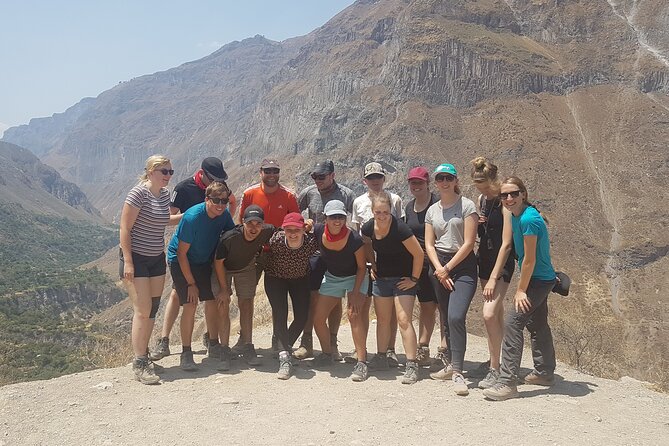
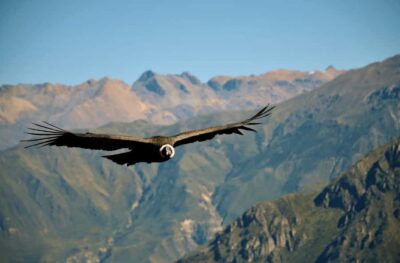
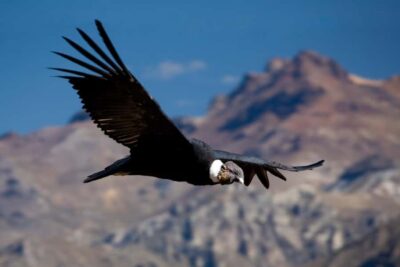
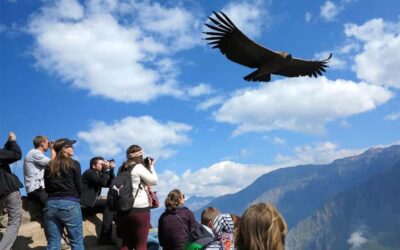
The group reaches Cruz del Condor at about 8:00 a.m. The stop lasts around 40 minutes. This viewpoint gives you a broad look into the canyon and a chance to see Andean condors riding the air currents below and above the cliffs.
Condor sightings are never a mechanical guarantee, so keep your expectations sensible. The appeal of the stop is both the bird and the setting. Local cultures have long regarded the condor as a sacred creature, and the guide can place the sight in that cultural setting rather than treating it as a quick photo stop.
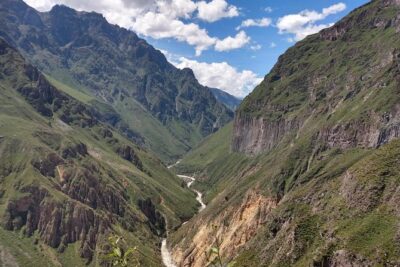
After Cruz del Condor, the walking begins. The first trek lasts about five hours and drops approximately 1,200 meters toward the Colca River. A downhill trail can sound easy, but long descents are hard on knees and feet. Trekking poles are more than a nice extra here.
The path winds through the canyon toward Pallca, where lunch is prepared with local products. The route allows pauses for photographs, rests, and local fruit. Those breaks matter because the heat and steep descent can catch you off guard, especially after starting before dawn.
Pallca is the first overnight area. You can rest, explore nearby, or use the thermal baths to loosen tired muscles. Accommodation is in a family home with a private bathroom and hot water. Expect comfort in a simple, local setting rather than hotel-style facilities.
Day two from Pallca to the Oasis Sangalle
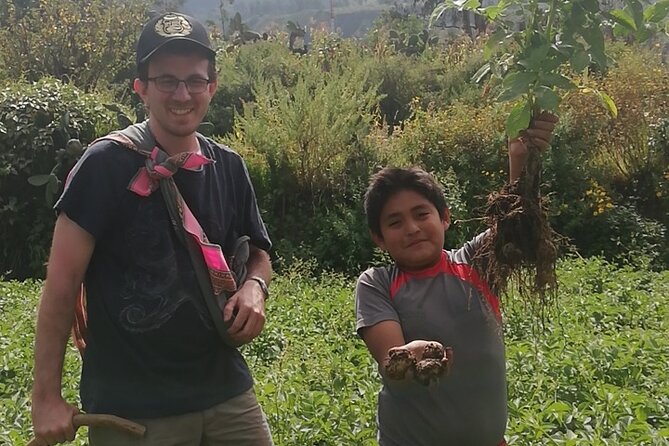
Day two covers about five hours. After breakfast, you head toward Sangalle, with the first two hours climbing toward the Apacheta viewpoint. This section gives you a different challenge from day one. You are no longer simply losing height, and your legs will already know that.
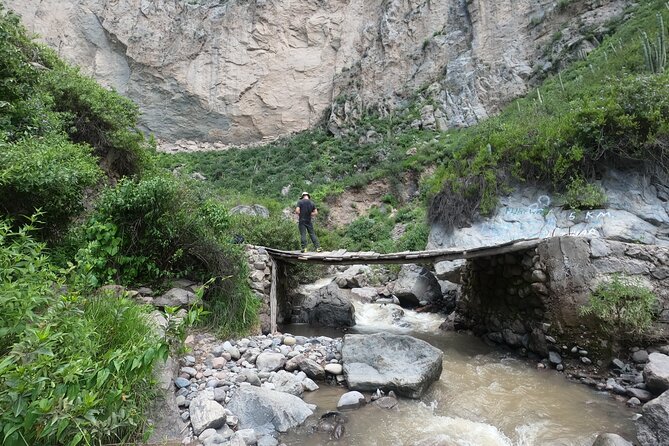
The route crosses hanging bridges and small communities. The guide explains local plants, wildlife, and the shape of the canyon while you pass fields and see how residents move water to their agricultural plots. That connection with daily work is one of the most worthwhile parts of the trek. The canyon is not an empty wilderness. People farm, carry water, cook, host visitors, and maintain a life here.
The route then descends through the Amphitheater, an archaeological farming site dated to roughly 1200 to 1500 B.C. The name fits the broad shape of the site, but the important point is its purpose. This was agricultural ground, shaped to make food production possible in a demanding place.
After a break to drink and recover, you continue along a zigzag trail to Sangalle. You should reach the oasis around 1:00 p.m., which is one of the strongest reasons to select three days. A shorter program may bring you here with far less time to enjoy it.
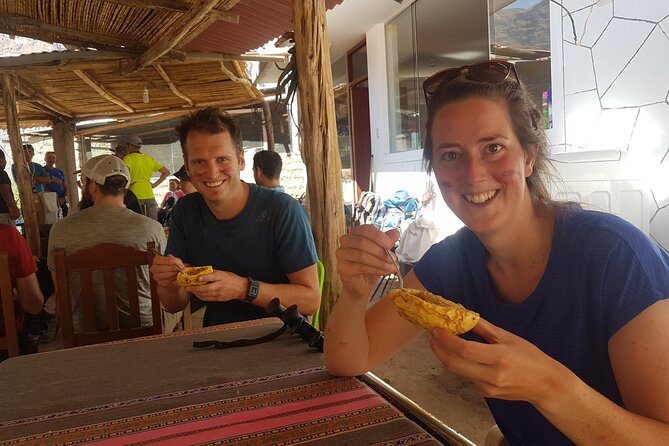
Sangalle sits at about 2,100 meters and has a natural pool where you can cool off. The afternoon is free for swimming, walking among fruit trees, resting, or talking with the group over a Colca sour. This is not a rushed stop squeezed between a descent and a night climb. You have time to let the canyon feel like a place, not just a route.
Dinner is served around 7:00 p.m. The evening also includes a briefing for the next morning. Pay attention here. The climb begins at 4:00 a.m., and your guide explains the pace, route, breaks, and mule arrangements before you go to bed.
Other walks into the mountains in Arequipa:
- From Arequipa: Sillar Route Trek
★ 4.2 · 461 reviews - 2 Day 1 Night Trek / Colca Canyon
★ 4.5 · 92 reviews - 4 hours Tour: Route of Sillar with Trek in Culebrillas
★ 4.2 · 69 reviews - Trekking, Waterfalls and Thermal Baths
★ 4.5 · 47 reviews
The 4:00 a.m. climb from Sangalle
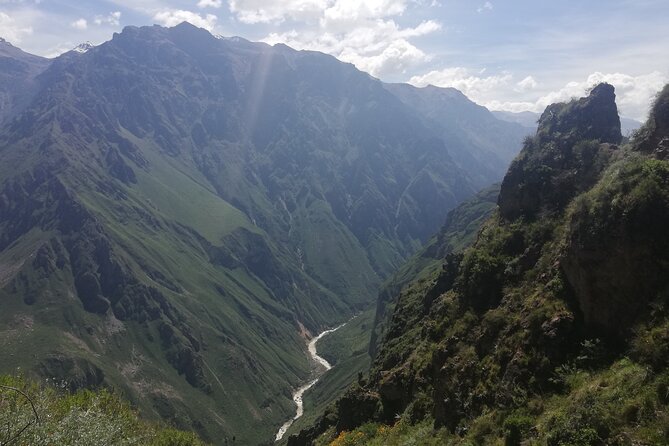
The final ascent is the tour’s hardest physical test. You begin around 4:00 a.m. and climb for about three hours, covering approximately five kilometers. The guide sets a mountaineering rhythm, which means conserving energy instead of racing the slope.
As daylight arrives, you can look back at the height already gained and see the canyon from a new angle. The route reaches the rim about an hour after sunrise begins to light the way, according to the schedule, though actual timing depends on the group.
A mule is available to carry the group’s backpacks on the final day, and you can also rent a mule for your own climb. This is worth considering if you are unsure about the ascent. It does not remove the walking itself, but it can reduce the load at the point when your legs are most tired.
At the top, the route continues to Cabanaconde, where you have time to rest and eat breakfast. This town provides a welcome reset after the climb before you board the tourist vehicle toward Chivay.
The guide support matters most on this morning. Past guests repeatedly singled out José, also called Pepe, for his care, humor, explanations of local plants, and steady attention to the group. Miguel and Jarley, sometimes spelled Jarly, were also praised for clear explanations, patience, organization, and personal attention. The assigned guide can vary, so ask at booking if a particular guide is important to you.
Chivay, volcanoes, and vicuñas
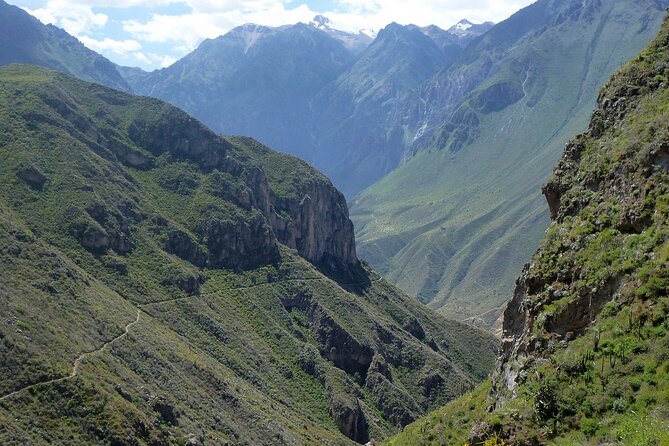
The vehicle reaches Chivay at about 1:00 p.m. This is the food-focused stop. You can try traditional Arequipeño dishes and see how regional cooking forms part of the trip, rather than treating meals as fuel between walks.
Three breakfasts, three lunches, and two dinners are listed as included, along with a hiking snack. Vegetarian and vegan meals can be arranged, as can other dietary preferences. It is still wise to state your needs clearly when booking.
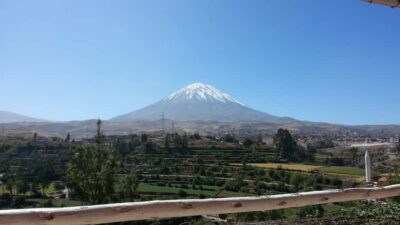
After Chivay, the route climbs toward Abra Patapampa, the highest point of the expedition at 4,910 meters. From here, you can see parts of the central Andes volcanic range, including Misti, Chachani, Sabancaya, Walka Walka, and Ampato.
This stop is brief, around 15 minutes, but the altitude makes it memorable. It is also a place to move slowly and follow your guide’s advice. Ampato is associated with the Inca sacrifice of the young woman known as Juanita, adding an archaeological and cultural note to the mountain view.
The final stop is in the Salinas y Aguada Blanca National Reserve, known here as the Vicuña National Reserve. You leave the vehicle for photographs and a short explanation of the animals and their behavior. Give the vicuñas space and follow instructions. The reserve is valued for its wildlife, water sources, volcanoes, and links to the earliest human communities in the Andes.
You return to Arequipa at about 5:00 p.m. The long final drive makes this a full day, even after the morning climb.
What the included service really gives you
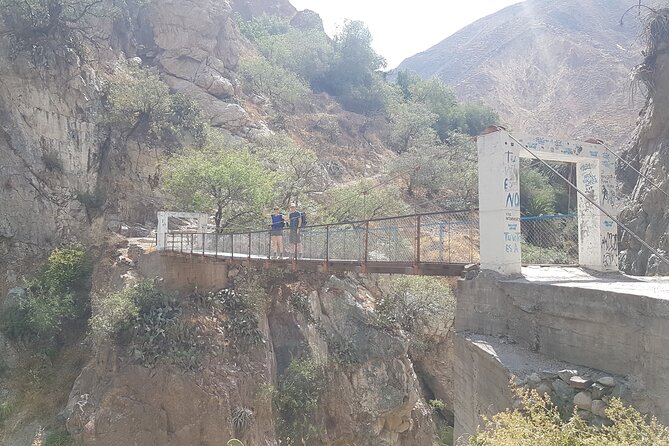
The guide is an official tourism professional specializing in hiking, with English and Spanish service. That language combination is important because the route includes much more than directions. You get explanations about local farming, plants, animals, canyon geology, traditions, and history.
The medical oxygen and first aid kit are included for all participants. They do not replace travel insurance, and accident insurance is not included, but the equipment is a sensible part of a high-altitude mountain trip.
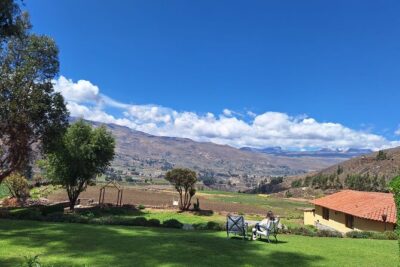
Accommodation is in family homes with private bathrooms and hot water. One stay may include access to a pool or thermal bathing area, but you should think of this as simple local lodging, not a polished resort. The reward is closer contact with canyon communities and a more personal setting.
The trip requires a minimum of two and accepts a maximum of eight participants. Everything apart from tourist transport is private for your group. That is a good balance if you want personal guiding without paying for an entirely private vehicle.
Bring a 40-liter pack, hiking boots, trekking poles, sunscreen, sunglasses, a hat, a jacket, and a poncho in the rainy season. Add mosquito repellent, swimwear, a flashlight with spare batteries, personal items, water, rehydration supplies, and extra money. The route notes specifically advise carrying cash for water, entry fees, and emergencies.
Who should book this Colca Canyon trek
I would choose this tour if you want a serious walk with cultural stops, local food, and time to pause. It suits people with moderate physical fitness who can manage long descents, steep climbs, early starts, and changing temperatures.
It is not recommended for babies, and the route is not designed for someone seeking an easy scenic outing. You should also avoid treating the mule as a magic solution. You still need to walk the trail, including the long climb out of the canyon.
The free cancellation policy allows a full refund if you cancel at least 24 hours before the start time. Changes or cancellations within 24 hours are not refunded, and the times are based on local time.
Should you book it?
Book this three-day Colca Canyon trek if you value time, local contact, and a guide who can turn a hard walk into a fuller understanding of the region. The overnight in Sangalle is the key advantage: you reach the oasis early enough to enjoy it instead of simply passing through.
Choose another option if you dislike pre-dawn starts, steep mountain trails, simple family accommodation, or shared transport. For fit hikers who want the canyon itself, not just its viewpoints, the $400 price buys a well-supported route with meals, lodging, permits, safety equipment, and the breathing room that shorter tours often lack.
FAQ
How long is the Colca Canyon tour?
The tour lasts approximately three days, beginning with an early pickup in Arequipa and ending with arrival back in Arequipa at about 5:00 p.m. on day three.
How difficult is the trek?
You need moderate physical fitness. Day one includes about five hours of walking with a descent of roughly 1,200 meters, day two takes about five hours, and day three begins with a three-hour ascent from Sangalle to the canyon rim.
Is the tour private?
The walking tour and activities are private for your group. The tourist transport is shared. The group size is limited to a minimum of two and a maximum of eight participants.
Is a mule available?
Yes. One optional mule can carry the group’s backpacks on the last day, and you can rent a mule for the climb to the top of the canyon.
What meals and lodging are included?
The package includes two nights in family homes with private bathrooms and hot water, three breakfasts, three lunches, two dinners, and a hiking snack. Vegetarian, vegan, and other food options can be arranged.
What is not included in the price?
Tips for the guide and group assistant, accident travel insurance, and personal expenses are not included. You should also bring extra money for water, entry fees, and emergencies.
More hiking tours in Arequipa
- 3-Day Colca Canyon trek with Professional Guide
★ 5.0 · 40 reviews - 2 Day Trek Including Transfer to Puno / Colca Canyon
★ 4.5 · 38 reviews - 4-hour excursion: Sillar Route with Hiking in Culebrillas
★ 4.0 · 21 reviews - Arequipa | Ascent to Chachani Volcano 2 days / 1 night
★ 4.9 · 10 reviews
More Colca Canyon tours in Arequipa
- From Arequipa: Full Day Tour of Colca Canyon with Meals
★ 4.4 · 146 reviews - Full-Day Colca Canyon Tour from Arequipa
★ 4.3 · 112 reviews - From Arequipa: Colca Canyon Day Trip with Transfer to Puno
★ 4.6 · 90 reviews - Full Day Tour / Colca Canyon
★ 4.0 · 70 reviews
Just added around Arequipa
- 3-Day Colca Canyon trek with Professional Guide★ 5.0 · 40 reviews
- 2 Day Trek Including Transfer to Puno / Colca Canyon★ 4.5 · 38 reviews
- Full Day Tour to Colca Canyon from Arequipa★ 4.0 · 34 reviews
- Colca Full Day★ 5.0 · 57 reviews
- Tour to the Sillar Route from Arequipa | Half Day★ 4.2 · 4 reviews
- 8-Hours Tour in Arequipa Laguna de Salinas with Pick-up★ 4.5 · 56 reviews
- Tour + Hike to the Sillar Route and Culebrillas in Arequipa★ 4.1 · 5 reviews
- Arequipa: The White City Origins – Sillar Route Half Day★ 5.0 · 4 reviews
Colca Canyon Tours, compared.
2-Day Tour Colca Canyon in Arequipa with end in Puno
Read our review →
From Puno to Arequipa: 2 Days/1 Night Colca Canyon Tour
Read our review →Browse the lists this tour appears in