
Reviewed · SACRED VALLEY TOURS
Complete Sacred Valley Tour Small group Pisac, Maras, Moray & Ollantaytambo
The best thing about this tour is the sheer variety packed into one long day. You move from Pisac’s mountain terraces to a working salt site, then on to Moray’s strange circular earthworks and the massive stones of Ollantaytambo. It gives you a useful picture of how the Incas farmed, built, traded, and managed water.
I like the small group of no more than eight and the chance to finish in Ollantaytambo, which is handy if you are continuing toward Aguas Calientes and Machu Picchu. I also like the guides’ strong reputation for explaining Inca science, religion, and engineering in clear English or Spanish. The drawback is the pace: this is a full 12-hour day, lunch may come around 2 p.m., and required entrance fees cost extra.
Key points to know before you book
- Four major Sacred Valley sights in one day: Pisac, Moray, Maras, and Ollantaytambo each show a different side of Inca life.
- Small-group transport: The van carries two to eight people and has air conditioning, a useful comfort on a long mountain day.
- Guides add real value: Jaime, Jimy, and Juan are noted for strong English, patient explanations, and enthusiasm for Inca culture.
- Bring extra cash: The Sacred Valley ticket costs 70 soles, and the Maras salt mine admission is 20 soles.
- Lunch is included but late: The buffet in Urubamba is scheduled during the middle of the route, often around 2 p.m.
- Useful for onward travel: The tour can end in central Ollantaytambo, about a 5 to 10 minute walk from the train station.
Why this route works so well
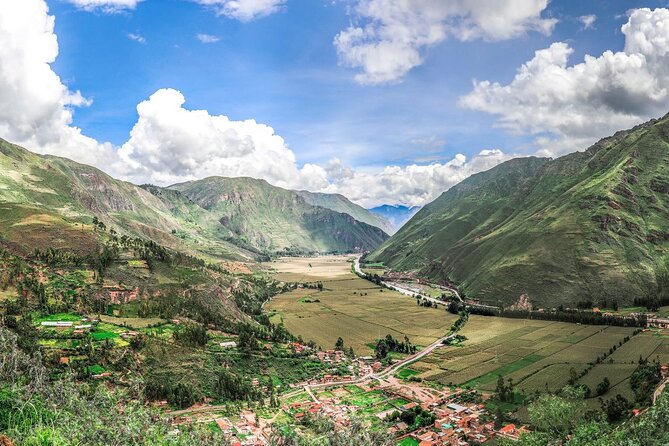
The Sacred Valley is not one single attraction. It is a long, fertile corridor below the high Andes, shaped by rivers, steep slopes, farm terraces, and Inca settlements. The Incas used the valley for food production and transport, then linked it to major religious and political centers.
This tour works because it joins several sites that answer different questions. At Pisac, you see how the Incas built on steep slopes. At Moray, you consider how they tested growing conditions. At Maras, you see salt still being collected from hundreds of small pools. Ollantaytambo then brings the focus back to military strength, sacred stonework, and urban planning.
You spend roughly an hour at the larger archaeological sites and less time at Moray and Maras. That balance keeps the day moving, though it does not allow a slow, meditative visit at every stop. If you want a deep study of one ruin, choose a more focused excursion. If you want a broad first look at the valley, this route makes good sense.
Other days through the Sacred Valley from Cusco:
- From Cusco: Moray, Maras Salt Mines & Chinchero Weavers Tour
★ 4.8 · 1,925 reviews - Cusco: Sacred Valley, Pisac, Ollantaytambo, Salt Mines Moray
★ 4.6 · 1,058 reviews - Cusco:Chinchero,Moray & Salt Mines drop-off in Ollantaytambo
★ 4.8 · 793 reviews
Pisac ruins and the first mountain views
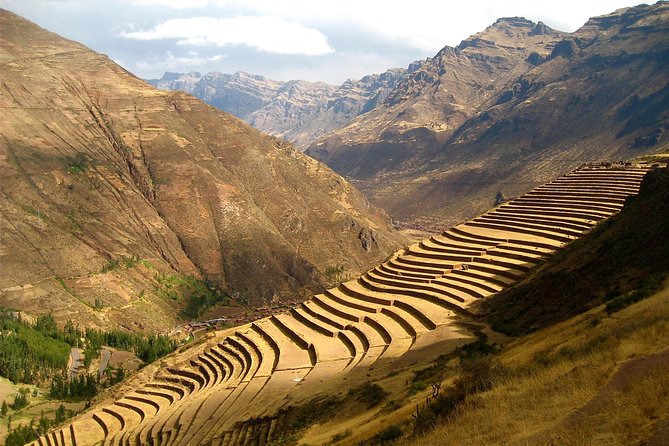
Pisac Archaeological Park is the first major stop, with about an hour to explore. The site gives you a fast introduction to Inca stonework, agricultural terraces, and the way settlements were fitted into steep terrain.
The terraces are the main visual reward. They run across the mountain slopes in broad steps, turning difficult ground into farmland. Your guide can help you notice the practical details, including how the terraces controlled erosion and supported cultivation at different heights.
You will also see stonework with carved designs and other signs of Inca planning. The value here is not just the view. Pisac shows that Inca construction was tied closely to farming and water management. The dramatic setting helps you understand the scale of the work.
An hour is enough for a useful introduction, but not for every corner of the site. Wear shoes suitable for uneven ground, and take your time on slopes. The guide is expected to allow breaks, which matters at altitude, especially early in your visit to the Cusco region.
Admission to the archaeological park is not included. The required Sacred Valley tourist ticket costs 70 soles and must be paid in cash. Keep that money ready instead of treating the quoted tour price as the full cost of the day.
Pisac Market and the human side of the valley
After the ruins, you spend about 45 minutes at Pisac Market. This is the more social part of the morning, with time to look at crafts, meet local sellers, and browse for a small purchase.
The market can feel like a standard shopping stop, so your expectations matter. You are not getting a long cultural workshop or a private meeting with artisans. You are getting a short chance to see the commercial side of the Sacred Valley and buy crafts if something appeals to you.
A useful feature of this tour is that the market stop has not been treated only as a forced sales opportunity. It can be interesting if you use the time to look carefully, ask questions, and avoid feeling obliged to buy. If shopping is not your priority, 45 minutes is still manageable.
The route also includes photo stops in the Sacred Valley. Your driver and guide point out places where you can see the valley’s breadth, cultivated plains, and terraced slopes. These pauses help break up the driving and give you a chance to appreciate why this area was so important to the Incas.
Moray’s circular terraces and Inca experiments
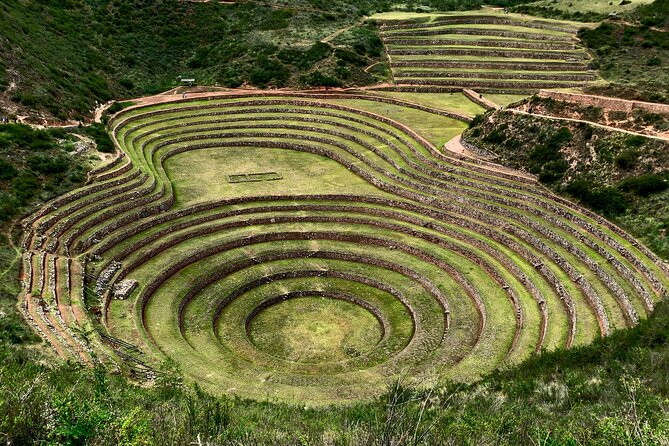
Moray is one of the most unusual stops on the route. The site consists of three bowl-shaped, amphitheater-like terrace groups cut deep into the earth. From above, the circles look almost too neat to be practical, but they had a serious agricultural purpose.
Moray is widely understood as a place where the Incas tested growing conditions. The depth and shape of the terraces created different temperatures and microclimates from one level to another. That allowed farming knowledge to develop in a controlled setting.
Your guide can connect the site to the larger Inca system of experimentation, crop production, and adaptation. This is where a good guide matters. Without explanation, Moray is a striking series of circles. With context, it becomes evidence of careful observation and planning.
The visit lasts about an hour, although some descriptions of the route suggest the actual stop may be closer to 15 to 30 minutes depending on the day’s timing. That difference is worth keeping in mind. The tour covers a lot of ground, and traffic, road conditions, and group pace can affect time at each place.
Moray admission is not included, so keep cash available for site tickets. The tour price of $73.47 covers transport, guiding, and lunch, but not every entrance fee.
Same base, a completely different day:
- Cusco: Humantay Lake Tour with Breakfast and Buffet Lunch
★ 4.9 · 2,976 reviews - From Cusco: Full-Day Group Tour of Machu Picchu
★ 4.7 · 1,767 reviews - Machu Picchu Day Trip from Cusco
★ 4.5 · 1,644 reviews - Cusco: Half-Day City Tour with Sacsayhuaman and Q’enco
★ 4.6 · 1,129 reviews
Maras salt pools below the Andes
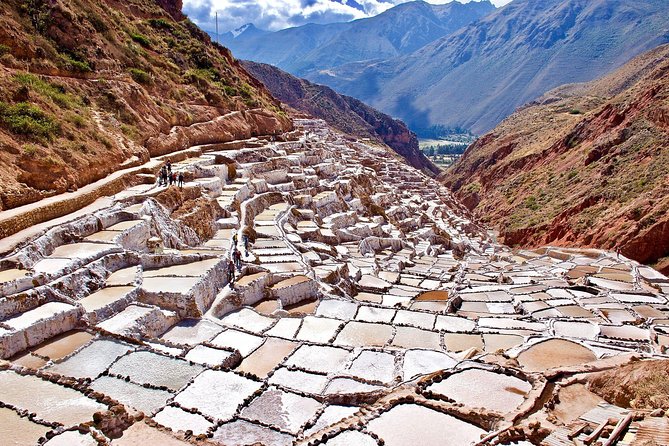
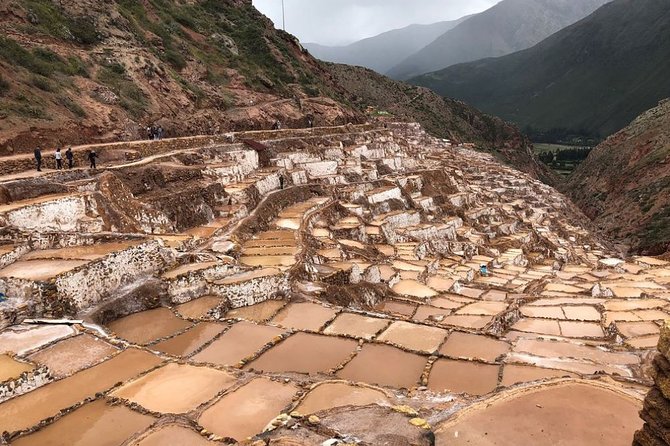
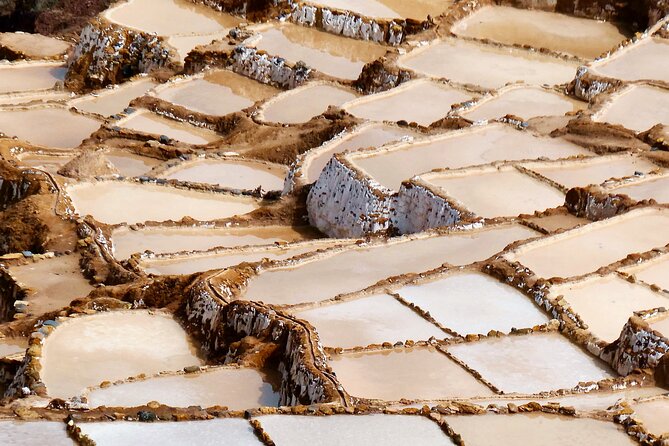
The Maras salt mines are only about two miles from Moray, making them a logical next stop. Here, more than 3,000 small pools spread across the mountainside. A small stream feeds the pools, and as the water evaporates, it leaves a layer of salt behind.
This is a working place rather than a single monumental ruin. The appeal comes from the pattern of the pools, the bright salt crust, and the contrast between the white terraces and the surrounding Andes. It is one of the tour’s best photography stops.
You have about 45 minutes here, though the exact time can vary. The site is more about seeing the system and taking in the view than walking through a large archaeological complex. Your guide can explain how the pools function and why Maras became a salt-producing center during colonial times.
There are two separate fee references for the salt mines, both listing 20 soles per person, so budget 20 soles in cash for admission. The tour information also lists salt mine admission as not included. Carry small notes if possible, since entrance fees are paid locally.
A late buffet lunch in Urubamba
Lunch is included at a buffet in Urubamba, a sensible location in the middle of the route. It gives you a proper meal rather than relying on snacks during a long day in the mountains.
The timing is the main issue. Lunch may be served around 2 p.m., which can feel late after an early departure from Cusco. I would bring a small snack, especially if you do not normally wait that long to eat.
The buffet offers variety, and some meals have been described as plentiful. At the same time, the dining hall may feel plain, and food may not always be clearly labeled or protected from flies. You can avoid surprises by choosing simple items you recognize and taking only what you plan to eat.
For the price, an included buffet is useful, but do not book this tour mainly for the meal. The real value is the route, transport, and guiding. Lunch is a practical break that keeps the day moving.
Ollantaytambo and the final Inca stronghold
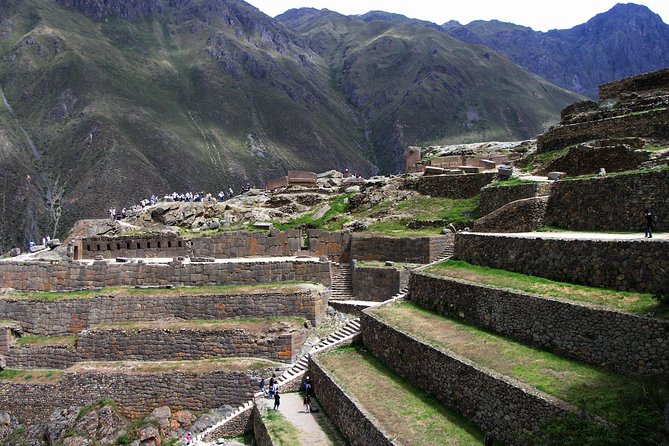
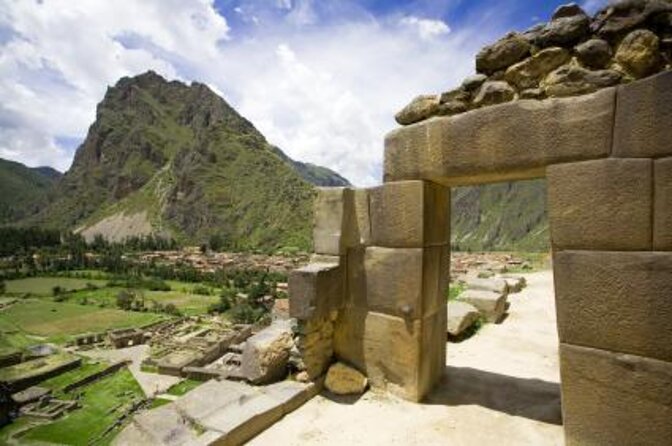
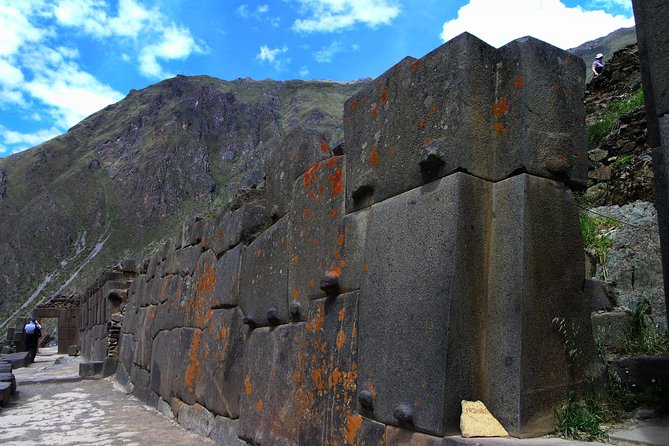
Ollantaytambo is the last major site and one of the most rewarding. The archaeological park presents large stone terraces, carefully cut blocks, and an imposing mountainside setting. The construction reflects the strength of the Inca state during its most powerful period.
The site also includes a striking rock formation associated with Wiracocha, the Inca god. Your guide can help you connect the stonework to religion, defense, agriculture, and settlement design rather than treating the ruins as a collection of impressive walls.
You get about an hour here. That is enough to see the main features, but Ollantaytambo can easily hold your attention longer. The steep terraces and large stones reward a slower pace, so use your time wisely and ask your guide where to focus.
One major advantage is the possible drop-off in central Ollantaytambo. If you are going to Aguas Calientes or Machu Picchu afterward, this can save you from returning to Cusco and retracing part of the route. The train station is about a 5 to 10 minute walk from the town center, according to the tour information.
The tour normally ends back at its meeting point, but the description and booking details indicate that an Ollantaytambo finish can be arranged as an option. Confirm this before departure. Do not assume the driver will automatically end there.
Guides, vehicles, and group size
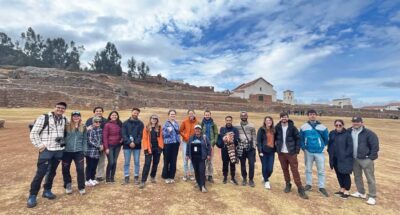
The tour uses private transportation with air conditioning and limits the group to eight people. That is a useful middle ground: more personal than a large coach, but less expensive than a fully private day.
Guides associated with this experience include Jaime, Jimy, and Juan. They are noted for clear English, Spanish-language service, patience with photo stops, and strong explanations of Inca discoveries, religious beliefs, and engineering. Juan is also described as comfortable explaining the sites in several languages.
The guide is the most important part of a route like this. Pisac, Moray, Maras, and Ollantaytambo are visually impressive, but the day becomes far more meaningful when someone explains why the Incas built terraces, how water moved through the valley, and what made the stonework difficult.
The driver matters, too. Most of the day is spent on the road, and a patient driver makes a real difference. One account describes a driver who seemed annoyed when the group wanted time at the market, so I would make sure the planned stops are clear at the start of the day.
Price, extra fees, and practical value
At $73.47 per person, this tour offers reasonable value if you want several major sites without arranging separate transport. The price includes hotel pickup in Cusco if you select that option, a professional English or Spanish guide, air-conditioned transport, and the Urubamba buffet.
You must add 90 soles for the listed entrance fees: 70 soles for the Sacred Valley tourist ticket and 20 soles for Maras. The information repeats the Maras fee in two places, but both references give the same 20-sole amount.
The tour is often booked about 63 days ahead, which suggests you should reserve early if your Cusco dates are fixed. Confirmation is provided at booking, and the cancellation policy allows a full refund if you cancel at least 24 hours before the start time. Changes or cancellations inside that window are not accepted.
Pickup details matter. The stated meeting point is Plaza Regocijo in Cusco, at F2M9+5X2, Cusco 08002, Peru. If hotel pickup is selected, confirm the exact pickup time and location before the morning of the tour.
Who should book this Sacred Valley day?
I would choose this tour if you want a broad, efficient introduction to the Sacred Valley and prefer a small group to a large coach. It suits first-time visitors who want ruins, mountain views, a market, salt pools, lunch, and a possible connection to the Machu Picchu route in one day.
It is also a good fit if you enjoy guided explanation. The places are much easier to understand when someone ties the terraces, salt pools, sacred rocks, and farming systems together.
I would think twice if you dislike early starts, long drives, late lunches, or fixed schedules. You may also prefer a slower private tour if you want more time at Ollantaytambo or Pisac.
Should you book it?
Book it if variety and convenience matter most. The route covers the valley’s biggest contrasts, the group stays small, and the guides bring useful context to sites that could otherwise blur together.
Before paying, set aside the extra 90 soles for entrance fees, carry a snack and cash, and confirm whether you can finish in Ollantaytambo. With those details handled, this is a strong-value day for seeing the Sacred Valley without organizing every transfer yourself.
FAQ
How long is the Sacred Valley tour?
The tour lasts approximately 12 hours.
What places does the tour visit?
The route includes Pisac Archaeological Park, Pisac Market, Moray, the Maras salt mines, and Ollantaytambo Archaeological Park.
Is hotel pickup in Cusco included?
Hotel pickup is included if you select that option. The listed meeting point is Plaza Regocijo in Cusco.
What is the maximum group size?
The tour is limited to a maximum of eight people.
Is lunch included?
Yes. A buffet lunch in Urubamba is included.
Are entrance fees included in the tour price?
No. The Sacred Valley tourist ticket costs 70 soles, and the Maras salt mine admission costs 20 soles per person. These fees must be paid in cash.
What languages are available?
The professional guide provides service in English or Spanish.
Can the tour end in Ollantaytambo?
The tour information indicates that ending in central Ollantaytambo is an option. Confirm this arrangement before departure, especially if you are continuing to Aguas Calientes or Machu Picchu.
What is the cancellation policy?
You can cancel for a full refund up to 24 hours before the experience starts. Cancellations or changes made less than 24 hours before the start time are not accepted.
Just added around Cusco
- Zipline over the Sacred Valley Trip★ 5.0 · 11 reviews
- Waqrapukara 1 day trekking + meals★ 3.9 · 3 reviews
- Visit Pisac from Cusco: Private Transport★ 4.6 · 9 reviews
- Valle Sur Cusco | half day★ 4.3 · 3 reviews
- Trek to Humantay Lake from Cusco★ 4.9 · 8 reviews
- Trek to Choquequirao 4 days★ 3.8 · 4 reviews
- rainbow mountain full day★ 5.0 · 44 reviews
- Machu picchu one day by train all included★ 4.5 · 53 reviews
Sacred Valley Tours, compared.
Sacred Valley & Maras Salt Mines Tour with Lunch
Read our review →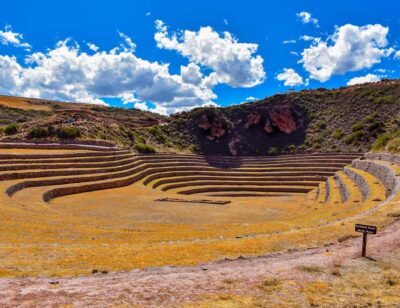
Moray, Maras Salt Mines & Chinchero Weavers Tour
Read our review →
Sacred Valley, Pisac, Ollantaytambo, Salt Mines Moray
Read our review →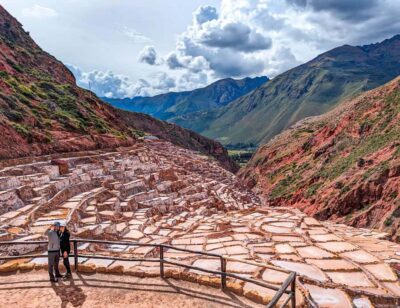
Chinchero,Moray & Salt Mines drop-off in Ollantaytambo
Read our review →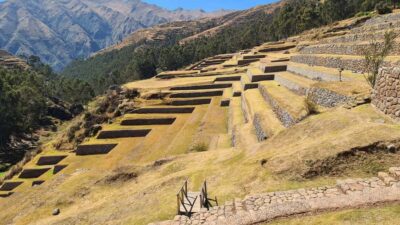

Pisac Indian Market and Ollantaytambo Fortress with Lunch
Read our review →
Browse the lists this tour appears in