
Reviewed · TOURS IN AREQUIPA
Arequipa Tasting Tour
Arequipa’s best introduction may be a walk that saves the food for last. This small-group tour moves from old streets and earthquake-shaped architecture to San Camilo Market, where you see the produce and everyday foods of the region, then finish with queso helado and pisco at Fundo el Fierro. The market visit and the pisco lesson are the real draws.
I like the modest $13 price, especially since the tour includes local fruit, a traditional dessert, and pisco. I also like the group size, capped at eight, which gives guides such as José, Daniel, and Jorge room to answer questions. The catch is simple: despite its food-focused name, most of the three-and-a-half-hour experience is a walking tour about Arequipa’s history, churches, and architecture. The tasting comes at the end.
Key points to know before booking
- San Camilo Market is the food heart of the walk: Expect regional fruits, tubers, meats, and other local products rather than a restaurant meal.
- The tasting happens at the end: Queso helado, local fruit, and pisco are included at Centro Artesanal Fundo el Fierro.
- Most of the tour is historical: Plaza Campo Redondo, the Plaza de Armas, La Compañía, and Jesuit cloisters receive careful attention.
- You walk through central Arequipa: The route begins at Plaza de Armas and ends at San Francisco Plaza, with several stops close together.
- The group is limited to eight people: This suits anyone who prefers a more personal walk and wants time for questions.
- Bring water and eat first: Bottled water, soda, and lunch are not included, and afternoon departures require you to have eaten beforehand.
Why this Arequipa walk works so well
At first glance, $13 seems almost too low for three and a half hours with a guide, several historic stops, a market visit, and tastings. The value makes more sense when you understand the format. This is not a meal tour with constant sampling. It is a central-city walking tour that uses food as its finish and as a way to explain local life.
That combination is useful on your first day in Arequipa. You get the basic city story, learn which buildings matter, see where residents shop, and finish with a taste of regional food and drink. I would use it as an orientation walk, then return later to the places that deserve more time.
The small group matters, too. A maximum of eight people is a good limit for narrow streets, market aisles, and church interiors. Guides José and Daniel have been singled out for patient explanations and for answering a long string of questions. Jorge has also led this route. Your assigned guide may vary, but the experience is clearly designed around conversation rather than a speech delivered to a large crowd.
You should also set your expectations correctly. The title suggests a food-first outing, yet the tasting appears late in the route. If you want a full lunch, a cooking class, or repeated food stops throughout the afternoon, this is not that kind of tour. If you want to understand Arequipa and sample a few local specialties along the way, the balance is much better.
Other days travellers book out of Arequipa:
- From Arequipa: Colca Canyon Full-Day Guided Tour with Meals
★ 4.5 · 982 reviews - Tour to the Salinas Lagoon and National Reserve in Arequipa
★ 4.5 · 548 reviews - From Arequipa: Sillar Route Trek
★ 4.2 · 461 reviews
Plaza Campo Redondo and the city’s first settlement
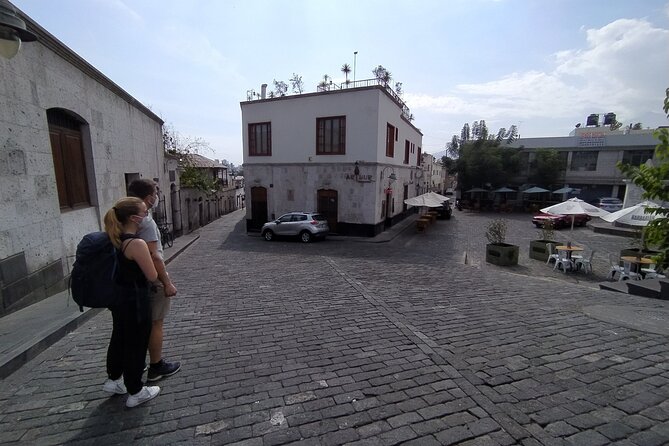
The route begins at Plaza de Armas, but the first stop is Plaza Campo Redondo, a traditional neighborhood linked with the first settlement of the Spanish conquerors in the area. You spend about ten minutes here.
That is a short stop, but it gives the tour a useful starting point. Instead of beginning with Arequipa’s grandest square, you start with the older neighborhood story. Your guide can place the city in time before the walk moves toward the better-known churches and plazas.
Do not expect a long visit or a formal indoor attraction here. Admission is free, and the value comes from the explanation. This is a quick scene-setter, not a stand-alone sightseeing stop.
San Francisco Plaza, Santa Catalina, and Fundo el Fierro
From Campo Redondo, the route passes by the Santa Catalina Convent and the street named after it before reaching San Francisco Plaza. The stop lasts about twenty minutes and includes a look at the Church and Monastery of San Francisco.
The church’s heavy structure and the surrounding colonial setting help show why Arequipa is often read through its buildings. The city has endured repeated earthquakes, and the guide connects those disasters with changes to the urban center. That context is more helpful than simply hearing dates and names.
You also see Fundo el Fierro, an artisan center at the end of the tour route. The walk finishes here, where the pisco tasting takes place. That creates a pleasant sense of return: you first encounter the area as part of the city walk, then come back to it for the relaxed food and drink portion.
Since the official end point is Centro Artesanal Fundo el Fierro at C. Zela 202, you should not assume the tour returns to Plaza de Armas. Plan the rest of your afternoon from the San Francisco area.
Plaza de Armas and the earthquake-shaped city
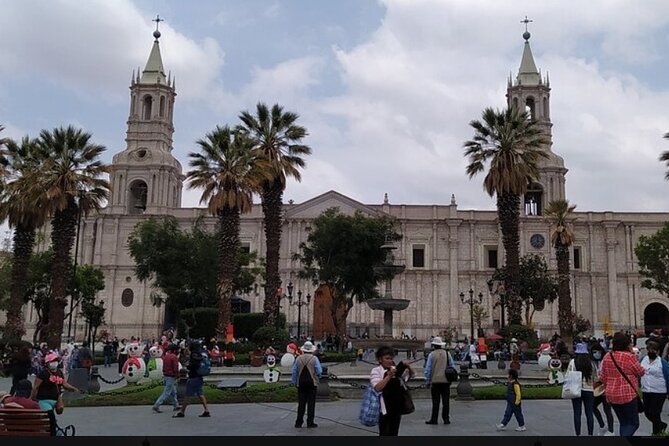
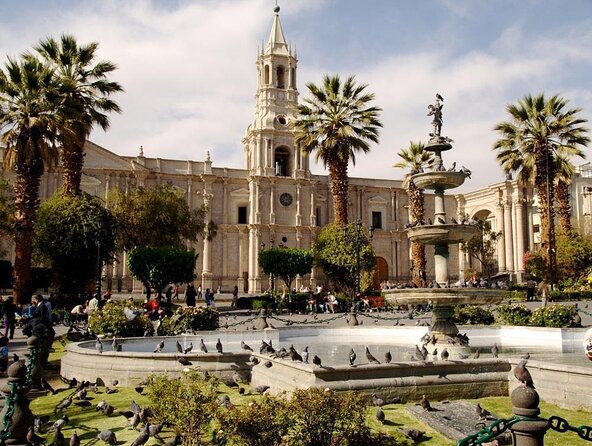
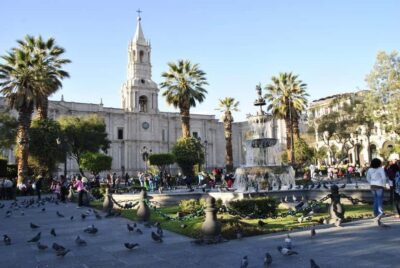
The Plaza de Armas receives about twenty-five minutes, making it one of the more substantial stops. This is where the guide explains the founding of Arequipa, how the city changed over time, and how earthquakes affected the cathedral and nearby buildings.
The square is also the meeting point, so pay close attention to your confirmation and meeting instructions. The tour starts at Plaza de Armas, Arequipa 04001, Peru.
I like this portion because it gives the rest of the walk a framework. Once you hear how the city developed and rebuilt, the church facades and thick masonry make more sense. The guide can point out details you might otherwise pass without noticing, which is especially useful if you spent the previous day walking through the center without context.
The time here is enough for a focused explanation, but not enough for a full cathedral visit. Entrance tickets are not included, and the itinerary does not promise an interior tour of every church. Think of the Plaza de Armas stop as guided orientation, not a substitute for a separate museum or cathedral visit.
Same base, a completely different day:
- Arequipa: Chili River White Water Rafting with Hotel Pickup
★ 4.8 · 329 reviews - From Arequipa: 2-Day Colca Canyon Trekking Tour
★ 4.8 · 243 reviews - Colca Canyon Plus
★ 5.0 · 198 reviews - Walking tour in the Historic Center of Arequipa
★ 4.4 · 180 reviews
La Compañía de Jesús and the Jesuit cloisters
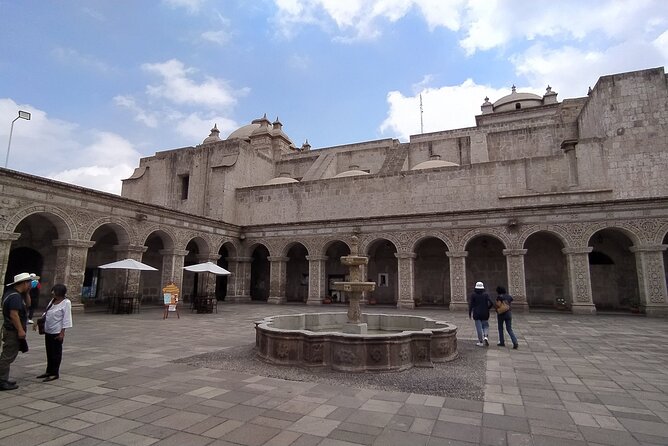
The Church of the Company of Jesus sits beside the Plaza de Armas. You spend about ten minutes seeing its baroque facade, relatively restrained interior, and altars covered in gold leaf.
This is a compact stop, but it carries a lot of visual information. The contrast between the detailed facade and the more sober interior gives your guide something meaningful to explain. You are not just collecting church names. You are learning how religious architecture shaped central Arequipa.
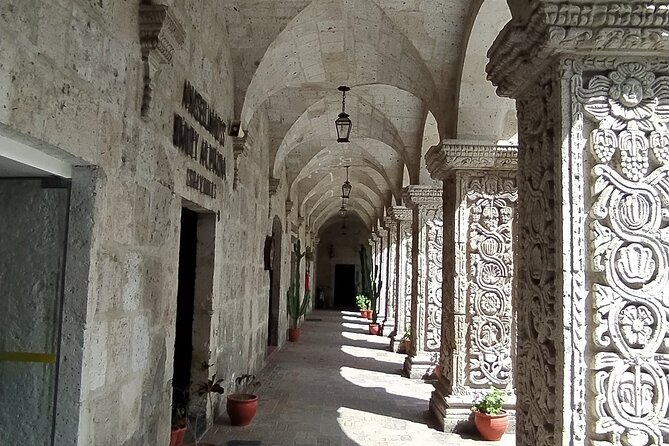
The longer visit comes later at the Cloisters of the Company, where you spend about forty minutes. These former Jesuit school and convent cloisters are described as one of the strongest examples of viceregal religious architecture in the city.
That forty-minute stop gives the architectural side of the tour room to breathe. You can look more carefully at the arcades and decorative details rather than rushing through in a few minutes. It is also where the experience may feel less like a food tour and more like a focused history walk.
Admission is listed as free, but entrance tickets are generally not included in the tour price. That wording means you should be prepared to pay any charge required on the day. The supplied details do not give a specific ticket price, so keep a little extra cash available.
San Camilo Market: the strongest food stop
San Camilo Market is the most compelling part of the itinerary for anyone interested in how Arequipa eats. You spend about thirty minutes looking at the regional products sold there, including tubers, meats, fruits, and other market goods.
This is not a polished tasting hall. It is an active public market, and that is exactly why it adds value. You see ingredients in their everyday setting and gain a clearer sense of the products available to local households. Your guide can explain what you are seeing and lead you toward samples that might be difficult to identify on your own.
The route may include several fruit samples and small bites. The exact selection can change, so do not book it expecting a fixed menu. The important point is access and interpretation: you are not just being handed a snack, you are being shown a working market and told why the foods matter.
Allow yourself some patience here. Market aisles can be busy, and a group of eight takes more time to move than a solo visitor. The reward is a better understanding of everyday food culture than you get from a restaurant meal alone.
San Camilo is also the part that best supports the $13 price. Even if you care more about food than architecture, the market gives you something specific to remember. Several people who praised the tour placed this stop at the center of their experience.
Queso helado, fruit, and the final pisco tasting
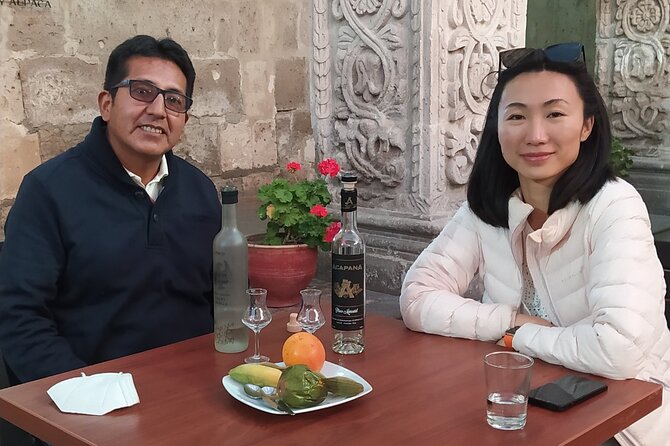
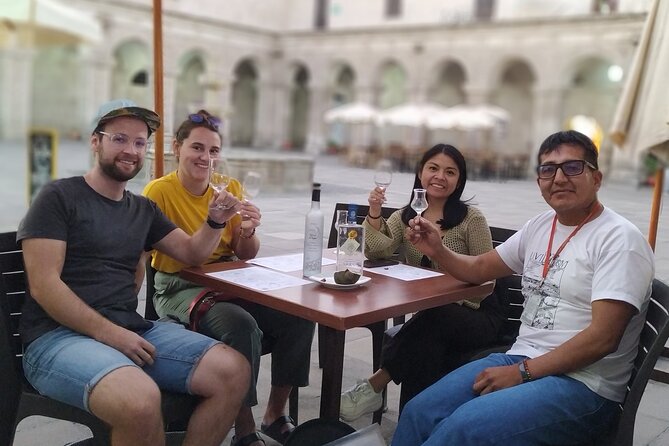
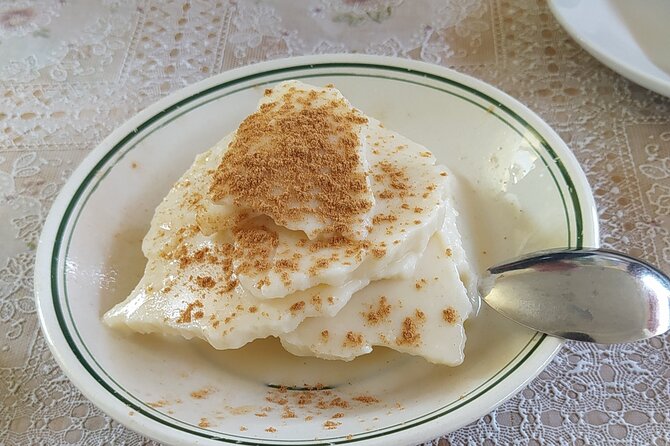
The tasting takes place at the end at Centro Artesanal Fundo el Fierro. Included are pisco, a traditional dessert, and local fruits. The dessert is queso helado, an Arequipa specialty whose name can surprise first-time visitors because it is a frozen dessert rather than cheese in the usual sense.
This final stop is more than a quick sip. The guide explains pisco and how it is made, giving you a better sense of Peru’s best-known spirit. Depending on the arrangements that day, the tasting may include pisco sour as well as pisco itself. The supplied information confirms pisco tasting, while individual drink details can vary.
One useful tip: the tasting is at the end, not midway through the walk. If you take the tour in the afternoon, eat lunch first. Lunch is not included, and the tour provider specifically recommends arriving after a meal. Bottled water and soda are also excluded, so bring water or plan to buy it.
A past scheduling problem at the tasting venue was handled by moving the lesson to another day, with communication and a partial refund when the full experience could not take place. That does not guarantee how every disruption will be handled, but it suggests you should contact the operator quickly if arrangements change.
Timing, walking effort, and group size
The tour lasts about three hours and thirty minutes. With stops at six locations, you should expect steady walking mixed with pauses for explanation. A moderate level of physical fitness is required.
The route is central, and public transportation is nearby. You do not need to arrange a private vehicle for the listed route. Wear comfortable shoes, carry water, and avoid scheduling a tight connection immediately afterward. The formal stops add up to more than two hours, and the remaining time covers walking, explanations, and tasting.
The group maximum of eight is one of the better features. A guide can respond to questions without losing control of the route, and the market portion is easier to manage than it would be with a large bus group. Solo visitors and couples who want a social but not crowded walk should find this format comfortable.
Service animals are allowed. The tour requires good weather, and a cancellation for poor conditions leads to a different date or a full refund. Free cancellation is available if you cancel at least 24 hours before the start time. Later cancellations and changes are not accepted for a refund.
Who should book this $13 experience
I would recommend this tour to first-time visitors who want a compact introduction to Arequipa. It works especially well if you like architecture but also want a direct connection to local food. The market and tasting keep the walk from becoming a dry sequence of church facades.
It is also a good choice for solo visitors. The small group and question-friendly guiding style make it easier to engage with the city than a self-guided walk. Families can benefit too, provided everyone is comfortable walking for several hours and waiting through historical explanations.
Food specialists should book with a clear understanding of the format. You receive samples, not a complete meal. The route is strongest for local context, market products, queso helado, and pisco. If your priority is a long sit-down tasting, you should choose a different experience.
History-minded visitors may find the balance just right. You get Arequipa’s founding story, earthquake history, colonial churches, Jesuit spaces, and a market that shows the city beyond its monuments. The one concern is that the tour may feel long if your main goal is only to taste food. One person specifically found the title misleading for this reason and wished the walk could be shortened.
Should you book the Arequipa Tasting Tour?
Book it if you want a low-cost orientation to central Arequipa with a real market visit and a short introduction to pisco. At $13, the combination of a small group, several historic stops, local fruit, queso helado, and a final tasting offers strong value.
Skip it if you want a food tour first and a city walk second. The tasting is concentrated at the end, and the middle of the experience is devoted mainly to history, religious buildings, and architecture.
For most first-time visitors, I would book it early in the stay, ideally when you can use the guide’s suggestions to plan later visits. Eat before an afternoon departure, bring water, leave room in your schedule, and expect the market and pisco lesson to be the most memorable parts.
FAQ
How much does the Arequipa Tasting Tour cost?
The tour costs $13 per person.
How long does the tour last?
The experience lasts approximately three hours and thirty minutes.
Where does the tour begin?
The tour begins at Plaza de Armas in Arequipa, Peru.
Where does the tour end?
It ends at Centro Artesanal Fundo el Fierro in San Francisco Plaza, at C. Zela 202, Arequipa.
What food and drink are included?
The tour includes a pisco tasting, a traditional dessert called queso helado, and local fruits.
Is lunch included?
No. Lunch is not included, and anyone taking the tour in the afternoon is advised to eat beforehand.
How many people can join the tour?
The activity has a maximum of eight participants.
Can I cancel for a full refund?
Yes. You can cancel at least 24 hours before the start time for a full refund. Cancellations or changes made less than 24 hours before the start time are not accepted for a refund.
Just added around Arequipa
- Adventure Day in Arequipa: Pillones Waterfall + Rock Forest★ 4.2 · 25 reviews
- From Arequipa: Pillones Waterfall and Stone Forest Day Trip★ 4.4 · 15 reviews
- Arequipa Walking Tour and Santa Catalina Monastery★ 5.0 · 4 reviews
- Trekking, Waterfalls and Thermal Baths★ 4.5 · 47 reviews
- From Arequipa: Colca Valley & Thermal Baths Small-Group Trip★ 4.1 · 43 reviews
- Arequipa, Historic and Colonial City and Santa Catalina Monastery★ 4.5 · 42 reviews
- Arequipa: City Tour and Santa Catalina Monastery★ 4.5 · 6 reviews
- From Arequipa: Colca Canyon & La Calera Thermal Waters★ 4.3 · 15 reviews
Tours in Arequipa, compared.
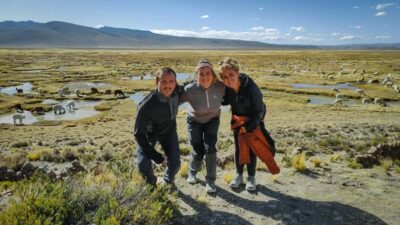

Tour to the Salinas Lagoon and National Reserve in Arequipa
Read our review →

Chili River White Water Rafting with Hotel Pickup
Read our review →
Walking tour in the Historic Center of Arequipa
Read our review →
Adventure Day in Arequipa: Pillones Waterfall + Rock Forest
Read our review →Browse the lists this tour appears in