
Reviewed · SACRED VALLEY TOURS
Cusco: Moray, Maras Salt Mines, and Chinchero Weavers Tour
Moray’s great circular terraces are the star here, but the best part of this six-hour trip is the mix: Inca farming, living Andean craft, colonial stonework, and salt still gathered in thousands of small pools. You also get wide views of the Sacred Valley and mountains without committing to a full-day excursion.
I like the low $14 starting price and the small-group format, limited to 12 people. I also like that Chinchero comes first, giving you a look at Quechua weaving before the archaeological stops. The main drawback is the extra cost: you must pay separately for the archaeological sites and Salineras, and the weaving workshop can feel sales-focused.
The high altitude deserves respect. Chinchero sits at 3,762 meters, and Moray reaches 3,450 meters, or 11,318 feet. One guide named Victor has been singled out for his warm manner and strong explanations, though English delivery can vary by guide and may feel rushed when the tour switches between Spanish and English.
Key points to know before booking
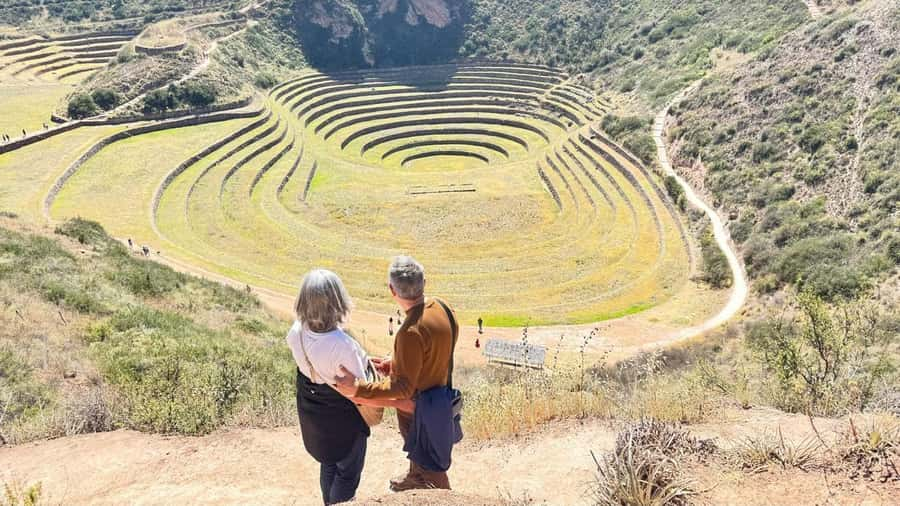
- Moray reaches 11,318 feet: Expect striking circular terraces, mountain views, and a short walk at high altitude.
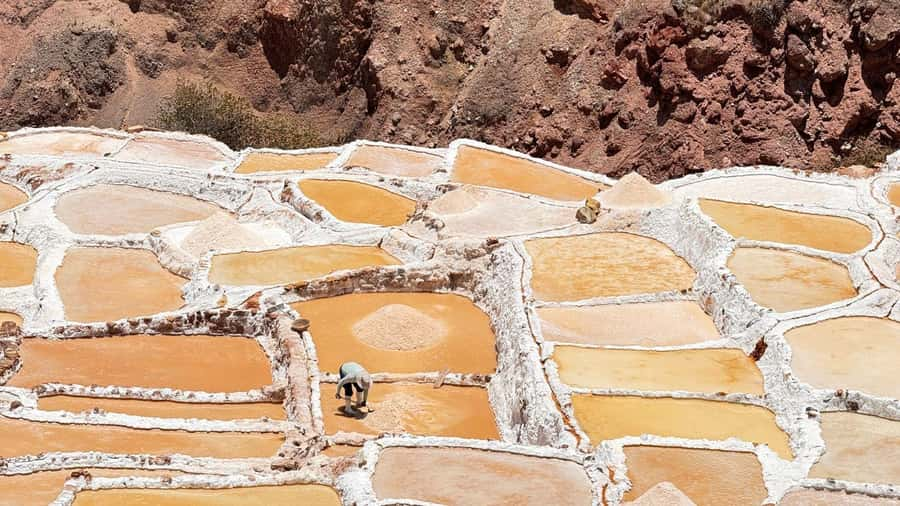
- Salineras has about 3,000 salt pools: The site remains a working source of salt for the region.
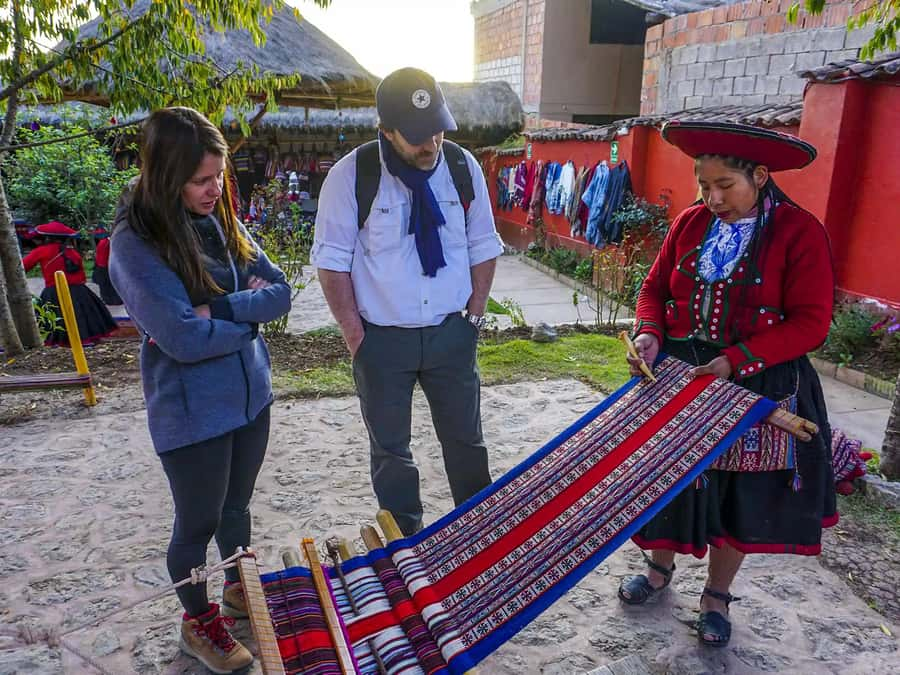
- Chinchero includes a live weaving demonstration: Artisans show how plants provide natural colors for Andean textiles.
- The base price is only part of the cost: Add $19, or 70 soles, for archaeological entrances and $6, or 20 soles, for the salt mines.
- The tour ends at Plaza Regocijo: Hotel pickup is included, but hotel drop-off is not.
- The workshop deserves caution: Ask questions about fiber content and prices before buying anything.
Why this half-day route works from Cusco
This outing packs several very different sights into one morning or afternoon. You begin with Chinchero, then travel to Moray, continue to Maras and Salineras, and finish in central Cusco at Plaza Regocijo.
The route involves several coach rides, with the longest listed ride taking about 80 minutes after the salt mines. That means you spend a fair amount of time on the road, but the stops are varied enough to keep the day from feeling repetitive. You are not looking at four similar ruins. You are seeing farming terraces, a craft workshop, colonial buildings, and an active salt site.
The starting price is excellent for visitors watching their budget. At $14, transportation, hotel pickup, a bilingual guide, and the small-group arrangement cost less than many standalone outings. But the real outlay is closer to $39 before any purchases once you add the $19 archaeological admission and the $6 Salineras fee.
That still makes this a good-value way to cover four major stops. Just do not mistake the advertised price for the complete sightseeing cost. Carry cash in soles or dollars, since the entrance fees are not included.
Other days through the Sacred Valley from Cusco:
- From Cusco: Moray, Maras Salt Mines & Chinchero Weavers Tour
★ 4.8 · 1,925 reviews - Cusco: Sacred Valley, Pisac, Ollantaytambo, Salt Mines Moray
★ 4.6 · 1,058 reviews - Cusco:Chinchero,Moray & Salt Mines drop-off in Ollantaytambo
★ 4.8 · 793 reviews
Chinchero: weaving, plants, and a careful shopping stop
The first stop is Chinchero District, about 50 minutes from Cusco. The town sits at 3,762 meters and is known here for its Quechua weaving tradition.
You spend about 30 minutes at a weaving workshop. Artisans demonstrate how natural plants are used to extract colors for Andean art. This gives the stop more substance than a quick gift-shop visit because you see part of the process behind the textiles.
I like this introduction because it connects the trip to living local traditions before you visit the older archaeological sites. You are not only looking at stones. You are seeing a craft practice that remains part of daily regional culture.
Still, keep your expectations measured. The workshop is also a shopping stop, and the quality of the presentation may vary. One particularly serious complaint described a different workshop from the one shown in promotional images and alleged that synthetic fiber was presented as alpaca. That is not a minor concern if you plan to spend money.
If you shop, ask plainly what the textile is made from. Ask whether it is alpaca, wool, cotton, or synthetic fiber, and compare prices before buying. You can enjoy the demonstration without purchasing anything. The tour becomes much better value when you treat the workshop as a cultural stop first and a shop second.
Moray at 11,318 feet: an Inca farming puzzle
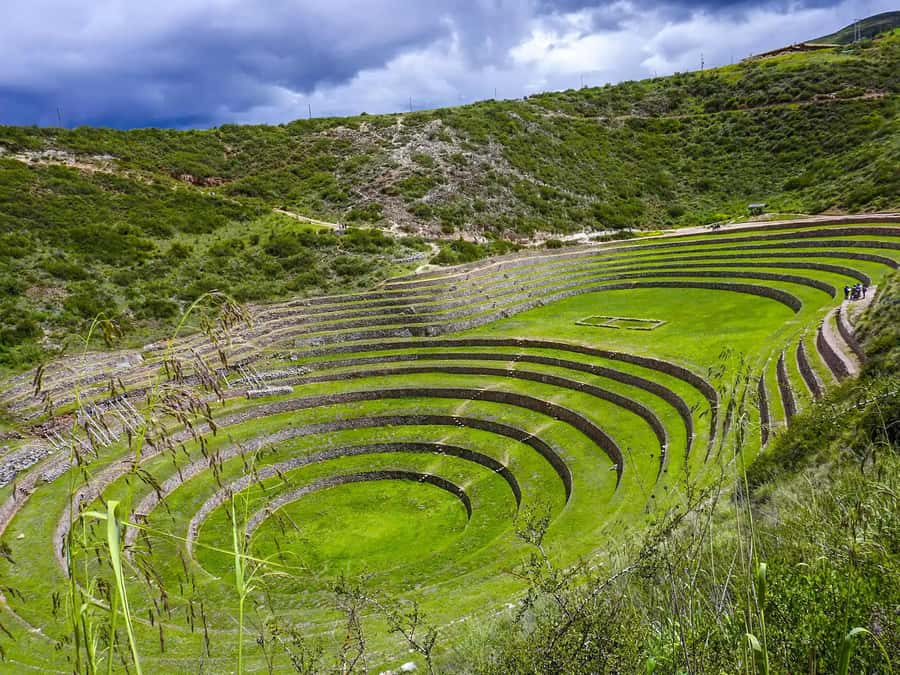
After roughly 35 minutes by coach, you reach the Moray archaeological complex. You have about 40 minutes here for a guided visit, photographs, walking, and views.
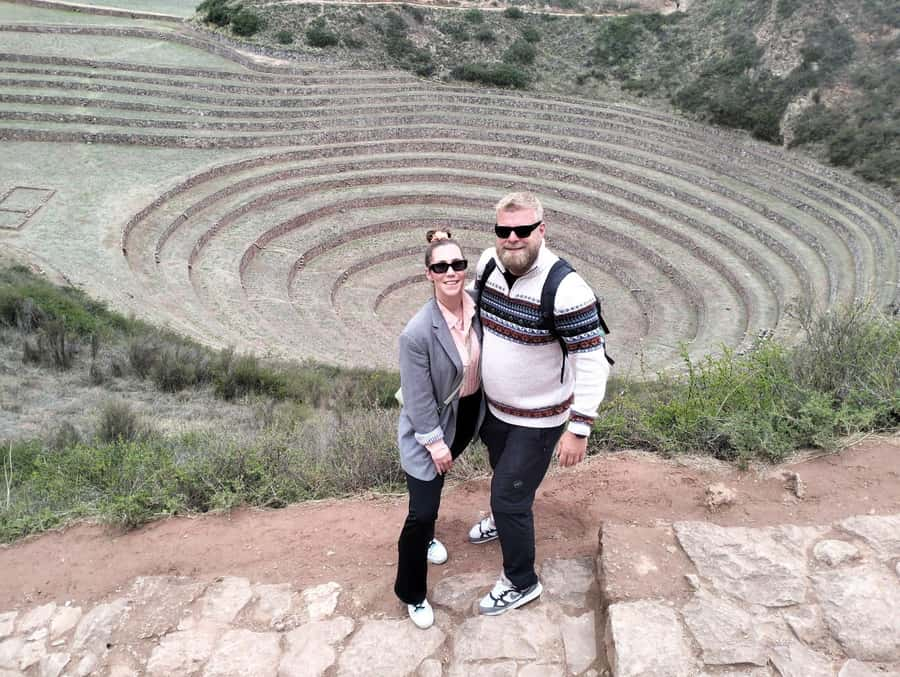
Moray is memorable because its terraces form huge circular depressions in the ground. The design is often linked to Inca agricultural experiments and growing conditions. The tour information also highlights its irrigation system, so your guide should explain how water moved through this carefully arranged site.
The setting is part of the appeal. From the terraces, you look across cultivated Andean country toward surrounding mountains. Even if you are not deeply interested in archaeology, the shape of Moray gives you an immediate reason to stop and look.
The altitude is the practical issue. At 11,318 feet, a short walk can feel harder than the distance suggests, especially if you have only recently arrived in Cusco. Wear comfortable shoes, move at a steady pace, and do not feel pressured to rush around the terraces for photographs.
The 40-minute visit is enough for an introduction, but not a long archaeological study. If you want extended time for sketching, detailed photography, or a slow circuit, this schedule may feel tight. For a first look at Moray as part of a broader route, the timing is reasonable.
Your archaeological entrance fee is not included. The stated cost is $19, or 70 soles, covering the archaeological sites. Confirm the current fee when booking, since entrance prices can change.
Maras: colonial walls and thin stonework
The coach ride from Moray to the Maras area takes about 40 minutes. The route includes scenic views along the way, and the visit focuses on Maras Village before continuing to the salt mines.
Maras is a useful counterpoint to Moray. Here you see preserved colonial architecture and buildings made with thin stones. The stop helps show how the region changed after the Inca period, rather than presenting the Sacred Valley as only an ancient world.
The village visit is shorter and less dramatic than Moray or Salineras, but it adds context. I like that the tour does not rush straight from the Inca terraces to the salt pools without acknowledging the later colonial layer.
You should not expect a long independent exploration of Maras. The listed timing gives you part of the transfer and sightseeing sequence, not an open-ended town visit. Listen closely to the guide’s explanation, then use the time for photographs and a brief walk.
Guide quality matters here. Several people praised the organization, punctual pickup, driving, and explanations. One detailed complaint, however, described repeated facts and inaccurate information from a guide whose English was difficult to follow. That makes it sensible to ask for clarification if an explanation sounds confusing, especially when discussing dates or historical claims.
Same base, a completely different day:
- Cusco: Humantay Lake Tour with Breakfast and Buffet Lunch
★ 4.9 · 2,976 reviews - From Cusco: Full-Day Group Tour of Machu Picchu
★ 4.7 · 1,767 reviews - Machu Picchu Day Trip from Cusco
★ 4.5 · 1,644 reviews - Cusco: Half-Day City Tour with Sacsayhuaman and Q’enco
★ 4.6 · 1,129 reviews
Salineras: 3,000 pools on the mountainside
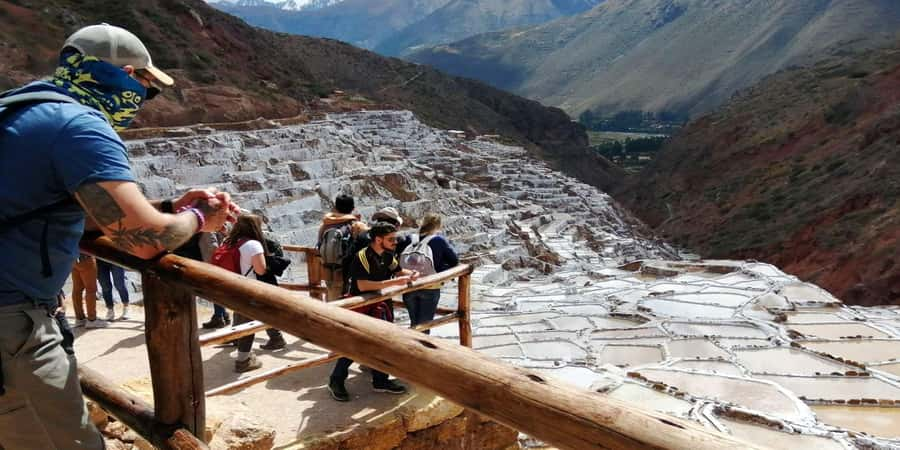
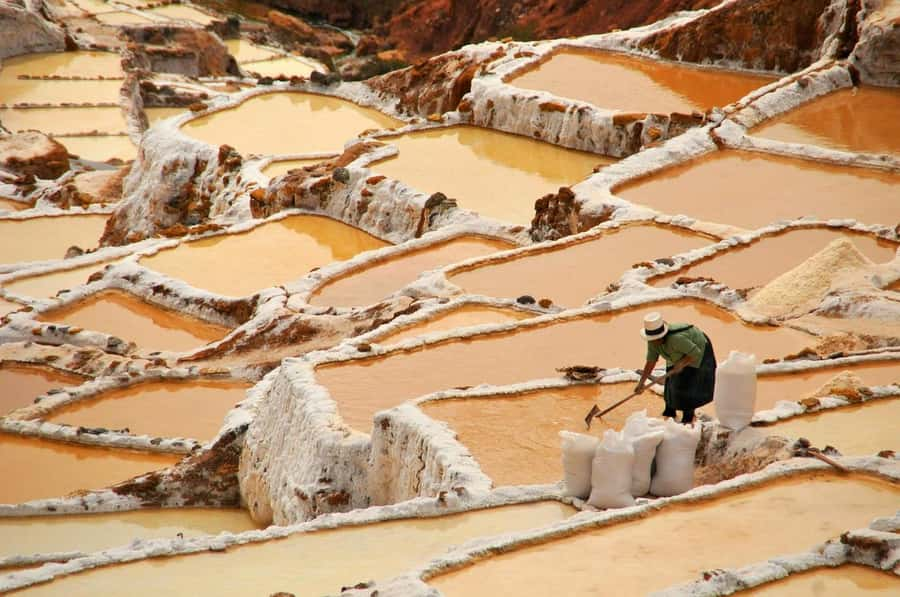
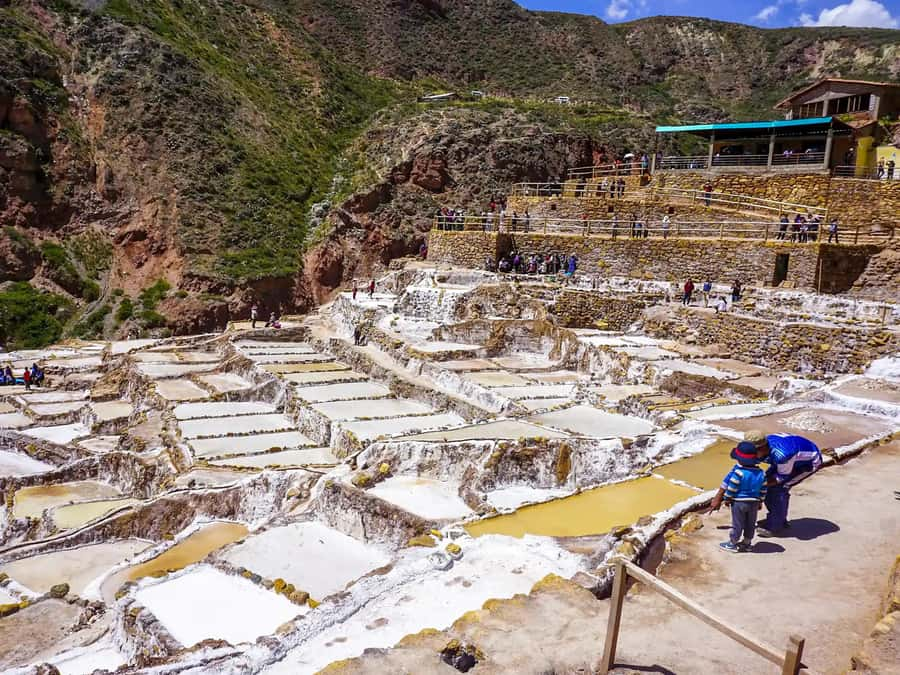
The Salineras salt mines are the final major stop and one of the most unusual sights on the route. About 3,000 small pools are arranged across the slope, where salt production has continued from pre-Inca times into the present.
The pools are fed by salty spring water. As the water evaporates, salt remains behind and can be collected. The operation is still tied to the local region, with salt processed and distributed nearby.
You have about 40 minutes for the visit, including a guided walk and photographs. This is enough time to understand how the site works and see the dense pattern of pools, but you may want to linger. The visual effect changes with light, water, and the amount of salt in each pool.
The salt mines also require a separate $6, or 20 soles, admission. Add that to the archaeological entrance fee when setting your day’s budget. Bring cash, as requested by the operator, and keep your camera ready. This is one of the places where a quick glance does not quite do the setting justice.
Conditions underfoot may be uneven, so comfortable shoes are more than a packing suggestion. Stay with the group and follow the guide’s instructions around the working pools. The site is a place of production, not just a photo backdrop.
Transport, group size, and the end of the day
The tour uses bus or coach transport between stops. The schedule lists about 50 minutes from Cusco to Chinchero, 35 minutes to Moray, 40 minutes to the Maras area, and roughly 80 minutes from the salt mines to the finish at Plaza Regocijo.
That final drive is long. If you prefer a tour with little time in a vehicle, this is not the right outing. On the other hand, shared transport is what keeps the price low and lets you reach several sites that would be awkward to arrange independently in one short day.
The group is limited to 12 people, which is a useful middle ground. You get more structure than with a private vehicle but less crowding than on a large coach. A private option is available if selected, so check the exact booking choice rather than assuming the standard price includes private transport.
Pickup from your Cusco hotel is included. Drop-off is not, and the tour finishes at Plaza Regocijo. That central finish can be convenient if you want to continue exploring Cusco, but you need to arrange your own return to the hotel.
The operator offers bilingual guiding in English and Spanish. The strongest praise has gone to guides who explain the sites clearly, care for the group, and keep pickup on time. The main risk is uneven English delivery, especially when the guide switches repeatedly between languages. If you need detailed archaeological explanations, ask questions early and make sure you understand the answer.
What to bring for this high-altitude outing
Pack lightly, but bring the items that make the stops easier:
- Your passport
- Comfortable walking shoes
- Sun hat
- Sunscreen
- Camera
- Cash for entrance fees and purchases
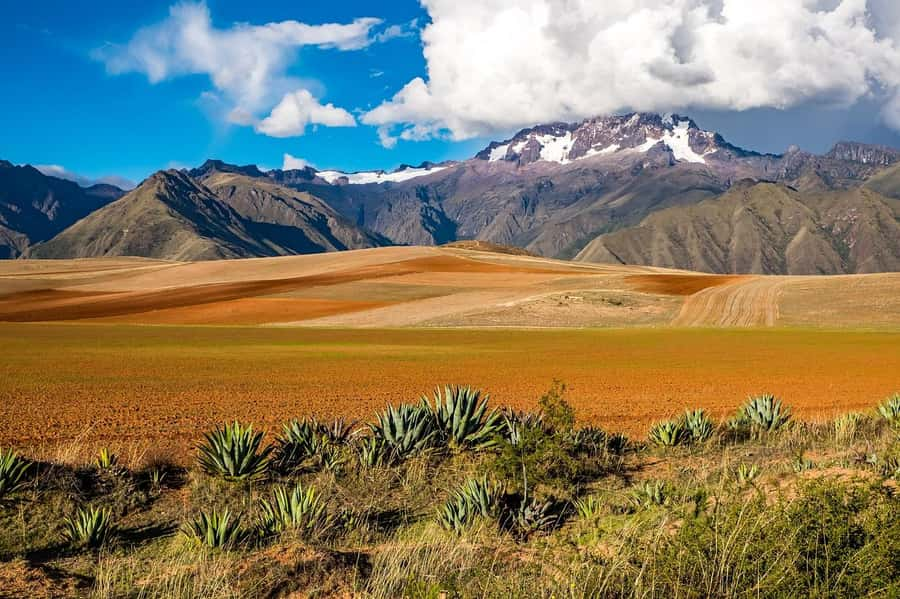
The sun can feel strong at altitude even when the air is cool. A hat and sunscreen matter at Moray and Salineras, where you may spend much of the visit outdoors.
The passport requirement is worth taking seriously. Keep it secure but accessible. You also need cash for the separate admissions, and you may want some extra for the Chinchero workshop or local salt products.
Who will get the most from this tour
I would choose this outing if you want a broad introduction to the Cusco Region in six hours. It suits you especially well if you want Moray and Salineras but also care about local craft and colonial-era architecture.
It is a good fit for budget-minded visitors, first-time visitors to the Sacred Valley, and anyone who prefers a guided route to arranging several transfers alone. The small group and hotel pickup remove much of the day’s practical work.
I would hesitate if the Chinchero workshop is your main reason for booking. The demonstration can be interesting, but the shopping element may be stronger than you expect, and the exact workshop experience is not fully consistent. If textile authenticity matters to you, go in prepared to ask direct questions.
I would also think twice if you are still adjusting to Cusco’s altitude. Moray is high, and the day includes walking, sun, and repeated vehicle transfers. The itinerary is not a strenuous trek, but high altitude can make even a modest stop tiring.
Should you book the Moray, Maras, and Chinchero tour?
Book it if you want four distinct experiences in one affordable half-day and you are comfortable adding the entrance fees to the $14 base price. Moray and Salineras provide the strongest visual payoff, while Chinchero adds a living craft tradition and Maras fills in the colonial story.
Go in with clear expectations. This is a structured shared tour, not a slow private exploration. You will have limited time at each stop, spend a long stretch in the coach, and may encounter a guide whose English is less polished than expected.
For the best result, confirm the private or small-group option you want, budget about $25 for the two admission charges, bring cash and sun protection, and treat the weaving workshop as a demonstration rather than a guaranteed shopping highlight. If those terms suit you, the tour offers a lot of Cusco-region variety for the money.
FAQ
How long does the tour last?
The tour lasts six hours.
Where does the tour start?
Pickup is provided from your hotel in Cusco.
Where does the tour finish?
The tour finishes at Plaza Regocijo. Hotel drop-off is not included.
Is transportation included?
Yes. Transportation between Cusco, Chinchero, Moray, Maras, and Salineras is included.
Are entrance fees included?
No. The archaeological sites cost $19, or 70 soles, and the salt mines cost $6, or 20 soles, according to the provided tour information.
What languages does the guide speak?
The live guide service is offered in English and Spanish.
How large is the group?
The standard group is limited to 12 participants. A private-tour option is available if selected.
What should I bring?
Bring your passport, comfortable shoes, a sun hat, camera, sunscreen, and cash.
Can I cancel the booking?
Yes. Cancellation up to 24 hours in advance qualifies for a full refund.
Just added around Cusco
- Zipline over the Sacred Valley Trip★ 5.0 · 11 reviews
- Waqrapukara 1 day trekking + meals★ 3.9 · 3 reviews
- Visit Pisac from Cusco: Private Transport★ 4.6 · 9 reviews
- Valle Sur Cusco | half day★ 4.3 · 3 reviews
- Trek to Humantay Lake from Cusco★ 4.9 · 8 reviews
- Trek to Choquequirao 4 days★ 3.8 · 4 reviews
- rainbow mountain full day★ 5.0 · 44 reviews
- Machu picchu one day by train all included★ 4.5 · 53 reviews
Sacred Valley Tours, compared.
Sacred Valley & Maras Salt Mines Tour with Lunch
Read our review →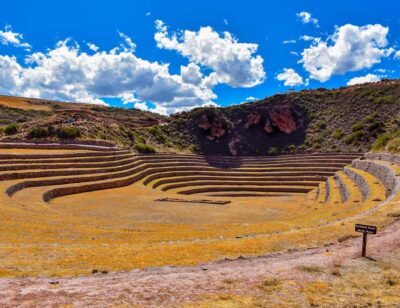
Moray, Maras Salt Mines & Chinchero Weavers Tour
Read our review →
Sacred Valley, Pisac, Ollantaytambo, Salt Mines Moray
Read our review →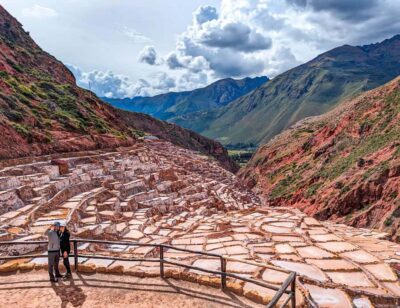
Chinchero,Moray & Salt Mines drop-off in Ollantaytambo
Read our review →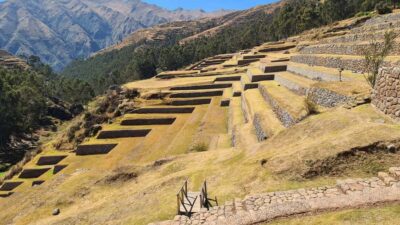

Pisac Indian Market and Ollantaytambo Fortress with Lunch
Read our review →
Browse the lists this tour appears in