
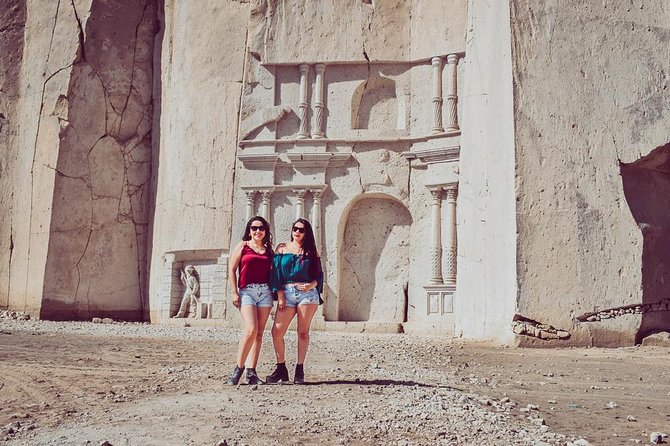
Reviewed · SILLAR ROUTE & AREQUIPA COUNTRYSIDE
Sillar Route in Arequipa and viewpoint of the Volcanoes
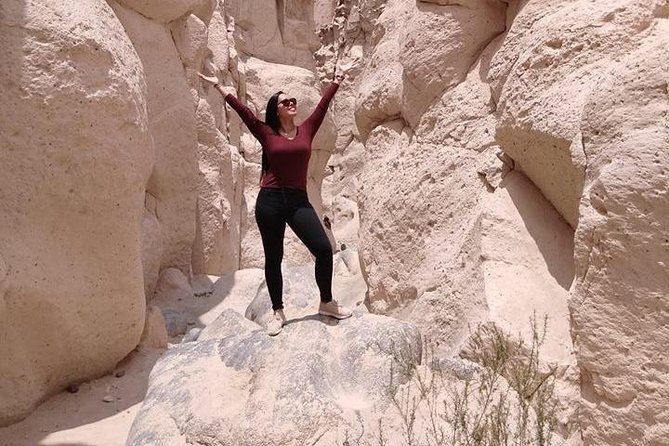
Arequipa’s white buildings begin with a very rough material: volcanic ashlar, or sillar, cut from the dry hills outside town. This short tour takes you to the quarries where the stone is still worked by hand, then into a narrow canyon with carvings and petroglyphs. The natural pink ashlar formation known as the Culebrillas canyon is the visual prize.
I like the small maximum group of 15 and the easy three to four hour schedule. I also like the chance to connect the stone at the quarry with the grand ashlar buildings around Arequipa’s Plaza de Armas. The main drawback is uneven service: some departures have suffered late pickups, weak English explanations, or poor communication, so confirm the meeting details and bring extra cash for entrance fees.
Key points to know before you book
- The pink ashlar canyon is the star: Culebrillas offers the most interesting walk, with petroglyphs and unusual stone walls.
- You see stonework in progress: Añashuayco shows how local workers cut and shape the volcanic blocks.
- The tour is short and inexpensive: At $11 per person, it fills a spare half-day without taking over your Arequipa schedule.
- Volcano views come mostly along the route: The scenery and nearby volcanoes add context, but the listed stops focus on the quarries.
- Bring practical gear: Use sturdy walking shoes, sunscreen, insect repellent, a mask for dust, and layers.
- Language and timing need attention: Confirm that the departure will suit your language needs, and do not assume every pickup runs perfectly.
Why Arequipa’s white stone matters
Arequipa is famous for its pale colonial buildings, but the city’s color is not just a design choice. Much of the historic center was built with sillar, a light volcanic stone formed from ash and material thrown out by ancient eruptions.
The stone is soft enough to carve but strong enough for walls, arches, churches, and courtyards. In the city, it gives buildings a clean, almost glowing appearance. Outside town, you see the less polished truth: dusty cuts in the hills, blocks waiting to be shaped, and workers handling stone in a trade that remains largely manual.
That connection is the real value of this outing. You are not simply looking at a quarry. You are seeing the source of a material that defines Arequipa’s architecture. After the quarry visits, the return to the city gives you a useful comparison between raw stone and finished buildings.
This is not a major archaeological site or a full-day mountain expedition. It is a practical side trip for anyone with a few free hours who wants to understand one of Arequipa’s most visible features.
Other trips into the countryside from Arequipa:
- From Arequipa: Sillar Route Trek
★ 4.2 · 461 reviews - Sillar Route and Culebrillas Petroglyphs
★ 4.5 · 89 reviews - 4 hours Tour: Route of Sillar with Trek in Culebrillas
★ 4.2 · 69 reviews
Añashuayco quarry: stone cut by hand
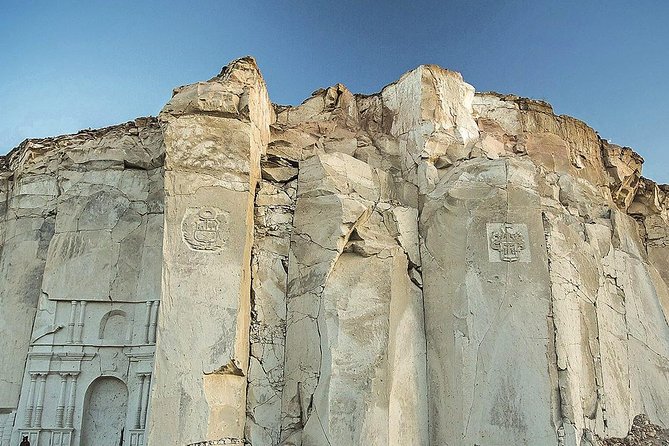
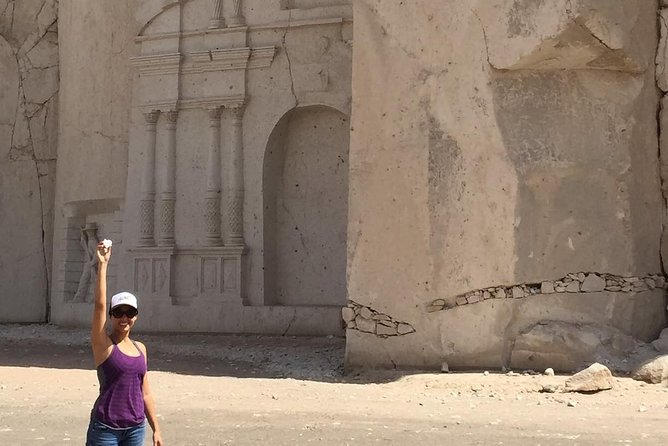
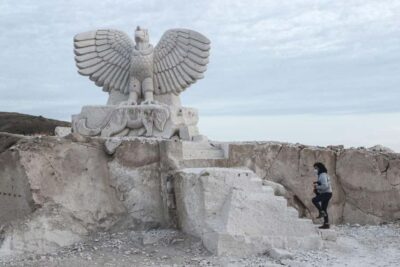
The first stop, Canteras de Sillar Añashuayco, lasts about 50 minutes. Here, you can see the ashlar being carved in an artisanal way and watch workers carry out their routine in the quarry area.
This stop gives the tour its strongest human element. The stone may come from volcanic activity, but the finished block depends on patient cutting and shaping. Your guide can explain how the material is removed and prepared, while the workers’ methods make the process easier to understand than a city lecture would.
You may also see murals and stone carvings made in the quarry itself. These provide good photo subjects, though they can make the area feel more arranged for visitors than untouched. There are also sculptures and other decorative pieces, which help show what can be made from the same pale stone used in Arequipa’s buildings.
A small pink ashlar cannon formed naturally is another unusual feature here. It is not a grand monument, but it gives you something specific to look for among the pale stone walls.
The admission ticket is not included. The listed extra fee is $3, though one visitor found that an entrance cost more than expected. I would carry small bills and ask the guide to confirm the current price before entering. This is a minor expense, but it matters if you are carrying only a tightly planned amount of cash.
Culebrillas canyon and the petroglyph walk
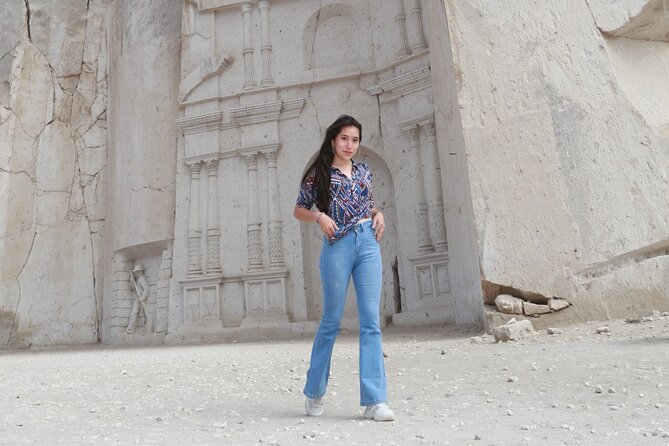
The second quarry area and the Ruta del Sillar section are where the tour becomes more than a lesson in construction material. The walk through the narrow ashlar canyon, often called Culebrillas, is repeatedly described as the best part of the outing.
The route takes you through a dry, rocky passage with carved walls and petroglyphs near the end. It is not presented as a long hike, but the surface can be rough. Wear walking shoes with a solid grip rather than smooth city soles.
This is also the place where you need insect repellent. Flies and other insects can be a serious nuisance, especially when the vehicle doors and windows remain open. Pack repellent instead of expecting the guide or driver to have it. A light mask is also useful because dust can be heavy in the quarry areas.
The canyon is protected, and the surrounding area is described as a natural zone where work cannot be carried out around the formations. That protection helps preserve the stone shapes and carvings, although the setting is still a working quarry area rather than a manicured park.
The petroglyphs add a welcome surprise. They give the walk a sense of discovery and make the canyon more memorable than a simple view of mined rock. You should keep your expectations measured, though. Some visitors find the route fascinating, while others find parts of the quarry plain or overly commercial, especially where souvenir sellers are present.
The volcano viewpoint and what you actually see
The tour title promises a viewpoint of the volcanoes, and nearby volcanic peaks are part of the experience. You can learn about the volcanoes while driving, and the open dry terrain gives you broad views around Arequipa.
Still, the stated itinerary gives the quarries and canyon most of the attention. I would not book this expecting a long, dedicated volcano lookout with a separate mountain-view stop. Think of the volcanoes as the setting and subject of the road commentary, not necessarily the entire purpose of the trip.
That distinction is useful when comparing this tour with longer Arequipa excursions. If you want a quick introduction to the area’s volcanic origins and the stone made from them, this outing works well. If your main goal is a dramatic panorama of several peaks, check the exact departure description and route before paying.
The views also change with the weather. Arequipa’s conditions can shift from warm sun to cloud, wind, and cool air, so layers are sensible even on a bright morning. Sunscreen is important, and a hat can make the open quarry areas more comfortable.
Same base, a completely different day:
- From Arequipa: Colca Canyon Full-Day Guided Tour with Meals
★ 4.5 · 982 reviews - Tour to the Salinas Lagoon and National Reserve in Arequipa
★ 4.5 · 548 reviews - Arequipa: Chili River White Water Rafting with Hotel Pickup
★ 4.8 · 329 reviews - From Arequipa: 2-Day Colca Canyon Trekking Tour
★ 4.8 · 243 reviews
A short schedule that fits around Arequipa
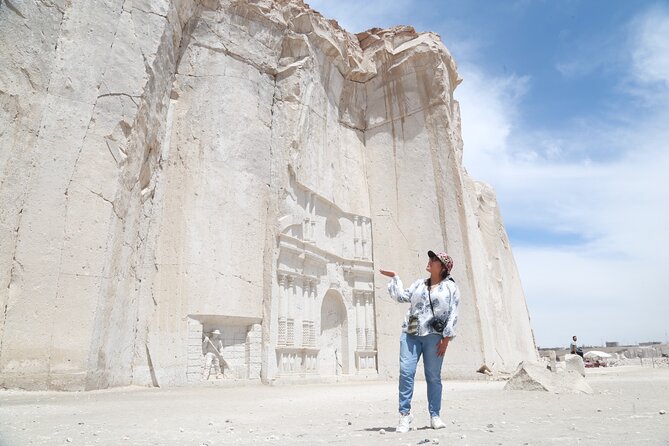
The total duration is about three to four hours, with morning and afternoon start times. That makes this a convenient choice if you are staying in Arequipa and do not want to sacrifice a full day.
The listed meeting point is C. San Agustín 102. The tour ends near Templo de San Agustín on C. Sucre, two or three blocks from the main Plaza de Armas because vehicles do not enter the square. That finish is useful: you can walk directly into the center for lunch, a museum, or an afternoon visit to the city’s sillar churches.
Round-trip tourist transport is included, along with a professional guide. The vehicles have been described as spacious and air-conditioned, though comfort has not been consistent on every departure. Keep a little patience for the road and remember that dusty quarry conditions can affect the feel of the ride.
The small-group limit of 15 is a genuine advantage. You are less likely to be lost in a large crowd, and a guide has a better chance of answering questions. In practice, the language mix matters more than the group size. Some tours have been multilingual, and an English-speaking participant received much less explanation than the Spanish-speaking majority.
If you need a full English tour, confirm this before departure. Guides named in positive feedback include Alonso, Betsey, Jose Jose, and Christina, with Alonso receiving praise for explaining Arequipa, the volcanoes, and the stories behind the route. Guide quality can vary, so your experience may depend heavily on who leads the group.
How much value do you get for $11?
At $11 per person, this is one of the easier Arequipa excursions to justify. Transportation and guiding are included, and the route gives you several distinct elements: active stonework, carved ashlar, a canyon walk, petroglyphs, and views of volcanic country.
The price is especially good if you have only half a day available. You get out of the city without committing to a long trip, and the return near the Plaza de Armas lets you continue sightseeing on foot.
The low price also explains why you should set reasonable expectations. This is not a private tour with a flexible schedule, and the service can feel basic. Pickup communication has occasionally been late or disorganized. Some people have waited well beyond the expected time, while a few reported that the vehicle did not arrive at all.
That risk does not make the outing a bad buy, but it makes confirmation important. Keep your booking details available, arrive early at the stated meeting point, and contact the operator if the vehicle is late. If you have a tight connection or a fixed afternoon flight, I would not schedule anything critical immediately afterward.
The $3 entrance fee is small, but budget for it separately. Because one price was reported as higher than expected, bring more cash than the advertised figure. You may also find snacks or queso helado for sale, but those purchases are optional and not included.
Problems worth planning around
The most common practical irritants are flies, dust, heat inside the vehicle, and unclear timing. None ruins the route by itself, but the right preparation makes a clear difference.
Bring:
- Insect repellent for the canyon
- Sunscreen and a hat
- A mask or cloth for quarry dust
- Walking shoes with good grip
- A light jacket or extra layer
- Small cash for entrance fees
The walking sections are manageable for most people, and the activity states that most participants can take part. Even so, the canyon is not a smooth urban promenade. If you have difficulty on uneven ground, ask the operator for a clearer description before booking.
The guide’s language ability is another key point. Some guides have offered useful explanations in both English and Spanish, while another English booking became mostly Spanish because the customer was the only English speaker. The operator has also acknowledged that some departures are multilingual.
That arrangement can be fine if you understand Spanish or do not mind a shorter explanation. It is less suitable if you are booking specifically for detailed English commentary. Clarify the language policy rather than assuming the booking page tells the whole story.
The route can also feel uneven in quality. The canyon walk and petroglyphs are the strongest section. The final quarry area may seem modest, with only a few sculptures and limited activity. One reason is that quarry work has declined in some areas, in part because of dust-related health concerns. The result is an interesting but imperfect visit to a working tradition, not a polished attraction at every stop.
Who should book this Arequipa excursion?
I would choose this tour if you want to understand how Arequipa’s famous white architecture began, enjoy unusual photo settings, and have a free morning or afternoon. Families can manage the short duration, and solo visitors benefit from the transport and small-group format.
It also suits you if you like a mix of culture and outdoor scenery. The stonecutting demonstration provides context, while the canyon and petroglyphs give you a short walk away from the city.
I would be more cautious if you want a detailed, English-only history tour, a fully predictable pickup, or a major mountain-view expedition. In those cases, pay more for a private or more tightly managed option, if available.
The free cancellation policy allows you to cancel up to 24 hours before the start time for a full refund. Changes or cancellations within 24 hours are not refunded, and poor weather may lead to a new date or full refund. That gives you some protection, but it does not solve last-minute communication problems.
Should you book the Sillar Route?
Yes, if you see it as a short, low-cost introduction to Arequipa’s volcanic stone rather than a grand day trip. The petroglyph canyon, handmade stonework, and chance to connect the quarries with the city’s historic buildings make the outing worthwhile.
Book it with practical expectations. Confirm the meeting point and language, bring repellent and a dust mask, carry extra cash, and leave room in your schedule in case transportation runs late. If the guide is strong, this simple excursion can become one of the most useful lessons in why Arequipa looks the way it does.
FAQ
How long does the Sillar Route tour last?
The tour lasts approximately three to four hours.
How much does the tour cost?
The listed price is $11 per person. An entrance fee of $3 is not included, although you should carry extra cash in case the current charge differs.
What is included in the price?
Round-trip tourist transportation and a professional guide are included.
Where does the tour start?
The listed starting point is C. San Agustín 102, Arequipa 04000, Peru.
Where does the tour end?
The tour ends at Templo de San Agustín on C. Sucre, two or three blocks from Arequipa’s main Plaza de Armas because vehicles do not enter the square.
Are morning and afternoon departures available?
Yes. You can choose between a morning or afternoon start time.
What will I see on the tour?
You will visit the Añashuayco sillar quarry, see artisanal stone carving, view ashlar murals and sculptures, visit additional quarry areas, walk through the Culebrillas canyon, and see petroglyphs. Volcano views and explanations about nearby volcanoes are part of the route.
Can I cancel for a full refund?
You can cancel at least 24 hours before the experience starts for a full refund. Cancellations or changes made less than 24 hours before departure are not refunded. If poor weather causes the operator to cancel, you will be offered another date or a full refund.
Just added around Arequipa
- Adventure Day in Arequipa: Pillones Waterfall + Rock Forest★ 4.2 · 25 reviews
- From Arequipa: Pillones Waterfall and Stone Forest Day Trip★ 4.4 · 15 reviews
- Arequipa, Historic and Colonial City and Santa Catalina Monastery★ 4.5 · 42 reviews
- Arequipa: City Tour and Santa Catalina Monastery★ 4.5 · 6 reviews
- From Arequipa: Colca Canyon & La Calera Thermal Waters★ 4.3 · 15 reviews
- Arequipa: Pub Crawl with Skip-The-Line Access and Drinks★ 3.0 · 4 reviews
- Arequipa: Walking Tour and Santa Catalina Monastery★ 4.4 · 7 reviews
- Arequipa Walking Tour and Santa Catalina Monastery★ 5.0 · 4 reviews
Sillar Route & Arequipa Countryside, compared.
4 hours Tour: Route of Sillar with Trek in Culebrillas
Read our review →Browse the lists this tour appears in