
Reviewed · COLCA CANYON TOURS
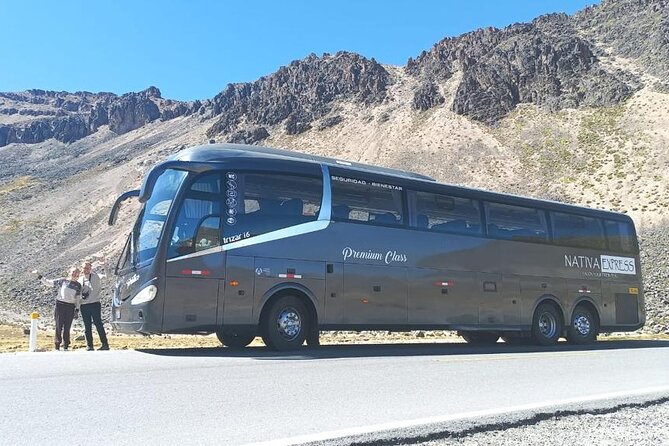
Turist Bus Colca Canyon (Chivay) To Puno
The best part of this Chivay to Puno bus ride is that it turns a necessary transfer into an Andean sightseeing trip. Instead of sitting on a bus for six and a half hours, you stop at volcanic viewpoints, high-altitude wetlands, vicuña country, and mirror-like Lagunillas.
I like the four planned stops and the bilingual guide who explains what you are seeing. I also like the practical touches: air conditioning or heating, charging points, an onboard toilet, and possible hotel drop-off in Puno’s historic center. The main drawback is that the trip can run longer than planned, and Wi-Fi, snacks, and bottled water may not always be available as expected.
Key points to know before booking
- Abra Patapampa reaches the high Andes: See several volcanoes, the Chila range, and the source area of the Amazon River.
- Tocrapampa is the best wildlife pause: Llamas and alpacas are common, while vicuñas depend on luck.
- Patahuasi combines a break with useful facilities: Buy hot herbal drinks, use the toilets, and browse local crafts.
- Lagunillas is the most photogenic stop: Small lakes reflect the sky, with Andean flamingos possible in season.
- The afternoon schedule is straightforward: Meet in Chivay from 12:30 to 1:10 pm, leave at about 1:15 pm, and reach Puno around 7:00 to 7:30 pm.
- Pack your own water and snacks: They are advertised as included, but one passenger reported that none were offered.
Why this Chivay to Puno transfer is worth considering
The road from Chivay to Puno crosses some of the highest and most open country in southern Peru. That makes this more than a point-to-point bus ride. You get a guided introduction to volcanic peaks, dry grasslands, wild camelids, mountain lakes, and the high plains of the Andes.
At $41.03 per person, the price is reasonable if you need to make this journey anyway. A standard transfer gets you from one city to another, but this service adds four sightseeing pauses and a bilingual guide. You are paying for transport, interpretation, and time outside the bus, not simply for a seat.
The timing also works well for many itineraries. You meet in central Chivay around midday, leave at about 1:15 pm, and arrive in Puno between 7:00 and 7:30 pm. That lets you spend the morning in or around Chivay before continuing to Lake Titicaca country.
Still, this is a long afternoon and evening on the road. Construction traffic once stretched the trip to about seven and a half hours. That delay was not caused by the operator, but it is a reminder not to schedule an important evening connection immediately after arrival.
The experience has earned a 4.8 rating from 83 ratings, with 95 percent of customers recommending it. The strongest praise centers on the helpful guide and the care taken with onward arrangements. One German-language assessment particularly valued the guide’s help in sorting out accommodation and continuing travel plans.
Other trips into the canyon from Peru:
- From Arequipa: Colca Canyon Full-Day Guided Tour with Meals
★ 4.5 · 982 reviews - 2-Day Tour Colca Canyon in Arequipa with end in Puno
★ 4.6 · 248 reviews - From Arequipa: 2-Day Colca Canyon Trekking Tour
★ 4.8 · 243 reviews
Meeting in Chivay and settling into the bus
The meeting point is the operator’s office beside the church on Chivay’s main square. The stated meeting window runs from 12:30 to 1:10 pm, with departure at approximately 1:15 pm.
Give yourself enough time to find the office and identify the bus. Chivay’s main plaza is the useful reference point, and this meeting arrangement is simpler than a pickup scattered among several hotels.
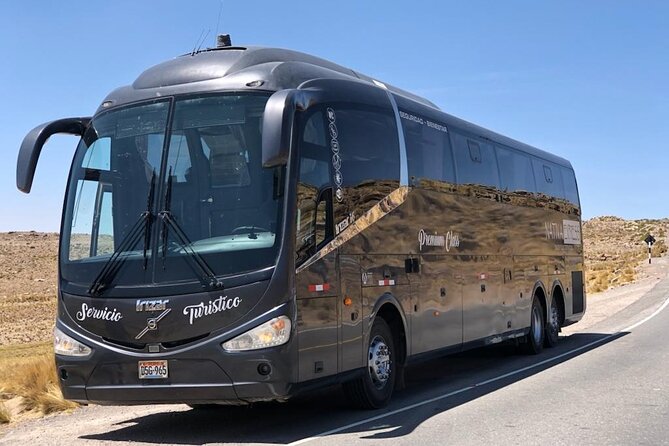
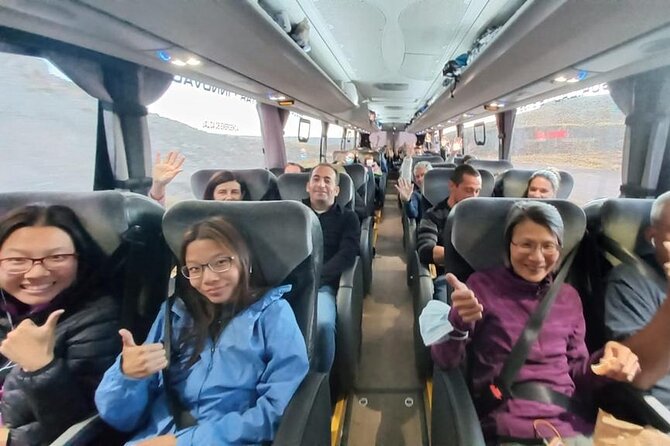
The bus is described as air-conditioned, with heating available as needed. That matters in the high Andes, where conditions can change quickly and the air outside may feel cold even during a sunny afternoon. Seats include individual reading lights and charging points for phones, tablets, and laptops.
An onboard toilet is listed, though the details note that it depends on the type of vehicle. Wi-Fi is also advertised. One important practical warning comes from the actual experience of a passenger who said the Wi-Fi, snacks, and bottled water were not offered. If you need internet access for work, do not depend on the bus connection. Bring water and a small snack as backup.
The group can include up to 40 people. That is large enough to feel like a proper bus tour rather than a private outing. It also means the stops need to stay on schedule, so do not expect unlimited time at each viewpoint.
Abra Patapampa and the Mirador de los Andes
The first major stop is Abra Patapampa, also called the Mirador de los Andes. You have about eight minutes here, so think of it as a quick high-altitude viewpoint rather than a walk.
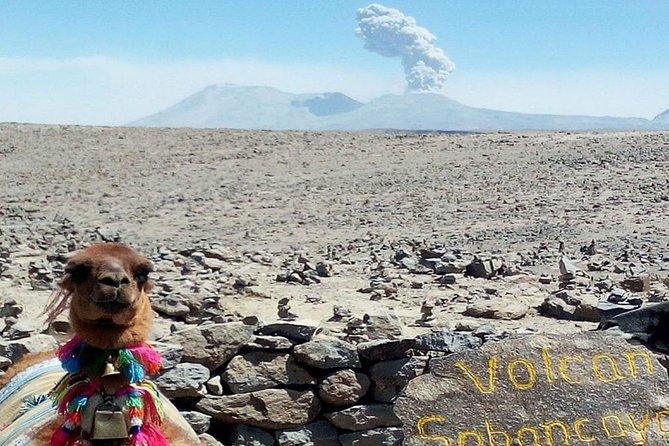
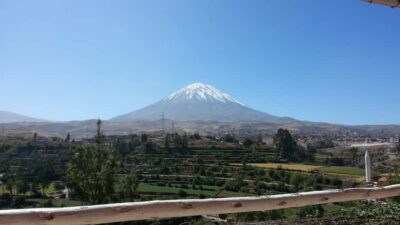
The view includes several major volcanic peaks: Ampato, Sabancaya, Hualca Hualca, and Mismi. The Chila mountain range is also visible. Mismi is identified as the source area of the Amazon River, a detail that gives this otherwise stark mountain view extra geographic importance.
You can also see apachetas, small stone towers traditionally left by people traveling through the mountains as offerings to local gods. They are easy to overlook if you focus only on the volcanoes, but the guide’s explanation helps connect the scenery with older Andean travel customs.
Eight minutes goes quickly. Have your camera ready before you step off the bus, and keep warm clothing close. At this altitude, you may want to spend less time posing and more time taking in the view. The short stop is useful for stretching your legs, but it is not long enough for a substantial walk.
Tocrapampa and the search for vicuñas
Tocrapampa is a technical stop focused on South American camelids. You can see llamas and alpacas grazing in their natural habitat, with a chance of spotting vicuñas.
The distinction matters. Vicuñas are prized for having some of the finest and most expensive natural fiber used in textiles. They are also less predictable than llamas and alpacas, so a sighting is not guaranteed. This is a good place to watch the open ground carefully rather than assume the animals will be close to the bus.
The stop is not given a fixed duration, which suggests that it functions as a practical pause within the route. It may be shorter and less structured than the named viewpoints. Still, it adds a wildlife element that you do not get on a normal intercity transfer.
Bring binoculars if you already have them, but do not expect a wildlife excursion with extended viewing time. The value here is the chance to see native animals in the setting where they live.
Other days on Lake Titicaca from Peru:
- From Puno: Uros, Amantaní & Taquile Islands 2-Day Tour
★ 4.5 · 452 reviews - From Puno: Floating Islands of the Uros Half-Day Tour
★ 4.4 · 394 reviews - Lake Titicaca 2-Day Tour to Uros, Amantani and Taquile
★ 4.4 · 199 reviews - Puno: Full-Day Tour of Lake Titicaca and Uros & Taquile
★ 4.4 · 178 reviews
Patahuasi in the Aguada Blanca area
Patahuasi, also known as Pampa Cañahuas, is located in the Aguada Blanca National Reserve, behind Chachani Volcano. This is the most useful stop for a proper break because you have about 15 minutes and access to toilets, hot drinks, and small purchases.
You may see vicuñas, llamas, and alpacas here as well. With luck, foxes and guanacos can appear farther away. The wording matters: these animals are possibilities, not guaranteed sightings. Keep your expectations flexible and enjoy the open highland setting even when the wildlife stays out of view.
Hot drinks made with local herbs such as chachacoma and muña are available for purchase. These are practical choices in the cold mountain air, though the cost is not included in the tour price. You can also browse handicrafts and souvenirs.
This is the stop where carrying some local currency may help, since extra purchases are not included. The pause is short, so use the facilities first, then decide if you have time for a drink or a quick look at the crafts.
Patahuasi also gives you a chance to reset before the longer run toward Puno. If you did not receive water or snacks on the bus, this is the most obvious point to buy something, but one passenger found the water at a high price. Bringing your own supply is the smarter choice.
Lagunillas and the final views before Puno
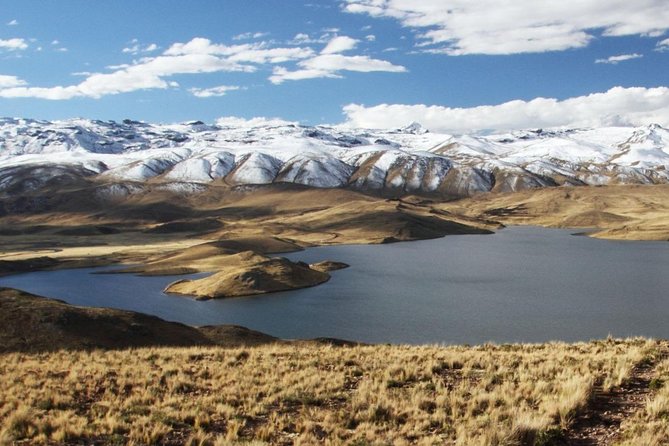
Lagunillas is the last sightseeing stop and likely the visual highlight of the route. From the viewpoint, you see a group of small lakes that can reflect the sky like mirrors.
The setting changes with the weather and season. Andean flamingos and other birds may be present, but sightings depend on conditions and timing. The stop lasts about 15 minutes, which gives you enough time for photographs and a short look around.
The appeal of Lagunillas is its quiet scale. The lakes, open ground, and sky create a simple composition that photographs well. You do not need a long hike to appreciate it, and the viewpoint makes good use of the limited time available.
As with Abra Patapampa, prepare before leaving the bus. Keep your phone or camera ready, and stay aware of the departure time. A group of up to 40 people cannot wait indefinitely for late returners.
After Lagunillas, the route continues to Puno. Arrival is expected around 7:00 to 7:30 pm. If your hotel is in Puno’s historic center, the bus may be able to take you directly to it. That can save you the trouble of arranging a separate ride after a long afternoon on the road, though the hotel drop-off should be understood as possible rather than guaranteed for every address.
Comfort, guide service, and the small details
The bilingual Spanish and English guide is an important part of the experience. Without guide commentary, several stops could feel like quick photo breaks. The guide gives meaning to the volcanoes, apachetas, wildlife, reserve, and lakes.
The most praised human quality is practical help. The guide is described as willing to assist with accommodation and onward travel arrangements. That is especially useful in Puno, where you may be arriving late and still need to settle into a hotel or connect to another service.
The bus includes air conditioning or heating, reading lights, and charging ports. These features matter more than they might on a short ride. You are spending most of an afternoon on board, and the ability to charge a phone or use a reading light makes the time easier.
Wi-Fi is listed as free, but the service may not work or may not be offered consistently. Treat it as a possible extra, not a reason to book the trip. Download anything you need before departure, and do not plan essential work around the connection.
Snacks, coffee, and bottled water are also described as complimentary, yet one passenger reported receiving none of them. This is the clearest area where expectations should be managed. Bring water, a snack, and anything you need for the full ride. If the included refreshments appear, they are a bonus.
Who gets the best value from this bus ride?
I would choose this service if you need to travel from Chivay to Puno and want to see more of the high Andes along the way. It suits you especially well if you prefer a planned route, guided explanations, and organized stops over arranging separate transport.
It also works for visitors who want some wildlife and scenery without committing to a full multi-day excursion. The stops are short, the walking demands appear limited, and most people can participate. The tour is not designed as a strenuous hike.
You should think twice if you need a guaranteed arrival time, dependable Wi-Fi, or a quiet private vehicle. A maximum group size of 40 means the experience is shared, and road construction can extend the journey. It is also not ideal for someone who wants long, unhurried time at each viewpoint.
The afternoon departure is a strong feature for many schedules, but it creates a late arrival. Plan your Puno evening around checking in, eating, and resting rather than a tightly timed activity.
Booking, cancellation, and final practical advice
The service costs $41.03 per person and allows free cancellation up to 24 hours before departure. Changes or cancellations inside that 24-hour window are not accepted for a refund. The activity also depends on suitable weather, with a new date or full refund offered if poor conditions force cancellation.
The tour receives confirmation at booking, operates near public transportation, and is open to most people. Since the ride reaches high mountain areas, pack layers, sun protection, water, and a small snack even if refreshments are promised.
I would also keep your phone charged before boarding. Charging points are listed, but it is better to begin with a full battery for photos, maps, and hotel contact.
Should you book the Chivay to Puno bus?
Book it if you want a practical transfer with real scenery built into the route. The combination of Abra Patapampa, camelid country, Patahuasi, and Lagunillas gives you a useful introduction to the high Andes for a fair price.
Skip it if your schedule cannot absorb a possible delay or if you require guaranteed Wi-Fi and included refreshments. For everyone else, this is a sensible way to connect Chivay and Puno without wasting the journey. Just carry your own supplies, keep your plans flexible, and treat the advertised extras as uncertain.
FAQ
Where does the bus leave from in Chivay?
The meeting point is the Nativa Express office beside the church on Chivay’s main square. The meeting window is from 12:30 to 1:10 pm.
What time does the bus leave Chivay?
The bus is scheduled to leave at approximately 1:15 pm.
What time does the bus arrive in Puno?
Arrival is expected between 7:00 and 7:30 pm. Construction traffic can make the trip longer.
How many sightseeing stops are included?
Four stops are included: Abra Patapampa, Tocrapampa, Patahuasi, and Lagunillas.
Is there a guide on the bus?
Yes. A professional bilingual guide provides service in Spanish and English.
Is Wi-Fi included?
Free Wi-Fi is listed as included. However, one passenger reported that it was not offered, so you should not rely on it for important work.
Is food and water provided?
Bottled water, snacks, and coffee are listed among the included services. One passenger reported that these were not provided, so bring your own water and snack.
Can the bus take me to my hotel in Puno?
If your hotel is in Puno’s historic center, hotel drop-off may be possible. The activity ends in a different location from its Chivay departure point.
Just added around Peru
- “Waqra Pucara, The Majestic Fortress Revealing Secrets of the Andes”.★ 3.5 · 8 reviews
- 3-Day Iquitos Amazon Jungle Adventure at Heliconia Lodge★ 4.5 · 54 reviews
- Fly Over the Nazca Lines with the Experts★ 4.5 · 48 reviews
- Adventure Day in Arequipa: Pillones Waterfall + Rock Forest★ 4.2 · 25 reviews
- From Nazca: Cahuachi Pyramids Tour and Textile Workshop★ 4.8 · 21 reviews
- From Arequipa: Pillones Waterfall and Stone Forest Day Trip★ 4.4 · 15 reviews
- From Cusco: Chinchero, Moray, Maras, Ollantaytambo and Pisaq★ 4.6 · 11 reviews
- From Cusco: Sacred Valley ending in Ollantaytambo and Lunch★ 4.3 · 36 reviews
Colca Canyon Tours, compared.

2-Day Tour Colca Canyon in Arequipa with end in Puno
Read our review →

From Puno to Arequipa: 2 Days/1 Night Colca Canyon Tour
Read our review →Browse the lists this tour appears in