
Reviewed · MUSEUMS & INCA RUINS
Lima: Tour to Huaca Pucllana and Huaca Mateo Salado
Lima’s most surprising sights are not always in museums. Huaca Pucllana rises from the middle of Miraflores, a 25-meter adobe pyramid surrounded by modern streets, restaurants, and apartment towers. I like that this tour pairs it with Huaca Mateo Salado, a quieter complex tied to the old Inca road system and the route to Pachacamac.
I also like the private group format and the clear four-hour plan. Your guide can explain the sites in English, Spanish, or Portuguese, and hotel pickup, transport, and admission are included. The main drawback is the price: at $217 per person, this is costly for four hours, though the private vehicle and two entry tickets soften the difference.
Key Details At A Glance
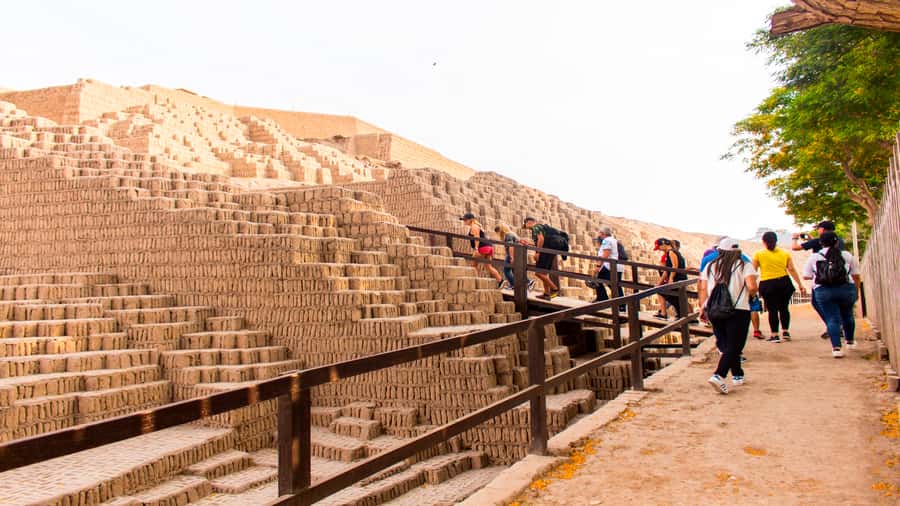
- Two major Lima huacas: Visit Huaca Pucllana in Miraflores and Huaca Mateo Salado in Pueblo Libre.
- A striking urban contrast: See a pre-Columbian adobe pyramid set among Lima’s modern city blocks.
- 170 minutes at the sites: The visit includes about 80 minutes at Pucllana and 90 minutes at Mateo Salado.
- Private transportation: Pickup and return are available in Miraflores, San Isidro, and Barranco.
- Three guide languages: Choose English, Spanish, or Portuguese when booking.
- A history-focused outing: Learn about the Lima, Ychsma, and Inca connections that shaped these places.
Why Lima’s Huacas Deserve Your Time
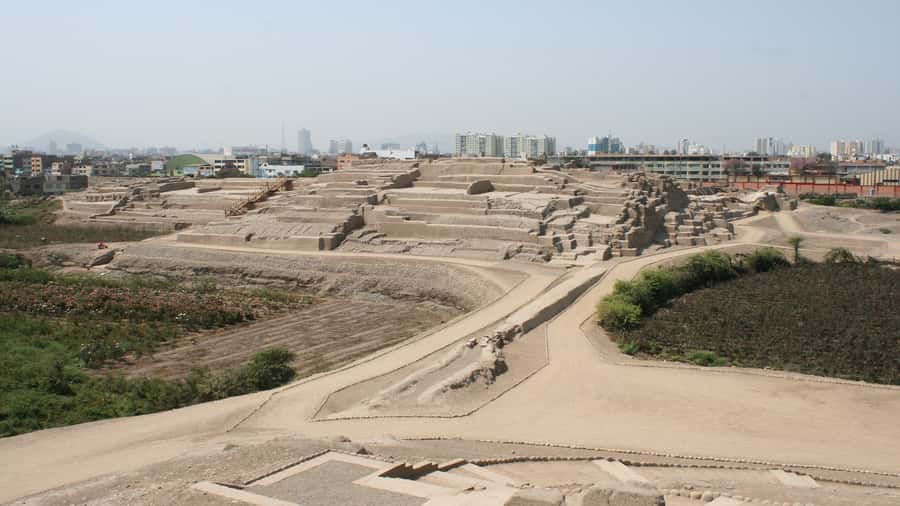
A huaca is a sacred place or structure, and Lima has many of them. Several survived only because they were built from adobe, the sun-dried brick that suited the dry coastal climate. They can look modest from the outside, but their location and scale reveal how much older Lima is than its colonial center and modern districts.
This tour gives you two different views of that past. Huaca Pucllana is compact, famous, and tightly surrounded by the city. Mateo Salado is a larger archaeological complex with a stronger connection to the wider network of roads and settlements used across the central coast.
I like this pairing because it avoids treating Lima’s archaeology as a single story. Pucllana introduces the Lima culture and its ceremonial center. Mateo Salado carries the story forward through the Middle Horizon, the Ychsma period, and later Inca use.
Other ruins and collections around Lima:
- Lima: The Charm of Barranco & Pre Inca Pyramid in Miraflores
★ 4.9 · 322 reviews - Lima: Pachacamac Ruins & Barranco Half-Day Guided Tour
★ 4.6 · 296 reviews - Pre Inca Temple of Pachacamac Half-Day Tour from Lima
★ 4.5 · 283 reviews
Hotel Pickup And The Four-Hour Plan
Pickup is available from hotels in Miraflores, San Isidro, and Barranco. Those are useful starting points for a short Lima tour, but you should check your hotel location before booking. The listed service does not include pickup from every part of the city.
The first drive is about 15 minutes. You then have roughly 80 minutes at Huaca Pucllana, a 30-minute transfer to Mateo Salado, about 90 minutes there, and a 25-minute return drive. The site visits total nearly three hours, while the remaining time covers city traffic and transfers.
That timing is well judged for a half-day outing. You get enough time at both sites without giving up an entire day. Lima traffic can affect any road-based plan, but the short route keeps this experience practical for a morning or afternoon between other activities.
Transport is by van. Since the group is private, you are not joining a large shared party with a fixed set of strangers. That matters most if you want to ask questions, move at a comfortable pace, or arrange the language and focus of the explanation around your interests.
Huaca Pucllana: An Adobe Pyramid In Miraflores
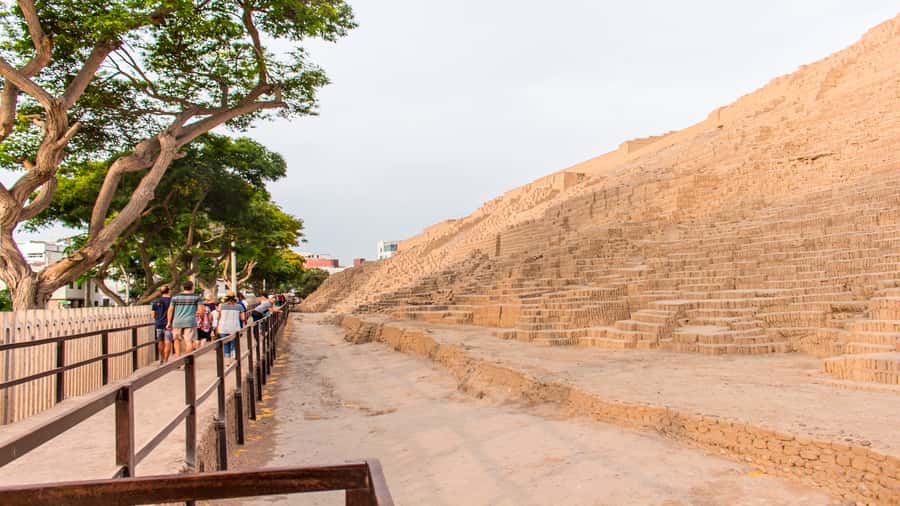
Huaca Pucllana is the attention-grabber. Its main pyramid rises about 25 meters, made from adobe bricks and shaped into a truncated pyramid. It is an arresting sight because the structure is not in a remote valley or open desert. It sits in the heart of Miraflores, one of Lima’s best-known urban districts.
The complex includes courtyards and squares that help you picture how the site once worked. This was not simply a mound or burial place. It served as a ceremonial and administrative center for the Lima culture, which flourished along Peru’s central coast between about 200 and 700 A.D.
Your guide leads the visit for around 80 minutes. That is long enough to walk through the main areas, hear the basic chronology, and ask questions without turning the stop into a full-day archaeological study. The tour also includes an exhibition hall, which adds objects and explanations to the outdoor structures.
Huaca Pucllana was found again during urbanization work in the 1980s. That detail changes the way you see the site. It was not always protected as a major cultural attraction. Excavation and restoration have been ongoing since its rediscovery, and what you see is the result of sustained work to preserve a piece of Lima’s pre-Columbian past.
The site is especially useful for first-time visitors because it makes the city’s timeline easy to grasp. Modern Lima surrounds an archaeological complex that was already active more than a thousand years before Spanish colonial rule. The contrast is hard to miss, and you do not need specialist knowledge to appreciate it.
What To Look For At Pucllana
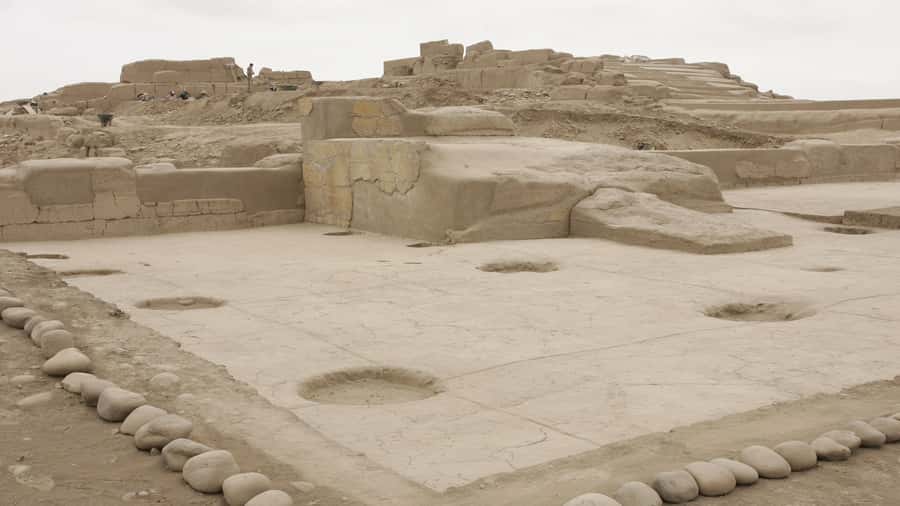
Pay attention to the construction itself. Adobe bricks are not the grand stone blocks associated with some Andean sites, but they were well suited to Lima’s dry climate. The pyramid’s shape, courtyards, and surrounding spaces show planning and purpose rather than random accumulation.
The exhibition hall is also worth your time. It is where the site’s less visible details can become clearer, including the people and culture behind the walls. The supplied information does not specify the objects on display, so you should think of the hall as a supporting part of the visit rather than expect a particular artifact.
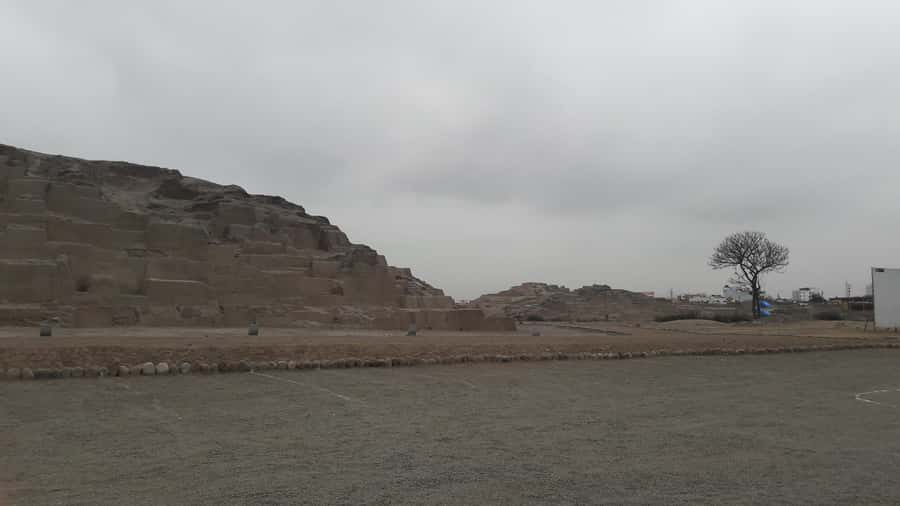
Pucllana may be the more famous of the two stops, but fame comes with a tradeoff. Its urban setting is part of its appeal, yet it can make the site feel confined. You are seeing an important archaeological place with the city pressing in from all sides, not a quiet ruin surrounded by open countryside.
Same base, a completely different day:
- Lima: Ultimate Peruvian Food Tour
★ 4.9 · 700 reviews - Full Day Paracas Ica and Huacachina from Lima All Included
★ 4.5 · 623 reviews - Lima’s Vibrant Heritage: Exploring the City’s Landmarks Half-day
★ 4.5 · 581 reviews - From Lima: Day trip to Paracas, Ica and Oasis Huacachina
★ 4.6 · 409 reviews
Crossing Lima To Huaca Mateo Salado
After Pucllana, the van takes about 30 minutes to reach Huaca Mateo Salado in Pueblo Libre. This transfer is more than a simple change of scenery. It takes you from a well-known Miraflores attraction to a complex that helps explain how Lima’s ancient sites connected with one another.
Mateo Salado is about 1,400 years old. It began as an administrative and ceremonial center associated with the Ychsma culture, after earlier Lima cultural development in the region. The complex was later reused by the Incas, who linked it with Pachacamac south of Lima through the Qhapaq Ñan, the road system often called the Inca Trail.
That connection gives Mateo Salado a wider role than a single pyramid. It was part of movement, administration, ceremony, and communication across the area. If you are interested in how ancient sites functioned within a larger network, this may be the more rewarding stop.
Mateo Salado’s Pyramids And Ceremonial Plaza
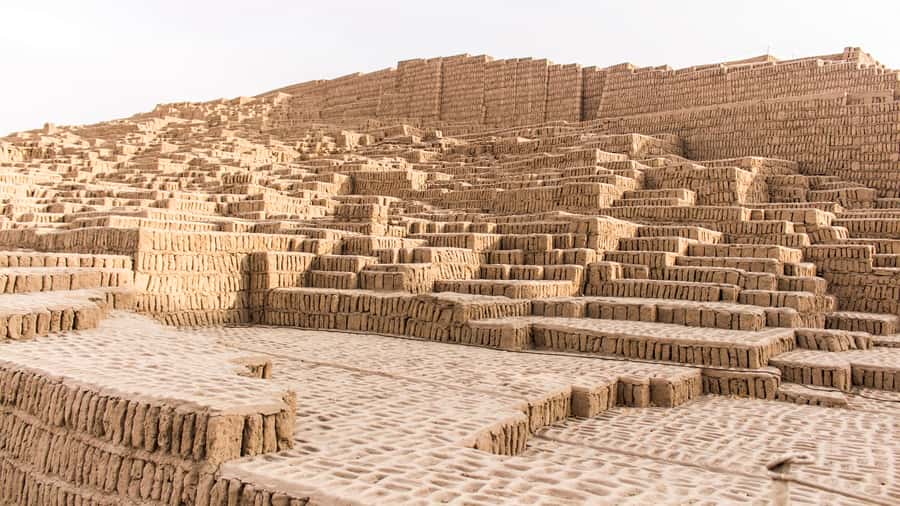
The Mateo Salado complex includes a truncated pyramid, a ceremonial plaza, and auxiliary structures. You have about 90 minutes here, slightly longer than at Pucllana. That extra time suits the site because your guide can explain its different periods of use instead of presenting it as one isolated ruin.
The main pyramid was covered in adobe and decorated with reliefs and mural paintings. The recorded descriptions refer to human figures, animals, and deities linked to Lima mythology. You should not expect every painted or sculpted feature to survive intact, but the idea of these decorations helps you picture the complex as a designed ceremonial place rather than a bare mound.
The Inca reuse is one of the most interesting points to listen for. Mateo Salado was not abandoned as earlier cultures changed. The Incas made use of the site and connected it with the road leading toward Pachacamac. That gives your guide a chance to explain continuity and adaptation, rather than suggesting that one culture simply replaced another.
The Pueblo Libre setting also gives this stop a different feel from Pucllana. The two sites are both within Lima, but they do not tell the same story or present the same urban context. Seeing both in one outing makes the comparison useful.
How The Guide Adds Value
A professional guide is included in English, Spanish, or Portuguese. That matters here because the structures alone cannot explain the full sequence of Lima culture, Ychsma use, and Inca reuse. Dates, functions, and cultural links are much easier to follow when someone puts them in order.
The guide also helps you read the physical remains. At Pucllana, you can connect the pyramid and courtyards with ceremonial and administrative work. At Mateo Salado, you can relate the plaza and auxiliary buildings to a more complex center tied to the Qhapaq Ñan.
Because this is a private group, you have a better chance to pause for clarification than you would on a large coach outing. The information provided does not name the individual guide, so you should select your preferred language at booking rather than expect a particular person.
A five-star rating and the available written feedback point to strong satisfaction with the overall service. The clearest praise is broad rather than detailed: the experience was described as excellent in every respect. I would read that as support for the tour’s organization, guide service, and straightforward delivery, not as proof that it suits every archaeological interest.
Is $217 A Fair Price?
The $217 per-person cost is the biggest decision point. For four hours, it is not a budget sightseeing option. A lower-cost visit may be possible if you arrange your own transport and tickets, but this tour charges for convenience, a private group, a live guide, hotel pickup and return, and admission to both archaeological sites.
The value improves if you are traveling with family or friends and can share the private experience. It also makes more sense if you want a guide to connect the sites rather than simply walk around them on your own. The package includes tickets to Huaca Pucllana and Mateo Salado, so you do not need to budget separately for those admissions.
Food and drinks are not included. That is not a serious issue for a four-hour tour, but you should eat beforehand or plan a meal after returning to Miraflores, San Isidro, or Barranco. This is a history outing, not a food tour.
I would be less likely to recommend the price to a solo visitor on a tight budget. For a couple, family, or small private group that values door-to-door transport and a guide in a preferred language, the price can be reasonable.
What To Bring And What To Expect
Bring your passport, sunglasses, sunscreen, and comfortable clothing. The sites are outdoors, and Lima’s bright conditions can make sun protection useful even when the air feels cool.
The tour is suitable for all ages, according to the supplied information. Still, you should expect walking around archaeological complexes, courtyards, plazas, and pyramids. The details do not provide a specific accessibility assessment, so anyone with mobility concerns should ask the operator for current site conditions before booking.
The experience lasts four hours and returns you to one of the same three districts used for pickup: Barranco, San Isidro, or Miraflores. The plan does not include food, drinks, or other attractions outside the two huacas.
Free cancellation is available up to 24 hours before the tour for a full refund. You can also reserve now and pay later, which helps if you are still adjusting your Lima schedule.
Who Should Book This Lima Archaeology Tour?
I would choose this tour if you want a focused introduction to Lima before moving on to other parts of Peru. It gives you two well-known sites, a clear cultural timeline, and enough guide time to understand why the ruins matter.
It also suits you if you prefer private transport or are not keen to manage Lima’s taxis and ticket arrangements. Families may appreciate the short duration and hotel pickup. Visitors staying in Miraflores, San Isidro, or Barranco get the most practical benefit from the route.
You may want to skip it if your main goal is colonial architecture, food, or contemporary Lima. You may also find the cost too high if you are comfortable visiting sites independently. This tour is about context and convenience, not the cheapest way to see a pyramid.
Should You Book It?
Book this tour if you want two archaeological sites in one well-organized half-day, with transport, admission, and a private multilingual guide handled for you. Huaca Pucllana offers the memorable city contrast, while Mateo Salado adds the larger story of cultural change and Inca connections.
Think carefully about the $217 price before committing. It is a premium charge for a short experience, but it is easier to justify for a private group that values time, transport, and clear explanation. For an independent budget visitor, the price may be hard to defend. For a small group seeking a simple, history-focused introduction to Lima, it is a solid choice.
FAQ
How long does the tour last?
The tour lasts four hours, including transportation between your hotel, the two archaeological sites, and the return drop-off.
Which archaeological sites are included?
The tour visits Huaca Pucllana in Miraflores and Huaca Mateo Salado in Pueblo Libre.
Where is hotel pickup available?
Pickup is available from hotels in Barranco, San Isidro, and Miraflores.
Where will I be dropped off?
Return transportation is available to Barranco, San Isidro, or Miraflores.
What languages does the guide speak?
The live guide service is available in English, Spanish, and Portuguese.
Is this a private tour?
Yes. The experience is arranged for a private group.
Are entrance tickets included?
Yes. Tickets to Huaca Pucllana and Huaca Mateo Salado are included.
Are food and drinks included?
No. Food and drinks are not included in the tour price.
What should I bring?
Bring your passport, sunglasses, sunscreen, and comfortable clothes.
Just added around Lima
- Tour to the magical water circuit with dinner and dance show★ 5.0 · 4 reviews
- Tour to the sanctuary of Pachacamac★ 4.8 · 8 reviews
- Tour Panorámico en Miraflores en Scooter Eléctrico★ 4.6 · 3 reviews
- Tour of Lima with a visit to the catacombs of San Francisco.★ 4.2 · 24 reviews
- Tour Huaca Pucllana: Pyramids and Pre-Columbian Antiquity★ 4.3 · 12 reviews
- Surfing experience in Lima★ 5.0 · 6 reviews
- Lima: Palomino Islands Speedboat Tour & Swim with Sea Lions★ 4.8 · 33 reviews
- Sandbording in Lima★ 5.0 · 12 reviews
Museums & Inca Ruins, compared.
Half-Day City Tour with Sacsayhuaman and Q’enco
Read our review →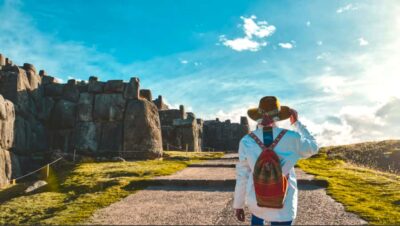
City Tour Cusco Qoricancha Sacsayhuaman y Tambomachay
Read our review →
The Charm of Barranco & Pre Inca Pyramid in Miraflores
Read our review →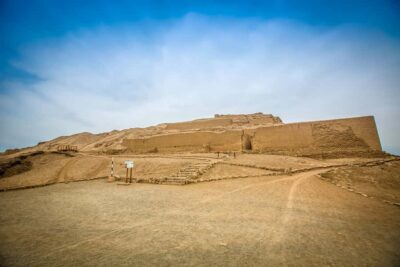
Pachacamac Ruins & Barranco Half-Day Guided Tour
Read our review →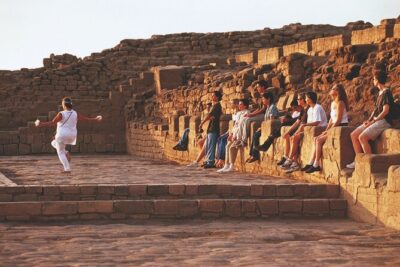
Pre Inca Temple of Pachacamac Half-Day Tour from Lima
Read our review →
City Tour | Half-Day Tour to 4 Archaeological Sites
Read our review →
City Tour in Cusco & visit Museum South American Camelid Private.
Read our review →Browse the lists this tour appears in