
Reviewed · MUSEUMS & INCA RUINS
Lima: Larco Museum Entry Ticket
Lima’s Larco Museum packs 45,000 pieces of ancient Peruvian art into an elegant 18th-century vice-royal mansion. I like the mix of serious archaeology and visual pleasure here: Moche pottery tells stories through faces, animals, ceremonies, and daily life, while the gold, silver, and textiles show remarkable technical skill. I also like the flower-filled gardens, which give you a quiet place to pause after the galleries.
The main thing to consider is that this is an entry ticket, not a guided tour. You’ll explore at your own pace, and the two-hour visit can feel short if you read every explanation. You must also use the actual ticket emailed the day before, not just the GetYourGuide booking voucher, and large bags are not allowed.
Key points at a glance
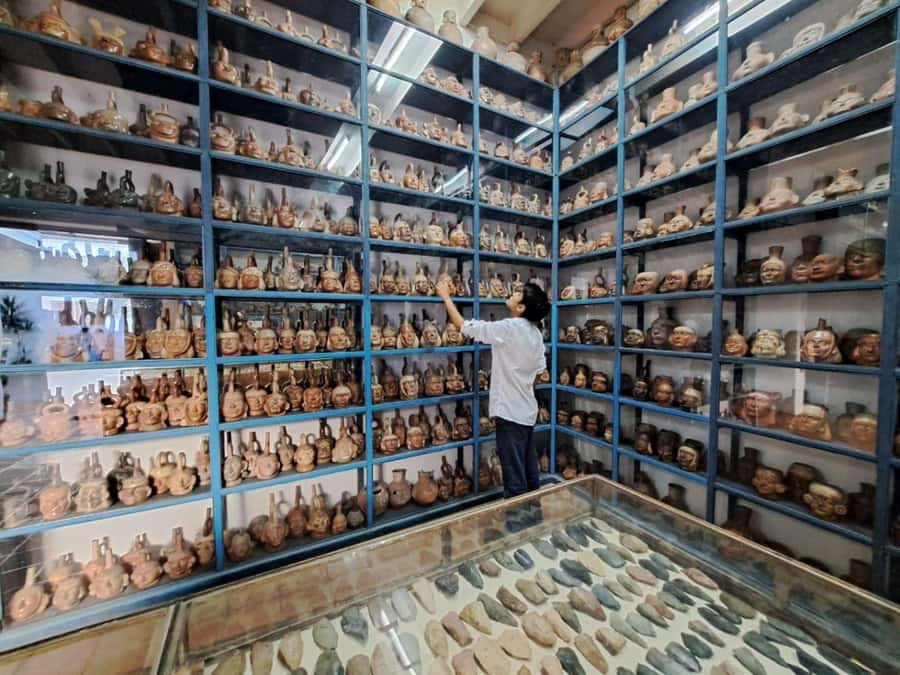
- 45,000 ancient Peruvian objects: See pottery, textiles, jewelry, ceremonial pieces, gold, and silver from several pre-Columbian cultures.
- Moche pottery tells human stories: Look for detailed scenes of rituals, animals, work, and daily life.
- A separate erotic art collection: This frank display offers clues about how sexuality appeared in pre-Columbian artistic and cultural life.
- An 18th-century mansion: The building is part of the experience, with colorful rooms, courtyards, and gardens.
- About two hours inside: The visit works well as a focused museum stop during a day in Lima.
- Bring identification: You need your passport or ID, plus the entry ticket sent by email the day before.
Why the Larco Museum is worth your Lima time
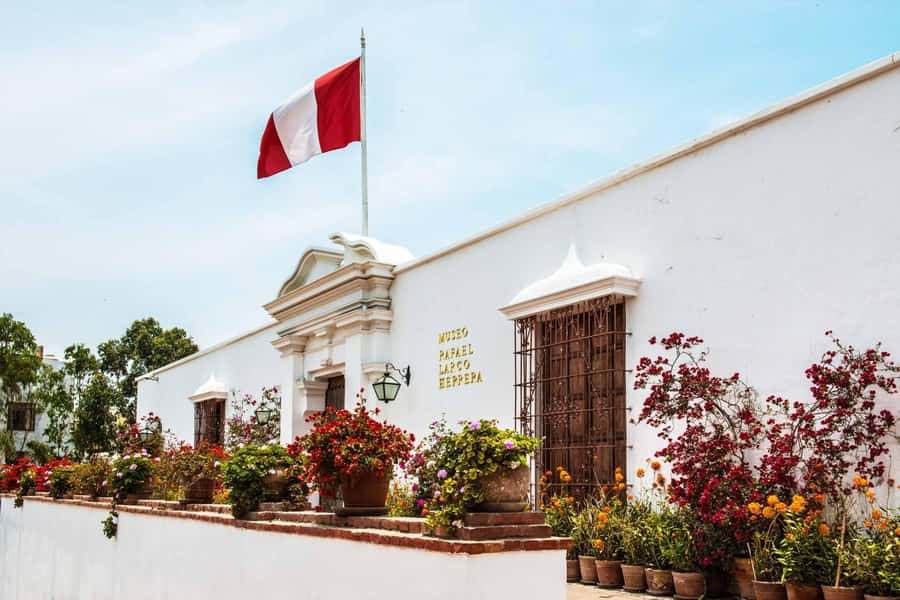
The Larco Museum is a good choice when you want more than a quick look at one famous object. Its collection covers many forms of ancient Peruvian art, so you can compare pottery, weaving, metalwork, and ceremonial objects in one visit.
That range matters. Ancient cultures are often presented through a few grand monuments, but here you also see the smaller things that reveal how people lived and expressed ideas. A pot may show a person at work. A textile may reveal a carefully repeated design. A piece of jewelry may tell you about status, ceremony, or belief.
I find museums easier to enjoy when the objects connect to everyday life. The Larco collection offers plenty of those connections. It also gives you a useful introduction to Peru’s pre-Columbian cultures before you visit archaeological sites elsewhere in the country.
You should not expect a modern theme-park presentation or a tightly scripted tour. This is a museum visit built around objects, labels, rooms, and your own pace. That makes it flexible, but it also means you need to decide how much context you want to read.
Other ruins and collections around Lima:
- Lima: The Charm of Barranco & Pre Inca Pyramid in Miraflores
★ 4.9 · 322 reviews - Lima: Pachacamac Ruins & Barranco Half-Day Guided Tour
★ 4.6 · 296 reviews - Pre Inca Temple of Pachacamac Half-Day Tour from Lima
★ 4.5 · 283 reviews
Entering the 18th-century vice-royal mansion
You enter through the museum’s main gate at the listed location in Lima Province. Show the ticket sent by email the day before. The booking confirmation itself is not valid for access, so check your inbox before leaving your hotel and keep the correct ticket easy to find.
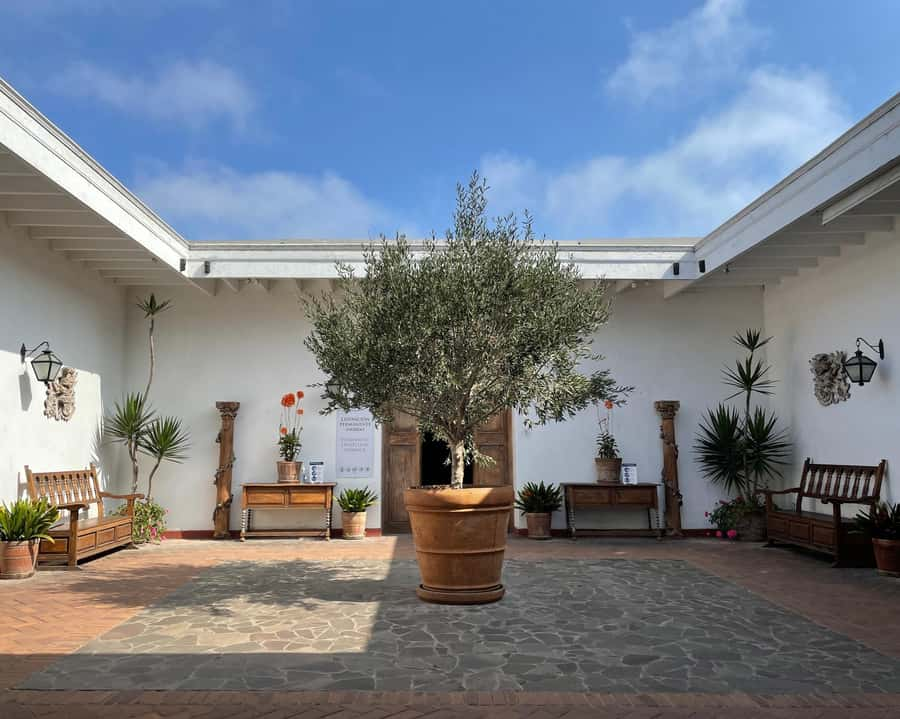
The building gives the museum a special feel from the start. Instead of moving through a plain modern box, you walk through a restored vice-royal mansion with historic rooms and garden areas. The setting softens the formal museum experience and gives the collection a strong sense of place.
The mansion is not just a decorative shell around the objects. Its courtyards, colors, and gardens create a calm rhythm between the galleries. After looking closely at small objects and reading labels, you can step outside and reset your attention.
A small restaurant is attached to the museum. Food and drinks are not part of the $25 ticket, but the restaurant gives you an easy option if you want to make the visit part of a longer outing. The available information does not specify the menu or meal prices, so plan to pay separately.
Moche pottery and scenes of ancient life
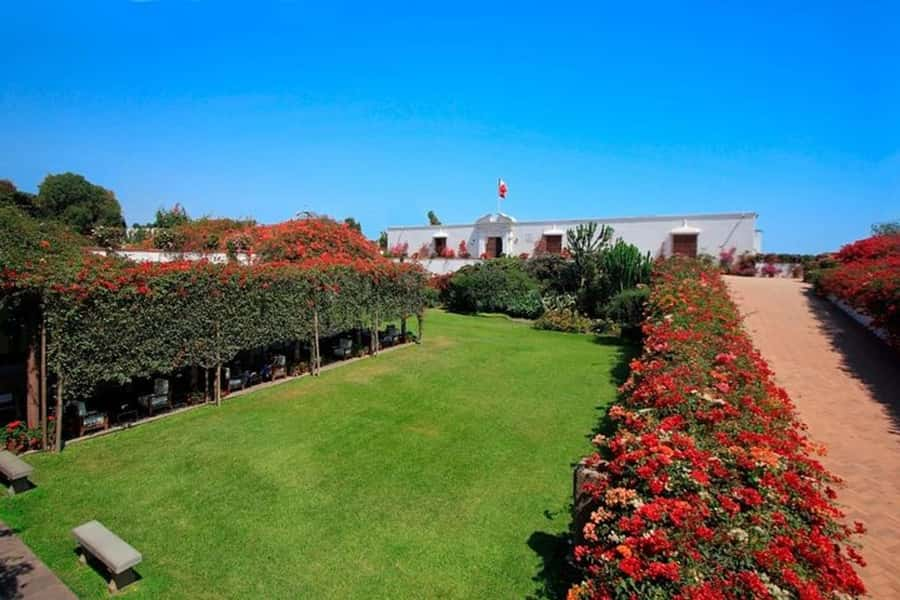
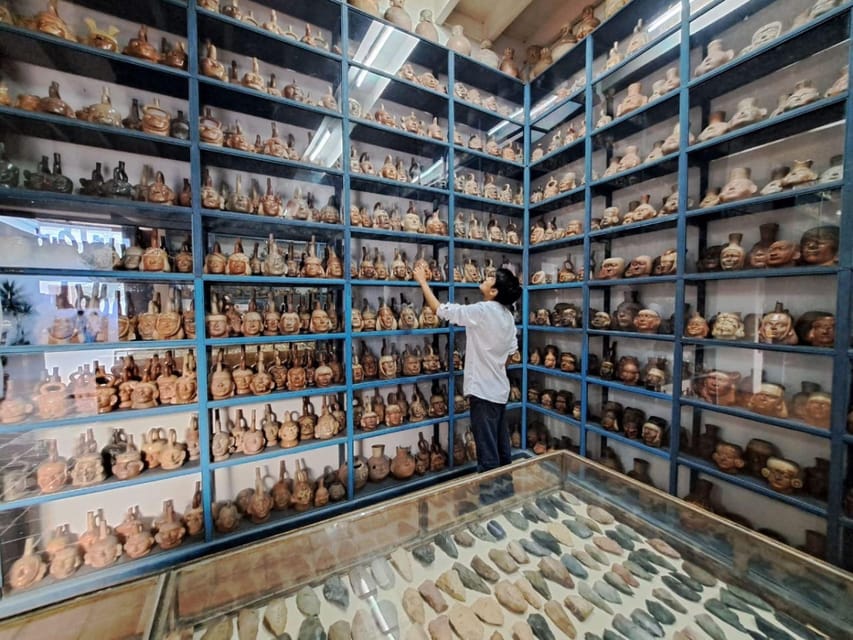
The Moche pottery is one of the strongest reasons to visit. These objects are often highly detailed, with carefully shaped human faces, animals, plants, and scenes connected to ceremonies or ordinary activities.
Look at the pots slowly. Their forms are not always simple containers. A face may be built into the vessel. A figure may carry symbolic meaning. The surface can show a scene that rewards close attention rather than a quick glance.
This is where the museum becomes particularly useful for a first visit to Peruvian archaeology. You can see how artists recorded the human body, social roles, animals, and ritual behavior. The pottery helps you think about ancient Peru as a group of creative societies, not one single culture with one artistic style.
The museum provides explanations and background for the objects. That makes the visit more approachable if you do not already know the difference between Peru’s pre-Columbian cultures. Still, the number of objects can be a lot to absorb, so do not feel that you must inspect every piece equally.
I would give the Moche galleries your best attention early in the visit. Choose a few objects that catch your eye, then read the labels beside them. A slower look at five memorable pieces is more rewarding than racing through dozens.
Gold, silver, and ancient metalworking
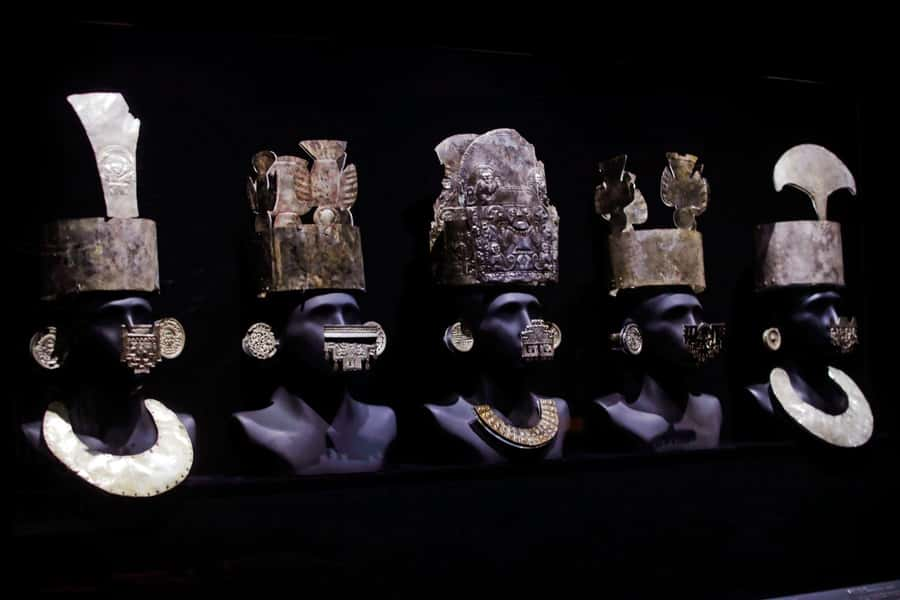
The gold and silver displays show another side of ancient Peruvian skill. You’ll see jewelry and ceremonial objects made with care, balance, and strong visual effect.
These pieces are easy to admire at first glance, but their real value comes from considering how much work went into them. Ancient metalworkers had to shape, join, polish, and decorate precious materials without modern tools. The objects also carried meaning beyond their material worth, especially when used in ceremony or worn as signs of position.
Gold can dominate a museum visit because it catches the light, but do not rush past the silver pieces. Comparing the two helps you notice differences in color, texture, and design. Jewelry can also feel more personal than a large ceremonial object. It brings ancient craftsmanship closer to the human body.
The collection does not need a treasure-hunt approach. I recommend looking for repeated shapes and patterns across the metalwork. Then compare them with the designs you see in textiles and pottery. That simple exercise helps you notice how ideas traveled across different art forms.
Same base, a completely different day:
- Lima: Ultimate Peruvian Food Tour
★ 4.9 · 700 reviews - Full Day Paracas Ica and Huacachina from Lima All Included
★ 4.5 · 623 reviews - Lima’s Vibrant Heritage: Exploring the City’s Landmarks Half-day
★ 4.5 · 581 reviews - From Lima: Day trip to Paracas, Ica and Oasis Huacachina
★ 4.6 · 409 reviews
Ancient textiles and fine detail
The textile displays require patience. From a distance, a woven piece can look like a pattern of colors and shapes. Up close, the work becomes much more exacting.
The collection includes pre-Columbian textiles with intricate designs and strong color. Textiles are especially useful because they show how ancient Peruvians worked with thread, structure, and repeated forms. They also remind you that art was not limited to stone, ceramic, or precious metal.
Textiles can be fragile, and museum displays often ask you to look without getting too close. Give your eyes time to adjust to the fine work. If a piece appears visually simple, study its edges, repeated symbols, and changes in color.
I like this part of the museum because it broadens the idea of what counts as an important ancient object. Pottery and gold get much of the attention, but weaving required its own form of planning and precision. The textiles provide a quieter counterpoint to the more dramatic galleries.
The pre-Columbian erotic art collection
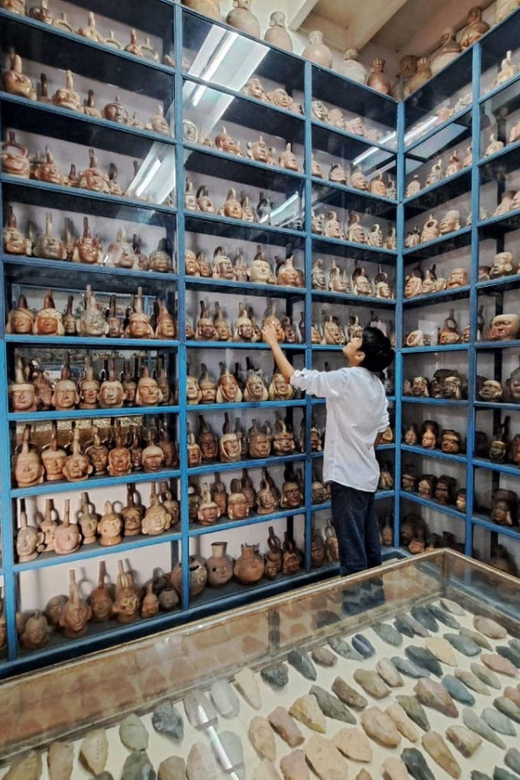
The museum’s erotic art collection is its most talked-about section, and it is not a minor side display. It presents explicit images and objects connected with sexuality in pre-Columbian Peru.
You should approach this gallery with an open mind and some historical distance. The objects are not simply modern illustrations of private behavior. They can reflect symbolic beliefs, fertility, social ideas, humor, ritual, or views of the human body. The explanations help place them in a wider cultural setting.
This section may not suit every child or every visitor. If you are visiting with family, consider the subject matter before entering. The collection is best appreciated as an important part of ancient artistic expression, not as a novelty stop.
I find it useful because it challenges the narrow way ancient cultures are often presented. Ancient people did not only make weapons, royal objects, and religious monuments. They also made art about the body and human relationships. The erotic collection makes that point plainly.
Allow enough time here to read the information. A quick glance can reduce the display to its most obvious feature, while the context gives it more meaning.
Gardens, courtyards, and a slower pace
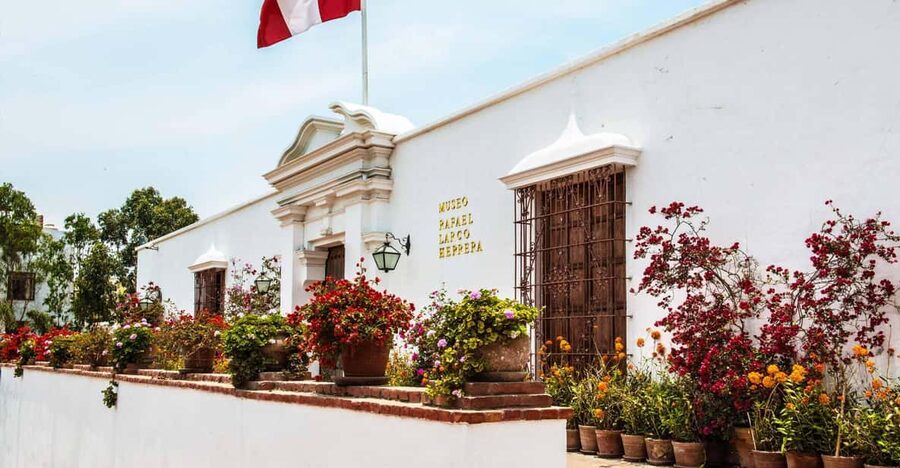
The museum gardens are a welcome part of the visit. Flowers and carefully maintained outdoor spaces give you room to breathe after the indoor galleries.
This is also where the museum feels different from a standard collection housed in a modern building. The mansion and gardens make the visit feel less compressed. You can shift from close study to a more relaxed walk, then return to the exhibits with fresh attention.
If you arrive on a busy sightseeing day, the gardens may be the best place to take a short break. They also add value to the ticket because you are not paying only for rows of display cases. You are visiting a historic house with an outdoor setting that rewards a little lingering.
The garden areas are not a separate tour, and no guided garden program is specified. Think of them as part of the museum setting rather than a formal attraction with a fixed schedule.
Planning your two-hour visit
The stated duration is about two hours. That is enough for a good first visit, but your pace will shape what you see.
For a focused visit, I would divide the time roughly like this:
- Begin with the main galleries and the broad collection of ancient Peruvian art.
- Spend extra time with Moche pottery, gold and silver, and textiles.
- Set aside time for the erotic art section instead of treating it as an afterthought.
- Finish with the mansion rooms and gardens, or use the gardens for a mid-visit pause.
You do not need to follow that order exactly. If the erotic art collection is your main reason for coming, go there earlier. If you enjoy material craft, start with pottery and metalwork.
The museum’s explanations are important because the ticket does not include a guide. Read selectively. Focus on introductory panels and labels for objects that interest you rather than trying to absorb every line.
A two-hour visit is a good fit for people who want a substantial museum stop without giving up an entire day. If you are a serious archaeology enthusiast, you may want longer than the suggested duration. The collection is large enough that a quick visit cannot cover everything in detail.
Is $25 a fair price?
At $25 per person, this is not a bargain-basement museum entry, but the price can be fair for the amount of material and the quality of the setting.
You are paying for access to 45,000 objects, a major collection of pre-Columbian art, the historic mansion, and the gardens. You also get the convenience of a skip-the-ticket-line entry, which can matter when you are fitting the museum into a busy day.
The value depends on how you visit. If you rush through in 45 minutes, $25 may feel high. If you spend the full two hours reading, comparing objects, and enjoying the building and gardens, the cost makes more sense.
Food and drinks are not included, though the attached restaurant gives you an optional add-on. You should also budget for your own transport to the museum, since the ticket covers entry only.
Practical details before you go
Bring your passport or ID card. This is specifically required, so do not assume the booking email alone will be enough.
Large bags and luggage are not allowed. If you are moving between hotels or heading to the airport, arrange storage before visiting. A small personal bag is the safer choice, but the exact bag policy should be checked at entry.
The meeting point is the museum’s main gate at approximately -12.0722329, -77.07063459999999. You should enter there and show the actual ticket sent by email the day before.
The activity has free cancellation up to 24 hours in advance for a full refund. You can also reserve now and pay later, which helps if your Lima schedule is still changing. Check the available starting times before booking because the two-hour visit is tied to the selected availability.
No guide names or guided commentary are provided. This is best treated as an independent museum visit.
Who should book the Larco Museum
I recommend this experience if you enjoy art, archaeology, ancient cultures, or museums that combine indoor exhibits with a historic setting. It is also a smart choice if you want a clear introduction to pre-Columbian Peru before visiting other cultural sites.
Families can enjoy the pottery, animals, textiles, and gardens, but parents should decide if the erotic art section is suitable for their children. The museum also works well for couples and solo visitors because you can move at your own speed.
You may want to skip it if you dislike reading museum labels, have very little time in Lima, or need to bring large luggage. You may also prefer a guided visit if you want someone to explain the collection as you go.
Should you book it?
Book the Larco Museum if you want a substantial, self-guided look at ancient Peruvian art in an attractive historic house. The Moche pottery, precious metalwork, textiles, and erotic art collection give you several different ways into the subject, while the gardens keep the visit from feeling like a long march through galleries.
The $25 price is easiest to justify when you use the full two hours and take time with the explanations. Bring identification, download the correct ticket, leave large bags behind, and plan for food separately. For a focused cultural stop in Lima, this is a strong choice.
FAQ
How long does the Larco Museum visit take?
The stated duration is two hours. You can use that time to explore the galleries, the erotic art collection, the vice-royal mansion, and the gardens.
What does the entry ticket include?
The ticket includes entry to the Larco Museum. Food and drinks are not included.
What should I bring to the museum?
Bring your passport or ID card. You also need the entry ticket sent by email the day before the activity.
Can I enter with luggage or a large bag?
No. Luggage and large bags are not allowed.
Is the GetYourGuide voucher valid for entry?
No. The voucher confirms your booking but is not valid for access to the venue. Use the ticket sent by email the day before.
Where do I enter the museum?
Enter through the museum’s main gate and show your valid entry ticket there. The listed coordinates are -12.0722329, -77.07063459999999.
Can I cancel the booking?
Yes. You can cancel up to 24 hours in advance for a full refund. You can also reserve now and pay later.
Just added around Lima
- Full Day Pilgrims★ 5.0 · 28 reviews
- Guided Tours in Colonial and Modern Lima★ 5.0 · 54 reviews
- Lima Peru Sea Lions, History and Palomino Callao Islands★ 5.0 · 56 reviews
- Sandboarding and Off Road in Lima (National Park Lomas de Ancón)★ 5.0 · 54 reviews
- In Lima: Sandboarding Off Road Half Day!!★ 5.0 · 36 reviews
- Tour Miraflores + Fotografía Profesional★ 5.0 · 47 reviews
- Full day PRIVATE to Paracas, Ica and Huacachina from Lima All Inclusive and Lunch★ 5.0 · 55 reviews
- Peruvian Experience: Interactive, Cultural & Gastronomic Guided Tour★ 5.0 · 42 reviews
Museums & Inca Ruins, compared.
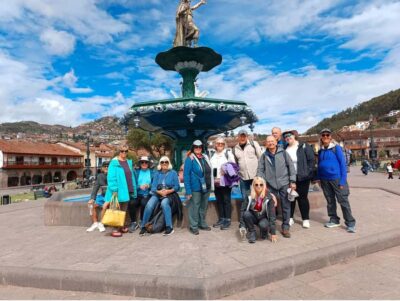
Half-Day City Tour with Sacsayhuaman and Q’enco
Read our review →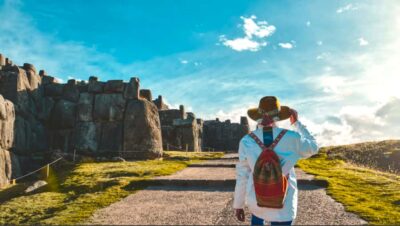
City Tour Cusco Qoricancha Sacsayhuaman y Tambomachay
Read our review →
The Charm of Barranco & Pre Inca Pyramid in Miraflores
Read our review →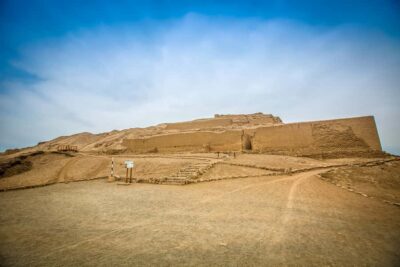
Pachacamac Ruins & Barranco Half-Day Guided Tour
Read our review →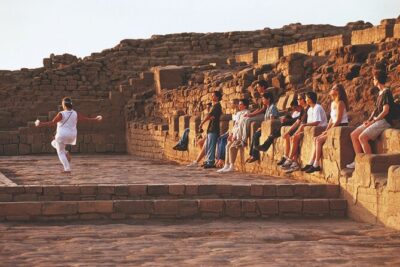
Pre Inca Temple of Pachacamac Half-Day Tour from Lima
Read our review →
City Tour | Half-Day Tour to 4 Archaeological Sites
Read our review →

City Tour in Cusco & visit Museum South American Camelid Private.
Read our review →Browse the lists this tour appears in