
Reviewed · HIKING & TREKKING
From Huaraz: Lake 69 Trek Day Tour – White Mountain Range
Lake 69 is the prize at the end of a hard Andean hike, not a quick roadside stop. From Huaraz, you’ll follow the Llanganuco Valley into Huascarán National Park, then climb from 3,900 to 4,600 meters for views of snow-covered peaks and a startlingly turquoise lake.
I like the small group, limited to 10 people, and the chance to see Chinancocha, Orconcocha, waterfalls, and several Cordillera Blanca summits in one day. I also like the practical value: at $42, transport and a professional Spanish-speaking guide are included. The catch is serious: the altitude makes this a strenuous outing, and the long ride begins very early.
Key points to know before booking
- Lake 69 sits at 4,600 meters, with about 700 meters of uphill gain from the trailhead.
- The route passes through Yungay and the Llanganuco Valley, with stops near Chinancocha and Orconcocha.
- The hike takes about three hours round trip, including the flatter opening section and the steep switchback climb.
- The group is limited to 10 people, and guiding is provided in Spanish.
- The $42 price excludes the 30-sol national park entrance fee, food, drinks, and hotel drop-off.
- You need time to acclimatize, warm layers, rain gear, hiking shoes, sunscreen, and cash.
Why Lake 69 is worth the hard climb
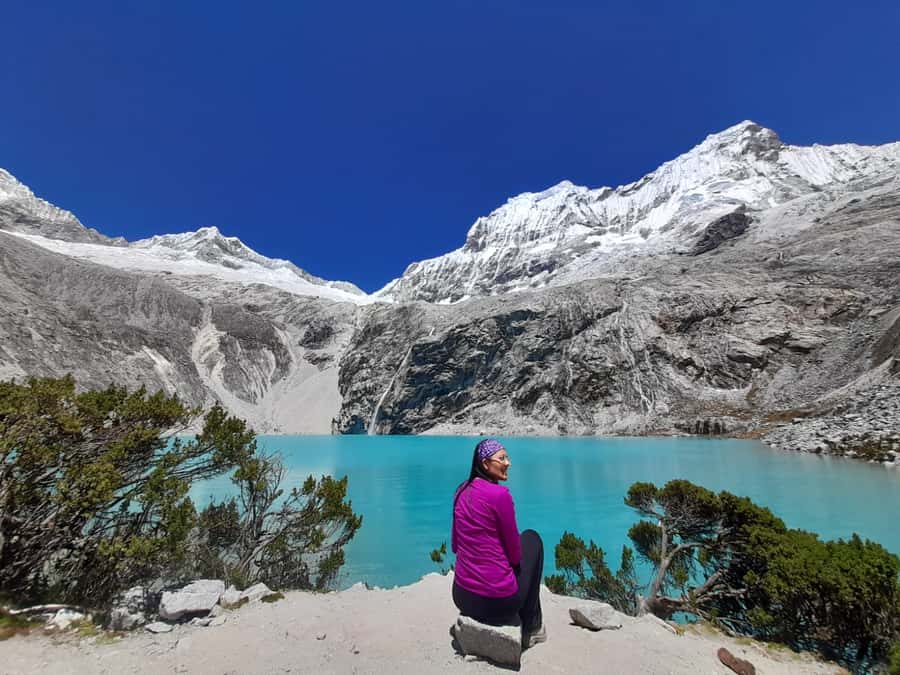
The appeal is easy to understand once you see the setting. Lake 69 lies below high glacial peaks, with clear turquoise water that can look almost unreal in bright mountain light. The lake itself is small, but the surrounding peaks give it a grand setting.
You are not simply walking to one viewpoint. Along the way, the route opens to views of Huascarán, the highest mountain in the Cordillera Blanca, as well as Chacraraju, Yanapaccha, and Chopicalqui. Waterfalls drop through the valley, and the changing scenery gives you something to focus on during the climb.
I would not describe this as an easy scenic walk. The final ascent is demanding, especially because the air is thin. A strong hiker who has spent time acclimatizing in Huaraz will have a much better chance of enjoying it than someone arriving from sea level and attempting it immediately.
Other walks into the mountains in Huaraz:
- From Huaraz: Hike to the Lagoon 69
★ 4.4 · 121 reviews - Huaraz: Laguna 69 | Cordillera Blanca | Hike to Lake 69
★ 4.5 · 9 reviews - Ancash: Trekking to Paron Lagoon with Entrance | Full day|
★ 4.1 · 9 reviews
The early road from Huaraz to Yungay
The day begins with pickup in Huaraz, usually at or near Jr. José de Sucre 723. The drive follows the northern route along the Callejón de Huayhuash, passing small Andean towns and views of the Cordillera Blanca.
The transport section takes about two and a half hours each way according to the schedule. That makes this a very long day, with around five hours on the road before counting the walking and stops. One passenger reported a pickup message showing 8:30 a.m. even though the guide arrived at 5 a.m., so I would confirm the exact pickup time directly before setting your alarm.
The roads can be rough and winding. If you get carsick, prepare for a bumpy ride and consider bringing whatever usually helps you. The long drive is part of the price, but it is also the main reason this tour fills a full 14 hours.
The route passes through Yungay District before turning northeast toward the Llanganuco Valley. Yungay is not the main attraction here, but it marks the change from the wider valley route to the mountain road leading into the national park.
Llanganuco Valley and the national park entrance
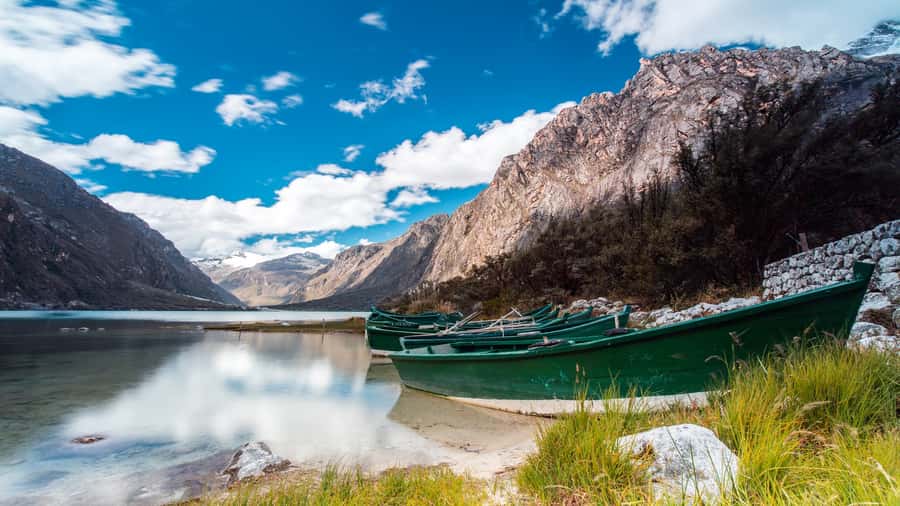
Before reaching the trailhead, you pass near the Llanganuco lakes, Chinancocha and Orconcocha. Their mountain setting gives you an early taste of the blue-green water and steep peaks that define this part of Ancash.
The road then reaches Cebolla Pampa at about 3,900 meters. This is where the walk begins. The national park entrance fee is not included, so bring 30 Peruvian soles in cash for each person.
Huascarán National Park has protected status dating from 1975. It is also recognized as a UNESCO World Natural Heritage Site and a Biosphere Reserve. The park covers about 3,400 square kilometers and protects a large part of the Cordillera Blanca.
That context matters because the trip is not only about a famous photo. You are entering a protected high-mountain area where glaciers, lakes, waterfalls, and fragile alpine plants form one connected setting. The guide can help explain what you are seeing, though the guiding language is Spanish only.
The first hour on foot from Cebolla Pampa
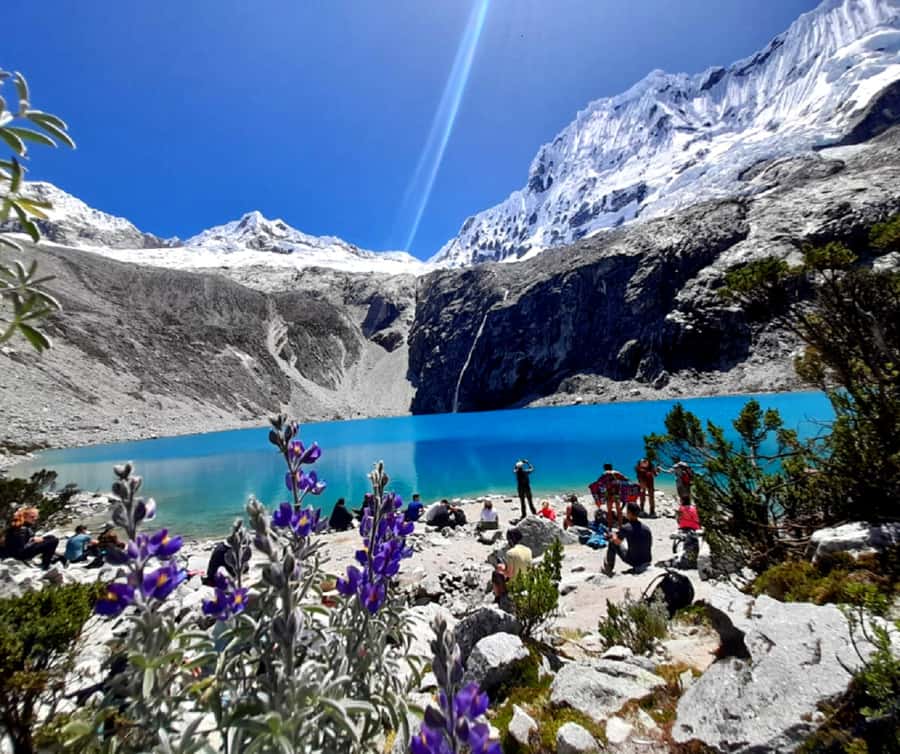
The walk starts on relatively flat ground. This first section takes about an hour and gives you time to settle into the altitude before the steep part begins.
You will have views toward Huascarán and the valley, with the white peaks rising above the route. The opening section may feel manageable, but do not use it as proof that the whole walk will be easy. The hardest part comes later, when the path begins climbing in switchbacks.
This is a good point to set a slow pace. You do not gain anything by rushing the first hour. Short steps, steady breathing, and regular pauses are more useful than trying to keep up with the fastest person in the group.
The route is not described as technical climbing. The difficulty comes from the uphill grade and the altitude. You need to be in good physical condition, and the operator specifically recommends proper acclimatization before joining the outing.
Same base, a completely different day:
- From Huaraz: Tour to the Pastoruri Glacier and Puya Raimondi
★ 4.3 · 68 reviews - 69 Lake – Cordillera Blanca
★ 5.0 · 62 reviews - Parón Lake – Cordillera Blanca
★ 4.5 · 35 reviews - Pastoruri Glacier
★ 4.5 · 34 reviews
The switchbacks and the final climb
After the flatter opening section, the path rises through switchbacks toward a smaller lake and higher viewpoints. Here you begin to see more of the glacial peaks, including Chacraraju, Yanapaccha, Huascarán, and Chopicalqui.
The reported elevation gain is about 700 meters, from roughly 3,900 meters at Cebolla Pampa to 4,600 meters at Lake 69. That number explains why the hike feels far harder than its distance alone might suggest.
You may need to stop often. That is normal at this height. The Spanish-speaking guide is expected to keep an eye on the group, and guides named Wilson and Noel have led this route. One account specifically noted that Noel checked on everyone during the climb, while Wilson was praised for being helpful.
Even with a caring guide, you are responsible for judging your own condition. If you feel unwell, tell the guide early. Do not wait until you are exhausted to speak up.
Reaching the turquoise water of Lake 69
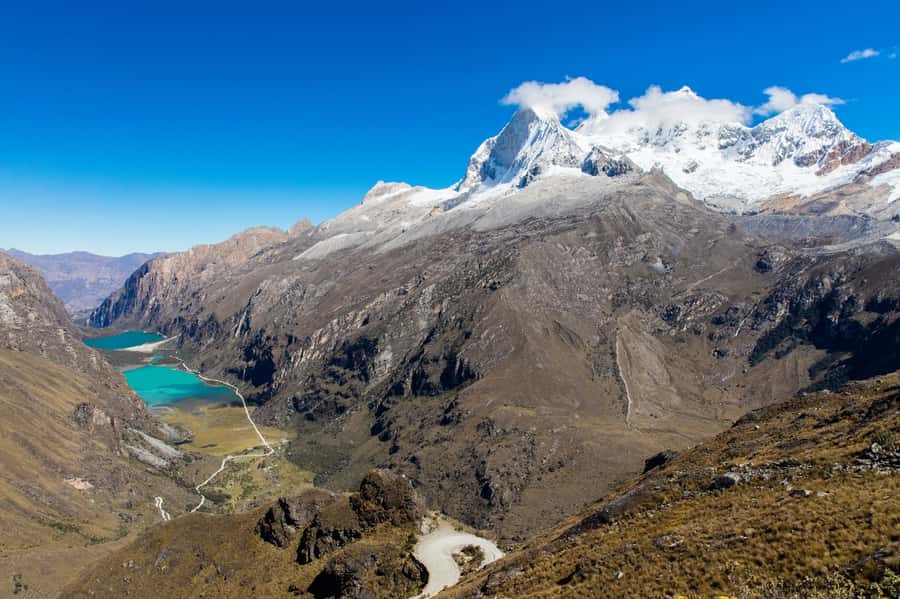
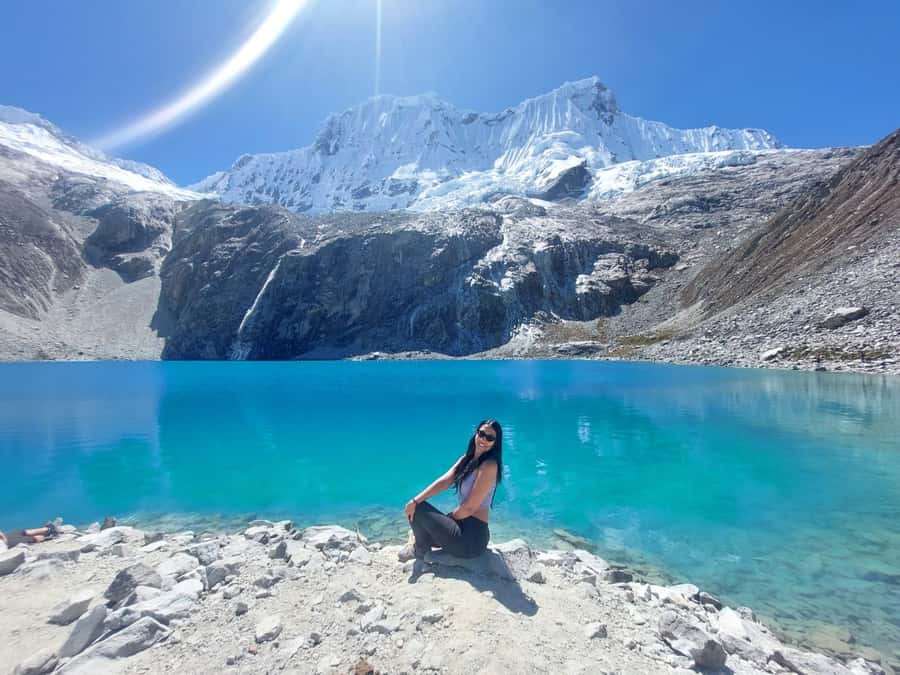
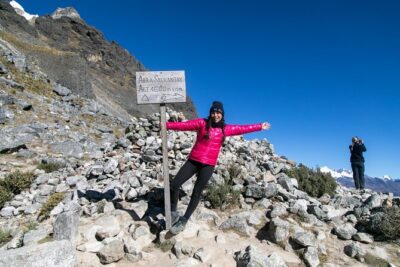
The final approach brings Lake 69 into view at 4,600 meters. This is the moment that makes the long drive and hard climb feel worthwhile for many people.
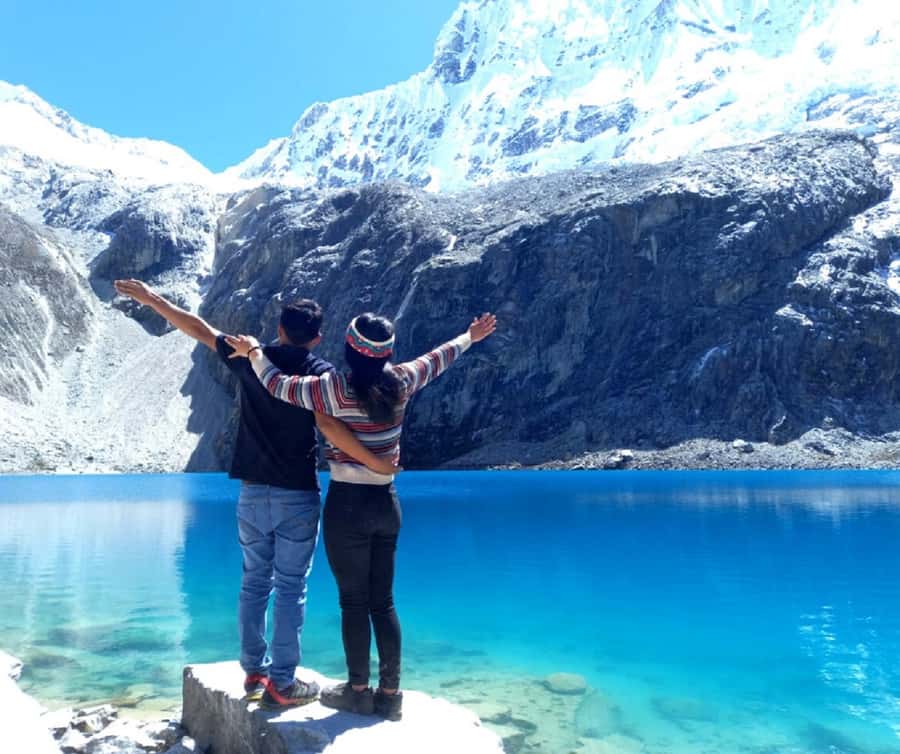
The water is clear and intensely turquoise, set beneath the snow-covered peaks. You are given about an hour at the lake for photos, rest, and sightseeing. That is enough time to enjoy the view without turning the stop into a rushed photo break.
The cold and altitude can be noticeable, so pack a warm jacket even if Huaraz feels mild when you leave. Rain can also arrive in the mountains, which is why the recommended list includes rain gear.
You will want sunglasses and sunscreen here. At high altitude, bright reflected light can be harsh, and the open setting offers little shelter. Insect repellent is also recommended.
The lake is the main reward, but do not ignore the wider view. Look back toward the route and the surrounding peaks. The setting shows why the Cordillera Blanca is one of Peru’s great mountain areas, with the Cordillera Negra forming the western side of the Callejón de Huaylas and the Santa River running along the valley below.
The descent and the long ride home
After the lake stop, you return by the same path to Cebolla Pampa. The descent takes about an hour and a half in the stated schedule. Going downhill is usually easier on the lungs, but it can be tiring on the knees and legs after the climb.
Take care on the descent. Loose or uneven ground can feel more difficult when you are tired, and the excitement of reaching the lake does not remove the need for steady footing.
At Cebolla Pampa, the vehicle takes you back toward Huaraz. The schedule allows about two and a half hours for the return bus ride, although the total road time can feel longer if stops or road conditions slow the journey.
This is not a tour for a relaxed evening afterward. You may return tired, hungry, and ready for an early night. Since food and drinks are not included, bring something for the day or be ready to buy food during an arranged stop if one is available. A breakfast stop with a local family has been part of the experience, but do not rely on it as a replacement for packing your own food.
What the $42 price really covers
At $42 per person, this is a useful deal if you want transport from Huaraz and a guide without arranging a private trip. The group size is capped at 10, which should make the day more manageable than a large coach excursion.
The price includes transportation and a professional Spanish-speaking guide. Hotel pickup may be available, but hotel drop-off is not included. You need to provide your accommodation details when booking so the pickup area can be checked.
Budget separately for:
- The 30-sol Huascarán National Park entrance fee
- Food and drinks
- Any costs connected with optional stops
- Your own hotel drop-off after returning to Huaraz
The value is strongest for visitors who already speak Spanish or are comfortable following a Spanish-speaking guide. If you need English guiding, this particular option is not a good match.
Free cancellation is available up to 24 hours before departure, and you can reserve while paying later. Those terms are useful if your Huaraz plans depend on weather or how well you adjust to the altitude.
Who should book this hike
I would choose this outing if you want to see one of the Cordillera Blanca’s best-known lakes in a single day and you are prepared for a serious physical challenge.
It suits you best if:
- You have already spent time acclimatizing in the Andes
- You are comfortable with a 14-hour day
- You can handle a 700-meter uphill climb at high altitude
- You speak Spanish or do not need detailed guiding in English
- You are happy with shared transportation and a small group
- You want dramatic mountain views more than a leisurely walk
I would think twice if you have just arrived in Peru, dislike long vehicle rides, or have trouble with steep climbs. The official guidance says the activity is not suitable for people over 65, and the altitude warning should be taken seriously regardless of age.
Bring hiking shoes, sunglasses, sunscreen, insect repellent, a jacket, rain gear, and cash. Pack food and water because neither is included. Confirm the pickup time, since one reported message gave a later time than the actual early-morning collection.
Should you book the Lake 69 day tour?
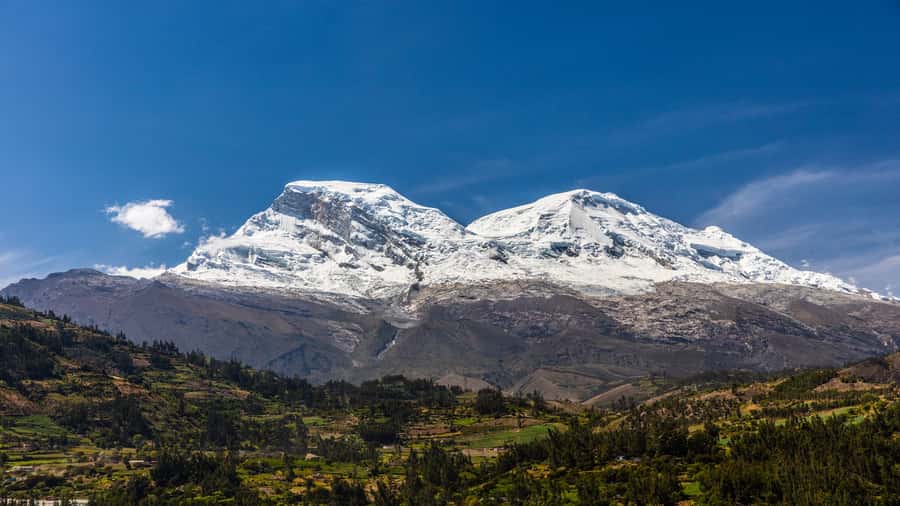
Book it if the image of a turquoise lake beneath snowy peaks is exactly what brought you to the White Mountain Range, and you are willing to work for it. The scenery is the strongest part of the day, and the small group, guide, and transport make the $42 base price reasonable.
Skip it if you want an easy outing or have not adjusted to high altitude. Lake 69 is beautiful, but it is not effortless. With acclimatization, warm clothing, a sensible pace, and realistic expectations about the long road day, this can be one of the most rewarding excursions from Huaraz.
FAQ
How long is the Lake 69 tour from Huaraz?
The full activity lasts about 14 hours. The scheduled bus ride takes about two and a half hours each way, with the remaining time covering the park entrance, hiking, sightseeing, and the stop at Lake 69.
How high is Lake 69?
Lake 69 is located at about 4,600 meters above sea level.
Where does the hike begin?
The hike begins at Cebolla Pampa, at approximately 3,900 meters above sea level.
How much uphill walking is involved?
The route gains about 700 meters in elevation between Cebolla Pampa and Lake 69.
Is the tour suitable for beginners?
The provided guidance says you must be in good physical condition and well acclimatized. The hike is described as difficult, so it is not a gentle beginner walk.
Is the guide available in English?
No. The live guide language is Spanish.
How large is the group?
The group is limited to 10 participants.
Is the national park entrance fee included?
No. The Huascarán National Park entrance fee is 30 Peruvian soles per person and is paid locally.
Are food and drinks included?
No. You need to arrange your own food and drinks for the day.
What should I bring?
Bring sunglasses, sunscreen, insect repellent, rain gear, hiking shoes, a jacket, and cash. Warm clothing is especially important for the high-altitude section.
Just added around Huaraz
- Huaraz: Full-day Tour to Lake Parón with Optional Lunch★ 4.9 · 4 reviews
- Huaraz: Pastoruri Glacier Day Trip★ 5.0 · 8 reviews
- Huaraz: Visit to Laguna 69★ 4.2 · 5 reviews
- Huaraz: Laguna 69 | Cordillera Blanca | Hike to Lake 69★ 4.5 · 9 reviews
- Huaraz: Full Day Rocotuyoc Lagoon + Frozen Lagoon★ 5.0 · 3 reviews
- Huaraz-Excursion to the Pastoruri Snows and Puyas Raymondi★ 3.3 · 4 reviews
- Huaraz: 3-hour Trek to Laguna 69 with Optional Lunch★ 4.7 · 7 reviews
- Huaraz: Bike tour | Mountain Biking in the Andes★ 4.8 · 3 reviews
Hiking & Trekking, compared.
7 Lakes Ausangate Trek with Breakfast and Lunch
Read our review →
Rainbow Mountain Tour and Red Valley Hike (Optional)
Read our review →
Full-Day Rainbow Mountain & Red Valley Trekking Tour
Read our review →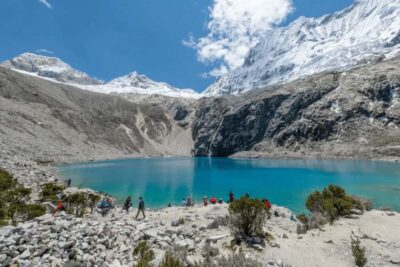
Browse the lists this tour appears in