
Reviewed · TOURS IN TRUJILLO
Shore Excursion from Salaverry port
The most striking part of this shore excursion is the chance to see two great adobe civilizations in one morning. The Moche temples at Huacas de Moche reveal an older world of ritual and royal power, while Chan Chan shows how the later Chimú built an enormous adobe capital near the Pacific coast.
I like the strong mix of archaeology and practical port service. You visit Huaca de la Luna, the Huacas de Moche Museum, Huaca Arcos Iris, and Chan Chan without arranging separate taxis. I also like the guides’ reputation for clear explanations: Alfredo and William are both praised by name for friendly, well-organized tours.
The main caution is time. Five hours is enough for the principal sites, but not for a slow, detailed visit to every corner. Entrance fees, food, and drinks are not included, and the outing involves walking over archaeological ground, so it is not suited to people with mobility impairments or certain medical concerns.
Key points at a glance
- See Moche and Chimú sites in one outing: Compare Huacas de Moche with the later city of Chan Chan.
- Visit Huaca de la Luna: Study the religious complex and its layered adobe construction.
- Add a museum stop: The Huacas de Moche Museum displays ceramics, tools, tombs, and other finds.
- Explore Huaca Arcos Iris: Look for carved adobe panels and niches linked to Chimú ritual life.
- Return to your ship from Salaverry: Port pickup and drop-off make the schedule easier to manage.
- Expect a small-group format: Transport is provided in a small group with an English or Spanish-speaking guide.
From Salaverry port to the Moche temples
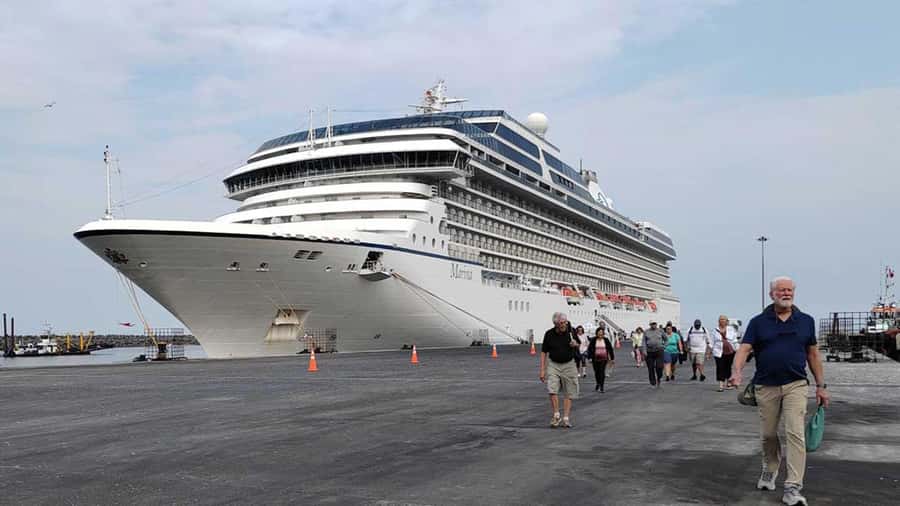
Your morning begins at 8:30 a.m. at Salaverry port. Cruise passengers first take the shuttle bus provided by the cruise company. The ride to Salaverry Plaza takes about 10 minutes, where you look for the JD ADVENTURE sign.
This meeting arrangement is simple, but it requires attention. The operator sends full meeting details two days before arrival, and you need to provide your ship name, arrival and departure times, and a mobile number that works with WhatsApp. Keep checking your email for any change to the departure time. For a shore excursion, these small steps matter more than they might on an ordinary day, since the ship will not wait for a late tour group.
From the plaza, you board the tour vehicle and head toward the Huacas de Moche. The transport is included, and the small-group setup should make the trip more personal than a large coach outing. Still, the exact group size and vehicle type are not specified, so I would not book this expecting a private tour.
The listing gives the location as Ancash, but every attraction described here is connected with the Trujillo area and the Salaverry port itinerary. If you are comparing tours by destination, confirm the final meeting and route details with the operator before sailing.
Other shore excursions from the port at Peru:
- Lima: Shore excursion from the Port of Callao for Cruises
★ 4.3 · 10 reviews
Huaca de la Luna, the Moche religious center
The first major stop is Huaca de la Luna, or Temple of the Moon. It was built by the Moche, a culture that controlled parts of Peru’s northern coast long before the Inca period.
The temple is not one single structure raised all at once. It grew in stages over roughly 700 years. Moche rulers sealed the remains of earlier leaders into the building, then covered an old platform with a new one. Each generation effectively built over the past, creating a huge stepped adobe mound.
That detail helps you read the site. You are not simply looking at a ruined pyramid. You are seeing layers of political power, religious ceremony, and changing construction methods. The temple served as a religious complex, so your guide can explain how its platforms and enclosed areas were used.
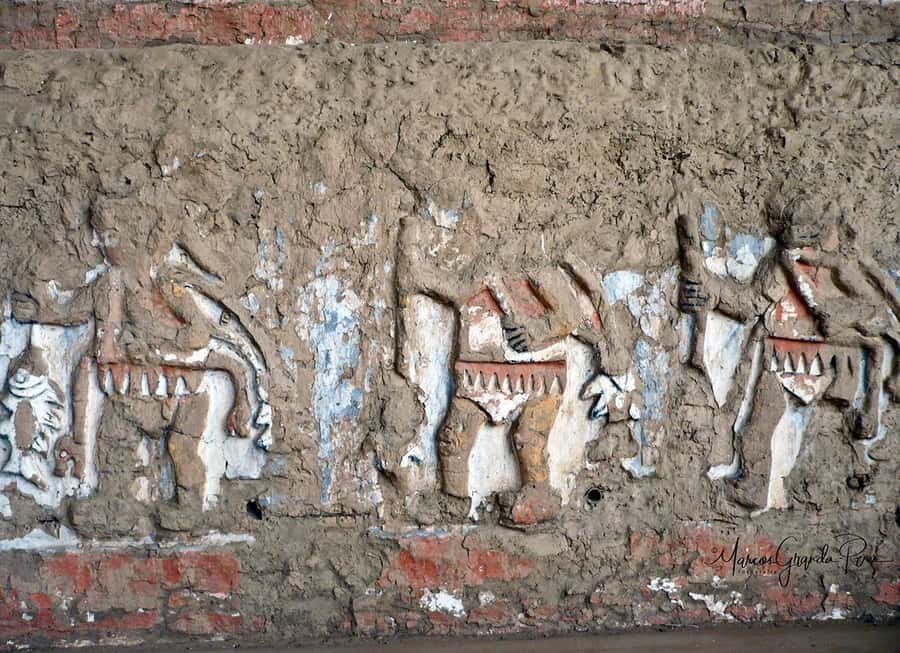
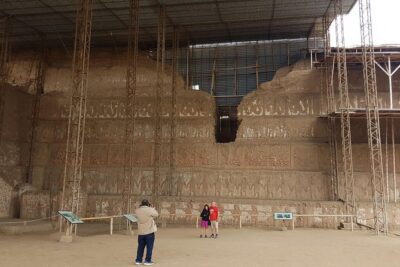
The surviving adobe decoration gives the visit much of its force. Huaca de la Luna is known for its painted and modeled surfaces, though the amount visible on any given visit can vary by protected area and conservation work. Listen closely to the guide here, since the meaning of the buildings is not always obvious from the walls alone.
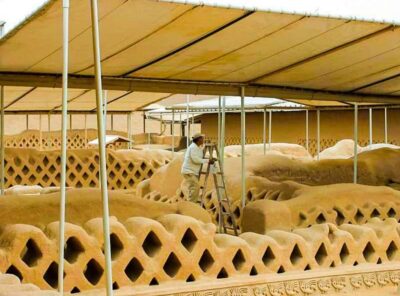
The Moche used adobe because the dry coastal climate made mud brick practical. Rain is limited in this part of Peru, but occasional El Niño weather can cause serious damage. That is why you may see covered or protected sections, and why the site can feel more like an active archaeological project than a finished monument.
Allow enough energy for walking. The tour is not described as accessible for people with mobility impairments, and the itinerary does not promise a flat route. If you have balance, joint, or stamina concerns, ask the operator for current conditions before booking.
The Huacas de Moche Museum puts the ruins in context
After the temple complex, you visit the Huacas de Moche Museum. This is an important stop because the museum gives you smaller objects that help explain the large adobe structures outside.
The collection includes artifacts, ceramics, utensils, and tombs. These objects can show details that the monumental ruins cannot, from household use to burial customs and the skill of Moche craftsmen. I find this kind of pairing especially useful: first you see the scale of the temple, then you see the objects that make the people who built it easier to picture.
The museum also provides a break from the open sun. The exact amount of time spent inside is not stated, so the guide’s pacing will shape the visit. One of the most consistent strengths of the tour has been its guiding. Alfredo is praised for friendly and clear explanations, while William is singled out for being structured and for speaking at the right place and time rather than giving long, unfocused talks.
That style matters here. A museum can become a quick walk past display cases if nobody explains what you are seeing. With a good guide, the ceramics and tombs connect directly to the platforms, rituals, and rulers discussed at Huaca de la Luna.
Huaca Arcos Iris and the Chimú connection
The next stop is Huaca Arcos Iris, also called the Rainbow Temple or El Dragon. The Chimú built it around A.D. 1200, after the Moche civilization had passed from power.
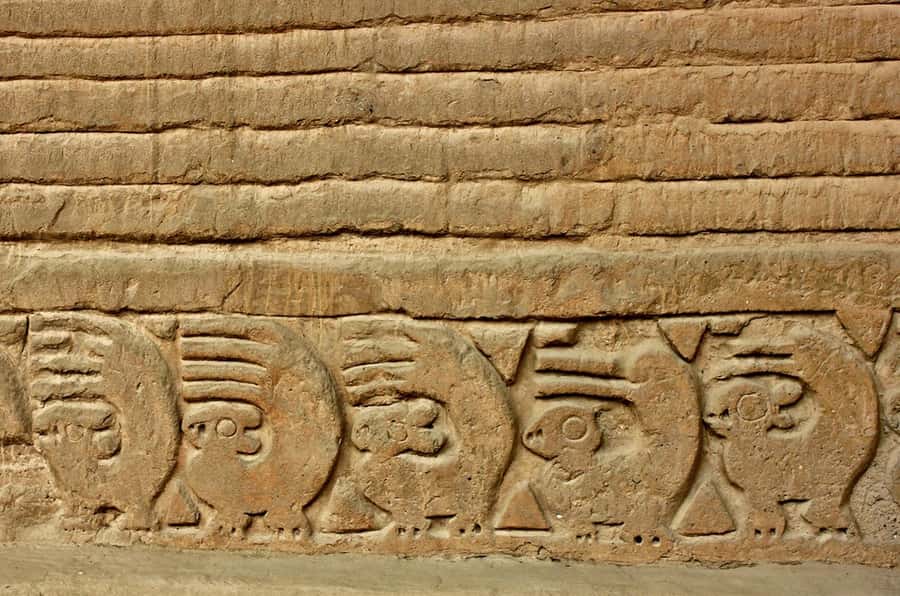
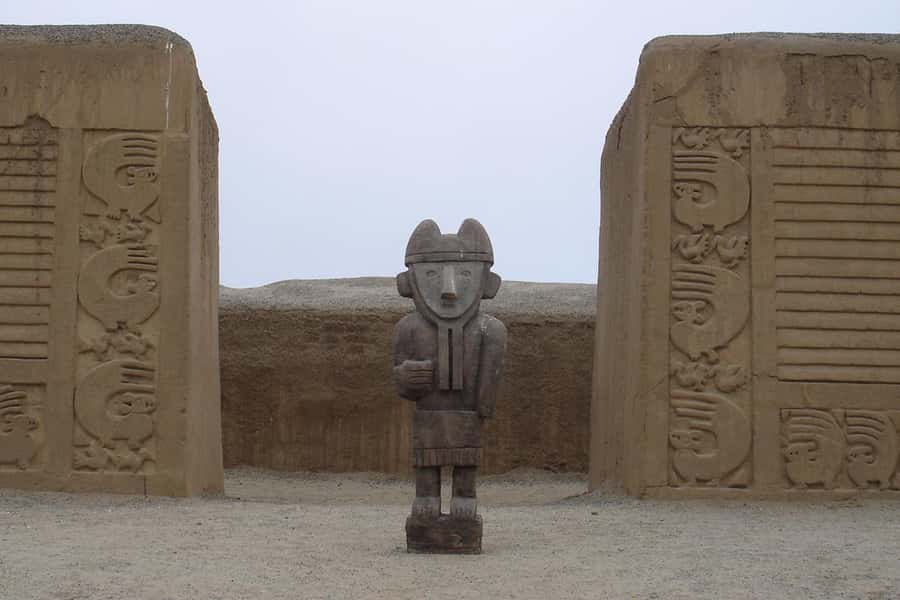
The site has two platforms, carved adobe panels, and niches that once held ritual objects. Compared with the larger scale of Chan Chan, Huaca Arcos Iris is a more focused stop. It gives you a close look at the decorative language of Chimú construction and helps set up the final visit.
Local tradition identifies this temple as the home of Takaynamo, the mythical founder of Chan Chan. Treat that as legend rather than settled historical fact, but it adds a useful connection between the smaller temple and the great Chimú capital.
The stop also makes the cultural sequence easier to follow. The tour is not showing you unrelated ruins. It moves from the Moche religious center to a Chimú temple and then to the Chimú capital. If you have little background in northern Peru, this order gives the morning a clear shape.
You should expect another outdoor archaeological visit, with exposure to the sun and walking around adobe structures. Bring cash, as requested by the operator, and plan for your own food and drinks because those are not included. The supplied information does not specify whether bottled water is provided, so I would carry what you need if permitted by the tour arrangements.
Same base, a completely different day:
- Cusco: Humantay Lake Tour with Breakfast and Buffet Lunch
★ 4.9 · 2,976 reviews - From Cusco: Sacred Valley & Maras Salt Mines Tour with Lunch
★ 4.8 · 2,227 reviews - From Cusco: Moray, Maras Salt Mines & Chinchero Weavers Tour
★ 4.8 · 1,925 reviews - From Lima: Paracas and Huacachina Oasis Full Day Guided Tour
★ 4.7 · 1,780 reviews
Chan Chan, the Chimú capital near Trujillo
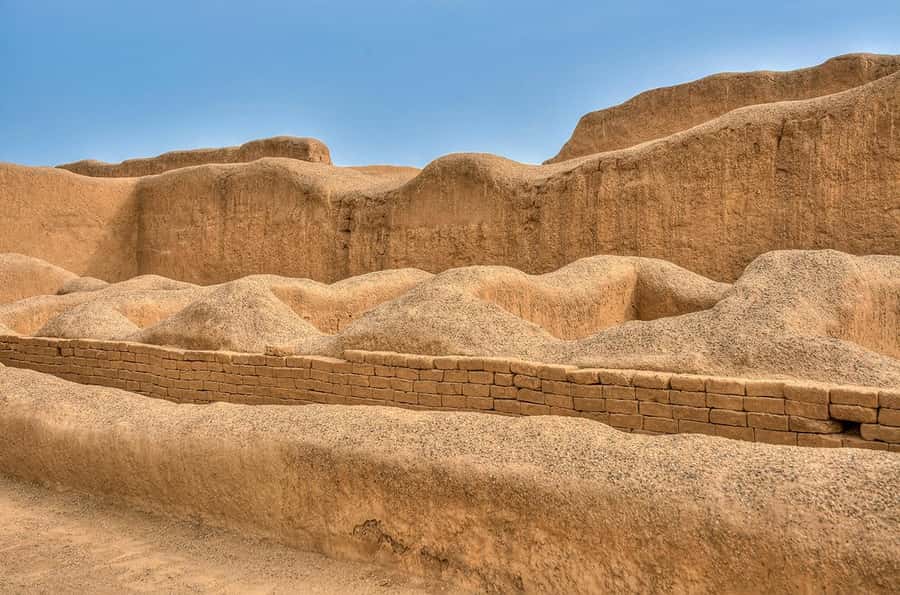
The final archaeological stop is Chan Chan, the largest pre-Columbian adobe city in the Americas. It was the capital of the Chimú empire and became a UNESCO World Heritage Site in 1986.
Chan Chan was not merely a ceremonial mound. It was a planned city with courtyards, terraces, palaces, and gardens. Estimates place its population between 30,000 and 60,000 people. Even if you see only a portion of the archaeological complex, the scale changes your understanding of adobe construction.
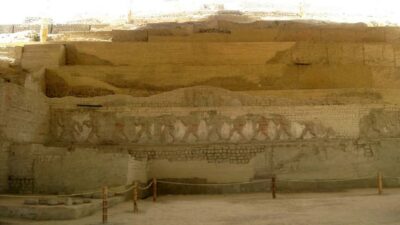
The palace areas are particularly useful for reading the city as an urban center. Walls and courtyards indicate controlled movement and organized public life, while carved surfaces point to the importance of water, animals, farming, and ceremony in Chimú art. Your guide’s explanation will do much of the work, since many walls are weathered and the original city is far larger than the restored or protected sections you can visit.
Chan Chan is also where the five-hour schedule becomes most noticeable. This is a major site, and it rewards time. You can see the key areas on a tight port-call itinerary, but you will not have the freedom to wander through the full complex at a leisurely pace.
One past itinerary included a restaurant stop with delicious ceviche and an ocean view, but that is not listed as a standard inclusion here. Do not assume lunch is part of the tour. Food and drinks are excluded, and entrance fees are also extra.
Is $80 good value for a shore excursion?
At $80 per person, this is a reasonable price if you want several important archaeological stops with transport and a guide from Salaverry. The value comes from combining the Moche temples, museum, Huaca Arcos Iris, and Chan Chan in one half-day outing. Arranging those visits independently from a cruise port could be difficult, especially when you need to return before sailing.
The price is less attractive if you want a private vehicle, a long museum visit, or a slow archaeological study. The tour is described as small group rather than private, and the published duration is five hours. Entrance fees are not included, so budget for those separately.
The strongest value is structure. You get a planned route, port pickup and drop-off, and a guide who can connect four stops into one story. The best available feedback gives the tour a 4.5 rating from eight ratings, with particular praise for the guides and the range of sites.
There is one detail worth watching: one review describes a seven-hour experience, while the current tour information gives a five-hour duration. That may reflect a different departure, a longer day, or an unusual itinerary. I would rely on the current five-hour schedule and confirm the timing before paying, especially if your ship has a tight departure.
Guide quality can shape the whole morning
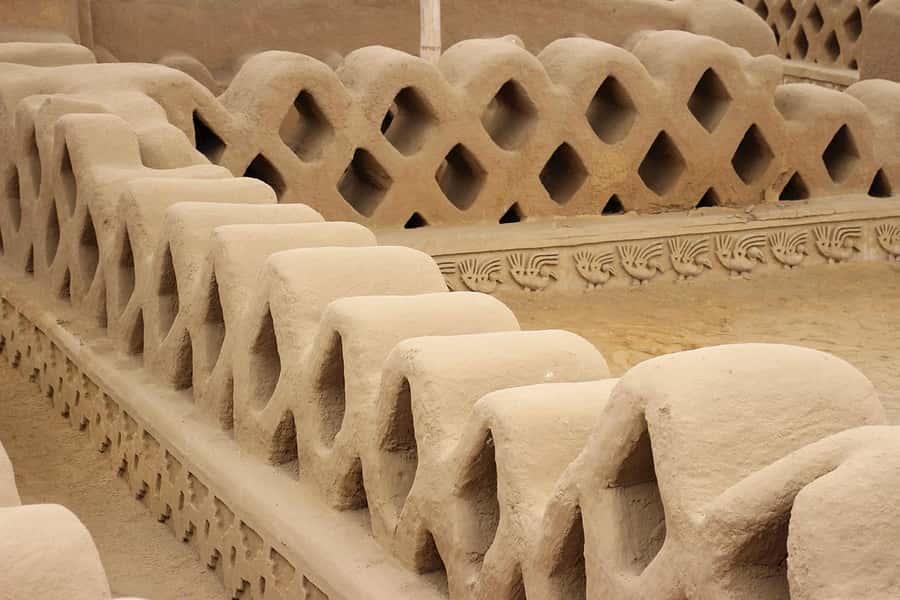
Archaeological sites in northern Peru are much easier to appreciate with a guide. Adobe walls, platforms, and niches can look similar from a distance. The guide supplies the chronology and explains why one temple was religious, another administrative, and Chan Chan an entire capital.
The guide language is English or Spanish. Alfredo receives repeated praise for his English, friendliness, and clear knowledge of the sites. William is praised for a well-ordered approach and for avoiding long, unfocused speeches. Those details suggest the best part of the tour is not simply transportation, but the way the information is delivered.
Guiding quality can vary by departure, and a specific guide is not guaranteed. Still, the names are useful when you contact JD ADVENTURE TRAVEL. You can ask who is scheduled for your date and confirm the language you need.
I would choose this outing for someone who enjoys history but does not want to spend a full day at one ruin. The pace gives you a broad look at northern Peru’s Moche and Chimú cultures. If you prefer long photography stops or detailed architectural study, the schedule may feel compressed.
Practical limits and who should book
This excursion is best for cruise passengers who want a guided introduction to Trujillo’s major archaeological sites and need a return transfer to Salaverry. It suits couples, families with older children, and adults who can manage outdoor walking and a fairly active morning.
It is not suitable for pregnant women, people with mobility impairments, people with altitude sickness, people with pre-existing medical conditions, or people over 95 years old, according to the stated restrictions. The itinerary is in the Trujillo coastal area, but those rules still apply, so take them seriously rather than treating them as boilerplate.
Backpacks, pets, alcohol, and drugs are not allowed. Bring cash, and keep your phone available for WhatsApp contact. Because the operator asks for arrival and departure details, send complete ship information rather than only the name of your cruise line.
The tour offers free cancellation up to 24 hours before departure and allows you to reserve now and pay later. That flexibility is helpful when cruise schedules change, but it does not remove the need to check the final meeting instructions two days before arrival.
Should you book this Salaverry shore tour?
Book it if you want the most useful archaeological overview you can fit into a half-day. The route covers the Moche temples, a museum, a Chimú temple, and Chan Chan, with port transport and a guide included. Alfredo and William’s strong feedback also gives you a reason to expect careful explanations, though guide assignment is not guaranteed.
Skip it if you need step-free access, dislike fixed schedules, or want to spend most of your time at Chan Chan alone. Also confirm the entrance fees and total timing before booking. For a first visit to the Trujillo area from a cruise ship, though, this is a well-focused way to see the region’s two great pre-Columbian cultures without wrestling with local transport on your own.
FAQ
Where does the tour meet at Salaverry port?
You first take the cruise company’s shuttle bus, which takes about 10 minutes to Salaverry Plaza. Look for the JD ADVENTURE sign there.
What time does the tour begin?
The tour is scheduled to begin at 8:30 a.m. Check your email for updates, since the departure time may be adjusted.
How long does the excursion last?
The stated duration is five hours. One supplied account describes a seven-hour outing, so confirm the timing for your specific sailing if your ship has a tight schedule.
Which languages are available?
The tour is offered with an English or Spanish-speaking live guide.
Are entrance fees included?
No. Entrance fees are not included in the $80 price. Food and drinks are also excluded.
What should I bring?
Bring cash and provide a valid mobile number that can receive WhatsApp messages. You should also provide your ship name and arrival and departure times.
Can people with mobility impairments join?
The activity is listed as unsuitable for people with mobility impairments. It is also not recommended for pregnant women, people with altitude sickness, people with pre-existing medical conditions, or people over 95 years old.
Just added around Peru
- Lima: Palomino Islands Speedboat Tour & Swim with Sea Lions★ 4.8 · 33 reviews
- Tambopata Rainforest Night Walk & River Exploration★ 4.4 · 6 reviews
- Tambopata: Multi-Day Amazon Rainforest Tour with Local Guide★ 4.8 · 11 reviews
- Super Sacred Valley with Transfer to Ollantaytambo★ 3.1 · 4 reviews
- From Cusco: South Valley Villages and Archaeology Tour★ 5.0 · 3 reviews
- Tambopata Macaw Clay Lick 3 days/2 nights★ 4.1 · 5 reviews
- Sun island and Copacabana | From Puno or La Paz / Day Trip★ 4.1 · 5 reviews
- SOUTH VALLEY CUSCO★ 4.1 · 56 reviews
Tours in Trujillo, compared.
Full Day Tour Huacas, Chan Chan & Huanchaco – Trujillo
Read our review →
Pyramids of the Sun and the Moon, Huanchaco and Chan Chan
Read our review →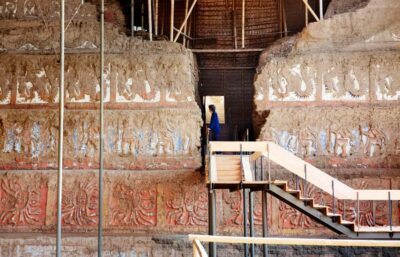
El Brujo Complex Archaeological Tour with Tickets
Read our review →Browse the lists this tour appears in