
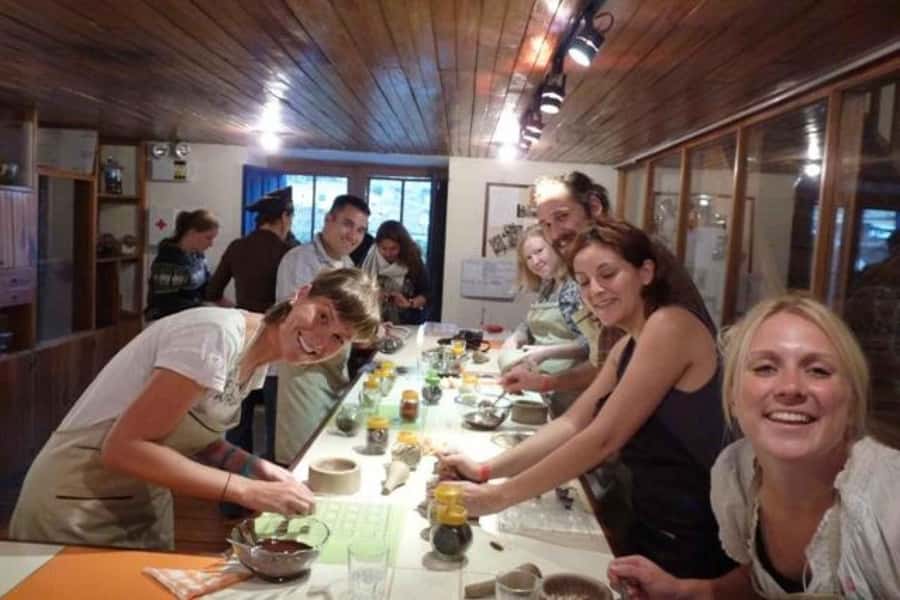
Reviewed · CHOCOLATE WORKSHOPS
Cusco: Bean to bar chocolate workshop
The best part of this Cusco chocolate workshop is that you do not simply taste a finished bar. You work through the four stages of cacao making, from roasting the beans to refining the paste, then use the result to make your own chocolate.
I like the hands-on work with the metate and mano, tools used in the same basic way by the Aztecs. I also like the freedom to tailor your chocolate bar with your choice of ingredients. The main limitation is the short two-hour format, so this is an introduction rather than a full professional course.
Key points to know before booking
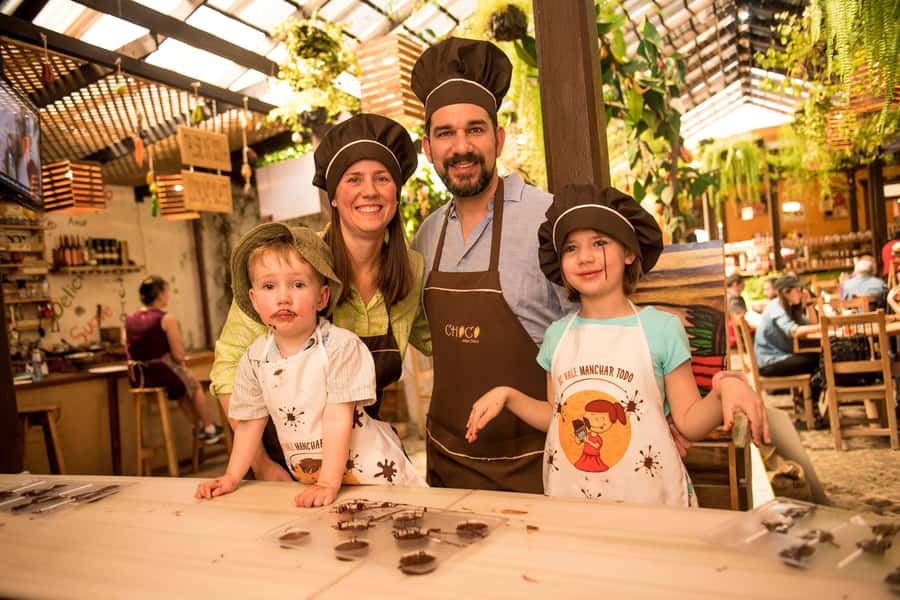
- Roast, peel, grind, and refine cacao yourself: You take part in the full bean-to-bar process instead of only watching a demonstration.
- Use a metate and mano: Grind cacao nibs by hand in the traditional way before refining the paste.
- Make organic chocolates to your taste: Choose ingredients for your own molded bar.
- Try Maya and conquistador-style drinks: The workshop includes hot chocolate traditions linked to different periods and cultures.
- Leave with handmade chocolate: You can take home your own creations, assuming you have not eaten them during class.
- Plan for a two-hour indoor activity: It fits neatly between Cusco sightseeing, meals, and other short visits.
Starting with the cacao bean in Cusco
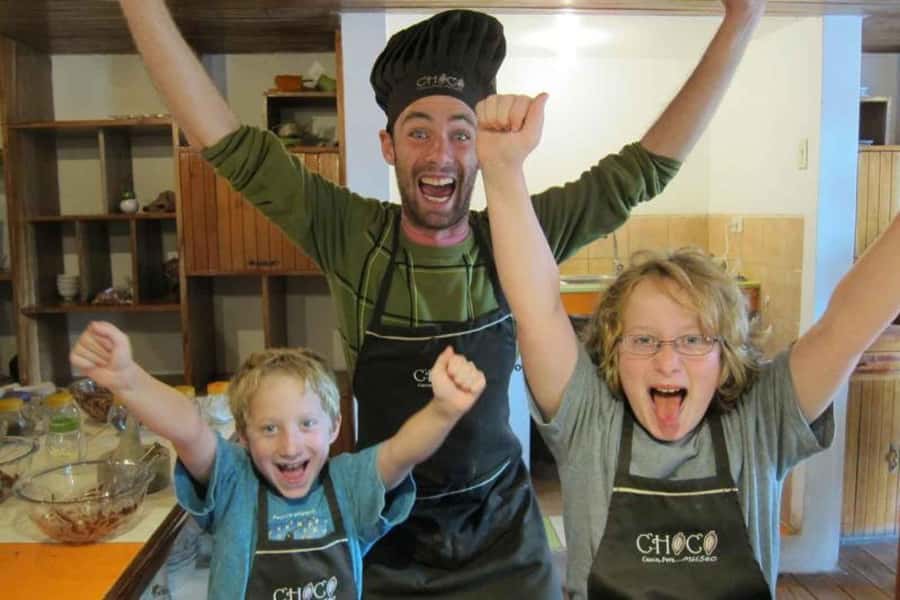
This class begins with the basic question many chocolate lovers skip: how does a cacao bean become a smooth bar?
You learn about the cacao tree, the beans, and the steps that transform them into chocolate. The workshop also explains why Cusco is associated with fine chocolate, giving the tasting and preparation work a local connection rather than treating cacao as a generic ingredient.
The setting combines a chocolate museum with a working workshop. That matters because you get both the story and the physical process. You are not only told that cacao changes through roasting and grinding. You see and handle the stages yourself.
The guide leads the session in English or Spanish. No individual guide names are provided, so you should choose your preferred language when booking and confirm any last-minute details with the supplier.
Other cacao workshops around Cusco:
- Chocolate Workshop in Cusco with Premium Organic Cacao
★ 5.0 · 75 reviews - Cusco: Chocolate Workshop with the Best Local Organic Cacao
★ 4.5 · 23 reviews - 1.5h Cusco Chocolate Workshop – Truffles & Hot Chocolate
★ 4.3 · 8 reviews
Roasting the cacao beans
The first working step is roasting the cacao beans. This is where the raw ingredient begins to take on the familiar smell and flavor associated with chocolate.
You get to see how the beans change before they are ready for grinding. The roasting step is useful because it makes clear that chocolate flavor does not appear all at once. It develops through a chain of small processes, and each one affects the final result.
I like this part for another reason: it keeps the workshop connected to the cacao itself. Many chocolate tastings rush straight to sweetness. Here, you start with the bean and follow its progress.
The class is practical rather than technical. In two hours, you will not become a chocolatier, but you will understand why roasted cacao tastes and behaves differently from the original bean.
Removing the husk and finding the nibs
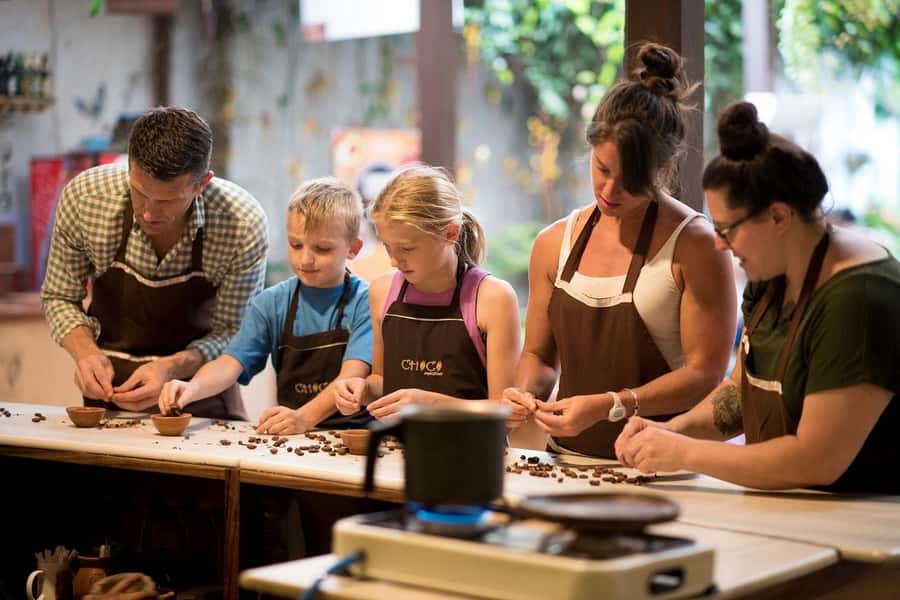
After roasting, you remove the cacao husk. This separates the outer covering from the edible cacao nibs.
It is a simple step, but it helps you see how little of the bean becomes the core chocolate ingredient. The nibs are the part you grind and refine into cacao paste. Handling them also gives you a clearer sense of the raw material before sugar, milk, flavorings, or other additions enter the picture.
This is one of the workshop’s strongest features for curious eaters. You can connect the finished chocolate bar to a recognizable ingredient rather than treating chocolate as something made in a distant factory.
The pace should be manageable for most people because the activity is designed as a guided class. Still, expect to participate. This is not a sit-back tasting where the guide does all the work.
Grinding cacao on a metate and mano
Next comes the most distinctive hands-on stage: grinding cacao nibs on a metate with a mano.
The technique follows the same basic method used by the Aztecs. You place the nibs on the stone and work them with the hand-held grinding tool until they form a thicker cacao paste.
This is a useful reminder that chocolate began as a labor-intensive food. The metate gives you a direct feel for the work behind the ingredient. It also makes the class more memorable than a standard demonstration with modern equipment hidden behind a counter.
Do not expect the hand grinding to produce a perfectly smooth bar on its own. The point is to understand the traditional method and see how the nibs release their natural fats as they are crushed.
The class then moves from the traditional tool to a melangeur, which refines the cacao paste. That change shows the difference between an older grinding technique and the smoother texture people usually expect from modern chocolate.
Same base, a completely different day:
- Cusco: Humantay Lake Tour with Breakfast and Buffet Lunch
★ 4.9 · 2,976 reviews - From Cusco: Moray, Maras Salt Mines & Chinchero Weavers Tour
★ 4.8 · 1,925 reviews - From Cusco: Full-Day Group Tour of Machu Picchu
★ 4.7 · 1,767 reviews - Machu Picchu Day Trip from Cusco
★ 4.5 · 1,644 reviews
Refining the paste in a melangeur
The melangeur is used to refine the cacao paste after the nibs have been ground.
This stage helps explain why finished chocolate feels smooth rather than gritty. The machine works the paste into a more even texture, preparing it for drinks and molded chocolate.
For me, this is where the bean-to-bar idea becomes clear. You have followed the cacao from whole bean to husk-free nibs, then from nibs to paste, and finally toward a form you can eat and shape.
The process also gives you a better sense of what a short workshop can and cannot cover. You learn the key stages, but the class is not a full factory tour or an advanced confectionery course. It is best for building a working understanding through a few well-chosen tasks.
Making hot chocolate in Maya and conquistador styles
The workshop includes hot chocolate drinks connected with Maya and conquistador traditions.
These drinks give you a chance to taste cacao in more than one cultural context. The names point to different historical influences on the way chocolate has been prepared and consumed.
The class description does not specify the exact ingredients or recipes used in each drink, so do not book expecting a detailed menu in advance. Ask the guide to explain the differences as you taste them. That conversation is part of the value, especially if you want to understand how chocolate moved from an ancient cacao tradition into European-style preparations.
A hot chocolate made from the cacao paste you helped produce also gives the grinding and refining stages an immediate purpose. You are not just processing beans for a future product. You get to taste the result during the class.
A previous participant specifically praised the chance to roast, peel, and grind cacao before making the hot chocolate. That detail is worth keeping in mind: the drink is tied to your own work, not simply served as a separate refreshment.
Molding your own organic chocolate bar
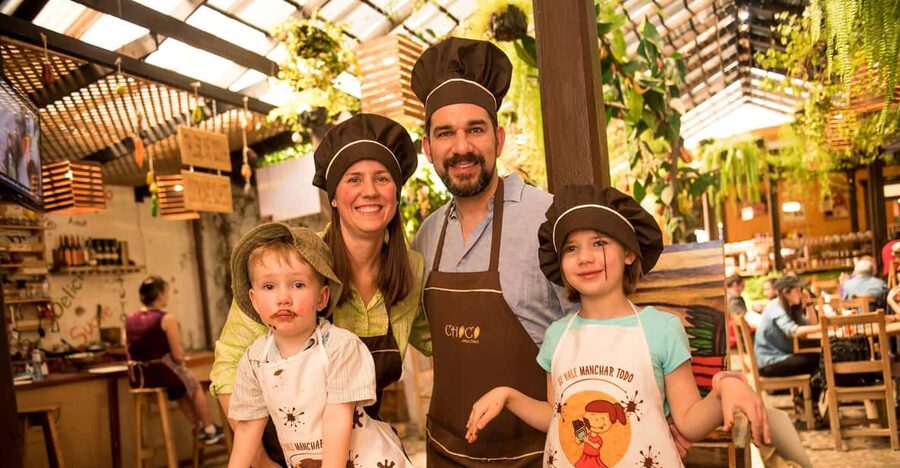
After learning the main process, you create your own chocolate.
You choose ingredients for the bar, so the finished piece can reflect your taste. The supplied information does not list the available additions, which means you should ask about the day’s choices if you have a particular flavor in mind.
The molding stage is the most appealing part for families, couples, and anyone who wants a physical souvenir. You are not buying a bar from a shop. You are shaping one during a class and taking it with you afterward.
The chocolates are described as organic. You should still tell the guide about any allergies or dietary limits before you begin, since the available ingredients and preparation setup are not specified.
The handmade result may not look factory-perfect, and that is part of the fun. The value is in the connection between the cacao bean, your choices, and the finished chocolate.
What the two-hour schedule really gives you
Two hours is enough time for a clear introduction to cacao and a few practical tasks. You can expect an orderly progression through the bean, husk, nib, paste, hot chocolate, and molded bar.
The short length makes this easy to fit into a Cusco itinerary. It works well when you want a break from churches, ruins, museums, and walking tours without giving up half a day.
At the same time, you should set realistic expectations. A two-hour class cannot offer a long lecture on cacao cultivation, a full scientific explanation of fermentation, or extensive practice with every chocolate-making technique. The listed four processes are roasting, removing the husk, grinding on the metate, and refining in the melangeur.
That focused structure is a strength if you want to make something and taste it. It may feel brief if your main interest is agricultural production or advanced confectionery.
Who will enjoy this Cusco chocolate workshop
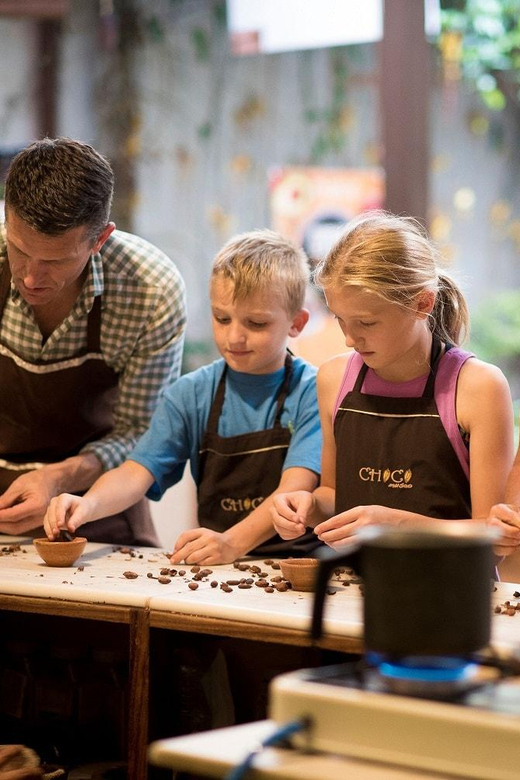
I would recommend this activity to anyone who likes food with a story and prefers a small practical class to another sightseeing stop.
It suits:
- Chocolate lovers: You taste cacao at several stages and make your own bar.
- Families: The work is hands-on and produces an edible souvenir.
- Couples and friends: You can compare ingredient choices and creations.
- Food-focused visitors: The class links local cacao to traditional tools and preparation.
- Short-stay visitors: Two hours is easy to fit into a busy Cusco schedule.
- Museum fans who want participation: You get cultural context, then put it into practice.
It may be less suitable if you want a long farm visit, a large-scale production tour, or an advanced tempering course. None of those are part of the stated program.
Value, timing, and practical planning
No price is provided here, so I cannot judge the exact cost. The value depends on what is included in the booking price, but the activity gives you several things in one short session: museum context, instruction, hands-on cacao preparation, hot chocolate, and handmade chocolate to take away.
I would judge the price against the quality of the participation rather than against the cost of a chocolate bar. You are paying for the guide, the ingredients, the equipment, the instruction, and the chance to make the food yourself.
The tour lasts two hours, with starting times based on availability. Since the workshop is in the Cusco Region, check the exact meeting details when you reserve. The supplied information does not state a pickup service, transportation, or a specific meeting point, so do not assume those are included.
The guide speaks English or Spanish. You should provide your phone number with the correct country code and have WhatsApp available. This is especially important because the supplier may need to contact you about the reservation.
For a last-minute booking, check availability with the supplier by email before paying. The activity allows cancellation up to 24 hours before the start for a full refund, and you can reserve now and pay later. Those terms are helpful if your Cusco plans are still changing.
A good break from the major Cusco sights
Cusco is packed with major sights, and many visits become a long chain of churches, plazas, archaeological sites, and day trips. A chocolate workshop gives you a different way to spend part of the day.
The activity is not a replacement for a Sacred Valley visit or a Machu Picchu tour. It does something smaller and more personal. You work with an ingredient connected to Peru, use a traditional grinding tool, and take home something you made.
That contrast is the main reason I would add it to a full Cusco itinerary. It provides a food memory rather than another photograph of a monument.
It also gives you a useful souvenir. Handmade chocolate is lighter and easier to pack than many crafts, though you should protect it from heat and keep in mind that the class does not describe special packing arrangements.
What to ask before you go
A few details are not specified, so I would confirm them before booking:
- What ingredients are available for the custom chocolate bar?
- Are the Maya and conquistador drinks made with milk, water, sugar, or other additions?
- Is the class held at a fixed workshop location?
- Are all ingredients and equipment included in the booking price?
- Can the guide accommodate a known allergy or dietary restriction?
- What time should you arrive, and what happens if you are booking at short notice?
These questions do not suggest a problem with the class. They simply help you match the activity to your needs, especially if food restrictions or a tight schedule matter.
Should you book this chocolate workshop?
Book it if you want a short, active food experience that connects Cusco with cacao. The strongest reasons are the four-stage process, the metate grinding, and the chance to leave with a chocolate bar made to your taste.
I would choose this over a simple tasting if you want to understand how chocolate is produced. I would skip it only if you are looking for a farm visit, a long cultural lecture, or advanced chocolate-making instruction.
For most people, the appeal is straightforward: you roast, peel, grind, refine, drink, mold, and take home the result. That is a good use of two hours in Cusco, especially on a day when you want something tasty and hands-on.
FAQ
Where does the chocolate workshop take place?
The activity takes place in the Cusco Region of Peru. The supplied information does not provide a specific street address or meeting point.
How long does the workshop last?
The workshop lasts two hours.
What languages are available?
The live guide can conduct the activity in English or Spanish.
What chocolate-making steps will I learn?
You learn four main processes: roasting cacao beans, removing the cacao husk, grinding cacao nibs on a metate with a mano, and refining the cacao paste in a melangeur.
Will I make my own chocolate bar?
Yes. You create a chocolate bar and choose the ingredients used in your chocolate.
Can I take the handmade chocolates home?
Yes. You can take home the chocolates you make, unless you eat them during or after the class.
Are hot chocolate drinks included?
Yes. The workshop includes hot chocolates connected with Maya and conquistador traditions.
What should I do for a last-minute reservation?
For a last-minute reservation, check availability with the supplier by email before booking. You should also provide your phone number with the correct country code and have WhatsApp available.
Just added around Cusco
- “Waqra Pucara, The Majestic Fortress Revealing Secrets of the Andes”.★ 3.5 · 8 reviews
- 1.5h Cusco Chocolate Workshop – Truffles & Hot Chocolate★ 4.3 · 8 reviews
- Cusco: Chocolate Workshop with the Best Local Organic Cacao★ 4.5 · 23 reviews
- Cusco: Pub Crawl with Skip-the-Line Access and Drinks★ 4.6 · 57 reviews
- Horseback Tour in cusco to Temple of the Moon & Hidden temples★ 5.0 · 54 reviews
- From Cusco: 2-Night Lake Titicaca Excursion★ 3.7 · 62 reviews
- From Cusco: Rainbow Mountain in ATV Quad Bikes + meals★ 4.5 · 60 reviews
- 2-Day Tour in Sacred Valley and Machu Picchu from Cusco★ 5.0 · 59 reviews
Chocolate Workshops, compared.
Chocolate Workshop in Cusco with Premium Organic Cacao
Read our review →
Chocolate Workshop with the Best Local Organic Cacao
Read our review →
1.5h Cusco Chocolate Workshop – Truffles & Hot Chocolate
Read our review →Browse the lists this tour appears in