
Reviewed · MACHU PICCHU TOURS
Cusco: 5-Day Salkantay Ultimate Trek to Machu Picchu
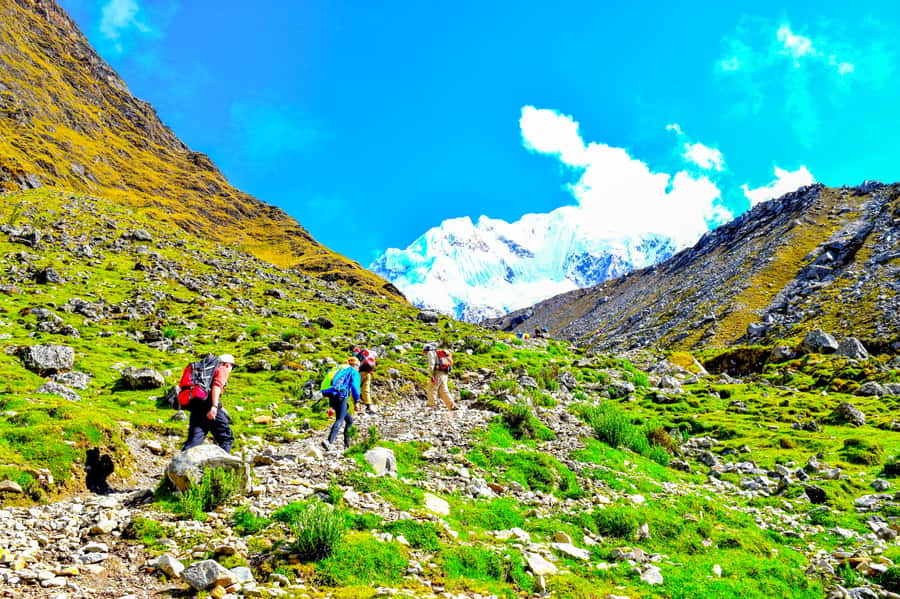
The big draw here is the route itself. You cross the Salkantay Pass at 4,630 meters, pause beside turquoise Humantay Lake, then walk from cold mountain country into cloud forest before reaching Machu Picchu. Few five-day routes pack in such a sharp change of scenery.
I like the practical support: horses carry equipment and up to 7 kilograms of your belongings, while a cook prepares four hot dinners and four lunches. I also like the overnight stop in Lucmabamba, where a family coffee farm adds a local touch beyond the usual mountain views.
The catch is simple: this is hard walking at serious altitude. The pass and Humantay Lake can be rough for anyone affected by altitude sickness, and Day 2 is especially demanding. You should arrive ready for steep climbs, long descents, cold nights, and basic camping.
Key points to know before booking
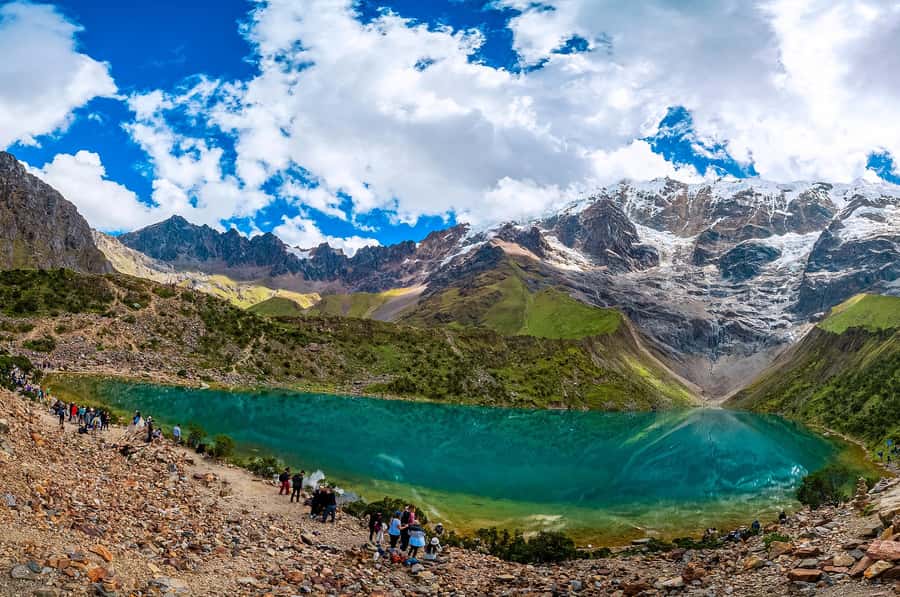
- Humantay Lake at 4,200 meters: A steep high-altitude hike leads to a turquoise glacial lagoon beneath the Humantay and Salkantay peaks.
- Salkantay Pass at 4,630 meters: This is the trek’s highest point and its toughest physical test.
- From peaks to coffee country: The route changes from snow-capped mountains to cloud forest, waterfalls, fruit trees, and Lucmabamba.
- Llactapata viewpoint: An original Inca trail leads to lesser-visited ruins with an unusual first view toward Machu Picchu.
- Small-group support: Groups are limited to 10, with a guide, cook, horses, camping gear, and an assistant guide for groups of nine or more.
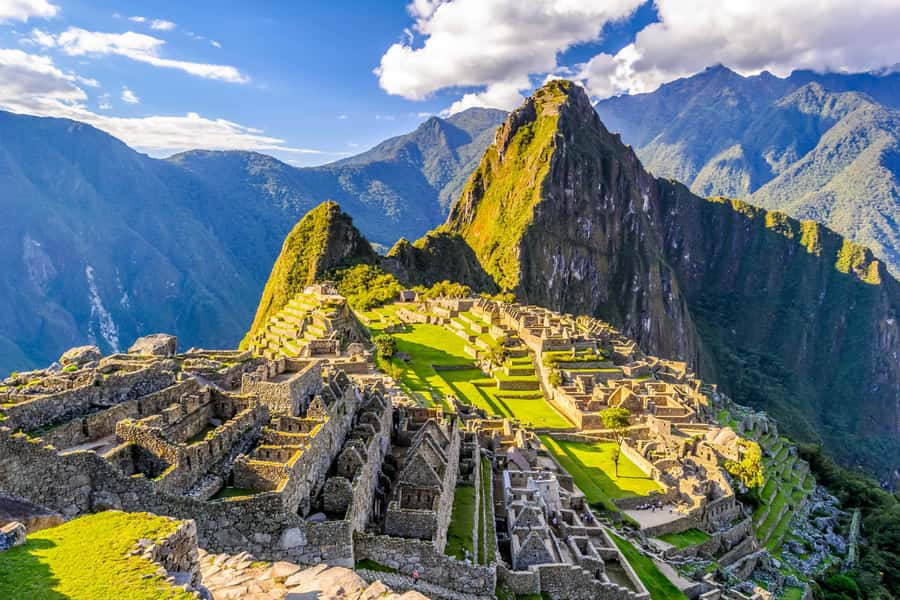
- Machu Picchu is included: Your entrance, guided citadel visit, and bus are part of the package, while extra mountain hikes cost more or require separate arrangements.
Why this five-day route is worth considering
At $669 per person, this is not just a hike followed by a Machu Picchu visit. The price covers transport from your Cusco hotel, guiding, meals from lunch on Day 1 through breakfast on Day 5, camps, a hotel in Aguas Calientes, horses, Machu Picchu admission, and the bus up to the ruins.
That bundle matters. You are not carrying every meal and tent yourself, and you do not need to arrange separate transport from the trailhead to the Sacred Valley. The support crew handles much of the camp work, allowing you to focus on walking.
Still, compare the cost with the physical demands. You are paying for a supported expedition, not a soft adventure. The route has high passes, steep ascents, long descents, and camping at changing elevations. I would choose it for the scenery and route variety, not because it is the easiest way to reach Machu Picchu.
A verified rating of 5 from three reviews, including one describing the trek as physically and mentally difficult but worthwhile, fits the nature of the route. The strongest praise centers on the scenery, guide, and support team. That is exactly where this trip needs to deliver.
Other walks into the mountains in Cusco:
- From Cusco: 7 Lakes Ausangate Trek with Breakfast and Lunch
★ 4.8 · 360 reviews - Cusco: Rainbow Mountain Tour and Red Valley Hike (Optional)
★ 4.7 · 149 reviews - Cusco: Full-Day Rainbow Mountain & Red Valley Trekking Tour
★ 4.5 · 121 reviews
Day 1: Soraypampa and the climb to Humantay Lake
The first day takes you toward Soraypampa at about 3,800 meters. Above you are Salkantay Mountain, at 6,271 meters, and Humantay Mountain. The high peaks give the opening hike a grand scale, but the altitude makes every uphill section count.
You will have lunch made with local ingredients around midday, then continue toward Humantay Lake at 4,200 meters. The lake’s turquoise water reflects the surrounding peaks, making it one of the day’s clear highlights.
The lake is also the first serious test. You are climbing soon after arriving in high country, and the air is thin. Take a measured pace and do not treat the lake as a quick warm-up. After returning to camp, you will have dinner and a night under the stars.
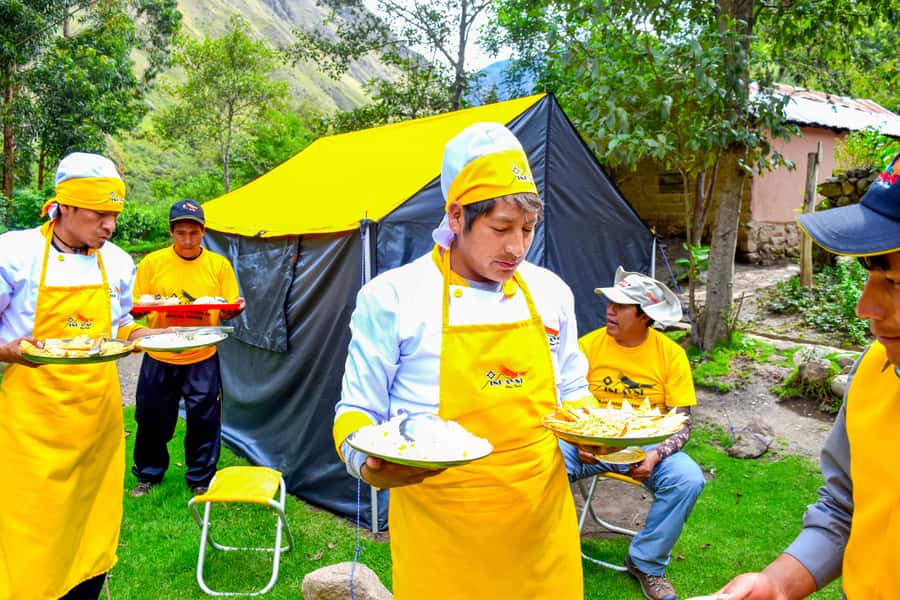
A warm meal and wake-up tea each morning are small comforts that matter here. Staff bring tea to your tent, and meals are served in a dining tent with tables and chairs. That setup gives the trip more structure than independent camping, though you should still expect basic conditions rather than hotel comfort.
Breakfast on Day 1 is not included, so plan for that before departure. Water is also not provided for the first four hours of the trek. This is one of the easiest details to overlook, so carry what you need at the start.
Day 2: Crossing the 4,630-meter Salkantay Pass
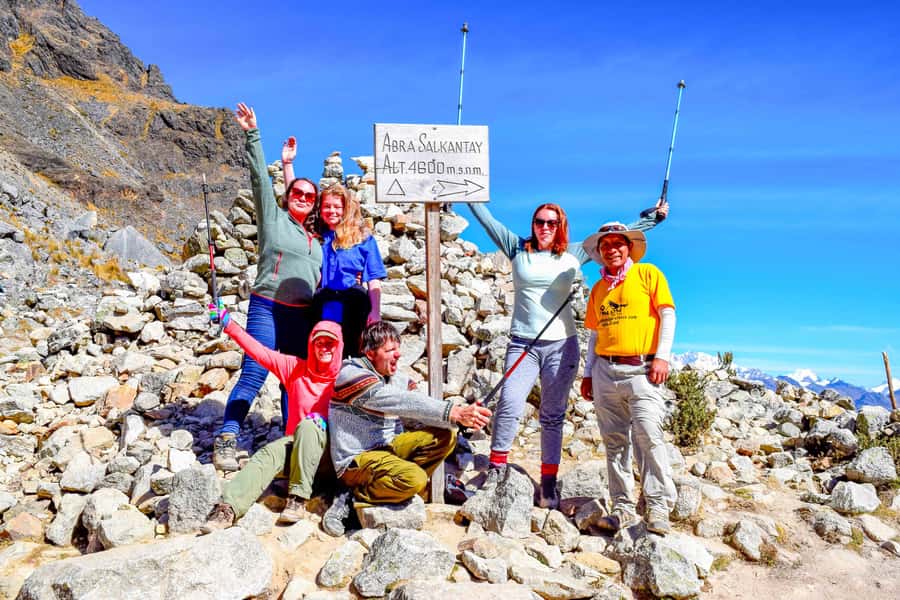
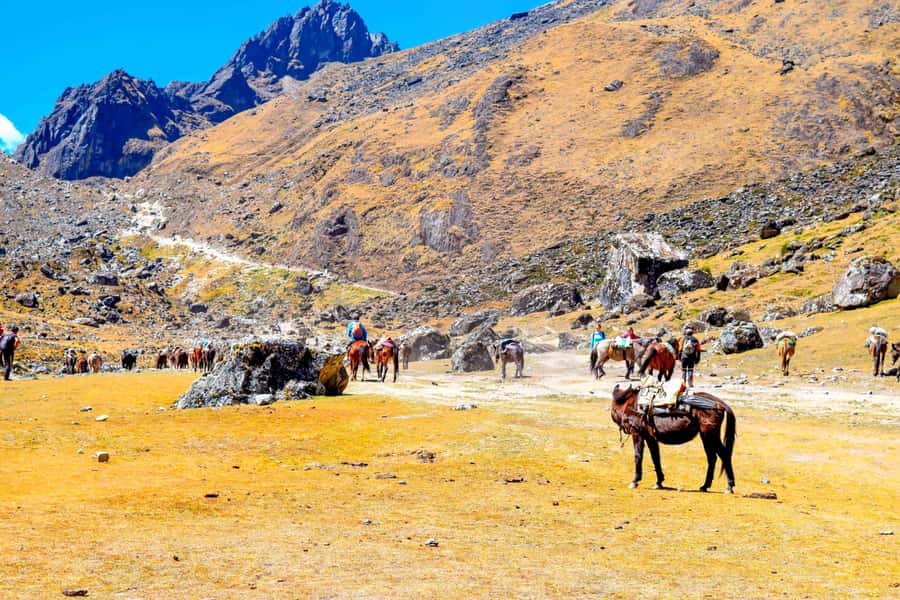
Day 2 is the heart of the trek. After an early breakfast, you climb to Salkantay Pass, the highest point of the route at 4,630 meters. You will be surrounded by snow-capped peaks, sharp ridges, and broad mountain views.
This is the day that separates a scenic walk from a serious trek. The thin air can slow you down, and the climb may feel much harder than the distance suggests. The reward is not a single attraction but the sense of crossing a major Andean divide under your own power.
After the pass, the route drops into high-altitude jungle. That change is one of the most interesting parts of the trip. The cold, open mountain setting gives way to more plant life and natural sounds as you descend.
The descent is welcome after the pass, but it is not effortless. Long downhill sections can be hard on knees and backs. People with back problems are specifically advised against this experience, and that warning is worth taking seriously.
The included horses carry the equipment and up to 7 kilograms of personal items. You still need a daypack with the things you need while walking, but you do not have to carry your full camping load. A double-thickness foam mattress is included, while a sleeping bag and trekking poles can be rented separately.
Day 3: Waterfalls, cloud forest, and Lucmabamba
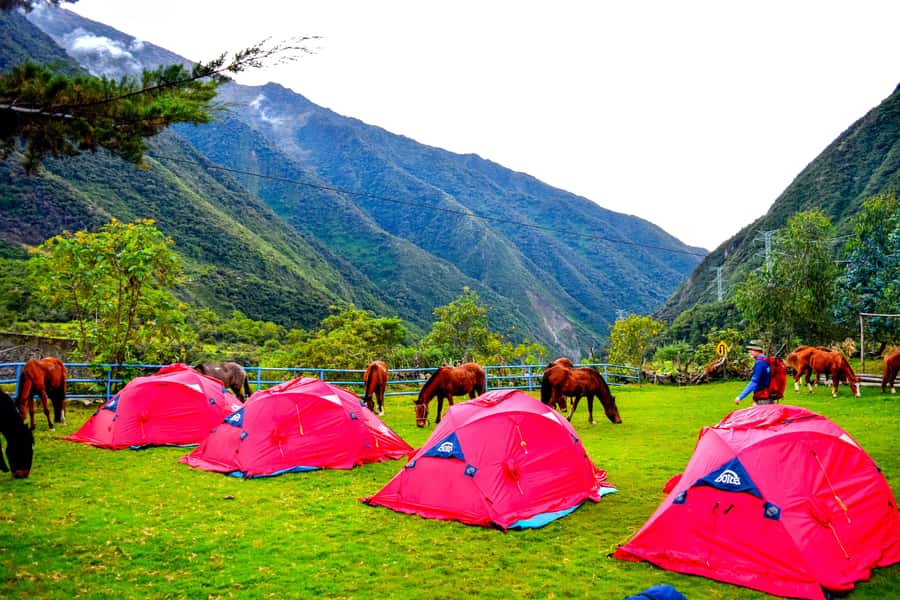
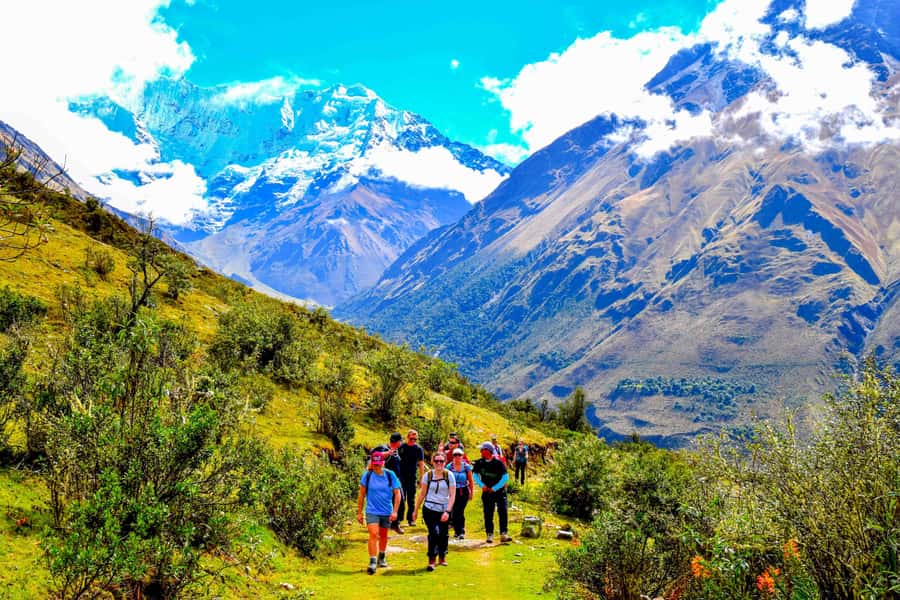
Day 3 follows the route farther downhill through cloud forest. The trail passes waterfalls, fruit-laden trees, and unusual plants and animals. After about five hours, you reach Playa Sahuayaco at roughly 2,200 meters.
The drop in elevation changes more than the temperature. After two days dominated by exposed peaks and cold air, you are now in a greener, wetter setting known here as the eyebrow of the Amazon. I like this transition because it keeps the trek from becoming a repeat of the same mountain view.
The day ends at Lucmabamba, about 2,000 meters above sea level. This is your final campsite and the starting point for the old Inca route to Llactapata. You will also stay with a local family and learn about their coffee farm, which gives you a direct connection to life in the area.
That coffee-farm visit is an important part of the trip’s character. Machu Picchu can easily turn a trek into a long approach walk to one famous ruin. Lucmabamba adds a human and agricultural side to the journey.
You should also understand the accommodation clearly. Four-person tents are supplied for every two trekkers, along with the dining tent and mattress. The tour includes four nights of accommodation in total, with camping on the trail and a hotel in Aguas Calientes. This is comfortable by trekking standards, but it is still camping for most of the route.
Other ways up to Machu Picchu from Cusco:
- From Cusco: Full-Day Group Tour of Machu Picchu
★ 4.7 · 1,767 reviews - Machu Picchu Day Trip from Cusco
★ 4.5 · 1,644 reviews - Machu Picchu: Full-Day Tour from Cusco with Optional Lunch
★ 4.6 · 927 reviews - Cusco: 4-Day Inca Trail to Machu Picchu with Accommodation
★ 4.8 · 432 reviews
Day 4: Llactapata and the first view of Machu Picchu
After breakfast, you climb for about two hours along an original Inca trail to Llactapata, at approximately 2,840 meters. This uphill section comes after several demanding days, so do not underestimate it.
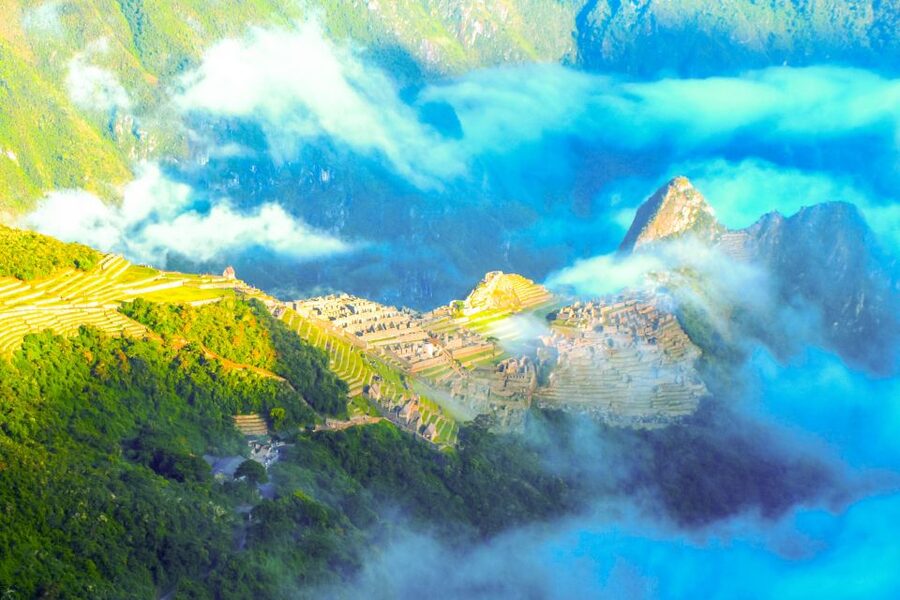
Llactapata is less visited than Machu Picchu, but its position is the reason it matters. From the terraces, you get a first view toward Machu Picchu from an angle many people never see. The sight works best as a preview rather than a replacement for the citadel itself.
You then descend through cloud forest for about 1.5 hours to the Hydroelectric Station, at 1,890 meters. From there, transport takes you to Aguas Calientes, also called Machu Picchu town, at 2,040 meters.
The move from trail camp to hotel is well timed. You get a proper evening before the early visit to Machu Picchu, rather than sleeping in a tent on the final night. Use that evening to organize your passport, daypack, and clothing for the next morning.
The final walking section to the ruins is not part of this route. Instead, the package includes the morning bus from Aguas Calientes to Machu Picchu. That saves your legs for the guided visit and any extra mountain hike you have arranged.
Day 5: A guided visit to Machu Picchu
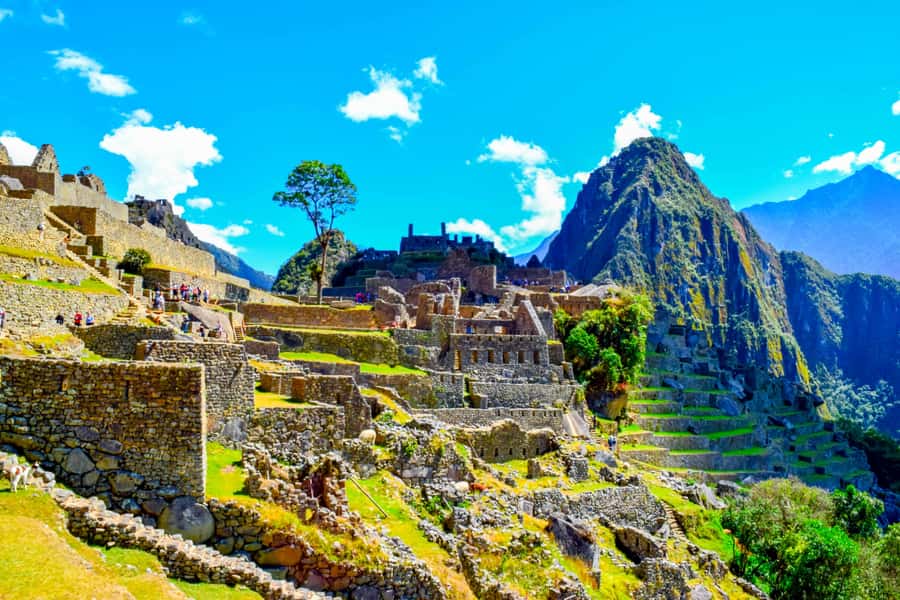
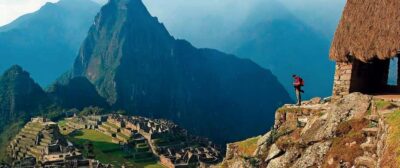
The final morning begins with breakfast and the bus to Machu Picchu at 2,430 meters. Your guide leads you through the citadel, including temples, ceremonial areas, terraces, and storage buildings.
A guide adds real value here. After four days of walking through remote terrain, you want context for what you are seeing, not just time to take photographs. The tour is designed to explain the main structures and the role they played within the site.
You may also hike Huayna Picchu or Machu Picchu Mountain for a higher view. Huayna Picchu requires an additional fee of $85. The supplied details do not give a separate fee for Machu Picchu Mountain, so confirm the current arrangements before counting on either climb.
These mountain hikes are optional, but they are not casual add-ons. After the Salkantay route, you may prefer to spend your remaining energy exploring the citadel at a steady pace. If you want one of the higher walks, check availability and make sure your booking includes the correct entrance.
After the guided visit, the group returns to Aguas Calientes for a short rest and lunch. Lunch and dinner on Day 5 are not included. In the afternoon, you take a train to Ollantaytambo and continue by van to Cusco.
That final transfer makes for a long day. You will have an early start, a major archaeological visit, a train, and a road journey. It is efficient, but it is not a relaxed final afternoon. Plan your expectations accordingly.
The support that makes the trek manageable
The tour includes an English or Spanish-speaking professional guide, a professional cook, and an assistant guide for groups of nine or more. The maximum group size is 10, which is small enough to keep the walking pace and group communication manageable.
A private group is listed, while the group size can still reach 10 people. Confirm how your booking is being handled if you are reserving as an individual or small party. The minimum operating group is two participants.
The horses carry equipment and up to 7 kilograms of your personal belongings. Before departure, you meet the guide and group for a briefing at the operator’s office and receive a duffle bag for the horse transport.
Meals include four breakfasts, four lunches, four afternoon snacks, and four dinners. Vegetarian, vegan, and gluten-free requests can be made, along with allergy information, but you should provide those details when booking and repeat them at the briefing.
The tour also carries an oxygen bottle and first-aid kit. That is useful support in high country, but it does not remove the need to take altitude symptoms seriously. The experience is not suitable for people with altitude sickness, back problems, or people over 70.
What to pack for changing conditions
You need a valid passport or identity card during the tour, especially for the Machu Picchu visit. Pack a sun hat, sunscreen, rain gear, and comfortable clothes.
The weather can change sharply between the pass, cloud forest, and lower-elevation trail. Use layers rather than relying on one heavy item. A sleeping bag is not included, but you can hire one. Trekking poles can also be rented and may help on the steep climbs and long descents.
Do not bring pets, weapons or sharp objects, alcohol, or drugs. Travel insurance is strongly recommended for the full trip, particularly because this is a demanding high-altitude trek.
Who should book this Salkantay trek?
I would recommend it to a fit hiker who wants more than a direct visit to Machu Picchu. You should enjoy long days on foot, accept basic camping, and be comfortable with a route that reaches 4,630 meters.
It suits you especially well if you want several kinds of scenery in one trip: glacial water, high peaks, cloud forest, coffee country, Inca ruins, and the Machu Picchu citadel. The combination feels more complete than a short trail followed by a single day at the ruins.
I would not choose it if your main goal is comfort, if you have a history of altitude sickness, or if you want a gentle introduction to Peru. The route is physically and mentally demanding, as the description from a past participant makes clear, even though the scenery and support can make the effort worthwhile.
You can cancel up to 24 hours before departure for a full refund, and the reserve-now, pay-later option gives you some flexibility. Starting times should be checked for your chosen date, and pickup is available from hotels around central Cusco.
Should you book the Salkantay Ultimate Trek?
Book this $669 trip if you want the full approach to Machu Picchu, not just the ruins. The strongest reasons are the high pass, Humantay Lake, the shift into cloud forest, the Lucmabamba coffee-farm stay, and the unusual Llactapata viewpoint.
Skip it if you want a low-effort route or dislike camping. The guide, cook, horses, meals, mattress, hotel, transport, and Machu Picchu entrance give the price solid value, but they do not make the altitude disappear.
For a fit hiker who accepts the work, this is a well-supported five-day route with scenery that keeps changing and enough local contact to make the journey feel like more than a transfer to Machu Picchu.
FAQ
How long is the Salkantay trek to Machu Picchu?
The experience lasts five days, including the hike, camping, a hotel night in Aguas Calientes, the Machu Picchu visit, train, and return transport to Cusco.
What is the highest point of the trek?
The highest point is Salkantay Pass at 4,630 meters, or about 15,190 feet.
Is Humantay Lake included?
Yes. The itinerary includes a hike to Humantay Lake at about 4,200 meters.
Is Machu Picchu entrance included?
Yes. Entrance to Machu Picchu and the bus to the site are included.
Are meals included?
The tour includes four breakfasts, four lunches, four afternoon snacks, and four dinners. Breakfast on Day 1, plus lunch and dinner on Day 5, are not included.
Is accommodation provided?
Yes. Accommodation includes camping during the trek and a hotel in Aguas Calientes. A double-thickness foam mattress and tents are included.
Can horses carry my belongings?
Yes. Horses carry equipment and up to 7 kilograms of your personal items in the provided duffle bag.
Are sleeping bags and trekking poles included?
No. Sleeping bags and trekking poles are not included, but both can be hired.
Is the tour suitable for someone with altitude sickness?
No. The experience is not suitable for people with altitude sickness. It is also not suitable for people with back problems or people over 70.
What languages are available?
The tour is offered with a live guide in English or Spanish.
More Machu Picchu tours in Cusco
- From Cusco: 2-Day Trip to the Sacred Valley and Machu Picchu
★ 4.6 · 265 reviews - The First Class Machu Picchu Train by Inca Rail
★ 4.0 · 182 reviews - From Cusco: 1-day Machu Picchu Tour by Train
★ 4.6 · 138 reviews - Private Tour to Sacred Valley and Machu Picchu from Cusco
★ 5.0 · 133 reviews
More treks in Cusco
- Cusco: Machu Picchu 2-Day Inca Trail with Panoramic Train
★ 4.9 · 260 reviews - From Cusco: 2-Day Inca Trail to Machu Picchu
★ 4.2 · 244 reviews - Machu Picchu: Inca Trail 2-Day Overnight Guided Tour
★ 4.9 · 203 reviews - Short Inca trail to MachuPicchu || 2days – 1nigth ||
★ 5.0 · 103 reviews
Just added around Cusco
- 7 Colors Mountain Tour + Red Valley★ 4.0 · 3 reviews
- Amazonas Manu Cultural Zone 4 Days / 3 Nights★ 4.2 · 8 reviews
- 5-Day Salkantay Trek to Machupicchu Sky Lodge Dome★ 4.0 · 6 reviews
- Arrive before the crowd to the Mountain in private service★ 3.4 · 6 reviews
- From Cusco: 4-Day Inca Jungle Adventure to Machu Picchu★ 4.8 · 45 reviews
- From Cusco: 2-Day Sacred Valley and Machupicchu by Train★ 5.0 · 8 reviews
- 1 day excursion to the Humantay Lake from Cusco.★ 5.0 · 3 reviews
- 1 day excursion to Waqrapukara★ 4.5 · 23 reviews
Machu Picchu Tours, compared.
4-Day Inca Trail to Machu Picchu with Accommodation
Read our review →
2-Day Trip to the Sacred Valley and Machu Picchu
Read our review →
Machu Picchu 2-Day Inca Trail with Panoramic Train
Read our review →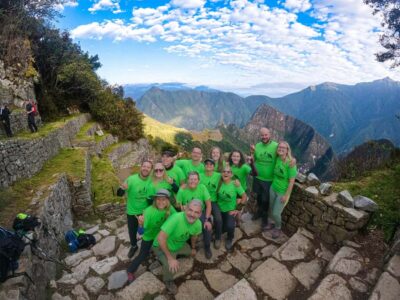
The First Class Machu Picchu Train by Inca Rail
Read our review →Browse the lists this tour appears in