
Reviewed · AMAZON JUNGLE TOURS
Amazon Rescue Center – Manatees Conservation Center Admission Ticket
The most moving part of CREA is seeing conservation at close range: young manatees receiving care before they can return to the river. This is not a zoo built to display animals. It is a working rescue center for wildlife taken from illegal captivity or found injured.
I like the clear rehabilitation story, from rescue and quarantine to release. I also like the small price and short visit, which make CREA easy to add to a day in Iquitos. The main drawback is simple: the center is modest, and some visitors may find the one-hour walk too brief or expect more animals and larger facilities.
Key points to know before you go
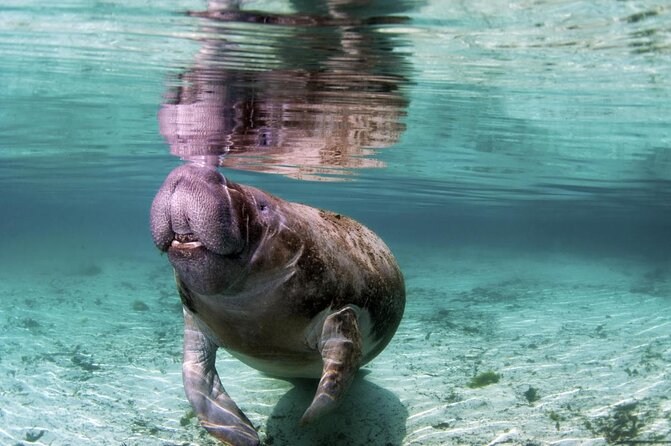
- See manatees at the heart of their recovery: Learn why young rescues need careful feeding and long-term preparation before release.
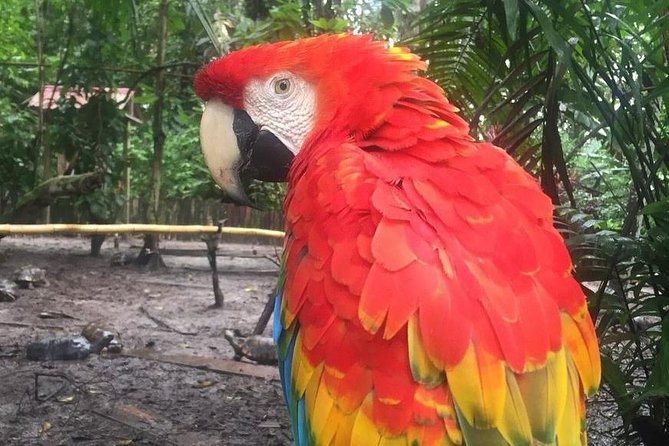
- Meet more than manatees: The center also cares for monkeys, birds, turtles, tortoises, anteaters, sloths, and other Amazonian animals.
- Expect a working facility, not a polished zoo: Small quarantine tanks and basic paths reflect the center’s rescue purpose.
- Plan your own transport: CREA is at kilometer 13.8 on the Iquitos-Nauta road, outside downtown Iquitos.
- A guide makes a big difference: English tours are available, and guide Jessica has been praised for her warm, clear explanations.
- Bring repellent and water: You’ll be outdoors in hot Amazon weather, with some walking on forest paths.
Why CREA matters in the Amazon
CREA, the Centro de Rescate Amazónico, works with The Dallas World Aquarium Zoo and the Research Institute of the Peruvian Amazon. Its job is to care for animals rescued from illegal captivity and prepare them for life in the wild.
That mission changes how you should look at the place. A rescue center hopes to have fewer animals over time, not more. An empty enclosure can be good news if an animal has recovered and returned to a protected part of the Amazon.
The center has released manatees, pink dolphins, anteaters, sloths, turtles, and other animals. The supplied information gives two different release totals for manatees, 23 in the main tour description and 33 in a later center response, so I would treat the exact number as changing over time. The important point is that releases are a central part of the work.
You will not be invited to pet the animals. That is a positive sign. Close contact can make rescued wildlife dependent on people, which works against the goal of release. The staff protect the animals from unnecessary handling while monitoring their health and behavior.
Other trips into the rainforest from Iquitos:
- 3-Day All Inclusive Guided Jungle Tour from Iquitos at Maniti Eco-Lodge
★ 4.5 · 74 reviews - 2-Day All Inclusive Guided Jungle Tour from Iquitos at Maniti Eco-Lodge
★ 4.5 · 62 reviews - 3-Day Iquitos Amazon Jungle Adventure at Heliconia Lodge
★ 4.5 · 54 reviews
Reaching the center from Iquitos
CREA is located on the Iquitos-Nauta road at kilometer 13.8 in San Juan. The center is about 30 minutes from downtown by tuk tuk according to the tour information, while the bus journey is listed at about one hour. One detailed account describes roughly an hour each way by motocar, so your actual trip can vary with traffic, the vehicle, and where you begin.
Transportation is not included. You need to arrange your own tuk tuk, motocar, bus, or taxi, and the tour ends where it begins. One visitor paid about 100 soles for a round-trip taxi and spent around three hours away from Iquitos, including transport and the visit. That fare was considered high by the visitor, so agree on the price before setting off.
For a simple visit, a private motocar or taxi may be easiest. If you are already taking an Amazon excursion along the Iquitos-Nauta road, ask if CREA can fit into the route. One person visited after an Amazon River cruise, which made the center a useful stop on the way back to town.
The road trip gives you a reason to leave central Iquitos and see more of the countryside. Still, do not think of the advertised one-hour tour as a one-hour total outing. Add transport time, waiting, and the heat of the day.
What the one-hour walk includes
The visit begins at the Amazon Rescue Center, where a professional guide explains the project and the animals in care. The path leads through several areas rather than presenting one large exhibit hall.
Your guide explains how the animals arrive, what care they need, and how staff decide if they can return to the wild. The details matter. A manatee may need round-the-clock feeding when first rescued, then move through larger enclosures as it gains strength and independence.
The exact animals you see can change. Rescue centers do not keep a fixed collection for display. One visit may focus on young manatees, while another may include more turtles, monkeys, birds, or sloths.
The route includes areas for:
- Manatees
- Monkeys
- Birds
- Reptiles, including yellow-spotted river turtles and tortoises
- Other rescued Amazonian animals when present
You also visit the Flooded Forest interpretation center. It uses life-size fiberglass statues of major aquatic species from the Amazon. This section helps explain the river environment and gives you a visual introduction to animals you may not see in the live enclosures.
The path through the forest adds a little context about Amazonian plants and habitat. I would not make the plant portion the main reason to book. The strongest part of the visit is the rescue work and the explanation of how animals return to nature.
The manatees are the main event
Amazonian manatees are the reason most people come to CREA, and they deserve the attention. These gentle river mammals face pressure from illegal capture, hunting, habitat loss, and the trade in young animals. A rescue center can give a calf time to grow and learn the habits it needs before release.
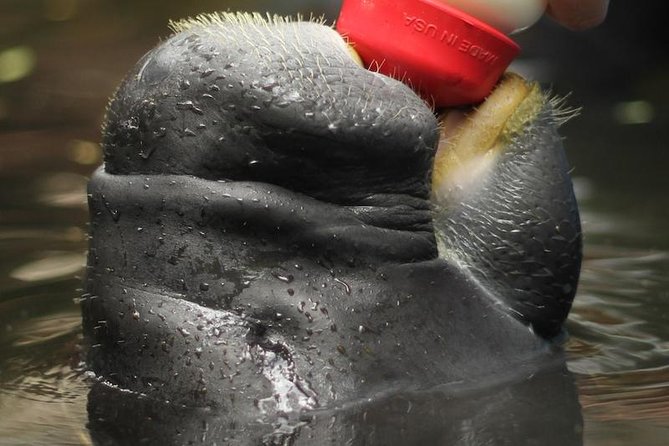
You may see a young manatee being bottle-fed. That can be a memorable sight, but it is important to understand what you are seeing. A bottle-fed calf is not there for entertainment. It is receiving necessary care because it was separated from its mother or rescued from poor conditions.
The work can take years. The center’s process includes feeding, medical attention, gradual growth, and preparation for a protected release site. That slow pace is part of the lesson. Wildlife rescue is not a quick cycle of taking in an animal and putting it back outside.
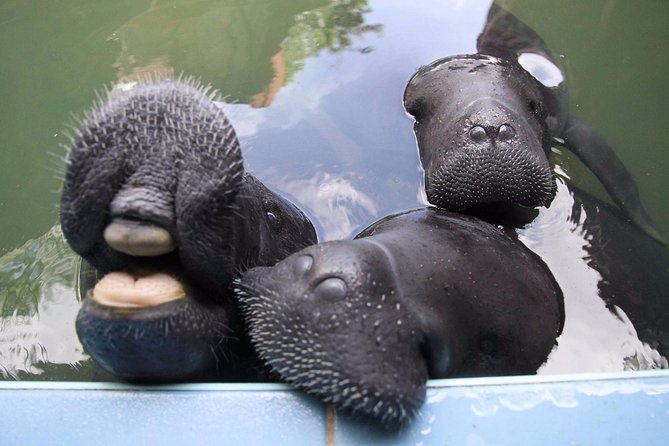
Some visitors have found the manatees’ quarantine tanks small, even describing them as similar in size to large household tubs. That criticism is fair as a first impression, especially if you expect a spacious aquarium. The explanation is also important: newly rescued manatees may be kept in smaller quarantine tanks while they receive intensive care. As they recover, they move to larger areas.
This is why I would listen closely to the guide instead of judging the project by one enclosure. The modest setting makes more sense when you understand the stages of recovery.
Other tickets worth booking ahead around Iquitos:
- Monkey Island,Amazon River & Native Aquatic Species – All tickets
★ 5.0 · 44 reviews - Machu Picchu Entrance Ticket
★ 4.5 · 108 reviews - Machu Picchu: Tour Guide Service & Entrance Ticket Circuit-2
★ 4.6 · 90 reviews - Machu Picchu Private Tour from Aguas Calientes (Tickets included)
★ 5.0 · 84 reviews
Other animals and the limits of a rescue center
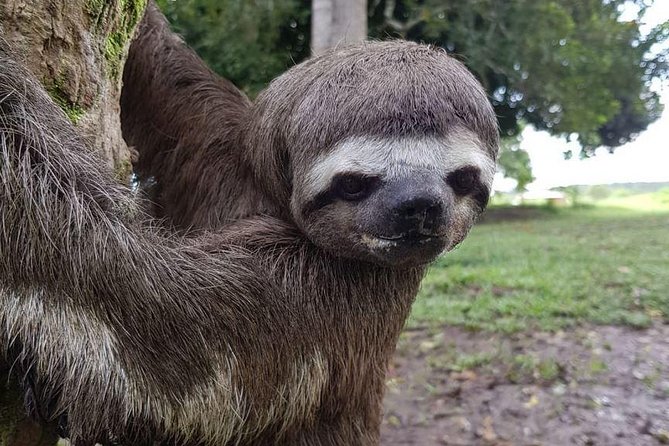
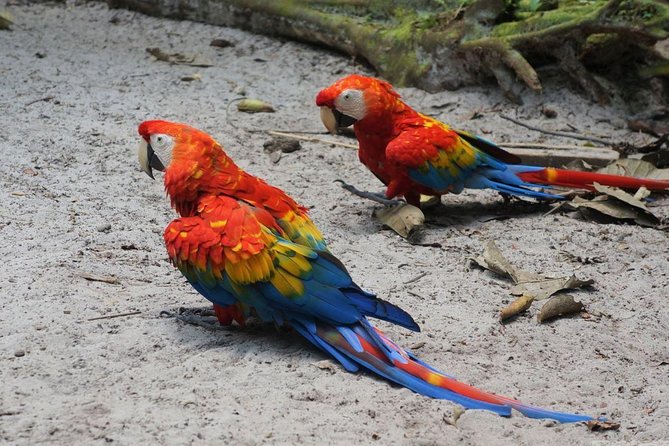
CREA also works with monkeys, birds, turtles, tortoises, anteaters, sloths, and other Amazonian wildlife. The variety helps you see that the center is not only a manatee project. It responds to the needs of different species, each with its own care plan.
A sloth encounter can be a highlight, especially for children, although you should not expect the staff to make every animal active for a photo. One guide has been known to gently wake a sloth for a closer look, but the purpose remains education, not performance.
The reptile area can be especially useful for understanding the quiet, less glamorous work of rescue. Turtles and tortoises are often treated as pets or traded illegally, yet returning them to suitable habitat takes careful planning. Your guide can explain how these animals fit into the wider release effort.
The facility is not fancy. Some areas are basic, and the number of animals on view may feel limited. That is not a reason to skip it if you want to understand conservation. It is a reason to set the right expectations.
If you want a large collection, dramatic exhibits, or guaranteed sightings of many species, CREA may disappoint you. If you want to see how a local organization handles rescued animals, the same simplicity becomes part of the experience.
The value of a good guide
The tour lasts about an hour, so the guide shapes much of its value. Without explanations, you may see a few enclosures, turtles, plants, and a path through the forest. With a good guide, you learn why each animal is there and what must happen before release.
English-language guiding is available. Jessica has led a private English tour and was praised for explaining the manatees, birds, fish, and rescue process in a friendly way. Other guides have also translated the full visit into English. If English is important to you, confirm the language when booking or ask about the next English group after you arrive.
The activity is private, meaning only your group participates. That gives you a better chance to ask questions and set the pace than you might have in a crowded public group. It also makes the $8.08 admission price attractive for anyone who values a focused visit.
The guide can help you understand the difference between rescue, rehabilitation, and permanent care. Some animals can return to the wild. Others may not be able to survive independently and remain under care or move to a nearby preserve. That distinction is one of the most useful things you will learn.
Is the $8.08 price good value?
At $8.08 per person, the admission is inexpensive by international sightseeing standards. The fee includes entrance and a professional guide, but not transport, lunch, or drinks. Your final cost depends mainly on how you get there.
I see the price as a contribution to a working conservation project as much as a ticket. You receive a short guided visit, but the money also supports the center’s daily effort to feed, house, and prepare animals for release.
The value is strongest if you combine CREA with another stop on the Iquitos-Nauta road. If you pay for a separate private taxi only for a one-hour visit, transport may cost much more than admission. A prearranged vehicle can make the outing easier and give you flexibility.
You can also book ahead for easier entry. The experience is commonly reserved about 12 days before the visit, so advance planning is sensible during busy travel periods. Free cancellation is available if you cancel at least 24 hours before the start time.
Practical advice for a comfortable visit
Wear outdoor clothing and comfortable shoes. The visit uses a forest path, and you will spend time outside in hot, humid conditions.
Bring water. Food and drinks are not included, and the heat can make the short walk feel more tiring than expected. Apply mosquito repellent before leaving Iquitos, even if conditions seem dry. One visit may be nearly bug-free, while another can bring more mosquitoes.
Plan for about one hour inside the center, but allow closer to three hours if you include a round trip from Iquitos, waiting, and traffic. The center is open to most people, but the paths may be difficult for wheelchair users. Access is not impossible, though a strong helper may be needed.
This is a good outing for families because the guide can explain the animals in a way children understand. It also suits visitors with limited time who want an educational stop rather than a full-day jungle excursion.
Who should book CREA?
You should book if you want to learn about endangered Amazonian animals, support local rehabilitation, and see a different side of Iquitos. It is especially worthwhile if manatees interest you, or if you are traveling with children.
You should also book if you value conservation more than polished presentation. The center’s strongest feature is its purpose, not its architecture or size.
Think twice if you expect a major aquarium, many animals, hands-on contact, or a long tour. You may see only a handful of animals, and some may be resting or in small quarantine enclosures. The experience depends on understanding what a rescue center is trying to achieve.
Should you book the Amazon Rescue Center?
I would book it if you can arrange sensible transport and accept the modest setting. The admission is low, the visit is manageable, and the manatee rehabilitation work gives you a real lesson in the challenges facing Amazon wildlife.
Make it part of a larger day if possible, especially if you are already heading along the Iquitos-Nauta road. Go with water, repellent, outdoor clothes, and realistic expectations. You are not going to a show. You are visiting a place where the best result is for an animal to disappear from view and return to the forest.
FAQ
Where is the Amazon Rescue Center located?
The center is at Carr. Iquitos-Nauta km 13.8, San Juan 16024, Peru, outside downtown Iquitos.
How long does the visit last?
The guided visit lasts approximately one hour. The full outing takes longer once you add transport from Iquitos.
How far is CREA from downtown Iquitos?
The center is listed as about 30 minutes from downtown by tuk tuk or about one hour by bus. Actual travel time can vary.
Is transportation included?
No. Transportation to and from the center is not included, and you must arrange your own tuk tuk, motocar, bus, or taxi.
What animals can I see?
The center works with manatees, monkeys, birds, yellow-spotted river turtles, tortoises, anteaters, sloths, and other Amazonian animals. The animals present can change as rescues recover and are released.
Is the tour available in English?
English-language guiding is available. Jessica has led private English tours, and English translation has also been provided by other guides.
Is this a private activity?
Yes. Only your group participates in the activity.
What should I wear and bring?
Wear outdoor clothes and bring mosquito repellent and water. Food and drinks are not included.
Can I cancel for a full refund?
Yes, if you cancel at least 24 hours before the experience start time. Cancellations made less than 24 hours before the start time are not refunded.
Just added around Iquitos
- Monkey Island,Amazon River & Native Aquatic Species – All tickets★ 5.0 · 44 reviews
- Tarapoto: Full-Day to Laguna Azul (Blue Lake) – El Sauce★ 3.8 · 3 reviews
- Iquitos to the Amazon: 2-Day Jungle & Wildlife Experience★ 3.2 · 8 reviews
- Iquitos: Native Community Experience & Amazon River Tour★ 4.6 · 15 reviews
- Iquitos : Full Day Excursion to Monkey Island★ 4.4 · 3 reviews
- Iquitos: Amazon River Tribes Full-Day Tour with Lunch★ 3.5 · 3 reviews
- Iquitos: Full Day Tour in the Jungle | Amazon Safari★ 4.0 · 14 reviews
- Iquitos: Amazon Jungle in 3 Days: Adventure and Culture★ 4.8 · 4 reviews
Amazon Jungle Tours, compared.
Tambopata Peruvian Amazon Jungle for Three Days/Two Nights
Read our review →

3-Day All Inclusive Guided Jungle Tour from Iquitos at Maniti Eco-Lodge
Read our review →
4 Day Tambopata Amazon Wildlife & Canopy Experience
Read our review →
Browse the lists this tour appears in