
Reviewed · MACHU PICCHU TOURS
Machu Picchu: 5-Day Salkantay Trek with Panoramic Train
The finest part of this five-day Salkantay route is the changing scenery. You begin beside snow and turquoise water, cross a high mountain pass, drop through cloud forest and coffee country, then reach Machu Picchu by foot. It feels like a journey, not simply a hard walk followed by a famous ruin.
I like the thoughtful camps, especially the glamping night beneath Salkantay Mountain and the campsite at Llactapata, where Machu Picchu first appears across the valley. I also like the human touches: hot drinks, excellent cooking, a Pachamanca meal, and guides such as Cesar, Roger, José, Gilbert, and Elias who have earned strong praise for care and encouragement. The main caution is altitude and effort. The first two days reach 4,630 meters, and this is not a gentle sightseeing trip.
Key points before you book
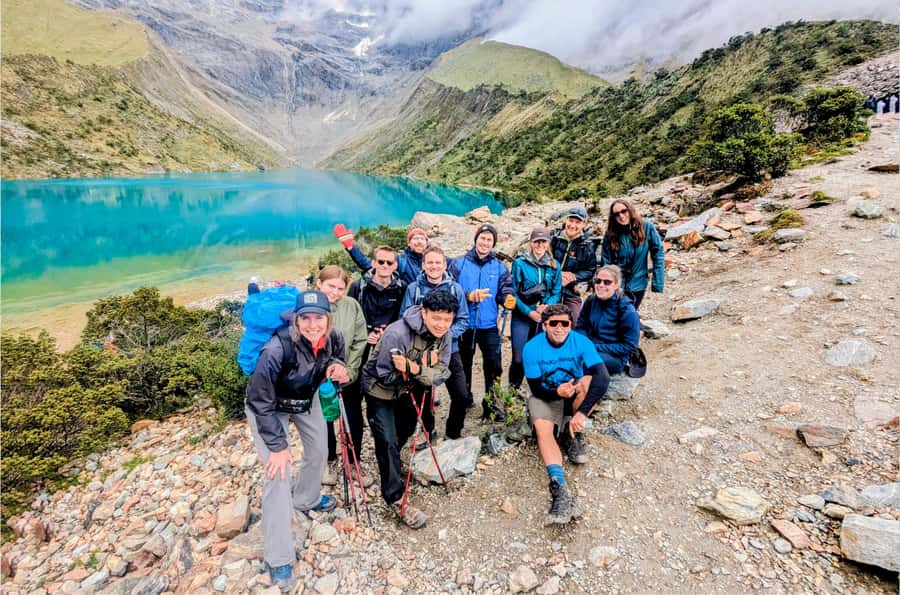
- Humantay Lake at 4,200 meters: A steep morning climb leads to one of the trek’s most striking views.
- Salkantay Pass at 4,630 meters: This is the highest and most demanding point of the route.
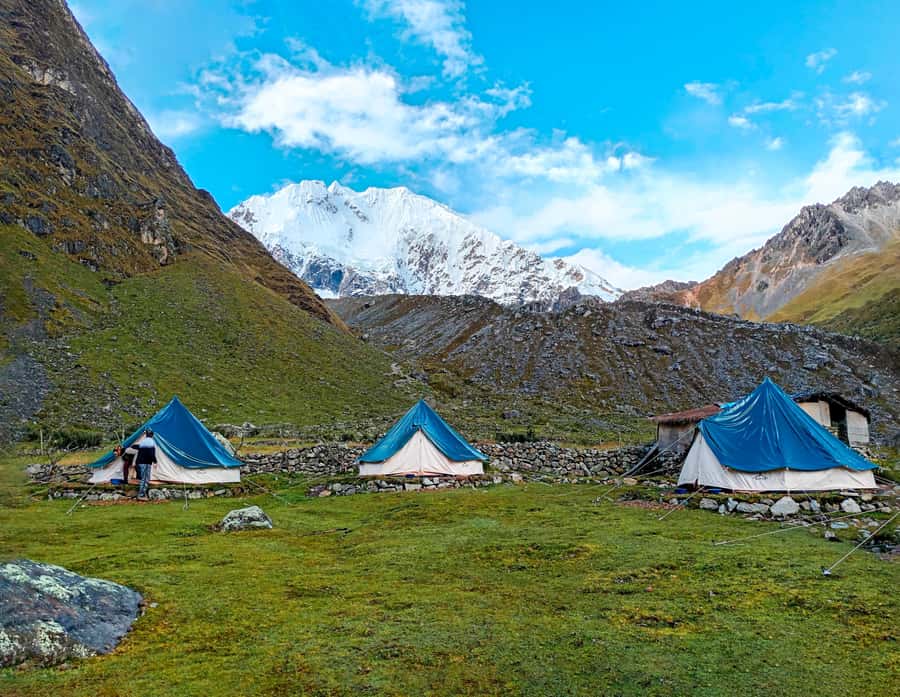
- Glamping under the peaks: Your first night combines proper beds and shelter with a remote mountain camp.
- Pachamanca and local coffee: Day three adds food, farming, and Peruvian tradition to the walking.
- Llactapata facing Machu Picchu: You camp with your first distant view of the citadel.
- Vistadome or 360° train: After Machu Picchu, you return toward Cusco in comfort rather than repeating the railway walk.
Why this Salkantay route feels different
At $655 per person, this is not the cheapest way to reach Machu Picchu. It is also far more than a basic transport package. The price covers five days, permits, a professional guide, meals, camps, a hotel night, buses, the panoramic train, a duffle bag service, and a support crew.
That matters because the trek crosses several climate zones. You are not carrying every item for five days, and the cooking team prepares meals at camp. The crew provides water, snacks, sleeping pads, pillows, rain ponchos, and hand towels. A satellite phone, first-aid kit, and oxygen tank are also carried for safety.
The group is limited to 16 people, small enough for the guides to keep an eye on different walking speeds. The route still asks for stamina. You should be comfortable with long days on uneven ground, steep climbs, and extended descents. One strong point of the guiding team is its flexibility. Guides have allowed slower walkers to take breaks or faster walkers to move ahead without turning the hike into a forced march.
The first-day pickup is around 4:30 a.m. from a hotel or Airbnb near Cusco’s historic center. That is early, but necessary. The drive to Mollepata takes about three hours, followed by breakfast and the meeting with your guides, cooks, and muleteers.
Other walks into the mountains in Cusco:
- From Cusco: 7 Lakes Ausangate Trek with Breakfast and Lunch
★ 4.8 · 360 reviews - Cusco: Rainbow Mountain Tour and Red Valley Hike (Optional)
★ 4.7 · 149 reviews - Cusco: Full-Day Rainbow Mountain & Red Valley Trekking Tour
★ 4.5 · 121 reviews
Day one: Humantay Lake and a night at 4,150 meters
The opening day gives you the most abrupt change in scenery. After breakfast in Mollepata, you reach the trailhead and begin a roughly three-hour climb to Humantay Lake at 4,200 meters.
The lake is famous for its turquoise color, but the altitude is the real story. Your breathing may feel short, and the climb can be hard even if you are fit. Take the pace set by the guide, drink often, and keep warm when you stop. Several people have found the first day challenging because their bodies had not yet adjusted to the height. If you already use altitude medication, speak with a medical professional before your trip rather than treating the issue casually.
After time at the lake, you descend to Soraypampa for lunch. This break is welcome because the morning climb is concentrated and exposed. The next section is a gentler two-hour ascent to the Salkantay glamp campsite at about 4,150 meters.
The camp is one of the experience’s best ideas. You sleep in a substantial tent with a bed rather than on a bare groundsheet, while still feeling surrounded by high mountain country. Salkantay Mountain rises nearby, and clear nights can reveal a remarkable spread of stars.
The cold can be serious at this altitude. Pack warm layers, gloves, a hat, and dry socks in your daypack. A sleeping bag is not included, though you can rent one. An inflatable mattress and trekking poles can also be rented if you prefer extra comfort or support.
Day two: Salkantay Pass and the drop into cloud forest
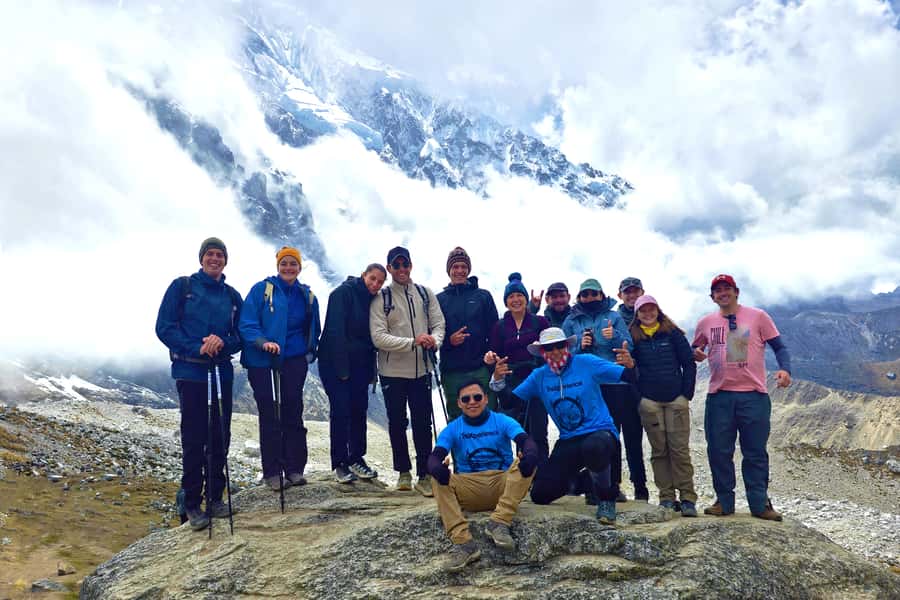
Day two is the trek’s physical centerpiece. You start with coffee or coca tea, then climb toward Salkantay Pass at 4,630 meters. This is the highest point of the entire route.
The pass gives you a wide view of the surrounding peaks and a nearby glacial lake. It is a proud moment, but do not rush to prove anything. The trail then turns into a long descent, first across high, open ground and later into warmer country.
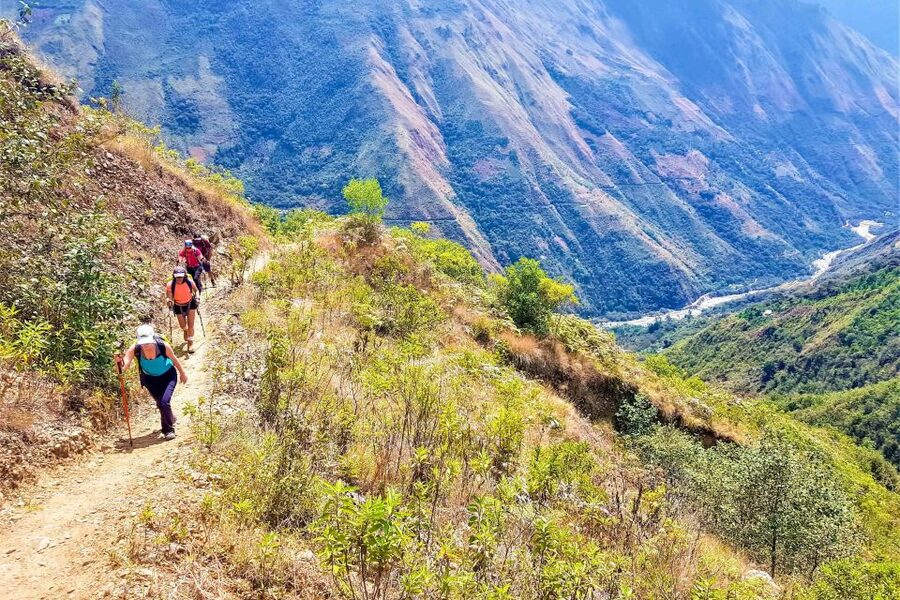
Lunch at Wayracmachay breaks up the descent. Afterward, the scenery changes steadily as the high Andes give way to cloud forest. The shift is striking: colder air and sparse mountain vegetation are replaced by thicker plant life, waterfalls, and damp forest slopes.
By evening, you reach Collpapampa at about 2,770 meters. The accommodation here is in comfortable Andean huts, a welcome contrast with the exposed cold of the first night. Your body may appreciate the lower altitude, though your legs will likely feel the day’s climb and descent.
The downhill walking deserves more respect than it gets. It can be hard on knees and hips, especially after the pass. Trekking poles are worth considering, and shoes with good grip are more useful than fashionable hiking boots. The route is not suitable for people with mobility impairments, serious back or heart problems, or those who are pregnant.
Day three: waterfalls, Pachamanca, coffee, and the Inca Trail
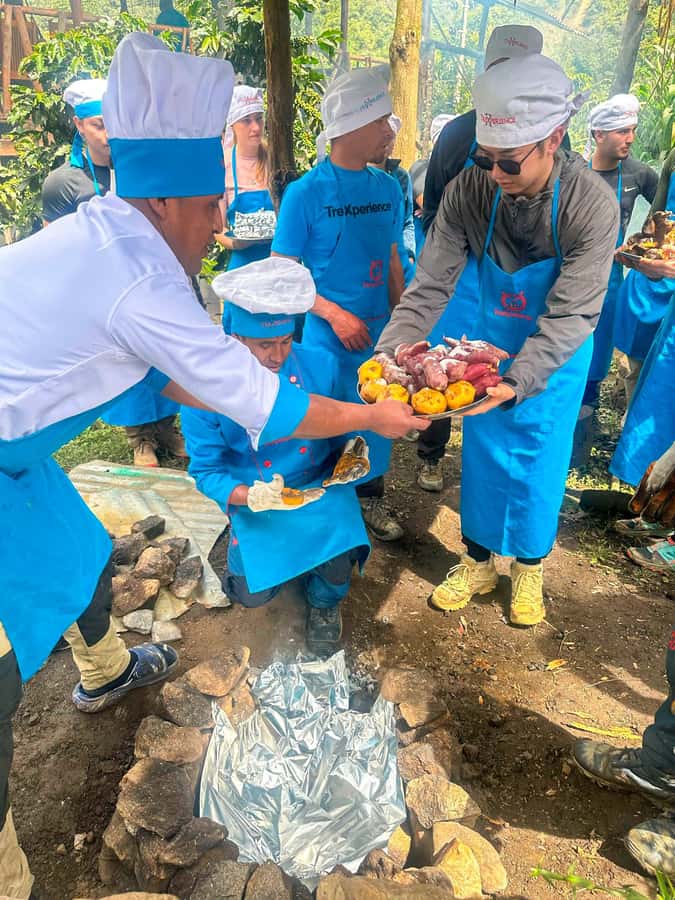
Day three is the most varied day culturally. After breakfast, the route crosses wooden bridges and passes waterfalls, plantations, and local communities on the way to Lucmabamba at about 2,000 meters.
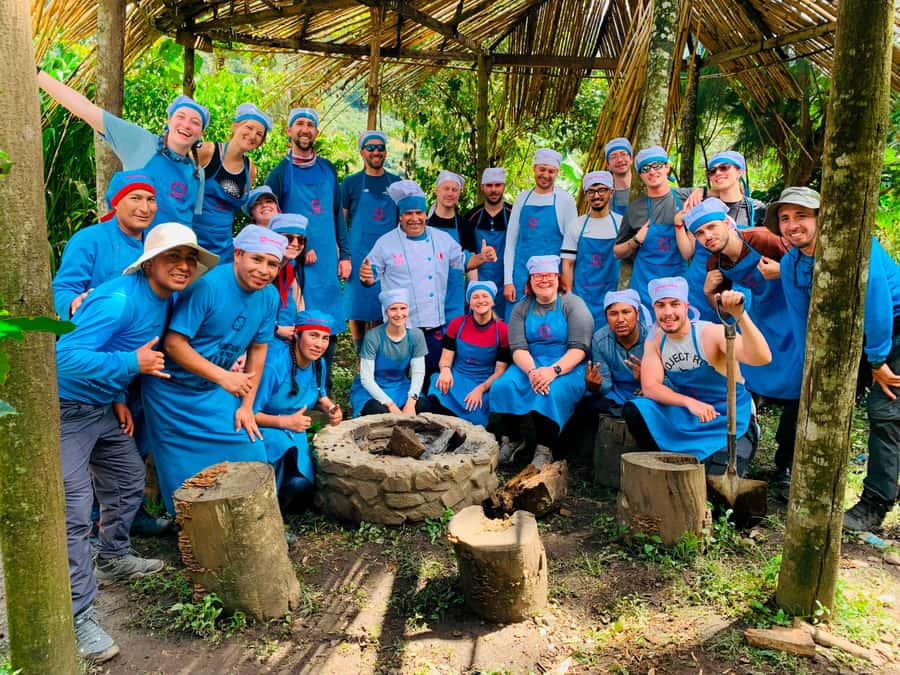
Here, walking gives way to food and agriculture. You take part in a Pachamanca cooking experience, a traditional Andean method in which food is cooked in an earth oven with heated stones. It is not just a meal break. It gives you a direct connection to local cooking practices and the ingredients grown in this warmer valley.
The coffee visit adds another layer. You taste coffee made in the area and see how the crop fits into daily life in the region. If you enjoy food-based activities, this is a major strength of the route. The cooks also have a strong reputation for producing generous meals, including vegetarian choices. Breakfasts, lunches, dinners, water, and daily snacks are included, so you do not need to plan every meal yourself.
The schedule can feel slightly uneven on this day because the Pachamanca stop comes before the afternoon hike. If you prefer a steady walking rhythm, the long meal and cultural stop may interrupt your momentum. For most people, though, the change of pace is welcome.
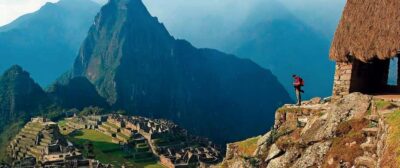
After lunch, you follow a section of the Inca Trail for about three hours to Llactapata at 2,750 meters. The final approach brings the first distant view of Machu Picchu. It is not the close, grand reveal you get inside the citadel. Instead, the ruins appear across the valley, framed by mountains and distance.
That view is why the Llactapata camp matters. You sleep with Machu Picchu in sight, rather than arriving at the site by bus with no sense of the surrounding terrain. The campsite is also repeatedly praised for its setting. Bring a head torch, since camp movement after dark is easier and safer with your own light.
Other ways up to Machu Picchu from Cusco:
- From Cusco: Full-Day Group Tour of Machu Picchu
★ 4.7 · 1,767 reviews - Machu Picchu Day Trip from Cusco
★ 4.5 · 1,644 reviews - Machu Picchu: Full-Day Tour from Cusco with Optional Lunch
★ 4.6 · 927 reviews - Cusco: 4-Day Inca Trail to Machu Picchu with Accommodation
★ 4.8 · 432 reviews
Day four: from Llactapata to Aguas Calientes
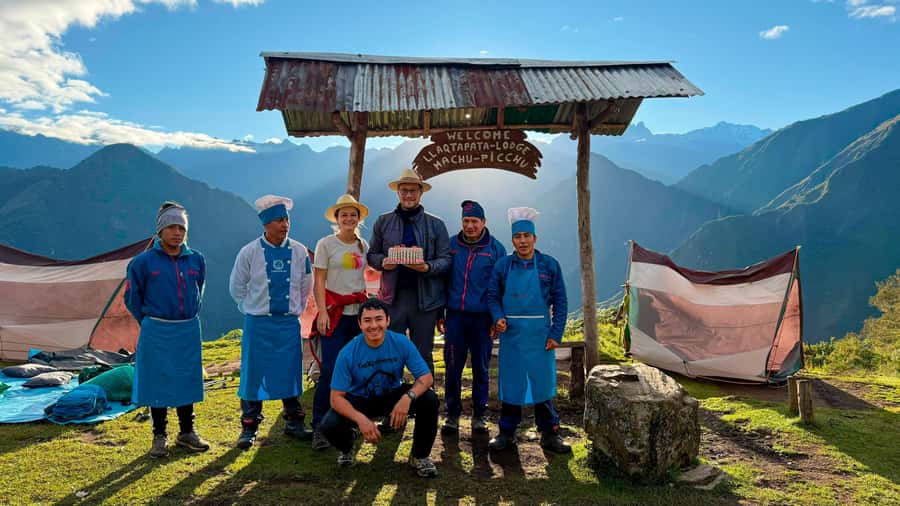
The fourth morning begins with coffee and a view of Machu Picchu from camp. The route then descends for about two hours to the hydroelectric station.
After a final brunch with the support team, you walk for around three hours beside the railway and the Urubamba River toward Aguas Calientes. This section is far less dramatic than the pass, but it gives you time to absorb the change from remote trail to the practical gateway town for Machu Picchu.
A stop at Mandor Botanical Gardens adds interest. The area is known for birdlife and orchids, and it breaks up the railway walk. You should still expect a long day on your feet. The route is not technically as demanding as the pass, but tired legs make any three-hour walk feel longer.
In Aguas Calientes, you check into a three-star hotel. The evening is free for rest, a look around town, or a visit to the hot springs. Dinner at a local restaurant is included according to the day plan.
This night is a useful comfort break before Machu Picchu. You have a bed, showers, and the chance to repack your small day bag. Large backpacks cannot enter Machu Picchu, and a pack no larger than 25 liters is recommended. The larger duffle, limited to 7 kilograms or 11 pounds, is handled by the support team during the trek.
Day five: Machu Picchu and the panoramic train
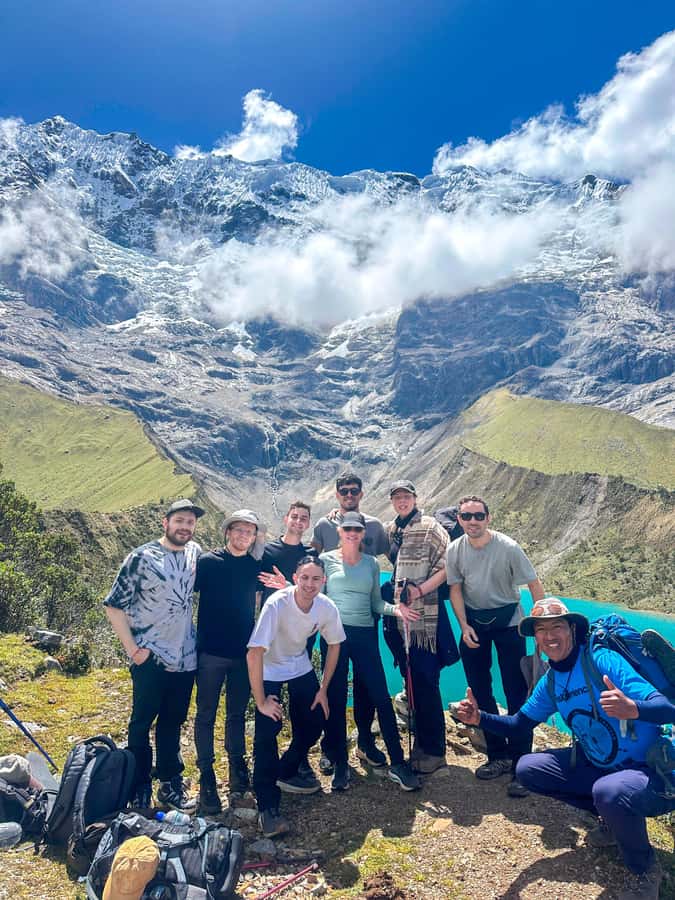
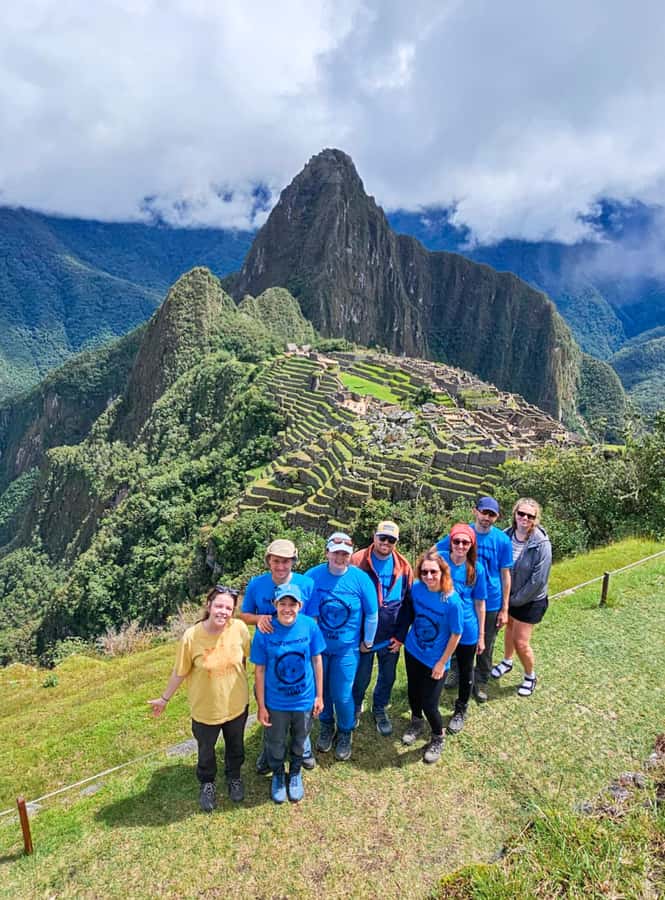
The final morning starts early. After breakfast, you take one of the first buses up to Machu Picchu, aiming for the morning light and cooler conditions.
The guided visit lasts about two to three hours. Your guide explains the citadel and directs you through the permitted circuit. The exact route inside Machu Picchu is controlled, so you should not expect unlimited wandering through every part of the site.
After the guided visit, you may have time to explore independently. Huayna Picchu and Machu Picchu Mountain require separate permits booked in advance. Neither mountain pass is included, and last-minute availability cannot be assumed.
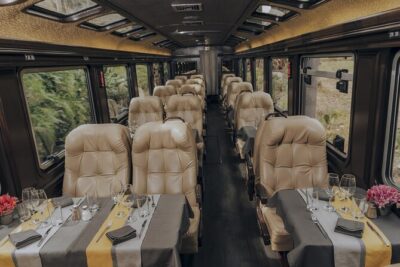
After returning to Aguas Calientes for lunch, you board the Vistadome or 360° train to Ollantaytambo. Large windows and broad views make the train ride more than a simple transfer. A private van then takes you back to Cusco, with arrival around 7:30 p.m.
That makes the final day long. You see Machu Picchu, return to town, take the train, and continue by road to Cusco. It is efficient, but you should not plan an important late-night activity after arrival.
Food, support, and guide quality
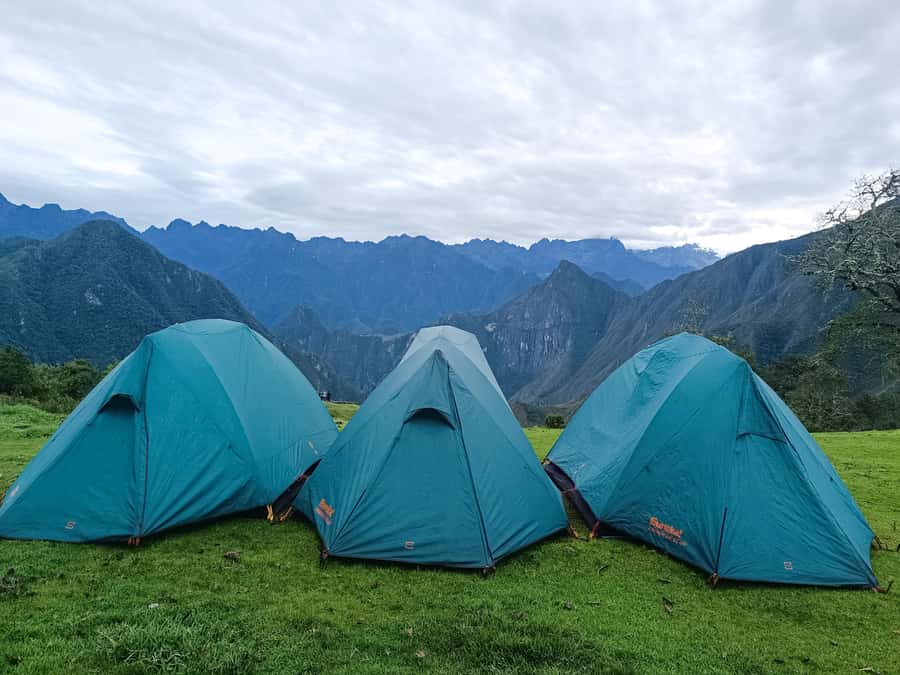
Food is one of the strongest parts of this trip. The cooks prepare breakfasts, lunches, and dinners in difficult conditions, and meals are not treated as basic fuel. Past groups have described multi-dish meals, hot drinks, snacks, and careful attention to vegetarian needs.
The support crew includes muleteers who carry camping equipment and the shared load. You still carry your daypack, water, rain gear, camera, and personal items, but the arrangement takes away much of the burden. Keep medication and essentials with you rather than putting them in the duffle.
The guides vary by departure. Names connected with this operation include Cesar, Roger, Alex, Renato, Miguel, Klever, Eddie, Elias, Gilbert, José, Sebastian, and Fillo. The strongest pattern is practical care: pacing groups, encouraging tired walkers, explaining Inca culture, watching water intake, and helping people who struggle with altitude.
That does not remove the need for preparation. A guide can support you through a difficult climb, but cannot make 4,630 meters feel like sea level. Arrive in Cusco with time to adjust if your schedule allows, and discuss altitude concerns with a medical professional.
What to pack for comfort
Keep your daypack light and organized. You will want quick access to:
- Passport and student card, if you use one
- Warm layers, hiking pants, and rain gear
- Comfortable hiking shoes with good grip
- Sun hat, sunglasses, sunscreen, and insect repellent
- Toiletries, hand sanitizer or tissues, and toilet paper
- Personal medication and basic band-aids
- Camera, spare batteries, and a head torch
- Cash for personal spending
- Water and a small supply of snacks
Weather can change quickly between the high pass and the warmer forest. Pack layers rather than one heavy coat. Rain protection matters even in a dry season, and insect repellent becomes more useful after the route drops into warmer country.
Is $655 good value?
For a five-day trip with this amount of support, $655 is a fair price. You receive two camping nights, one glamping night, a hotel night, permits, meals, transport, a guide, cooks, muleteers, buses, and the panoramic train. Buying each part separately would require more planning and would not necessarily provide the same support.
The price does not include a sleeping bag, inflatable mattress, trekking poles, or the optional mountain permits. You also need money for personal purchases and any extra food or drinks. The non-refundable booking rule is important, so confirm your dates, passport details, fitness, and travel insurance before paying.
The value is highest if you want a fully supported trek with real food and cultural stops. It is lower if you prefer to travel independently, dislike early mornings, or want a shorter walk with more time in towns.
Who should book this trek?
You should consider it if you want Machu Picchu to be the end of a physical journey rather than an isolated day trip. It suits fit walkers who enjoy long days, changing climates, basic camp life, and a small-group setting.
It is also a good match if you care about food and local culture. The Pachamanca meal, coffee stop, Inca Trail section, and Llactapata camp give the trip more substance than a simple point-to-point hike.
Think twice if altitude has caused serious problems for you, or if steep climbs and long descents are not part of your normal activity. The route is not for wheelchair users and is not suitable for people with mobility, back, heart, or pregnancy-related concerns.
Should you book it?
I would book this trek if you want a well-supported route with variety: glacial scenery, high passes, cloud forest, coffee, local cooking, a first view of Machu Picchu from camp, and a comfortable train ride home.
I would choose another plan if your priority is a relaxed Machu Picchu visit or if you are not ready for the altitude. For everyone else, the combination of strong logistics, capable guides, excellent camp food, and the Llactapata viewpoint makes this a compelling five-day route at a sensible price.
FAQ
What time does pickup begin?
Pickup is around 4:30 a.m. from a hotel or Airbnb near Cusco’s historic center.
What languages are available for the guide?
Guides speak English or Spanish.
How high does the trek go?
The highest point is Salkantay Pass at 4,630 meters. Humantay Lake reaches about 4,200 meters.
Is food included?
Yes. The package includes four breakfasts, three lunches, three dinners, water, and daily snacks. Dietary options are available if you advise the company when booking.
Is a sleeping bag included?
No. A sleeping bag can be rented. Inflatable mattresses and trekking poles can also be rented.
Are Huayna Picchu and Machu Picchu Mountain included?
No. Both require separate passes that must be booked in advance.
More train journeys around Cusco
- The First Class Machu Picchu Train by Inca Rail
★ 4.0 · 182 reviews - From Cusco: 1-day Machu Picchu Tour by Train
★ 4.6 · 138 reviews - 2-Day Machu Picchu Tour by train from Cusco ( All included )
★ 5.0 · 85 reviews - From Cusco: Sacred Valley & Machu Picchu 2-Day Tour by Train
★ 4.9 · 79 reviews
More treks in Cusco
- Cusco: Machu Picchu 2-Day Inca Trail with Panoramic Train
★ 4.9 · 260 reviews - From Cusco: 2-Day Inca Trail to Machu Picchu
★ 4.2 · 244 reviews - Machu Picchu: Inca Trail 2-Day Overnight Guided Tour
★ 4.9 · 203 reviews - Short Inca trail to MachuPicchu || 2days – 1nigth ||
★ 5.0 · 103 reviews
Just added around Cusco
- “Waqra Pucara, The Majestic Fortress Revealing Secrets of the Andes”.★ 3.5 · 8 reviews
- 1.5h Cusco Chocolate Workshop – Truffles & Hot Chocolate★ 4.3 · 8 reviews
- Cusco: Chocolate Workshop with the Best Local Organic Cacao★ 4.5 · 23 reviews
- Cusco: Bean to bar chocolate workshop★ 5.0 · 3 reviews
- Cusco: Pub Crawl with Skip-the-Line Access and Drinks★ 4.6 · 57 reviews
- Horseback Tour in cusco to Temple of the Moon & Hidden temples★ 5.0 · 54 reviews
- Humantay Lake 2 Day Trek with Sky Camp from Cusco★ 5.0 · 62 reviews
- Sacred Valley Experience and Machu Picchu Sunrise 2-day Journey★ 5.0 · 60 reviews
Machu Picchu Tours, compared.
4-Day Inca Trail to Machu Picchu with Accommodation
Read our review →
2-Day Trip to the Sacred Valley and Machu Picchu
Read our review →
Machu Picchu 2-Day Inca Trail with Panoramic Train
Read our review →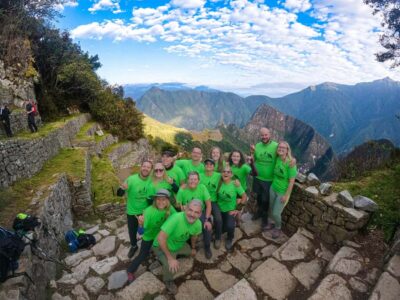
The First Class Machu Picchu Train by Inca Rail
Read our review →Browse the lists this tour appears in