
Reviewed · TOURS IN LIMA
8-Days Peru, The Rise of the Inca Empire
Machu Picchu is the headline, but the clever part of this 8-day Peru route is how much ground it covers: Lima’s colonial center, Cusco, the Sacred Valley, Lake Titicaca, and the road to Puno. I especially like the built-in transport and the chance to see both Inca stonework and living Andean traditions without arranging every bus, train, and hotel yourself.
The small maximum group of 15 should make the long sightseeing days easier to manage, and ending in Puno gives you a useful next stop for Bolivia or a return to Lima. The main drawback is pace: this is a tightly packed trip, and the schedule can be hard to follow unless you confirm each day’s plan and hotel details before departure.
Key points to know before booking
- Lima to Puno in eight days: The route links Peru’s major cultural stops rather than staying in one region.
- Machu Picchu by Voyager train: The excursion includes entrance, bus assistance, train tickets, and buffet lunch at Sanctuary’s Lodge.
- Morning flight required: Your Lima to Cusco flight must arrive early, with arrival by noon considered too late.
- A long final transfer: The Cusco to Puno bus takes about seven hours and includes Andahuaylillas, Raqchi, La Raya, and Pucara.
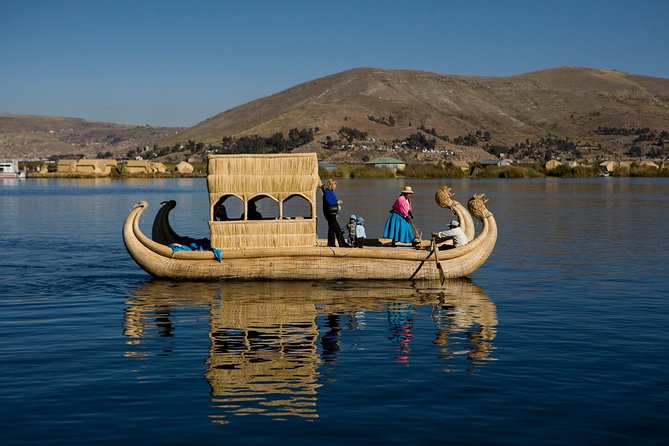
- Lake Titicaca is not just a photo stop: Uros and Taquile provide contact with ongoing island and textile traditions.
- Confirm the details: Daily schedules may be sent to your hotel front desk only the evening before, so ask for the full plan in advance.
What this Peru route gets right
At $1,280 per person, this is a useful package for someone who wants Peru’s main sights handled in one booking. Seven nights of accommodation, seven breakfasts, three lunches, airport transfers, the Machu Picchu train, archaeological admissions, and the Cusco to Puno journey are included.
That price is not simply paying for sightseeing. You are also paying to avoid the usual chain of small arrangements: meeting an airport driver, finding the right train station, sorting the Machu Picchu bus, transferring between hotels, and getting to the lake tours. In Peru, those connections matter.
Still, check what your selected hotels are before you pay. The package includes accommodation, but the information does not name the hotel category or properties. Food and drinks outside the specified meals are extra, and your flights are not included, including the important Lima to Cusco flight.
The route is best for you if you want structure and a broad first look at Peru. It is less suited to you if you prefer slow mornings, long museum visits, or the freedom to change plans on the spot.
Other days travellers book out of Lima:
- Lima: Ultimate Peruvian Food Tour
★ 4.9 · 700 reviews - Full Day Paracas Ica and Huacachina from Lima All Included
★ 4.5 · 623 reviews - Lima’s Vibrant Heritage: Exploring the City’s Landmarks Half-day
★ 4.5 · 581 reviews
Day 1: Lima’s old center and the Larco Museum
You begin at Jorge Chávez International Airport, where an arrival transfer takes you to your hotel. The first sightseeing block focuses on Lima’s Historic Center, a UNESCO World Heritage Site, and lasts about four hours.
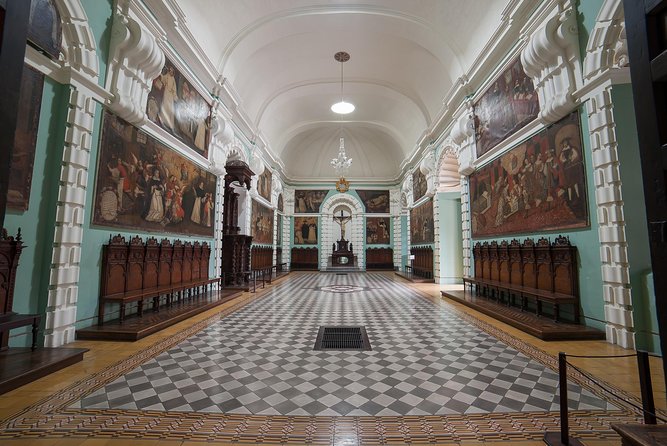
At the Convent of Santo Domingo, you see one of Lima’s earliest colonial foundations. The site also connects to the Universidad Mayor de San Marcos, founded here and described as the oldest university in the Americas. Inside are old choir stalls, a library holding about 25,000 books, and the tombs of San Martín de Porres, San Juan Masías, and Santa Rosa de Lima.
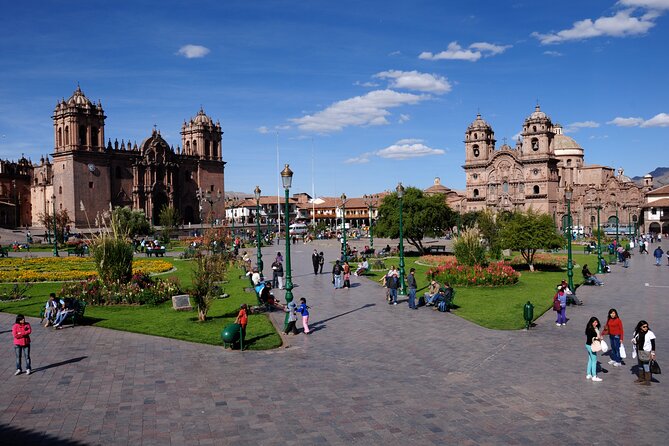
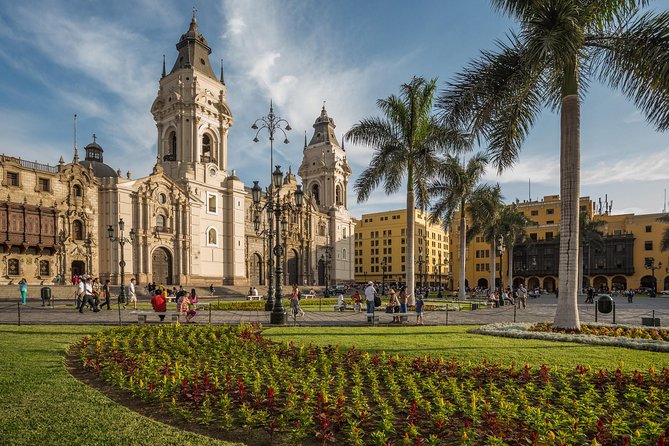
The route then crosses the Plaza Mayor, with views of the Government Palace and Municipality, before entering Lima Cathedral. This is a good opening lesson in colonial Peru because the buildings are not presented as isolated monuments. They form the civic and religious center of the old city.
After lunch or free time at your own expense, you visit the Larco Museum for about two hours. Its collection covers the cultures that existed in Peru before the Inca Empire. Gold objects, textiles, ceramics, and the famous erotic pottery help explain how varied ancient Peru was before Cusco became the center of power.
The museum’s open storage area is especially useful. Instead of seeing only a few polished display pieces, you can look at a much larger collection and get a better sense of the scale of ancient Peruvian art.
Day 2: From Lima to Cusco and the Inca capital
You fly from Lima to Cusco on the second morning. This flight is not included, and the timing is important. The operator requires a morning arrival, and reaching Cusco by noon is considered too late for the planned program.
At altitude, the first day can feel demanding. The tour information specifically advises people prone to altitude sickness to bring medicine or ask a doctor for advice before leaving. That warning deserves attention. Cusco sits high, and Day 2 combines arrival with several visits.
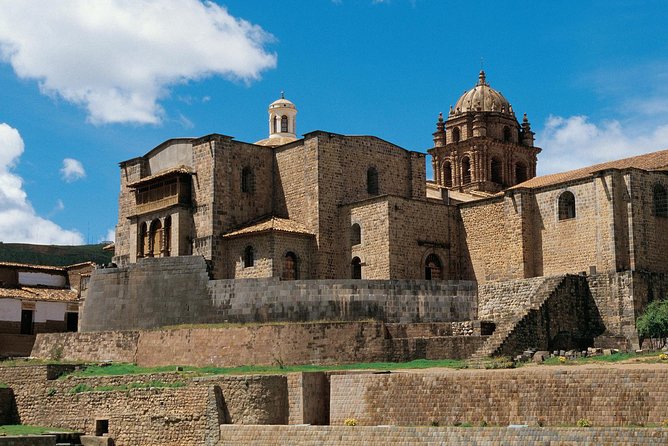
The first stop is Qorikancha, once the Inca Temple of the Sun. Spanish construction now sits above the Inca foundations, making this a clear example of how Cusco combines two eras in the same building. The Inca stonework is the star here, even though the gold that once covered parts of the temple was taken after the Spanish conquest.
Cusco Cathedral follows. Inside, you find colonial paintings from the Cusco School of Art, carved choir stalls, ornate altars, and the original cross associated with the first Spanish conquistadors. The art is valuable not only for its European technique, but also for the indigenous symbols worked into the paintings.
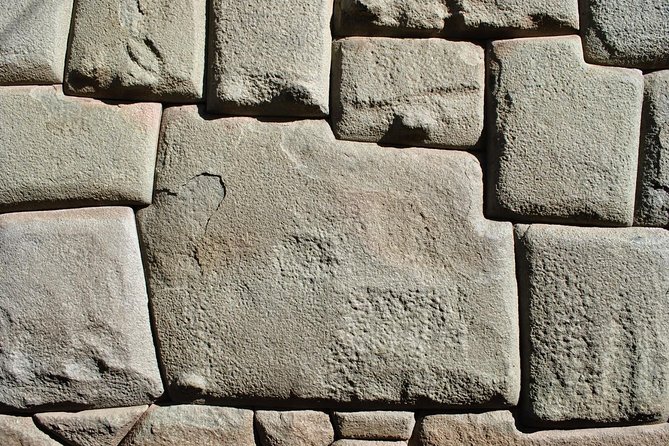
The afternoon continues uphill to Sacsayhuaman. Massive fitted stones, some more than four meters high, show the precision of Inca construction. The site also gives you broad views over Cusco.
The circuit then includes Q’enqo, a rock-cut ceremonial center; Tambomachay, where springs flow through Inca channels; and a panoramic view of Puca Pucara, a former military outpost. The outing lasts about two hours, though the full day, including transfers and city visits, is longer. Wear shoes with a good grip and expect some walking on uneven ground.
Day 3: Pisac, local crafts, and Andean traditions
The Sacred Valley opens the next day with mountains, farmland, and the Urubamba River. The Incas valued this area for its climate, agriculture, and position between important settlements.
Pisac combines a hilltop archaeological site with a colonial town below. At the ruins, terraces climb the slopes and religious buildings overlook the valley. The views help explain why the Incas built high above the valley floor, where they could control farming land and travel routes.
In the town, you walk through cobbled streets and visit the artisan market. Textiles, ceramics, silver jewelry, and other crafts are available. Take your time before buying, and ask about the work itself. A purchase is more meaningful when you know whether it was woven, dyed, or made locally.
The Inkariy Museum presents large representations of pre-Hispanic cultures from across Peru. It is not the same kind of visit as seeing original ruins, but it can help you compare the art and beliefs of cultures that existed before and beyond the Inca period.
The day also includes lunch and a visit to the Yucay Live Culture Center. Local residents demonstrate textile weaving and dyeing, adobe making, and the preparation of chicha, a traditional corn drink. You also meet llamas and alpacas.
This is one of the more useful parts of the trip for anyone who wants more than stone walls. You see how Andean craft and food traditions continue today. The tradeoff is time. The day contains several stops, so you should not expect a long, unhurried visit at each one.
Same base, a completely different day:
- From Lima: Day trip to Paracas, Ica and Oasis Huacachina
★ 4.6 · 409 reviews - Private transfers from Lima Airport or to Lima Airport
★ 4.0 · 359 reviews - Lima: Paracas and the Huacachina Oasis Guided Day Tour
★ 4.5 · 354 reviews - Lima: The Charm of Barranco & Pre Inca Pyramid in Miraflores
★ 4.9 · 322 reviews
Day 4: Moray and the salt pans of Maras
Moray is one of the most unusual Inca sites in the Sacred Valley. Circular terraces sink into the ground in a series of broad rings. The common explanation is that the Incas used the site to test crops in different microclimates, with temperature and exposure changing from one level to another.
The visit takes about an hour. It is more about understanding the site’s design and purpose than walking through a large complex.
At Maras, thousands of small salt pools cover the mountainside. Spring water flows into the shallow pans, then evaporates and leaves salt behind. Families still work the pools, continuing a practice that began before the Inca period.
The white pans against the reddish hills make this one of the strongest photo stops on the route. You should also remember that this is a working site, not merely a scenic viewpoint. Follow the access rules and avoid stepping into the pools.
The two stops fit comfortably into a half day, but the information provided does not describe additional afternoon activities. That leaves some room for hotel time, though the exact schedule should be confirmed in advance.
Day 5: Machu Picchu and the day’s crucial timing
The Machu Picchu day begins at Ollantaytambo station. You board the selected Voyager train, arrive at Machu Picchu station, and receive assistance with the bus up the winding road to the sanctuary.
The train and bus connections are a major reason to choose a package like this. Machu Picchu involves several linked tickets and transfers, and missing one can affect the whole day.
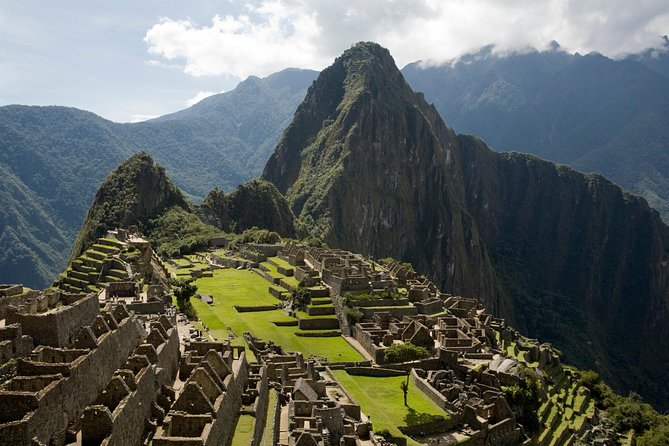
Inside the site, you see terraces, stairways, ceremonial areas, and urban sectors surrounded by steep mountains and the Urubamba River canyon. The entrance ticket is included, as is buffet lunch at Sanctuary’s Lodge restaurant.
Machu Picchu now uses visitor circuits, with specific routes assigned to spread people across the site. Route 2 is the priority when available. If it cannot be issued, the alternatives listed are Circuit 3B or Circuit 1B. Once the ticket is issued, the date cannot be changed, and the admission is not refundable.
That makes one detail especially important: confirm the route and visit date before the ticket is issued. You should also ask exactly how much time you will have inside the ruins. The published day lasts about ten hours and describes a return by train to Cusco, but one account of the operation described an unusually long wait in Machu Picchu Pueblo before the return train, with no planned activity. Get the train departure and hotel timing in writing.
The day is long, but this is not the place to rush. The ruins deserve your attention. At the same time, you cannot treat the schedule casually because the train, bus, guide, lunch, and entrance rules are all fixed.
Day 6: The long road from Cusco to Puno
The transfer to Puno takes about seven hours by tour bus, with several worthwhile stops along the way.
At Andahuaylillas, you visit the chapel, known for its ornate colonial interior. Raqchi follows, with the remains of the Temple of Wiracocha and its tall walls. These sites add religious and architectural context to the trip after your Inca-focused days.
Lunch is included during the route. At La Raya Pass, you reach the natural boundary between the Cusco and Puno regions. The high-altitude views are a highlight, but the stop can also be cold, so carry a warm layer.
Before Puno, the group visits the Pucara Museum. You may have an opportunity to buy one of the area’s recognizable bull-shaped ceramics. The bus reaches Puno late in the afternoon.
This is not a quick transfer disguised as sightseeing. It is a full day on the road. The advantage is that you avoid losing a separate travel day and get several cultural stops along the way. The cost is tiredness, especially after Machu Picchu the day before.
Day 7: Uros and Taquile on Lake Titicaca
The final full day takes you onto Lake Titicaca. At the Uros Floating Islands, you see islands made from totora reeds and meet the people who maintain them. The reed construction is the main lesson here, but listen carefully to the local explanation rather than treating the visit as a quick photo stop.
Taquile Island offers a different experience. Residents maintain traditional customs and wear distinctive clothing. The island also provides wide views across the lake and time to see how community life continues at a slower pace.
A typical lunch is included on Taquile, followed by the return to Puno in the afternoon. The outing lasts about six hours.
You should expect another active day. The tour combines boat travel, walking, and island visits, and the altitude remains a factor. The trip is worthwhile because it moves beyond Peru’s archaeological sites and shows living Andean culture, but it does not provide much spare time for an independent visit around Puno.
Day 8: Departure from Puno
The tour ends with a departure transfer. Since the final city is Puno, this route works well if you plan to continue toward Bolivia or arrange your onward journey from the region.
The package does not include your flights. It does include transfer help between the airport, bus station, hotels, and planned activities. Confirm the exact departure point and time with the operator before the final night.
How organized is the operation?
The strongest part of this package is the amount of transport it handles. Airport pickups, hotel transfers, train tickets, the Machu Picchu bus, the Cusco to Puno route, and the Lake Titicaca excursion are all included.
The weak point is communication. Daily schedules may be sent to the hotel front desk only the evening before. That can leave you unsure about pickup times, hotel names, or the next day’s transport.
I would email VIPAC Travel before departure and request:
- The name and address of every hotel
- Each day’s pickup time
- Your Cusco to Puno bus details
- Your Machu Picchu entrance circuit and train times
- The exact return plan after Machu Picchu
- Confirmation of the Lima to Cusco flight timing
The group limit is 15 people, which is a reasonable size for transfers and guided visits. No guide names are provided, so you should not book this expecting a particular guide.
Free cancellation is available up to 24 hours before the start time. Changes or cancellations inside that period are not accepted, and Machu Picchu tickets have stricter rules once issued.
Should you book the 8-day Peru tour?
Book it if you want a broad first visit to Peru with the major connections arranged for you. The route gives you Lima’s colonial core, excellent museum time, Cusco’s Inca sites, the Sacred Valley, Machu Picchu, the highland road to Puno, and both Uros and Taquile.
I would be more cautious if you need dependable day-by-day communication or want to linger in Cusco and the Sacred Valley. The price is fair for the included hotels, meals, admissions, transport, and train, but the value depends on the operator delivering the schedule clearly.
My practical advice is simple: book only after confirming the hotels, the full itinerary, and the Machu Picchu return timing. If those details are clear, this is an efficient way to see a great deal of Peru in eight days. If they remain vague, choose a slower plan with fewer moving parts.
FAQ
Where does the tour begin?
It begins at Jorge Chávez International Airport in Lima, Peru.
Where does the tour end?
The tour ends in Puno after the departure transfer on Day 8.
Are flights included?
No. Flights are not included. You must arrange the international flights and the Lima to Cusco flight yourself.
When must the Lima to Cusco flight arrive?
The flight must be scheduled in the morning. Arrival in Cusco by noon is considered too late for the planned program.
Is Machu Picchu admission included?
Yes. The Machu Picchu excursion and admission ticket are included. The ticket is not refundable, and its date cannot be changed after issue.
Which Machu Picchu circuit will be used?
Circuit 2 is the priority when available. If it is not available, Circuit 3B or Circuit 1B may be offered before the ticket is issued.
How many nights of accommodation are included?
Seven nights of accommodation at selected hotels are included.
What meals are included?
Seven breakfasts and three lunches are included. The Machu Picchu day includes buffet lunch at Sanctuary’s Lodge, and the Lake Titicaca outing includes a typical lunch on Taquile Island. Food and drinks outside the specified meals are not included.
Just added around Lima
- Lima´s Vibrant Heritage & Larco Museum of Cultures Half Day Tour★ 5.0 · 48 reviews
- Private Cooking + Market with Maido’s Former Creative Chef (+trasportation)★ 5.0 · 49 reviews
- 5 iconic restaurants of Lima a 3-hour guided food tour in Barranco★ 4.5 · 48 reviews
- Full day Tour Paracas Ica & Huacachina from Lima.★ 5.0 · 29 reviews
- City Tour Lima City of Kings★ 5.0 · 35 reviews
- Discovering Caral, The Oldest Civilization In America★ 4.5 · 35 reviews
- Cook with Maido’s creative chef and chef de cuisine★ 5.0 · 53 reviews
- Caral The First Civilization in America – Full Day From Lima★ 5.0 · 59 reviews
Tours in Lima, compared.
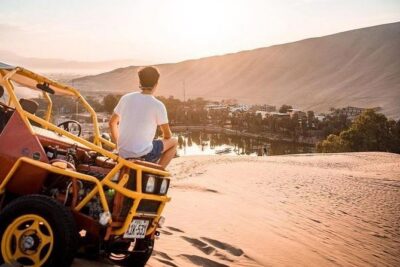
Full Day Paracas Ica and Huacachina from Lima All Included
Read our review →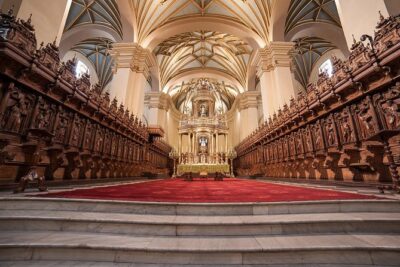
Lima’s Vibrant Heritage: Exploring the City’s Landmarks Half-day
Read our review →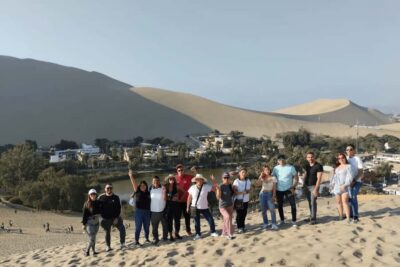

Paracas and the Huacachina Oasis Guided Day Tour
Read our review →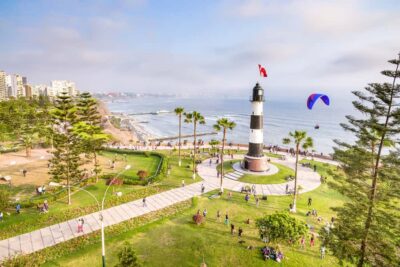
The Charm of Barranco & Pre Inca Pyramid in Miraflores
Read our review →
Full Day to Paracas and Huacachina Desert Oasis
Read our review →
Pachacamac Ruins & Barranco Half-Day Guided Tour
Read our review →Browse the lists this tour appears in