
Reviewed · PERU
Chiclayo: Chaparri Ecological Reserve Tour
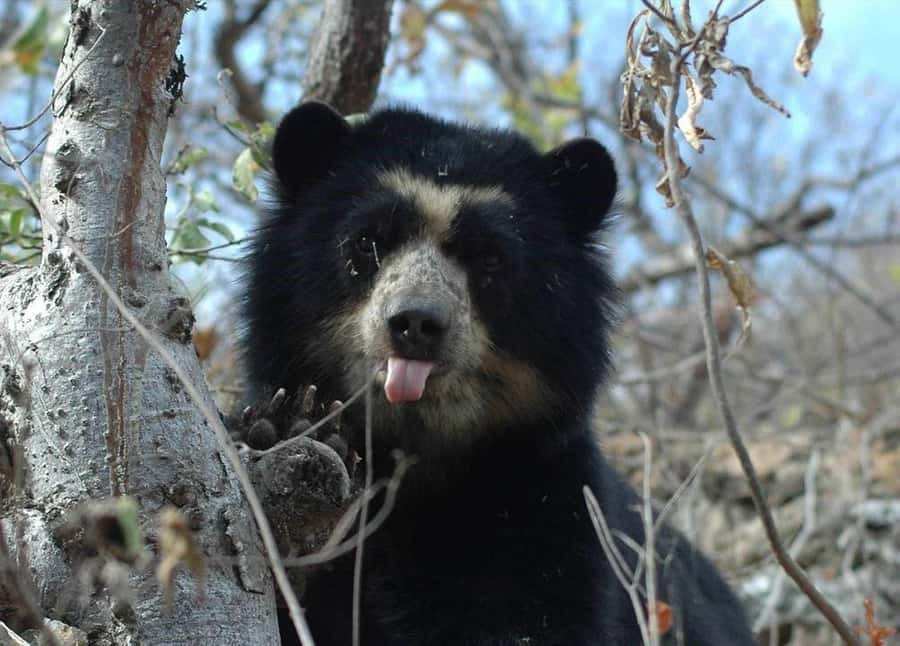
Chaparri is a 34,142-hectare dry-forest reserve where the big prize is not a polished zoo encounter but a chance to see wildlife in a protected setting. You may hear or spot birds, reptiles, foxes, deer, peccaries, or even larger animals such as pumas and spectacled bears. Jaguars are also listed among the reserve’s notable species, but no wild animal sighting is promised.
I like the mix of wildlife conservation and local tradition, especially the rescue center and the Huachuma route. I also like that the day includes several habitats and viewpoints rather than one short walk. The main drawback is the rough road into the reserve, and you should not book this expecting guaranteed bears, pumas, or jaguars.
Key points
- A full-day outing from Chiclayo: Travel about 80 kilometers southeast to Chongoyape, then continue into Chaparri.
- Three named routes: Walk the Spectacled Bear, Huachuma or San Pedro, and White-winged Guan routes.
- Strong birdwatching potential: Look for red-headed parrots, emerald parakeets, owls, woodpeckers, hummingbirds, and other dry-forest species.
- Conservation with a personal story: Visit the spectacled bear rescue center and meet Cuto, a rescued bear that now lives under park-ranger care.
- A cultural stop in the forest: Learn about Huachuma ceremonies, shamanic traditions, and respect for the mountain spirits known as Apus.
- A practical final stop: Visit Tinajones Reservoir, an important water source for Lambayeque, before returning to Chiclayo.
Why Chaparri makes a good escape from Chiclayo
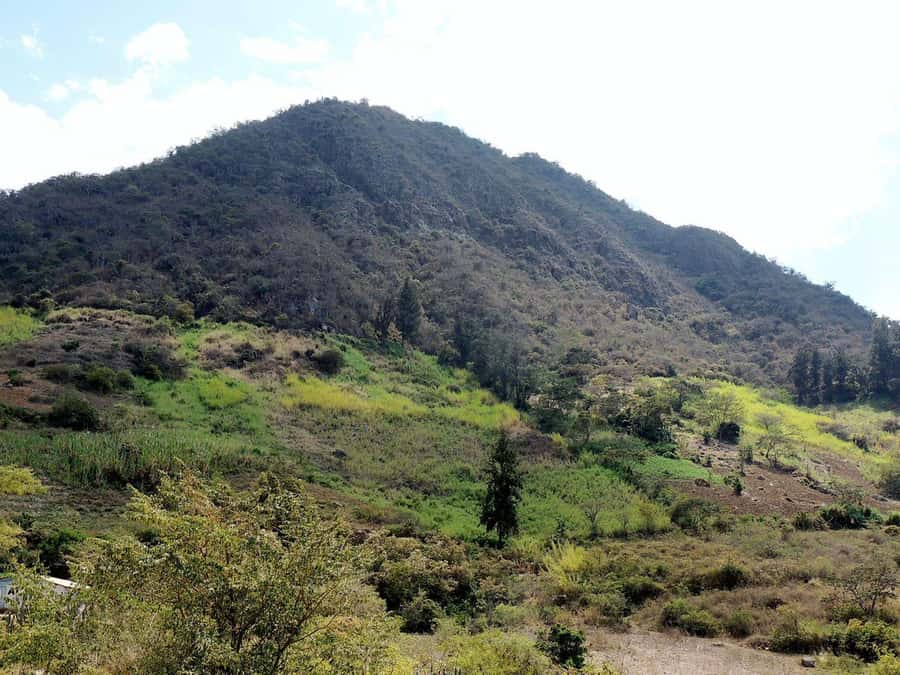
Chiclayo is one of northern Peru’s best bases for archaeology and food, but Chaparri offers a very different day. After leaving the city, you head toward Chongoyape and the dry forests of the Lambayeque Region. The change is gradual, with open views and rugged hills replacing the city streets.
The reserve is linked with Cerro Chaparri, a sacred mountain for local residents. That detail gives the visit more meaning than a simple wildlife drive. You are entering a place valued for both its plants and animals and its cultural importance.
The tour costs $79 per person, with hotel or airport pickup, transport, and an official tourism guide included. You pay the park entrance separately, listed as S/30, and food and drinks are also your responsibility. For a long day with private transport from Chiclayo, a guide, several reserve routes, and the rescue center, the price can make sense, especially if you do not want to arrange transport into the countryside yourself.
Still, value depends on your expectations. Chaparri is not a guaranteed big-cat safari. The strongest returns are the dry-forest scenery, birdlife, conservation work, and the chance to learn how this fragile ecosystem is protected.
Other days travellers book out of Peru:
- Cusco: Humantay Lake Tour with Breakfast and Buffet Lunch
★ 4.9 · 2,976 reviews - From Cusco: Sacred Valley & Maras Salt Mines Tour with Lunch
★ 4.8 · 2,227 reviews - From Cusco: Moray, Maras Salt Mines & Chinchero Weavers Tour
★ 4.8 · 1,925 reviews
The road to Chongoyape and the reserve
The excursion begins with pickup at your Chiclayo hotel or airport. From there, the route runs about 80 kilometers southeast to Chongoyape. The drive is part of the experience, not just a transfer, as you pass through changing scenery and rural areas of northern Peru.
A local guide accompanies the group as you continue toward Chaparri. The road approaching the reserve can be very rough. One practical warning is worth taking seriously: if you are prone to back pain or motion sickness, ask about the road conditions before booking and bring anything you normally use for a bumpy ride.
The tour is conducted in Spanish. That matters if you want detailed explanations about birds, plants, conservation projects, and local beliefs. If your Spanish is limited, you can still enjoy the scenery and animals, but you may miss some of the best context.
Bring water, snacks, sunscreen, a hat, sunglasses, and comfortable shoes. A flashlight is also listed, which suggests that some areas or departures may involve dim conditions. Since meals are not included, pack enough food for the day rather than assuming you can buy lunch inside the reserve.
The Enchanted Garden and Chaparri’s dry forest
The main visit begins at the Enchanted Garden in the Chaparri Private Conservation Area. The reserve covers 34,142 hectares, a large protected area where dry-forest vegetation supports birds, mammals, reptiles, and insects.
Dry forest can look spare compared with Peru’s rainforest, but that is part of its appeal. Plants and animals here have adapted to long dry periods, bright sun, and limited water. The winding trails give you a closer look at this setting than you would get from a roadside viewpoint.
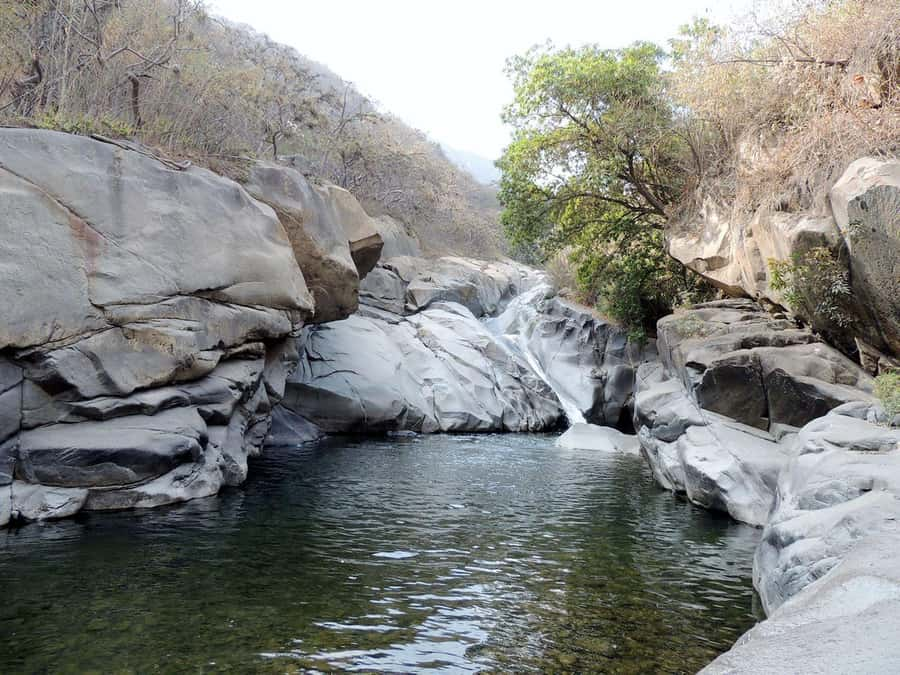
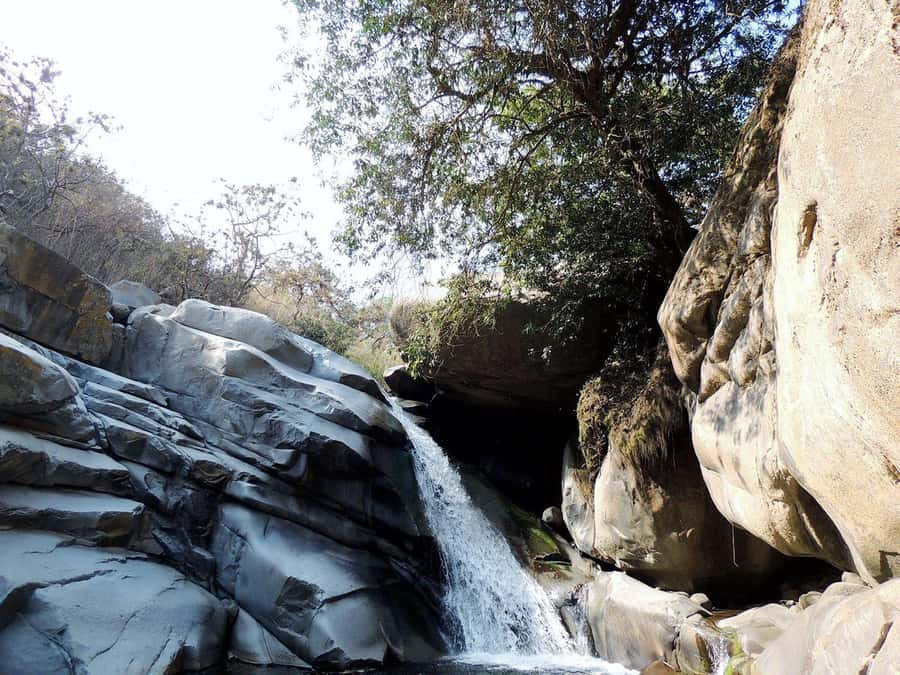
The route is not simply a walk from one exhibit to another. You follow forest paths, pass through areas of natural vegetation, and may reach waterfalls tucked into the reserve. The waterfalls are described as hidden, so do not expect a grand engineered attraction with extensive facilities. Their appeal lies in finding water and shade within a dry environment.
The reserve’s name is closely tied to Cerro Chaparri, regarded as sacred by local people. A respectful attitude is important here. This is both a conservation area and a place connected to living cultural beliefs.
Three routes with three different themes
The itinerary includes the Spectacled Bear route, the Huachuma or San Pedro route, and the White-winged Guan route. Each adds a different layer to the visit.
The Spectacled Bear route focuses on the Andean bear, also called the spectacled bear. This is one of the reserve’s key endangered species. The route gives you a chance to learn where the bear fits into the dry-forest ecosystem, though spotting one in the wild is difficult.
The Huachuma route connects the natural setting with local spiritual practice. You learn about shamanic sessions, the meaning of Huachuma or San Pedro, and respect for the Apus, or mountain spirits. This is not just a botanical explanation. It introduces a different way of understanding the mountain and the plants that grow around it.
The White-winged Guan route focuses on a bird that has become a symbol of conservation in northern Peru. Chaparri supports projects connected with the protection and reintroduction of the species. If you enjoy birdwatching, this route is one of the strongest reasons to choose the excursion.
Trail conditions and walking distances are not specified, so you should be prepared for uneven ground and outdoor conditions. Comfortable shoes are essential. The day combines driving, walking, wildlife watching, and educational stops, so it is best suited to people who are happy with a fairly active outing.
Same base, a completely different day:
- From Lima: Paracas and Huacachina Oasis Full Day Guided Tour
★ 4.7 · 1,780 reviews - From Cusco: Full-Day Group Tour of Machu Picchu
★ 4.7 · 1,767 reviews - Machu Picchu Day Trip from Cusco
★ 4.5 · 1,644 reviews - Cusco: Half-Day City Tour with Sacsayhuaman and Q’enco
★ 4.6 · 1,129 reviews
Birdwatching in a rare northern habitat
Birds may be the most reliable wildlife focus of the day. The reserve is home to a long list of species, including the red-headed parrot, Peruvian owl, emerald parakeet, bush nightjar, Tumbes swift, short-tailed starlet, scarlet-backed woodpecker, Peruvian woodpecker, Tumbes woodpecker, and eyebrow wren, also called the nightingale.
The guide can help you notice small birds that are easy to miss. A good bird guide does more than point toward a large animal. They help you catch movement in the branches, identify calls, and separate one similar species from another.
You may also see hummingbirds, royal vultures, eagles, and other birds of prey. The exact sightings depend on conditions, season, time of day, and luck. The tour information does not promise a bird list for every departure, so bring realistic expectations and, if you have them, binoculars.
Birdwatchers will get more from the day if they allow time for quiet observation. This is one place where rushing from stop to stop would work against the experience. Even when a rare bird does not appear, the guide’s explanation of the habitat adds value.
The spectacled bear rescue center and Cuto
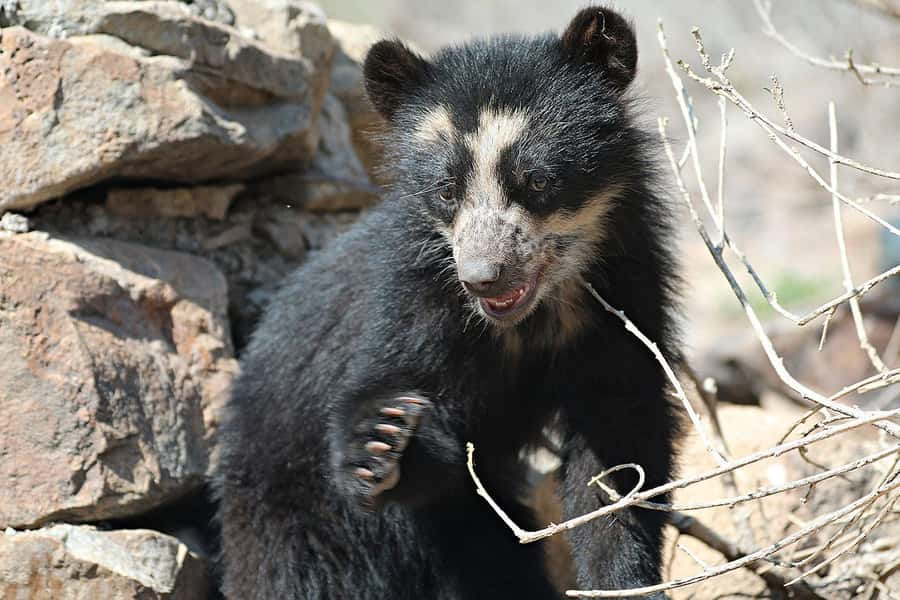
The bear rescue center is one of the most affecting stops. Bears rescued from illegal captivity are rehabilitated here and taught, as far as possible, to manage again in a natural setting before release.
You will meet Cuto, a permanent resident rescued from a circus. His story also shows the limits of rehabilitation. Not every rescued animal can safely return to the wild, so some remain under the care of park rangers.
This stop is useful because it puts the reserve’s conservation work in plain view. You are not simply told that bears are endangered. You see how illegal captivity can affect an individual animal and how long-term care becomes part of the solution.
The center should not be confused with a normal wildlife park. Its purpose is rescue, recovery, and protection. That means you may see fewer animals than at a commercial attraction, but the visit has a clearer connection to the problems facing Peru’s native species.
Reptiles, amphibians, and the Huachuma tradition
The Huachuma route continues with explanations of local shamanic practice and the spiritual importance of the mountains. You then visit the reptile house, where you learn about snakes and other reptiles found in the area.
This stop adds variety to the day. Large mammals receive most of the attention in the tour description, but reptiles and amphibians are important parts of the dry forest. You learn about their bodies, habits, and ways of living in a place where water may be limited.
The reptile house is especially useful if you are uneasy around snakes. Seeing them in a controlled setting can help you understand which animals live in the region without turning the encounter into a scare show. The available information does not name every species on display, so the local guide’s explanation will shape this part of the visit.
The combination of wildlife facts and Huachuma traditions also keeps the day from feeling one-dimensional. Chaparri is presented as a living place with ecological and spiritual value, not merely as a backdrop for photographs.
Interpretation Center: making sense of the reserve
The Interpretation Center explains the area’s biodiversity, conservation work, and the role of the dry forest. This is where the separate parts of the day come together.
By this point, you may have heard about the spectacled bear, Andean condor, White-winged Guan, birds, reptiles, and forest plants. The center helps explain why protecting one part of the ecosystem supports the rest. It also gives practical context about reintroduction projects and the value of preserving native habitat.
I consider this an important stop for anyone who wants more than scenery. Outdoor wildlife sightings can be brief or uncertain. An interpretation center gives you information you can still take away when an animal stays out of sight.
It also helps set accurate expectations. Chaparri protects endangered species, but protection does not mean that every visitor will see them. The reserve’s success is measured partly by habitat preservation and species recovery, not by how many large animals appear during one day.
Tinajones Reservoir on the return trip
After leaving Chaparri, the route detours to Tinajones Reservoir. The reservoir supplies water to Lambayeque and offers a different view of the region’s natural and human systems.
Here, you may see eagles, herons, and other birds around the water. The stop gives your day a change of pace after the forest trails and conservation center. It also shows how important water management is in a dry part of Peru.
Tinajones is not a substitute for Chaparri, but it is a sensible final stop. You get another chance to watch birds and enjoy open scenery before returning to Chiclayo. Since the excursion lasts one day, the reservoir helps fill out the route without adding another major museum or city attraction.
What the $79 price includes and leaves out
At $79 per person, the package includes hotel or airport pickup in Chiclayo, tourist transport, and an official tourism guide. The entrance fee is extra at S/30, with the stated price subject to change. Food and drinks are not included.
That cost is reasonable if you value convenience. Arranging your own transport to Chongoyape and Chaparri could be difficult, especially if you do not speak much Spanish or do not know the local roads. The included pickup also makes the day easier if you have limited time in Chiclayo.
The price is less attractive if you mainly want a guaranteed animal encounter. No tour can promise a puma, jaguar, tapir, or wild spectacled bear here. You are paying for access, transport, guidance, and a full introduction to a protected area, not a guaranteed wildlife checklist.
Cancellation is flexible, with a full refund available when you cancel at least 24 hours before departure. You can also reserve and pay later, which helps if your northern Peru schedule may change.
Who should book this Chaparri day trip?
I would recommend it to you if you enjoy birdwatching, conservation, nature walks, and local culture and want a break from Chiclayo’s urban and archaeological sights. It is also a good fit if you want to support a protected area while learning how rescued animals are cared for.
Families with older children may appreciate the rescue center and reptile house, though the rough road and long day could be tiring for very young children. People with back problems should think carefully about the drive into the reserve.
You will get the most from the excursion if you are comfortable with Spanish, outdoor heat, uneven trails, and uncertain wildlife sightings. Pack your own food and water, wear proper shoes, and keep your eyes open for small birds rather than waiting only for a bear or puma.
Should you book the Chaparri tour?
Book this tour if you want an authentic nature day from Chiclayo and understand that conservation is the main attraction. The bear rescue center, rare bird habitat, Huachuma traditions, and dry-forest trails give the visit real substance.
Skip it if your priority is a guaranteed jaguar, puma, tapir, or bear sighting, or if a rough road and a long Spanish-language day would make you uncomfortable. For the right visitor, Chaparri offers a thoughtful look at one of northern Peru’s most important protected areas, with enough variety to make the $79 cost worthwhile.
FAQ
Where is Chaparri Ecological Reserve?
Chaparri is in the Lambayeque Region of Peru. The tour travels from Chiclayo to Chongoyape, about 80 kilometers southeast of the city, before continuing to the protected area.
How long does the tour last?
The experience lasts one day and returns to Chiclayo after the visit to Chaparri and Tinajones Reservoir.
Is hotel pickup included?
Yes. Pickup from your hotel or the airport in Chiclayo is included, along with tourist transport and an official tourism guide.
What language is the tour conducted in?
The live guide speaks Spanish. The tour provider lists Spanish as the available language.
Is the park entrance fee included?
No. The entrance fee is separate and is listed as S/30, although the price may change.
What should I bring?
Bring comfortable shoes, sunglasses, a sun hat, snacks, drinks, sunscreen, and a flashlight. Food and drinks are not included in the tour price.
Just added around Peru
- Walking tour through the Historic Center of Arequipa★ 4.0 · 3 reviews
- Zipline over the Sacred Valley Trip★ 5.0 · 11 reviews
- Vinicunca Mountain Tour – Full Day Tour to Rainbow Mountain★ 3.4 · 4 reviews
- Waqrapukara 1 day trekking + meals★ 3.9 · 3 reviews
- Visit to the Cochahuasi Animal Sanctuary with rescued animal★ 4.1 · 4 reviews
- Visit Pisac from Cusco: Private Transport★ 4.6 · 9 reviews
- Uros Floating Islands Tour in Puno★ 3.7 · 9 reviews
- VISIT THE NATIONAL RESERVE OF PARACAS BY ATV★ 4.8 · 23 reviews