
Reviewed · INCA TRAIL & SALKANTAY TREKS
Ausangate Trek 5 Days
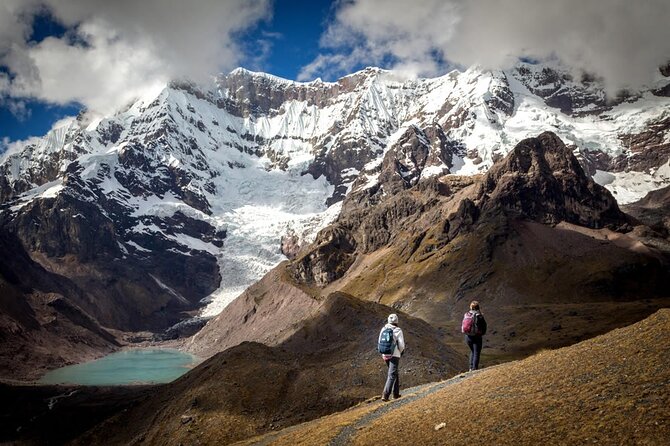
Ausangate is the kind of trek where the mountains do most of the talking. Over five days, you circle the great snow-covered Apu Ausangate, crossing passes as high as 5,200 meters and sleeping beside remote lakes far from Cusco’s busy tourist routes. The turquoise water, red-brown hills, alpacas, and huge glaciers keep changing with every turn.
I like the small-group format, capped at 10 people, and the way the local team becomes part of the experience. Guides including Guillermo, Urbano, and Chino bring in stories about Andean culture, while cooks such as Benigno have earned high marks for producing generous, hot meals in camp. The hot springs at Upis and Pacchanta are another fine touch.
The catch is the altitude. You camp as high as 4,630 meters, reach 5,200 meters on foot, and face cold evenings that can rival high mountain conditions elsewhere. This is not a casual walk, and the itinerary’s distances and elevation figures are demanding even for fit hikers.
Key points to know before booking
- 5,200-meter Palomani Pass: The trek’s highest point comes on Day 3, after a two-hour climb from camp.
- Two hot-spring stops: Soak at Upis on the first night and finish near Pacchanta, with Ausangate above you.
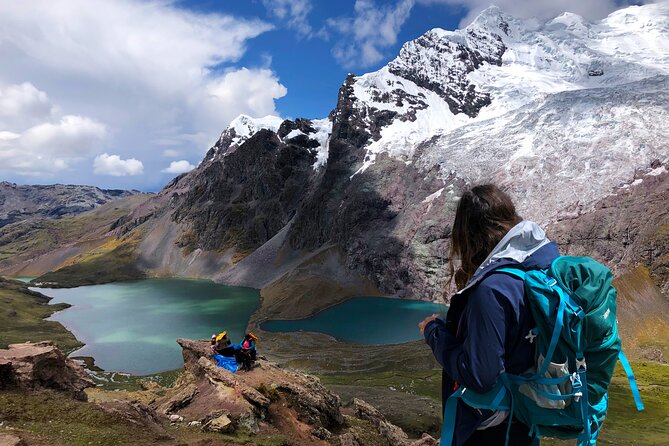
- Remote scenery: Expect turquoise and glacial lakes, broad valleys, snow-covered peaks, and few other hiking groups.
- Strong camp support: Horses carry equipment, while cooks prepare five lunches, four dinners, and four breakfasts.
- Cultural contact: A local family shares food, traditions, and weaving techniques on the final day.
- Bring serious cold-weather gear: A sleeping bag is not included, and nights above 4,000 meters can be bitterly cold.
Why the Ausangate Trek feels different from Cusco’s famous routes
Many people come to Cusco for Machu Picchu and the Inca Trail. Ausangate offers a very different Peru. You do not walk through ruins or jungle. Instead, you spend five days in open high country, where the main landmarks are glaciers, lakes, mountain passes, herds of alpacas, and small Andean communities.
The mountain itself is sacred to local people. Ausangate is regarded as an Apu, a powerful mountain spirit, and that belief gives the trek a cultural layer beyond the scenery. On the climb over Palomani Pass, your guide performs a ceremony for Apu Ausangate. You do not need to share every aspect of the belief system to appreciate the setting and the respect shown toward the mountain.
This route also feels less crowded than better-known treks near Cusco. The supplied program allows a maximum of 10 people, and the small size matters in a place this remote. You spend less time waiting on narrow sections of trail and more time walking at the group’s pace. Some outings may be much smaller, even just two people with the guiding and support crew.
At $660 per person, the price is reasonable for a five-day supported trek in a remote part of Peru. You are paying for private transportation from Cusco to the trailhead, camping equipment, horses for supplies, cooks, a guide, meals, and transport back to Cusco. You still need to budget for the 20-sol entrance fee and rent or bring a sleeping bag.
Other walks into the mountains in Cusco:
- From Cusco: 7 Lakes Ausangate Trek with Breakfast and Lunch
★ 4.8 · 360 reviews - Cusco: Rainbow Mountain Tour and Red Valley Hike (Optional)
★ 4.7 · 149 reviews - Cusco: Full-Day Rainbow Mountain & Red Valley Trekking Tour
★ 4.5 · 121 reviews
Day 1: Cusco to Tinke, Rondoca, and Upis hot springs
Your day begins early, with a 5:00 a.m. start in Cusco. Private transport takes you toward Tinke, where you can buy last-minute supplies and have breakfast before continuing to Rondoca, the starting point for the hike.
This early shopping stop is useful. Once you are on the trail, there is no simple way to replace forgotten snacks, batteries, or warm clothing. It also gives you a final chance to get food before the walking begins.
At Rondoca, you meet the wider support crew, including the cook and horse driver. The first section is fairly short by trek standards, about two hours to the lunch stop. From the trail, you begin to see Apu Ausangate, and the mountain remains a visual anchor for the rest of the journey.
After lunch, you continue toward Upis village. The day covers about 8 kilometers, with roughly 3 to 4 hours of walking, rising from around 3,800 meters to a camp near 4,200 meters. The distance is manageable, but the altitude can make even an easy uphill section feel slow.
The reward is an evening soak in the Upis hot springs. You can sit in the warm water with coca tea and let your legs recover before dinner. That first night is a good introduction to the rhythm of the trek: walk, eat, soak, and sleep at altitude.
Day 2: Arapa Pass, turquoise lakes, and a high camp
Day 2 is a major step up in difficulty. The crew wakes you with hot coca tea, followed by breakfast, then you climb toward Arapa Pass at 4,850 meters.
The morning climb tests your adjustment to the altitude. Move steadily and keep your breathing calm. There is no prize for rushing the first pass, and the guide can help set a pace that preserves energy for the rest of the day.
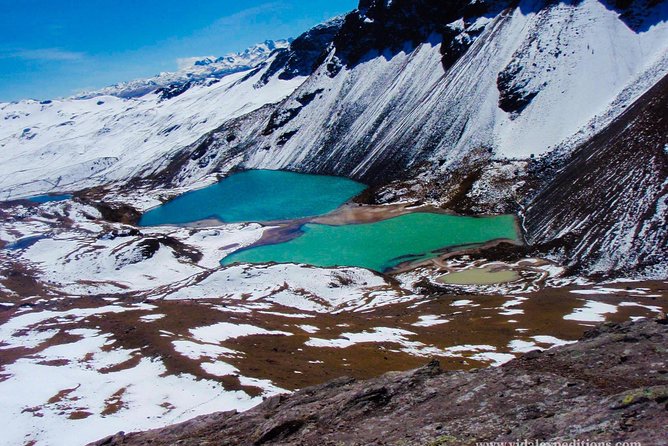
From Arapa Pass, the trail drops for about two and a half hours through the valley. You pass the green waters of Puqa Q’ocha before reaching the turquoise Jatun Puqa Q’ocha. Lunch beside the lake gives you time to enjoy the view of Ausangate and take photographs without having to hurry through the stop.
The second major climb leads to Apacheta Pass at about 4,980 meters. From here, you look down toward a striking turquoise lagoon fed by melting snow from Ausangate. The color comes from glacial water and suspended mineral material, giving the lake a tone that changes with the light.
After the pass, the trail descends for about an hour to Ausangate Qocha, where you camp. The day covers around 12 kilometers and takes about 7 to 8 hours of hiking. Camp is listed at roughly 4,630 meters, so you should expect a cold night and possibly a restless sleep.
This is where a proper sleeping bag matters. One is not included, and ordinary travel bedding is not enough for a night at this height. Pack warm layers, gloves, a hat, and clothing that stays comfortable when damp.
Day 3: The 5,200-meter climb over Palomani Pass
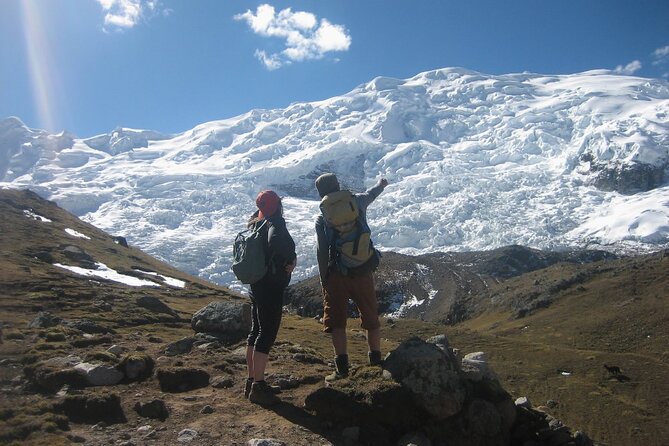
Day 3 brings the trek’s highest point. After breakfast, you climb to Palomani Pass at 5,200 meters, or about 17,060 feet. The ascent takes roughly two hours, though your pace may be slower if you are feeling the altitude.
The pass is the central physical challenge of the route. You should expect short steps, regular pauses, and a strong need to control your breathing. If you have not spent time at high altitude before, this is the day that makes acclimatization especially important.
At the top, the guide holds a ceremony for Apu Ausangate. It is a quiet reminder that this is not simply a mountain backdrop. The peak has meaning to the people who live in its orbit, and learning about that relationship adds depth to what you are seeing.
The trail then drops for about an hour to Uchuy Phinaya for lunch. The descent is welcome after the pass, though steep downhill walking can be hard on knees. After lunch, you continue for several hours to the next camp.
The day covers about 13 kilometers and takes 6 to 7 hours of hiking. Elevation ranges from roughly 4,600 meters to 5,200 meters, then down to around 4,300 meters, with camp near 4,500 meters. Even though the route descends after the pass, you remain very high overnight.
The support crew makes a difference here. A horse driver such as Angel carries equipment and helps with camp work, so you do not need to haul a full load over the pass. Cooks including Benigno and assistant cook Euden have been singled out for varied food and generous portions, a real benefit after a long day above 5,000 meters.
Other multi-day treks out of Cusco:
- Cusco: 4-Day Inca Trail to Machu Picchu with Accommodation
★ 4.8 · 432 reviews - Cusco: Machu Picchu 2-Day Inca Trail with Panoramic Train
★ 4.9 · 260 reviews - From Cusco: 2-Day Inca Trail to Machu Picchu
★ 4.2 · 244 reviews - Machu Picchu: Inca Trail 2-Day Overnight Guided Tour
★ 4.9 · 203 reviews
Day 4: Glacial lakes and the Pacchanta hot springs
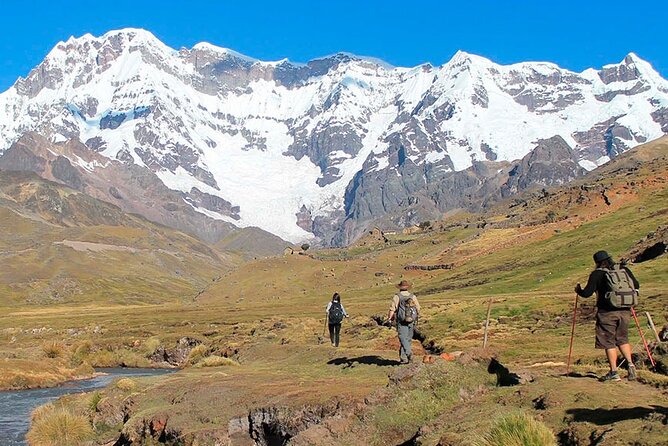
Day 4 is less severe in elevation than the previous day, but it is still a full hiking day. There is one pass to cross, and the route gives you time to enjoy deep-blue lagoons and glacial lakes in several shades.
The scenery keeps changing. Ausangate appears from another angle, while views open toward Pacchanta Valley. The route is a good reminder that the trek is not just about reaching one famous viewpoint. The pleasure comes from the steady sequence of lakes, ridges, ice, and open valleys.
You may be tempted to jump into one of the lakes to cool off. The option is mentioned as a bit of fun, but the water is glacial and the air can be cold. I would treat this as an optional moment for the brave, not an expected part of the day.
The route ends at the hot springs near Pacchanta. After four demanding days, a warm soak with Ausangate in view is a fitting finish to the hiking portion. The day covers about 15 kilometers and descends from around 4,300 meters.
Because the program lists this as a camp night, confirm the exact sleeping arrangements and timing when you book. The supplied schedule clearly places you at Pacchanta and includes the hot-spring stop, but it gives less detail than the earlier days about the evening setup.
Day 5: Local food, weaving, and the return to Cusco
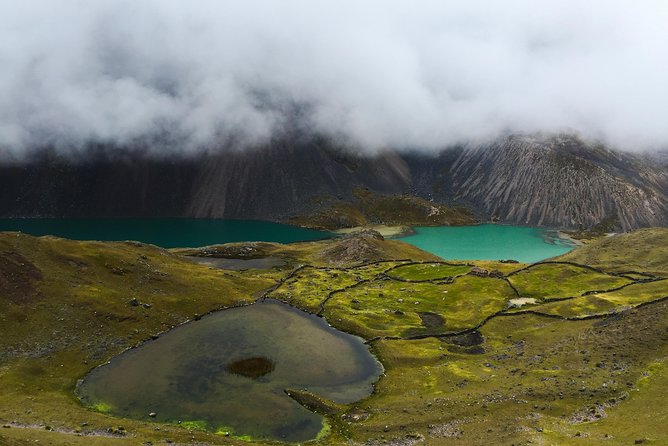
The final day is short, with about 3 hours listed for the day’s activity. After breakfast, you visit a local family for a cultural presentation.
This is not a rushed photo stop. The family prepares local food, explains traditions, and demonstrates weaving techniques. Those details help connect the dramatic scenery with daily life in the communities around Ausangate. You get a look at skills and customs that are easy to miss when a trek is treated only as a physical challenge.
After the visit, you take a bus back to Cusco. The schedule does not give an exact arrival time, so do not plan a tight evening connection or a fixed appointment until you have confirmed the return details.
The cultural visit also gives the trip a better ending than simply walking to a road and boarding a vehicle. You finish by meeting people who live in this high country, rather than leaving with only photographs of mountains and lakes.
Food, camping, horses, and the small-group setup
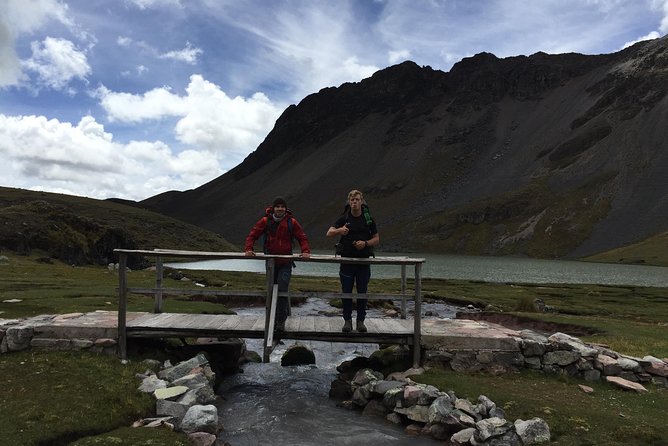
The package includes camping equipment, horses for carrying equipment, five lunches, four dinners, and four breakfasts. Breakfast on the first morning is available in Tinke, but it is not listed as part of the included meal count.
Food is one of the strongest practical features of this trek. Several guides and cooks have received specific praise, with Benigno repeatedly associated with varied meals, hot dishes, and generous servings. That matters because appetite and energy can suffer at altitude, and a dependable meal can make the next climb feel far more manageable.
The horse support also changes the experience. You are not carrying the full camping load yourself, though you still need a daypack with personal essentials. Angel is named as a horse driver who also helps with tents and camp chores.
The maximum group size is 10. The actual group may be smaller, and the company has operated trips for only two people. A small party makes it easier to keep meals and walking breaks flexible, and it gives you more direct time with the guide.
Guides named in connection with this route include Guillermo, Urbano, and Chino. Their roles go beyond trail direction. You can expect explanation of local culture, wildlife, mountain beliefs, and the people who have lived in the region for generations. Urbano has also been praised for taking photographs during the trek, though photography help should be viewed as a bonus rather than a guaranteed service.
How hard is the Ausangate Trek?
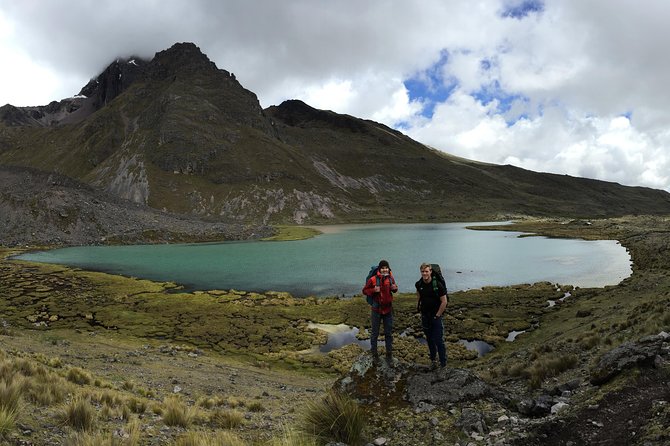
The tour requires a moderate level of physical fitness, but that label deserves a clear explanation. The route includes several days of 6 to 8 hours of hiking, passes close to 5,000 meters, and a high point of 5,200 meters.
The total distances are not extreme by long-distance trekking standards, yet altitude changes the effort. A short climb can leave you breathing hard, and recovery takes longer. You need to be comfortable walking for several hours on consecutive days and managing cold conditions at camp.
The high camps are another concern. You sleep around 4,200 meters on the first night, around 4,630 meters on the second, and around 4,500 meters on the third. One experienced trekker compared the cold to high mountain conditions in the Himalayas, so bring the warmest mountain clothing you can reasonably carry.
I would choose this trek if you want remote scenery and are ready for a real physical challenge. I would not choose it as your first-ever hike if you have no experience with long days, high altitude, or cold camping.
What to pack for five days above 4,000 meters
The supplied information confirms that a sleeping bag is not included. That is the most important item to arrange before departure.
You should also plan for:
- Warm layers suitable for very cold nights
- Gloves, a warm hat, and sturdy hiking clothing
- Sun protection for exposed high-altitude trails
- A small personal daypack, since horses carry the main equipment
- Extra snacks and personal supplies from the Tinke stop
- Clothing suitable for a hot-spring visit
- Any personal items you need for five days away from regular services
The entrance fee is also separate and costs 20 soles. The exact contents of the camping equipment are not spelled out, so ask Vidal Expeditions what tent, mattress, and other camp items are supplied before you leave.
Is $660 a fair price?
At $660, this is not a budget day trip, but it is a fair price for five days of organized high-altitude trekking. The cost covers transport from Cusco to the start, transport back after the trek, camping equipment, horse support, a guide, cooks, and most meals.
The strongest value comes from the support team. You get the chance to walk with a lighter load while a horse driver handles camp equipment, and you do not need to arrange food for four nights in a remote area. The small-group limit also gives the trip a more personal feel than a large departure.
The extra costs are modest but worth remembering. Add the 20-sol entrance fee, a sleeping bag if you need to rent one, and any breakfast or supplies purchased in Tinke. Because the tour starts at 5:00 a.m., you may also want to confirm whether your Cusco accommodation can provide an early meal, though that is not specified.
Who should book this trek?
You should consider it if you want:
- A remote alternative to the Inca Trail
- Big mountain views without a large group
- High-altitude hiking with horses carrying equipment
- Hot springs at both the beginning and end of the route
- Local food, weaving, and cultural explanation
- A guide who can discuss Andean beliefs and daily life
You should think twice if you dislike cold camping, long walking days, or very high passes. This is also not the best choice if your main goal is archaeology. Ausangate offers culture and mountain traditions, but the route does not focus on famous ruins.
The tour has a 5 out of 5 rating from 74 published evaluations and is recommended by all listed participants, with repeated praise for the guides, organization, food, scenery, and low number of other groups on the trail. Those patterns point to a consistently strong operation, but the altitude remains your responsibility. Good service cannot remove the effects of sleeping above 4,000 meters.
Should you book the Ausangate Trek?
Book this five-day Ausangate Trek if you want Peru at its most open and high. You will trade ancient stonework for glacial lakes, crowded viewpoints for quiet valleys, and hotel comfort for cold nights under Andean skies.
The best reasons to choose it are the small group, excellent meal support, horse-carried equipment, strong local guiding, and the chance to finish with a family’s food and weaving traditions. The main warning is simple: take the altitude seriously, bring a proper sleeping bag, and prepare for cold weather.
If you are fit, properly equipped, and excited by remote mountain scenery, $660 buys a well-supported route with real cultural substance. If you want an easy introduction to Peru or a low-altitude holiday, choose something gentler.
FAQ
How long is the Ausangate Trek?
The experience lasts approximately five days, beginning with an early departure from Cusco and ending with a bus ride back after the final cultural visit.
What time does the tour start?
The listed start time is 5:00 a.m. in Cusco.
How high does the trek go?
The highest point is Palomani Pass at 5,200 meters, or about 17,060 feet.
How many people can join the group?
The tour has a maximum of 10 travelers.
Are meals included?
Yes. The package includes five lunches, four dinners, and four breakfasts. Breakfast is also available for purchase at the Tinke stop on Day 1.
Is a sleeping bag included?
No. You need to bring or arrange your own sleeping bag.
What happens if bad weather cancels the trek?
If poor weather causes cancellation, you will be offered another date or a full refund. You can also cancel for a full refund if you do so at least 24 hours before the start time.
More five-day trips from Cusco
- Small Group 5 Days Salkantay and Machu Picchu by Llactapata Tour
★ 5.0 · 88 reviews - Machu Picchu: 5-Day Salkantay Trek with Panoramic Train
★ 5.0 · 79 reviews
More hiking tours in Cusco
- Salkantay Trek Challenge – 3 Days / 2 Nights
★ 5.0 · 101 reviews - From Cusco: Rainbow Mountain Trek
★ 4.5 · 98 reviews - Private Palccoyo Rainbow Hike Without the Crowds
★ 5.0 · 86 reviews - Choquequirao Trek 4 days and 3 nights
★ 5.0 · 81 reviews
Just added around Cusco
- “Waqra Pucara, The Majestic Fortress Revealing Secrets of the Andes”.★ 3.5 · 8 reviews
- 1.5h Cusco Chocolate Workshop – Truffles & Hot Chocolate★ 4.3 · 8 reviews
- Cusco: Chocolate Workshop with the Best Local Organic Cacao★ 4.5 · 23 reviews
- Cusco: Bean to bar chocolate workshop★ 5.0 · 3 reviews
- Cusco: Pub Crawl with Skip-the-Line Access and Drinks★ 4.6 · 57 reviews
- Horseback Tour in cusco to Temple of the Moon & Hidden temples★ 5.0 · 54 reviews
- Essential Machu Picchu Full Day Tour★ 5.0 · 60 reviews
- Sacred Valley of the Incas – Pisaq, Ollantaytambo and Chinchero★ 5.0 · 62 reviews
Inca Trail & Salkantay Treks, compared.
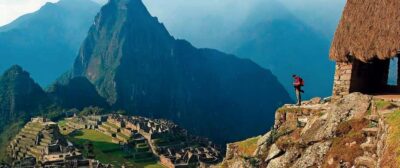
4-Day Inca Trail to Machu Picchu with Accommodation
Read our review →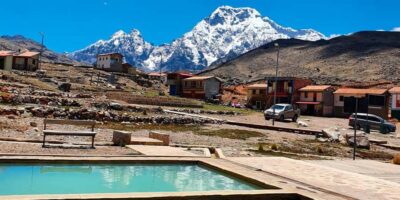
7 Lakes Ausangate Trek with Breakfast and Lunch
Read our review →
Machu Picchu 2-Day Inca Trail with Panoramic Train
Read our review →
Short Inca trail to MachuPicchu || 2days – 1nigth ||
Read our review →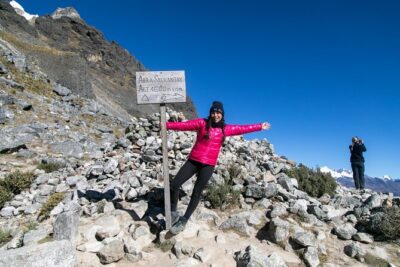
Small Group 5 Days Salkantay and Machu Picchu by Llactapata Tour
Read our review →
Browse the lists this tour appears in